
380+ US Flight Cancellations and 7,831 Delays Hit Chicago, Denver, Dallas as SkyWest, Southwest, Envoy Air Face June Crisis
On June 8, 2026, severe weather and cascading crew failures triggered 380+ cancellations and 7,831 delays across major US hubs. Chicago O'Hare saw 239 cancellations alone.

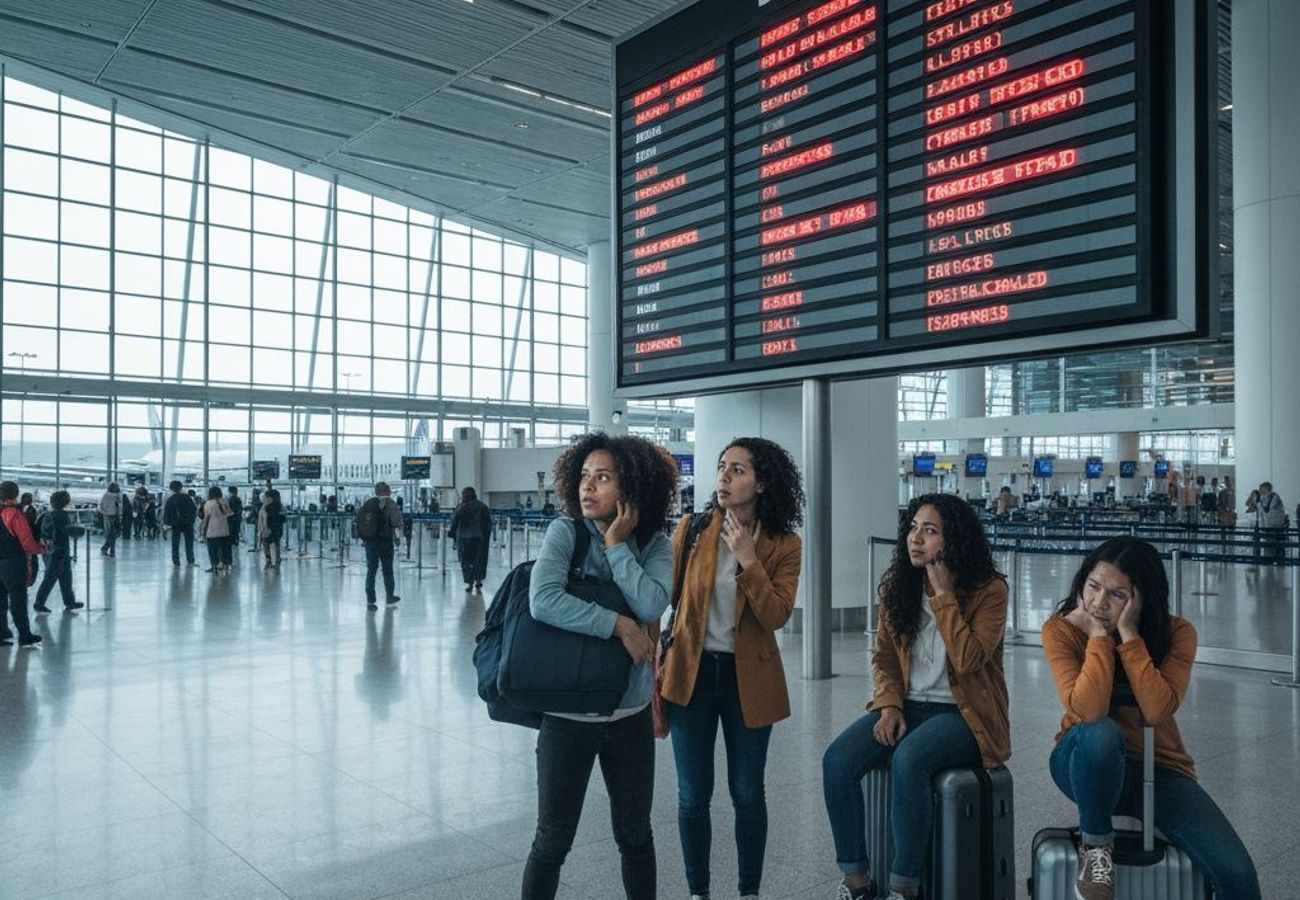
Image generated by AI
The Day the US Air Network Stumbled
June 8, 2026 will go down as one of the most operationally disastrous days in recent US aviation history. On a single day, over 380 flights were cancelled and 7,831 flights experienced delays across American airports—a perfect storm of weather, infrastructure bottlenecks, and crew scheduling failures that left hundreds of thousands of passengers stranded, frustrated, and uncertain about when (or if) they'd reach their destinations.
This wasn't just a regional problem. From the industrial heartland of the Midwest to the coastal hubs of California, from the bustling Northeast to the growing southern aviation centers, the disruption was nationwide, systematic, and cascading. Chicago O'Hare International, the busiest airport complex in North America, bore the brunt of it—reporting 239 cancellations and 1,171 delays alone. But the damage spread far beyond O'Hare's runways.
Reddit: "Stranded at O'Hare for 14 hours. The airline couldn't tell us anything. No rebooking. Just chaos." — r/travel
When Weather Meets Infrastructure Failure
The trouble started with something airlines can't control: severe convective weather. Thunderstorms, lightning, and high winds swept across the Midwest and Eastern seaboard, forcing ground stops and runway closures at critical moments. Denver International reported 994 delays despite only 9 cancellations—a clear sign that aircraft were landing and taking off, but the weather was creating bottlenecks.
But here's where it gets worse: weather alone doesn't cause 380 cancellations. The real culprit was the domino effect—once delays began at major hubs, they metastasized throughout the entire network.
Aircraft rotations broke down. Crews hit federal duty-time limits and couldn't fly. A plane scheduled to operate five flights that day might only complete two, stranding aircraft across the country. Regional carriers like SkyWest, Envoy Air, and Republic Airlines—which feed passengers to larger carriers—became the first casualties. These airlines operate on razor-thin margins with limited spare capacity, meaning a single delay cascades into multiple cancellations within hours.
Hub by Hub: The Anatomy of Collapse
Chicago O'Hare wasn't just hit hard—it was decimated. With 239 cancellations and 1,171 delays, the airport's terminals became processing centers for stranded passengers rather than transit hubs. Congestion on the runways meant aircraft couldn't push back from gates. Gate space filled up. Crews timed out. Scheduled flights evaporated.
Dallas-Fort Worth International, another major carrier hub, reported 41 cancellations and 770 delays. The scale here is telling: for every flight cancelled, nearly 19 were delayed—a sign that airlines were desperately trying to keep operations alive while managing crew constraints.
Denver International, serving as a critical western gateway, logged 994 delays with only 9 cancellations. Delays of this magnitude indicate aircraft were moving through the airport, but slowly—backed up by inbound traffic from other disrupted hubs. When a flight from Chicago arrives four hours late, the turnaround crew can't meet their next scheduled departure. The cascade continues.
Atlanta Hartsfield-Jackson, long the world's busiest airport by passenger count, reported 10 cancellations and 589 delays. San Francisco saw 604 delays on just 9 cancellations. Even Las Vegas's Harry Reid International, typically a smooth-running leisure hub, logged 302 delays—a sign that the disruption had reached tourist-heavy secondary markets.
But the crisis didn't stop at major hubs. Smaller airports became collateral damage:
- Minneapolis-St. Paul: 11 cancellations, 258 delays
- Detroit Metro Wayne: 8 cancellations, 227 delays
- Des Moines: 7 cancellations, 30 delays
- John Glenn Columbus International: 6 cancellations, 88 delays
These airports aren't byways—they're important regional connectors. When they start cancelling flights, it signals that the entire network is under strain.
The Crew Crisis That Airlines Won't Admit
Here's what the airline industry understands but passengers rarely hear about: Federal Aviation Regulations strictly limit how long pilots and flight attendants can work. A crew can legally operate for roughly 8-10 hours before they must rest. Add severe weather delays, and crews hit their limits far from their home bases.
When a crew times out in Denver, the aircraft they were supposed to fly to Las Vegas sits idle. That Las Vegas flight gets cancelled. The aircraft meant to return to Denver that evening never makes the trip. By nightfall, aircraft are scattered across the network in the wrong places, with no crews available to operate them.
SkyWest, which operates regional aircraft on behalf of larger carriers, reported cascading cancellations throughout its network. Envoy Air (American Airlines' regional subsidiary) faced similar challenges. Republic Airlines and Southwest Airlines, which relies on a distributed network of crews and aircraft, both struggled with crew availability.
The FAA's duty-time regulations exist for safety. But when applied to a network under stress, they become a multiplier effect. One crew timing out triggers five cancellations downstream.
What Passengers Can Do Right Now
If you're booked on a US flight, here's what you need to know:
Monitor your flight obsessively. Check your airline's app, FlightAware, or FlightRadar24 every 30 minutes before your flight. Gate changes and cancellations happen fast.
Know your rights. Under US Department of Transportation regulations, you may be entitled to rebooking on the next available flight at no additional charge. For weather-related delays, compensation is typically not required—but airlines must still get you to your destination or offer a refund.
Build buffer time into connections. If you're transiting through Chicago, Denver, or Dallas today or tomorrow, assume your inbound flight will be delayed. A tight 45-minute connection could become impossible.
Consider nearby airports. Flying into New York? Check if Newark or LaGuardia have availability. Heading to Los Angeles? Long Beach and Ontario may have fewer disruptions. Sometimes driving to an alternate airport saves hours of waiting.
Have a backup plan. If you're traveling for business, confirm attendance remotely if possible. If for leisure, consider rebooking for later in the week if cancellations persist.
The Broader Question: Is US Aviation Infrastructure Ready?
The June 8 disruption raises uncomfortable questions about capacity. Major US hubs were operating near maximum throughput before the weather hit. There's little margin for error. A single weather event shouldn't trigger 7,831 delays—but ours did.
Airlines have been cost-cutting for years. Ground crews are leaner. Spare aircraft are rare. Staffing is tight. The system works beautifully in normal conditions, but the moment conditions deviate, it becomes brittle.
This isn't just about yesterday's chaos. It's a pattern that will repeat unless something changes in how the industry plans for disruption.
One bad day. Two hundred thousand stranded passengers. A reminder that flying remains a delicate balance between capacity, weather, and human limits.
Related Travel Guides
Disclaimer
This article is for informational and educational purposes only. It does not constitute legal, financial, or professional advice. While we strive to provide accurate and up-to-date information, travel policies, regulations, and conditions change rapidly. Always verify information with official sources before making travel decisions. Nomad Lawyer makes no representations about the accuracy, reliability, completeness, or suitability of the information provided. Readers should consult qualified professionals for advice specific to their circumstances. The views expressed in this article are those of the author and do not necessarily reflect the views of Nomad Lawyer.
Preeti Gunjan
Contributor & Community Manager
A passionate traveller and community builder. Preeti helps grow the Nomad Lawyer community, fostering engagement and bringing the reader experience to life.
Learn more about our team →