
Minneapolis/St Paul Airport Hit by 69 Delays and 6 Cancellations as Delta, SkyWest, United Struggle with Operational Crisis
MSP airport grinds to a halt with 69 flight delays and 6 cancellations across domestic and international routes. Delta, SkyWest, and United face operational meltdown affecting passengers to Europe, Canada, and major US hubs.

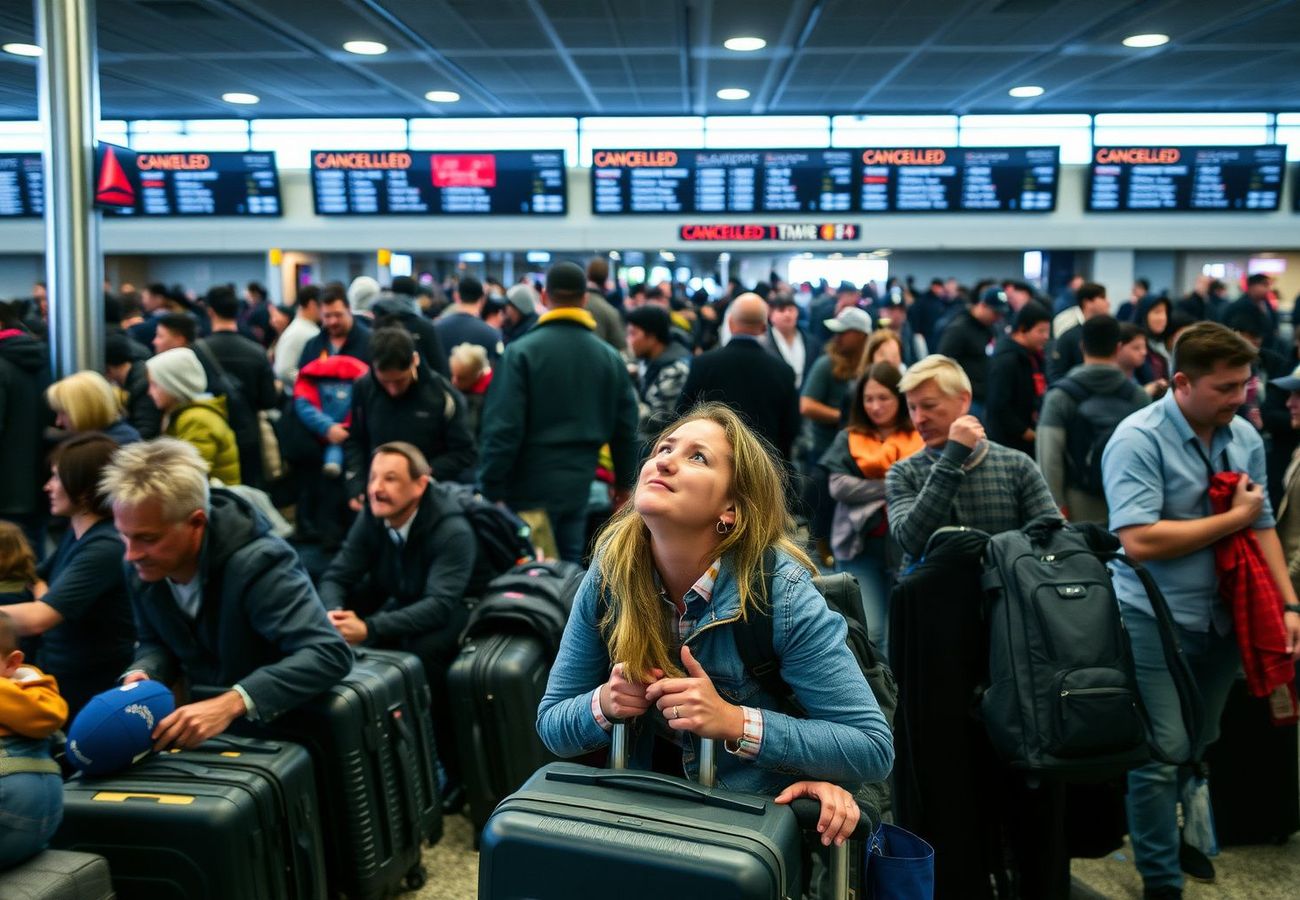
Image generated by AI
Travel Chaos Unfolds at Minneapolis/St Paul as Four Major Airlines Grind to a Halt
Minneapolis/St Paul International Airport descended into operational turmoil on June 5, 2026, with 69 flight delays and 6 cancellations snarling passenger connections across the United States, Canada, and Europe. The disruption rippled through networks operated by SkyWest, Delta Air Lines, United Airlines, and Frontier, leaving thousands of travelers stranded and itineraries shattered.
This wasn't a weather event or a single mechanical failure. This was a perfect storm of operational constraints, staffing shortages, and air traffic congestion hitting one of America's busiest regional hubs simultaneously.
The Scale of the Meltdown
The numbers tell a damning story. SkyWest bore the heaviest immediate blow, logging 3 cancellations and 17 delays representing 7% of its scheduled operations. Delta Air Lines, the airport's largest carrier, recorded 21 delays (5% of flights) while United Airlines suffered 10 delays affecting 27% of its MSP roster—the highest percentage impact among major carriers.
International carriers didn't escape unscathed. KLM reported 2 delays representing 100% of its scheduled flights to Amsterdam Schiphol, while Air France saw 50% of its Paris services delayed. These weren't isolated hiccups—they were network-wide breakdowns that cascaded through connecting airports globally.
Reddit: "I was supposed to connect through MSP to Amsterdam this morning. United told me my connection was gone before we even left the tarmac in Chicago. Still don't have a rebook." — r/travel
Domestic and International Destinations Under Siege
The disruption's geographic footprint was staggering. Major domestic hubs including Denver International (3 delays), Hartsfield-Jackson Atlanta (2), and Chicago O'Hare (3) reported cascading effects. But the real pain hit smaller regional airports, where operational issues created catastrophic delays.
William P Hobby (Houston), Marquette/Sawyer (Michigan), and Tulsa International all experienced 100% flight delays—meaning every single scheduled departure faced disruption. These aren't major hubs; they're regional lifelines where even a handful of flights represents significant passenger impact.
Transatlantic passengers faced even grimmer scenarios. Flights to London Heathrow and Paris Charles de Gaulle recorded complete delays for affected services, while Toronto Pearson and Montreal-Trudeau experienced 16-50% disruption rates, affecting cross-border business and leisure travel.
Breaking Down the Airlines' Operational Crisis
Delta Air Lines dominated the delay count with 21 total delays, but United Airlines faced the steepest proportional hit at 27% of its MSP operations disrupted. For a carrier relying on hub connectivity, this represented a serious network failure.
SkyWest's 3 cancellations were particularly damaging, suggesting crew availability or aircraft maintenance issues beyond simple scheduling friction. Endeavor Air (operating as Delta Connection) added 2 more cancellations and 4 delays, compounding the Delta family's operational struggles.
Smaller carriers felt the pressure differently. KLM and Air France's 100% and 50% delay rates respectively stemmed from limited daily services; a single slot disruption eliminated entire daily frequencies to those destinations.
What's Actually Breaking Down at MSP?
Three primary culprits emerge from the operational data:
Air Traffic Control Congestion remains the likely primary driver. Major international hubs—Amsterdam, Paris, London—are capacity-constrained during peak summer travel. MSP's role as a connection point for Delta, Sun Country Airlines, and United creates vulnerability to upstream ATC delays that trigger cascading effects.
Staffing and Operational Issues explain SkyWest's cancellations and Endeavor Air's struggles. These regional carriers operate on tighter crew scheduling margins than majors. A single call-out or maintenance discovery can unravel entire schedules.
Weather-related capacity constraints at secondary airports (like Marquette and Tulsa) suggest local weather or ground handling issues limiting departure rates.
What Passengers Must Do Right Now
If you're stranded or delayed at MSP today, the airline playbook matters:
Check flight status obsessively. Use the MSP airport website and individual airline apps—don't rely on gate agents who may have stale information.
Contact your airline immediately for rebooking. Don't wait in the terminal hoping for a better flight—proactively negotiate alternative routings, particularly if you're on a cancelled flight.
Document everything. Take screenshots of delays, boarding pass timestamps, and any verbal communication. This matters for EU261 compensation claims on international flights.
Monitor your connections. If you're transiting through MSP, call your connecting airline to confirm they're holding the aircraft. A 90-minute connection is now dangerously tight.
Know your legal rights. International passengers on US-operated flights to EU airports may qualify for €250-€600 compensation under EU Regulation 261/2004 if delays exceeded 3 hours—regardless of the airline's stated cause.
The Broader Picture: Is This MSP-Specific or Systemic?
This disruption reflects broader aviation fragility entering peak summer season. Regional carriers like SkyWest and Endeavor Air operate with minimal scheduling slack—their networks are engineered for efficiency, not resilience. When operational issues hit, they cascade immediately.
Delta's 21 delays at its key Twin Cities hub suggest either upstream ATC congestion or aircraft availability issues upstream. United's 27% disruption rate indicates more localized crew or maintenance problems.
The international component—particularly KLM and Air France's complete service disruptions—points to transatlantic slot congestion as summer travel peaks. These carriers operate single daily frequencies or close to it; one disruption eliminates the day's service.
Staying Informed Moving Forward
SkyWest, Delta, and United passengers should monitor airline communications closely. June historically sees operational stress across North American networks as schools break and transatlantic travel surges. MSP's role as a connection hub amplifies this effect.
For European-bound passengers, understand that transatlantic flight delays often trigger compensation claims under EU261 regulations. Airlines can't escape compensation by blaming ATC congestion if the delay exceeds 3 hours—the passenger has rights regardless.
Keep alternative routings in mind. If you're delayed at MSP with a connection, ask about rerouting through Chicago O'Hare, Atlanta, or Denver—sometimes ground reroutes move faster than waiting for a delayed connecting flight.
When 69 flights break simultaneously, it's rarely one problem—it's a system under stress revealing its fragile edges.
Related Travel Guides
The Airbus A380's Stunning Resurrection: How 190 Superjumbos Became Airlines' Most Prized Asset
Spirit Fort Lauderdale Belize Flights Launch Budget Gateway to Cayo District
Disclaimer
This article is for informational and educational purposes only. It does not constitute legal, financial, or professional advice. While we strive to provide accurate and up-to-date information, travel policies, regulations, and conditions change rapidly. Always verify information with official sources before making travel decisions. Nomad Lawyer makes no representations about the accuracy, reliability, completeness, or suitability of the information provided. Readers should consult qualified professionals for advice specific to their circumstances. The views expressed in this article are those of the author and do not necessarily reflect the views of Nomad Lawyer.
Preeti Gunjan
Contributor & Community Manager
A passionate traveller and community builder. Preeti helps grow the Nomad Lawyer community, fostering engagement and bringing the reader experience to life.
Learn more about our team →