
Bypassing Travel Chaos: Massive FAA Staffing Crisis Triggers 3-Hour Delays at Las Vegas Harry Reid, Forcing Global Airlines into Severe Airport Disruptions: Airline News
As a severe FAA staffing shortage triggers massive travel chaos at Las Vegas Harry Reid International, major airlines face cascading flight cancellations and hours-long delays.

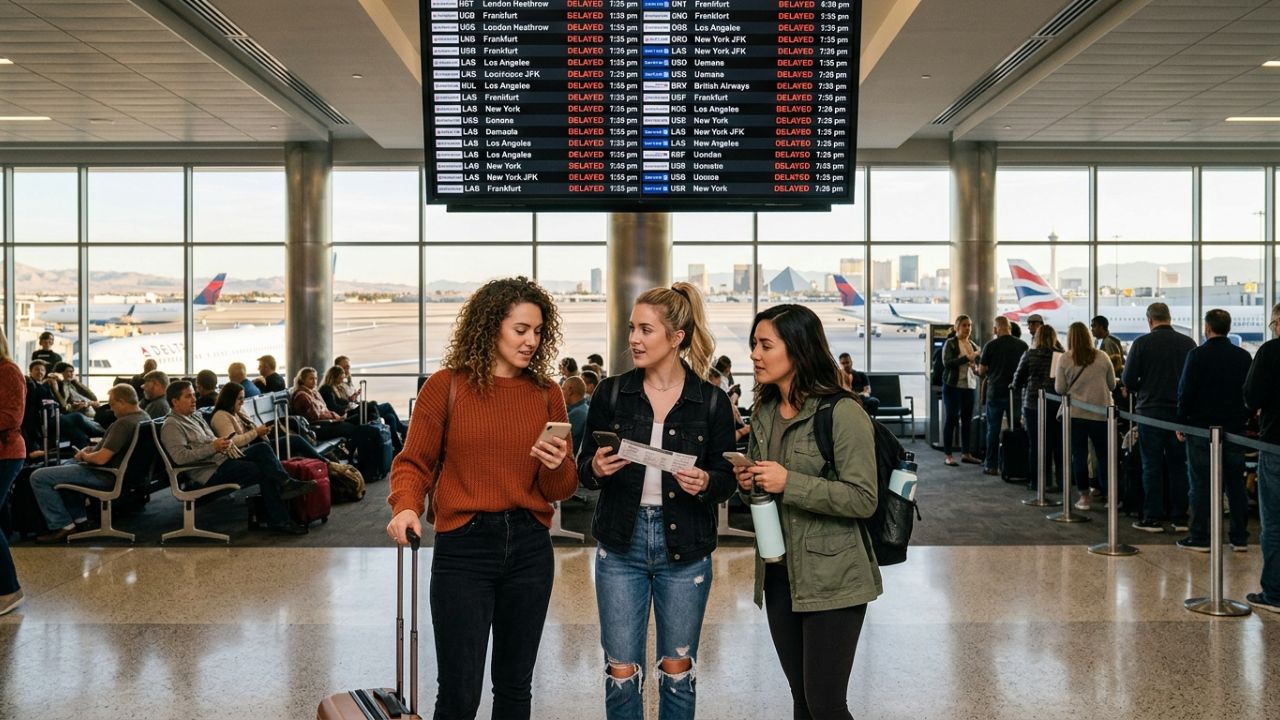
Image generated by AI
In a massive infrastructure collapse that is aggressively spreading systemic travel chaos across the entire North American and European aviation network, Las Vegas Harry Reid International Airport has suffered a catastrophic operational meltdown. Reported on June 20, 2026, as exhausted passengers frantically monitor the latest airline news for an escape from rolling flight cancellations, a severe shortage of FAA air traffic controllers has forced the airport into a critical traffic management program. This massive staffing deficiency has immediately triggered cascading airport disruptions, severely impacting Southwest, American, Delta, United, British Airways, and Air France. With live tracking data confirming peak delays of up to three hours and dozens of grounded flights, this crisis exposes the terrifying fragility of the US airspace system, cementing the Las Vegas gridlock as today's most crucial headline in breaking aviation updates.
By introducing direct passenger coordination and dynamic scheduling backups, the regional aviation hubs target growing passenger demand across vital commerce sectors. The choice to coordinate flight departures in phases helps to manage gate capacity, supporting the country's broader regional transportation network.
Context: The Reality of FAA Staffing Chaos
For the massive volume of international and domestic tourists attempting to access the Las Vegas entertainment sectors, surviving the US air traffic control system is now the absolute ultimate tactical challenge.
Following the massive travel resurgence after the COVID-19 pandemic, Harry Reid International Airport surged to become one of the busiest destinations in the United States, recording over 58 million arriving passengers in 2024. However, the Federal Aviation Administration (FAA) has utterly failed to staff its control towers to match this massive demand. To maintain safety amidst this severe controller shortage, the FAA was forced to implement drastic "spacing" protocols, artificially slowing the rate at which aircraft can land or depart. This functional limitation instantly paralyzed the network. Passengers flying in from domestic hubs like Cleveland, St. Louis, and Oakland suddenly found themselves trapped in holding patterns or stranded on the tarmac for hours. The backlog immediately shattered airline scheduling, resulting in massive systemic delays averaging over an hour, with peak disruptions shattering the two-to-three-hour mark.
To view live flight schedules, verify the active severity of the FAA ground stops, or to track potential route restorations prior to heading to the airport, travelers must consult official aviation directories. For direct updates regarding how this massive capacity crisis might trigger flight cancellations for your specific airline, travelers should aggressively utilize the official digital portals of their respective carriers. To explore live flight tracking and monitor the exact severity of the cascading bottlenecks paralyzing alternative domestic airspace—including related crises in Boston, Nashville, and Chicago—passengers can consult the official FlightAware tracking service.
Section-Wise Breakdown: Global Airline Gridlock
Southwest and American: Domestic Network Failure
The FAA spacing program immediately crippled domestic operations. Southwest Airlines, which commands a massive presence in Las Vegas, experienced widespread, systemic delays that shattered several domestic flight schedules. Simultaneously, American Airlines faced severe disruptions that instantly broke critical east and west flight connections. Because Las Vegas acts as a major artery for both carriers, a delay here creates a massive ripple effect, stranding passengers nationwide as aircraft fail to return to their primary hubs on time.
Delta and United: System-Wide Contagion
The crisis quickly infected the massive global networks of Delta Air Lines and United Airlines. Delta reported compounding delays across multiple domestic and international connections. United Airlines suffered disruptions that rippled back to multiple hubs system-wide. When air traffic controllers are spread this thin, airlines are completely incapable of maintaining their operational tempo, forcing massive re-ticketing efforts as passengers inevitably miss their connecting flights.
British Airways and Air France: The Transatlantic Collapse
The domestic FAA failure rapidly metastasized into an international travel disaster. British Airways was forced to delay multiple UK route flights, severely disrupting London connections. Similarly, Air France faced cascading delays for multiple international flight connections linking Las Vegas to Paris and other French cities. Because long-haul international flights operate on razor-thin turnaround margins, a three-hour delay on the Las Vegas tarmac guarantees massive financial losses and logistical nightmares for foreign carriers.
Technical Roster: Official Airport Disruption Matrix
To ensure absolute factual accuracy regarding the exact operational delays, flight cancellations, and specific passenger volume metrics defining this massive infrastructure failure, the following matrix details the strictly verified aviation data:
Official Las Vegas Airport Disruption & Passenger Flow Matrix
| Operational Metric / Passenger Flow | Verified Aviation Data |
|---|---|
| Primary Disruption Cause | Severe FAA air traffic controller staffing shortage |
| Peak Live Tracking Data | ~176 delays and ~18 flight cancellations |
| Average Delay Duration | Over 1 hour on average |
| Peak Delay Duration | 2 to 3 hours |
| Total 2024 Airport Volume | Over 58 million arriving passengers |
| Toronto, Canada Flow | ~507,000 annual passengers |
| London, UK Flow | ~370,000 annual passengers |
| Mexico City, Mexico Flow | ~350,000 annual passengers |
| Vancouver & Calgary Flow | ~345,000+ annual passengers each |
| Frankfurt, Germany Flow | ~101,000 annual passengers |
Data accurately reflects the verified flight tracking disruptions and the specific international passenger volume metrics tracking the Las Vegas FAA crisis as of June 2026.
Industry Analysis: The International Ripple Effect
Aviation analysts monitoring the intensely competitive US airspace note that the Las Vegas meltdown is a terrifying indicator of a much broader, systemic national failure.
Analysts emphasize that Las Vegas is heavily dependent on massive international passenger flows from Canada (Toronto, Montréal, Calgary, Vancouver) and Mexico (Mexico City, Guadalajara). When the FAA limits airport capacity, these high-volume international routes are instantly disrupted. Delaying a flight from London or Toronto doesn't just inconvenience tourists; it shatters the heavily optimized global travel market connectivity. As the FAA struggles with an insufficient workforce, they are forced to extend traffic management programs nationwide. The disruptions seen in Las Vegas are already bleeding into major US hubs like Boston, Nashville, and Chicago. Until the government can aggressively recruit and train new controllers, the entire US air travel system will remain pushed to the absolute breaking point.
Actionable Advice for Stranded Travelers
Because this massive FAA staffing shortage fundamentally alters the reliability of US air travel, passengers navigating Las Vegas must execute this strategic survival checklist immediately:
- Exploit Airline Applications: Before you travel, you must relentlessly check the actual flight status using your airline or airport app. Do not rely on terminal display boards, which often lag behind live data. Set up push notifications for SMS and email to receive instantaneous alerts regarding flight changes.
- Master the Rebooking Protocol: If you are trapped at Harry Reid and your flight is delayed by three hours or canceled, immediately call the airline’s customer service hotline while simultaneously standing in the physical rebooking line. Aggressively demand to be rebooked without fee penalties, leveraging the fact that the delay is a systemic, nationwide issue.
- Buffer Your Connections: Never book tight layovers through Las Vegas. You must plan travel with exceptionally wide gaps (minimum 3–4 hours) to prevent missing your connecting flights. Furthermore, always pack critical items, medications, and a change of clothes in your carry-on luggage, as these disruptions frequently force unexpected, overnight hotel stays.
FAQ: Las Vegas Airport FAA Travel Chaos
What is the exact cause of the Las Vegas flight delays?
The massive disruptions are caused by a severe FAA air traffic controller staffing shortage, forcing authorities to artificially space out arriving and departing flights for safety.
Which specific airlines are heavily impacted by this crisis?
The gridlock has triggered massive delays and flight cancellations across Southwest Airlines, American Airlines, Delta Air Lines, United Airlines, British Airways, and Air France.
How bad are the delays for international travelers?
Live tracking confirmed peak delays of 2 to 3 hours, directly breaking international connection flows for massive markets including Canada, the UK, Mexico, and France.
The Reality of Infrastructure Defense
The catastrophic FAA staffing failure at Las Vegas Harry Reid proves definitively that the US air travel network is highly vulnerable to systemic, unrecoverable travel chaos. By failing to staff critical control towers, the government has successfully guaranteed that both domestic airlines and international carriers will face massive, cascading flight cancellations. Yet, as travelers frantically call customer service from the crowded Las Vegas tarmac, they must accept a critical new reality: surviving the massive disruptions of modern aviation demands extreme personal preparedness. Navigating the failing US airspace requires a complete refusal to book vulnerable, tight layovers, and the tactical discipline to constantly monitor live flight tracking data to outmaneuver the inevitable airport disruptions.
Key Takeaways
- Massive FAA Failure: A severe shortage of air traffic controllers has forced drastic traffic management programs, crippling Las Vegas Harry Reid International.
- Three-Hour Delays: Live tracking data recorded ~176 delays and ~18 cancellations, with peak delay times reaching an agonizing 2 to 3 hours.
- Global Contagion: The domestic crisis instantly broke international routes for British Airways, Air France, and vital connections to Canada and Mexico.
- Systemic Airline Gridlock: Southwest, American, Delta, and United all suffered severe schedule breakdowns that rippled across their nationwide networks.
- National Spread: The staffing crisis is not isolated; experts warn that flight limits and massive disruptions will soon paralyze Boston, Nashville, and Chicago.
Related Travel Guides
Massive Travel Chaos Paralyzes Chicago O'Hare with 1,425 Disruptions
Disclaimer
This article is for informational and educational purposes only. It does not constitute legal, financial, or professional advice. While we strive to provide accurate and up-to-date information, travel policies, regulations, and conditions change rapidly. Always verify information with official sources before making travel decisions. Nomad Lawyer makes no representations about the accuracy, reliability, completeness, or suitability of the information provided. Readers should consult qualified professionals for advice specific to their circumstances. The views expressed in this article are those of the author and do not necessarily reflect the views of Nomad Lawyer.
Kunal K Choudhary
Co-Founder & Contributor
A passionate traveller and tech enthusiast. Kunal contributes to the vision and growth of Nomad Lawyer, bringing fresh perspectives and driving the community forward.
Learn more about our team →