
US Embassy Issues Urgent Travel Warning for Nepal's Rasuwa District After Deadly Bhote Koshi Floods 2026
The US Embassy in Nepal advises against nonessential travel to Rasuwa and downstream corridors following a catastrophic flash flood on August 26 that destroyed critical infrastructure and caused heavy loss of life.
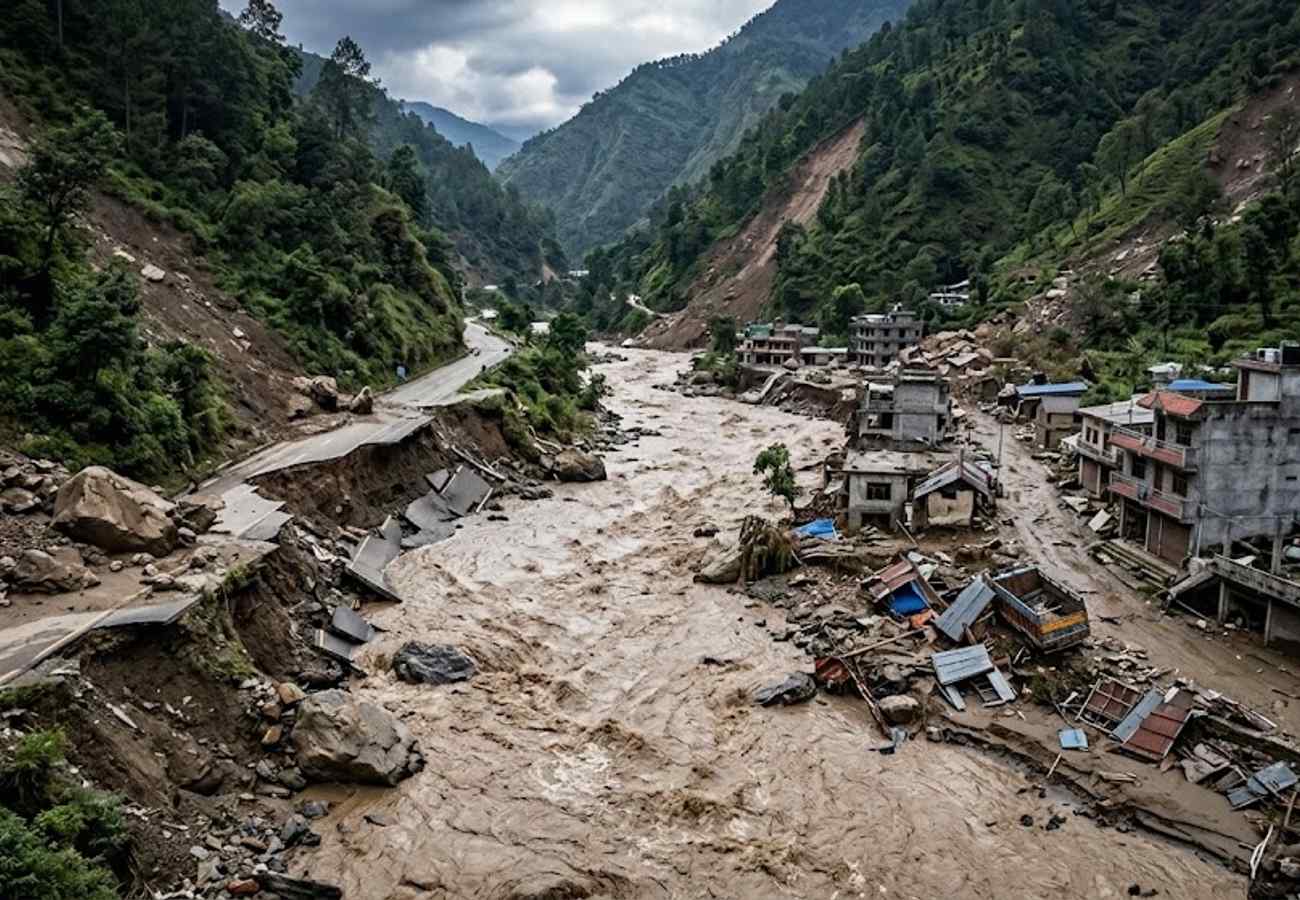
Image generated by AI
A catastrophic flash flood on August 26 has transformed Nepal’s Rasuwa district into a disaster zone, prompting the US Embassy to advise citizens against all nonessential travel to the region.
The disaster struck the Bhote Koshi and Trishuli river systems, resulting in extensive loss of life, mass displacement, and the total collapse of key overland transport arteries.
Catastrophic Surge Devastates Bhote Koshi Corridor
On August 26, a sudden and violent surge of water tore through the Bhote Koshi River, impacting the mountainous Rasuwa district bordering Tibet. The flood's trajectory caused systemic failure of infrastructure from high-altitude border settlements down to Syafrubesi and the broader Trishuli River basin.
Reports from the ground indicate that riverside neighborhoods and commercial hubs in Timure and Syafrubesi were largely washed away. The force of the water was sufficient to sweep away concrete buildings, vehicles, and entire markets, scattering debris far downstream.
The scale of the event was exacerbated by the failure of early warning systems. Automatic monitoring stations in the upper Bhote Koshi basin were reportedly overwhelmed or destroyed by the wave, leaving downstream communities with little to no notice before the surge arrived.
Impact on Human Life and Regional Infrastructure
The human cost remains high, with national and district sources reporting a rising death toll and hundreds of individuals still missing. The devastation extends beyond Rasuwa, affecting several downstream districts linked by the Trishuli river system, including:
- Nuwakot
- Dhading
- Gorkha
- Chitwan
Regional disaster agencies describe this as one of the most severe flash floods in Nepal's recent history. The event mirrored previous transboundary disasters where high-Himalayan catchments release massive volumes of water and debris into narrow valleys, creating a "wall of water" effect that obliterates everything in its path.
US Embassy Security Alert and Route Closures
The United States Embassy in Kathmandu has issued a formal security alert urging Americans to defer nonessential travel to affected districts. The embassy emphasizes that emergency response capacity in remote valleys is currently limited.
Travelers should be aware that several critical road segments are currently impassable due to washouts and landslides. Specifically, the following routes are experiencing severe disruptions:
- Galchhi–Nuwakot–Rasuwa–Syafrubesi route
- Connecting highways toward Muglin and Narayanghat
Foreign nationals already in the region are advised to seek higher ground immediately, maintain constant contact with their tour operators, and strictly follow the directives of local administrations.
Analyzing the Trigger: Glacial Lake Outbursts (GLOF)
While official investigations are ongoing, technical briefings suggest the flood was not caused by local rainfall within Nepal. Instead, evidence points to a high-altitude event on the Tibetan side of the watershed.
Experts are analyzing three primary potential triggers:
- Glacial Lake Outburst Flood (GLOF): The sudden drainage of a high-elevation glacial lake.
- Ice-Rock Avalanche: A massive collapse of glacial ice and rock blocking a tributary.
- Landslide-Generated Dam: A temporary blockage of the Lhende or Bhote Koshi rivers that subsequently failed.
Scientific organizations note that several unstable glacial lakes exist 40 to 50 kilometers upstream of the border. These hazards are increasingly common as climate change drives glacier retreat and permafrost degradation, making the river corridors below these catchments inherently more dangerous.
Disruptions to Tourism and Cross-Border Trade
The Rasuwa corridor serves as a vital economic and touristic artery. It is the primary gateway for trade with Tibet and the main access point for Langtang National Park and various pilgrimage circuits.
The flood has caused critical failures in:
- Border Infrastructure: Severe damage to the Rasuwagadhi border crossing and customs warehousing.
- Energy Sector: Hydropower projects along the Bhote Koshi and Trishuli systems have suffered inundated tunnels and destroyed intake structures.
- Tourism Logistics: Trekking itineraries relying on Syafrubesi and Timure are currently unfeasible.
Essential Safety Guidance for Travelers
For those currently in Nepal or planning a trip to the mountain regions, the following precautions are recommended:
- Route Flexibility: Avoid all major flood corridors and confirm ground conditions with reputable agencies immediately before departure.
- Communication: Register your presence with your embassy and ensure family members have your detailed itinerary.
- Logistics: Carry extra supplies and prepare for significant road delays, as rural lodges may be occupied by displaced residents or emergency personnel.
- Monitoring: Use a combination of diplomatic travel pages and local news platforms to track road reopenings.
Regional Impact Summary
| Affected Area | Primary Impact | Status |
|---|---|---|
| Rasuwa District | Total infrastructure collapse, loss of life | High Danger / Avoid |
| Syafrubesi & Timure | Market towns washed away, road washouts | Inaccessible |
| Rasuwagadhi Border | Customs and warehousing destroyed | Severely Disrupted |
| Bhote Koshi / Trishuli | Hydropower damage, riverbank instability | Hazardous |
| Nuwakot, Dhading, Gorkha | Downstream flooding, displacement | Caution Advised |
Key Takeaways
- Event Date: August 26, 2026.
- Primary Cause: Likely a high-altitude glacial or landslide event in Tibet.
- Critical Warning: US Embassy advises against nonessential travel to Rasuwa and downstream river corridors.
- Infrastructure: Major roads to Syafrubesi and the Rasuwagadhi border are severely damaged.
- Long-term Risk: Climate-driven glacial instability increases the likelihood of future GLOF events.
FAQ
Can I still trek in the Langtang region? Current embassy guidance suggests prolonged transport disruptions and limited emergency capacity. It is highly recommended to postpone trips requiring access through Syafrubesi.
Which roads are most affected? The Galchhi–Nuwakot–Rasuwa–Syafrubesi route and highways leading toward Muglin and Narayanghat are experiencing the most significant closures and landslides.
Was this caused by monsoon rains? While the monsoon season increases general risk, technical analysis suggests this specific event was triggered by a high-altitude process (such as a glacial lake outburst) on the Tibetan side of the border.
Travelers are urged to treat the entire Bhote Koshi and Trishuli corridor as hazardous until formal safety assessments are released.
Related Travel Guides
Disclaimer
This article is for informational and educational purposes only. It does not constitute legal, financial, or professional advice. While we strive to provide accurate and up-to-date information, travel policies, regulations, and conditions change rapidly. Always verify information with official sources before making travel decisions. Nomad Lawyer makes no representations about the accuracy, reliability, completeness, or suitability of the information provided. Readers should consult qualified professionals for advice specific to their circumstances. The views expressed in this article are those of the author and do not necessarily reflect the views of Nomad Lawyer.