
US Aviation Chaos 2026: 4,265 Flight Delays and 189 Cancellations Hit Boston, Chicago, and Dallas
Severe weather and traffic management initiatives triggered 4,265 delays and 189 cancellations across major US hubs, with Boston Logan and Southwest Airlines among the hardest hit.

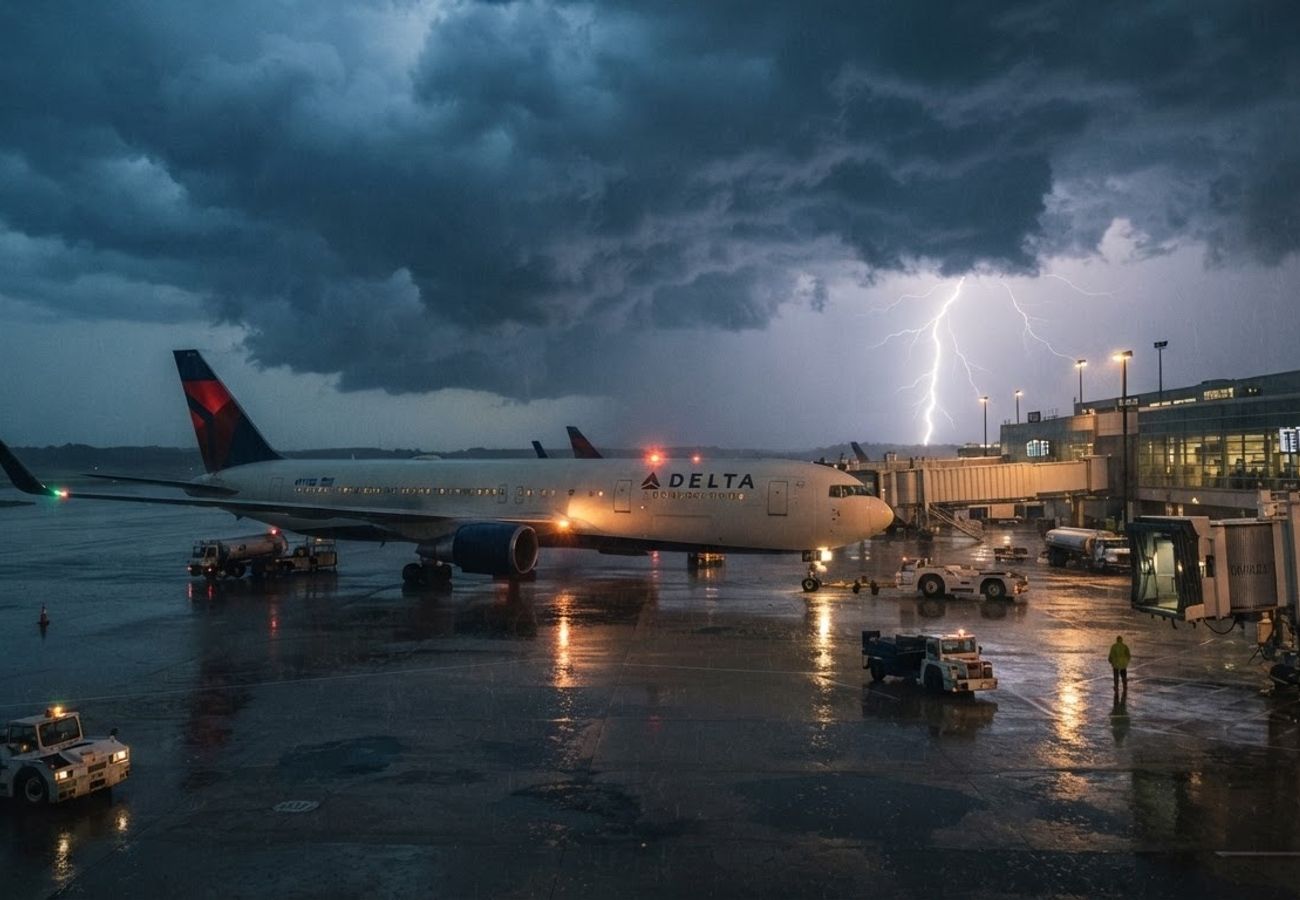
Image generated by AI
Widespread operational failures across the United States have resulted in 4,265 flight delays and 189 cancellations, leaving thousands of passengers stranded or diverted. The disruption, centered heavily in the Northeast and Midwest, has crippled schedules at ten major hubs and severely impacted the operations of five primary carriers.
The current aviation crisis is a result of a compounding set of issues, primarily driven by severe weather systems and subsequent Federal Aviation Administration (FAA) traffic-management initiatives. As thunderstorms swept through key corridors, airports were forced to implement metering and spacing protocols, creating a ripple effect that extended from the East Coast to the Pacific Northwest.
Severe Weather Triggers Chaos at Boston Logan and New York Hubs
Boston Logan International Airport has emerged as the epicenter of the current disruption. The hub is currently grappling with 501 delays and 70 cancellations, the highest figures recorded among all monitored US airports. Severe thunderstorms have forced a slowdown in departure operations, with average delays hovering around 30 minutes. While reports indicate the delay trend is beginning to decrease, the backlog remains significant.
In New York, John F. Kennedy International (JFK) is facing intense pressure, recording 413 delays and five cancellations. Because JFK serves as a primary gateway for international and domestic connections in the Northeast, these delays are creating secondary disruptions for passengers attempting to reach other parts of the country.
Major Connecting Hubs Face Mounting Backlogs in Dallas and Chicago
The disruption extends deep into the heart of the US aviation network, where major connecting hubs are struggling to maintain schedules. Dallas-Fort Worth (DFW), one of the world's busiest airports, has reported 363 delays and four cancellations. Given DFW's role as a massive transit point, these delays are affecting passengers who may not even have Texas as their final destination.
Similarly, Chicago O’Hare has recorded 237 delays and seven cancellations. As a critical domestic link between the East and West Coasts, O'Hare's operational struggles are contributing to the national instability of flight schedules.
Traffic Management Constraints at Reagan National and Newark Liberty
Beyond weather, technical traffic-management initiatives are slowing down the flow of aircraft in the Mid-Atlantic region. Reagan National has seen 172 delays and 25 cancellations, making it a high-risk point for those traveling into the nation's capital.
Newark Liberty is experiencing a similar trend, with 142 delays and six cancellations. Officials report that average departure delays are currently 15 minutes and increasing, citing specific metering protocols and traffic-management initiatives linked to DCA (Reagan National) airspace. Orlando International is mirroring this trend with 164 delays and three cancellations, where 15-minute average delays are also on the rise due to weather-related traffic controls.
Operational Impact Across West Coast and Regional Hubs
The disruption is not confined to the East. Seattle-Tacoma has recorded 104 delays and seven cancellations, signaling that the operational ripple effect has reached the West Coast. In the South, Nashville has reported 94 delays and five cancellations, while Washington Dulles has contributed to the tally with 77 delays and three cancellations.
The following table provides a detailed breakdown of the impact across the most affected airports:
| Airport Name | Delays | Cancellations | Primary Cause |
|---|---|---|---|
| Boston Logan | 501 | 70 | Thunderstorms |
| John F. Kennedy | 413 | 5 | Regional Disruption |
| Dallas-Fort Worth | 363 | 4 | Connecting Hub Backlog |
| Chicago O'Hare | 237 | 7 | Domestic Transit Issues |
| Reagan National | 172 | 25 | Traffic Management |
| Orlando International | 164 | 3 | Weather/Metering |
| Newark Liberty | 142 | 6 | Metering/DCA Initiatives |
| Seattle-Tacoma | 104 | 7 | West Coast Ripple Effect |
| Nashville | 94 | 5 | Schedule Changes |
| Washington Dulles | 77 | 3 | General Disruption |
Airline Performance and Disruption Statistics
While several carriers are feeling the strain, a few specific airlines are bearing the brunt of the operational failures. American Airlines currently holds the highest number of delays in the country, with 663 recorded delays and nine cancellations.
Southwest Airlines, however, is facing the most severe cancellation crisis, recording 26 cancellations—the highest count among all US carriers—alongside 659 delays.
Other major carriers are also reporting significant figures:
- Delta Air Lines: 387 delays and 11 cancellations.
- United: 380 delays and 17 cancellations.
- Republic: 186 delays and 10 cancellations.
Additional disruptions have been noted across JetBlue, Alaska Airlines, Hawaiian Airlines, and Spirit Airlines, though their figures are lower than the primary five.
Why This Matters: The Traveler's Legal and Logistical Reality
For the modern traveler, these statistics represent more than just numbers; they represent a breakdown in the "contract of carriage." When 4,265 delays occur simultaneously, the ability of an airline to provide timely rebooking vanishes.
From a logistical standpoint, the high cancellation rate at Southwest and the extreme delay volume at American Airlines suggest that passengers should not rely on airport ticket counters, which are likely overwhelmed. Instead, utilizing mobile apps for self-service rebooking is the only viable path to avoiding hours-long queues.
Furthermore, the concentration of delays at connecting hubs like DFW and O'Hare creates a "compounding delay" effect. A 30-minute delay in Boston can easily become a missed connection in Dallas, which then results in a 24-hour overnight stay. Travelers are strongly advised to verify the status of their connecting legs before accepting any rebooking offer from an airline agent.
Passengers are urged to monitor real-time flight tracking data and maintain digital copies of all receipts for potential compensation claims.
Related Travel Guides
Disclaimer
This article is for informational and educational purposes only. It does not constitute legal, financial, or professional advice. While we strive to provide accurate and up-to-date information, travel policies, regulations, and conditions change rapidly. Always verify information with official sources before making travel decisions. Nomad Lawyer makes no representations about the accuracy, reliability, completeness, or suitability of the information provided. Readers should consult qualified professionals for advice specific to their circumstances. The views expressed in this article are those of the author and do not necessarily reflect the views of Nomad Lawyer.
Raushan Kumar
Founder & Lead Developer
Full-stack developer with 11+ years of experience and a passionate traveller. Raushan built Nomad Lawyer from the ground up with a vision to create the best travel and law experience on the web.
Learn more about our team →