
US Airports Deploy Massive AI Security Fortresses to Defeat Travel Chaos, Leaving Europe and Asia Behind
Breaking airline news: United States airports are aggressively deploying advanced biometric AI and autonomous ground vehicles to completely eliminate the threat of severe travel chaos and airport disruptions.

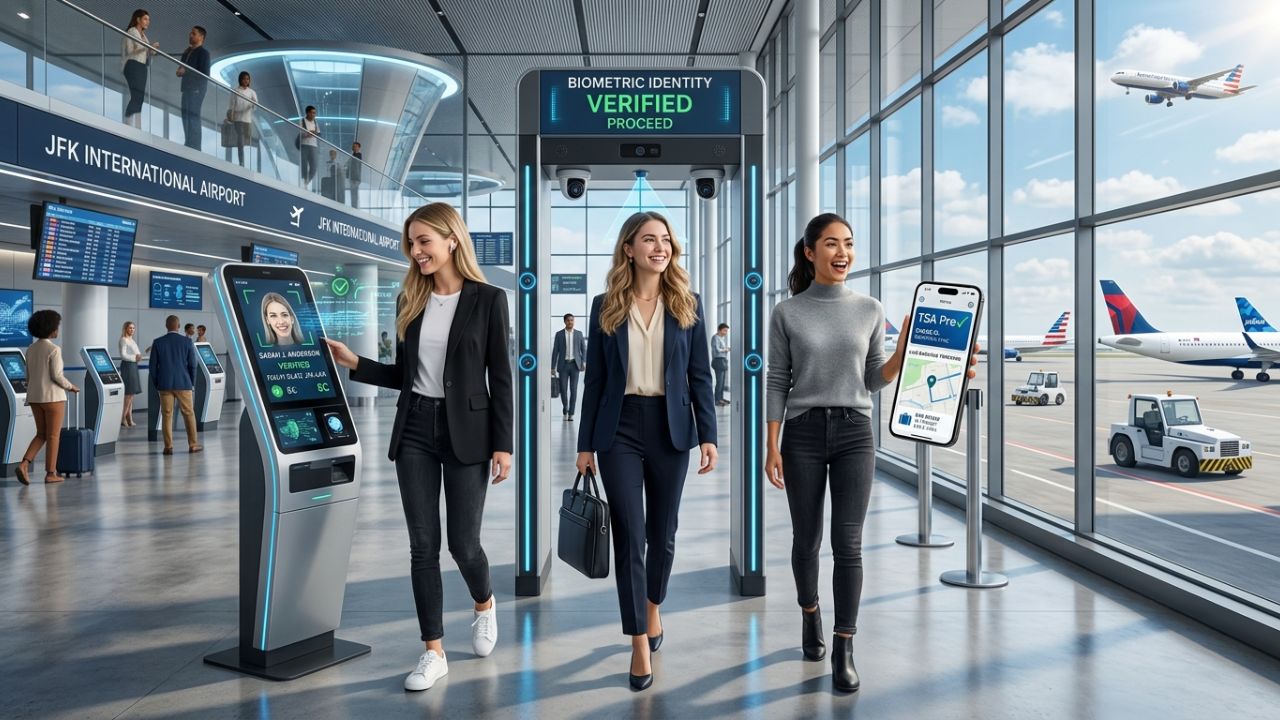
Image representing the massive technological transformation of US airports into AI security fortresses, utilizing biometrics and robotics to eliminate the massive travel chaos currently plaguing legacy European and Asian hubs.
US Airports Deploy Massive AI Security Fortresses to Defeat Travel Chaos, Leaving Europe and Asia Behind
Engineering the Ultimate Defense Against Aviation Bottlenecks
While legacy hubs across Europe and Asia continually succumb to paralyzing operational breakdowns, the United States is aggressively rewriting the rules of modern aviation infrastructure. According to the latest breaking airline news, major American airports are rapidly transforming into highly automated AI security fortresses. Driven by the coordinated efforts of the Transportation Security Administration (TSA), the Federal Aviation Administration (FAA), and the Department of Homeland Security (DHS), massive transit hubs including New York, Los Angeles, and Seattle are actively eradicating the terminal bottlenecks that historically trigger severe travel chaos. By replacing outdated, manual processing with advanced biometric recognition systems and intelligent robotics, the United States is forcefully positioning itself as the undisputed global leader in seamless, disruption-free border processing, leaving rival international aviation markets struggling in its wake.
The traditional airport experience—defined by agonizing document checks, massive security queues, and high friction—is dead. Instead, the US is engineering an environment where identity verification happens invisibly. For the millions of international tourists and domestic business travelers moving through American gateways, this technological leap is not a mere convenience; it is a critical defense mechanism. By drastically accelerating passenger and baggage processing times, these AI systems actively prevent the localized airport disruptions that rapidly cascade into massive, network-wide flight cancellations.
The Scale of the AI Transformation
According to recent aviation updates, the integration of digital travel credentials and predictive AI is completely reshaping terminal velocity. Travelers can now store verified identity documents digitally, allowing AI systems to authenticate them continuously throughout their journey. Once registered, passengers move through check-in, security, and boarding using only facial recognition.
This radically reduces dependence on paper documents and manual inspections. During the brutal peak tourism seasons—when human processing limits are rapidly breached and massive travel chaos becomes inevitable at foreign hubs—the American model utilizes touchless identity lanes to maintain a constant, high-speed passenger flow. This frictionless movement heavily mitigates the risk of missed connections and ensures that inbound tourists experience a highly predictable, stable transit environment.
Section-Wise Breakdown: The Automated Fortress
The US defense against aviation failure is being fought on three massive technological fronts:
The Biometric Terminal Defense Major airlines are directly integrating with this federal infrastructure to eliminate check-in friction. Alaska Airlines has pioneered the introduction of walk-up facial recognition kiosks in massive hubs like Seattle. By linking passenger identity directly to flight bookings via facial scans, physical boarding passes and repeated document checks are entirely eliminated. The TSA has aggressively expanded touchless identity lanes, where facial recognition instantly matches travelers against encrypted government databases. This reduces processing times to mere seconds, obliterating the agonizing security queues that traditionally plague massive international hubs.
Eradicating Baggage Disruption Historically, lost luggage has been one of the primary drivers of severe international tourism dissatisfaction and localized airport disruptions. The US has deployed a revolutionary AI-powered tracking network to solve this. Systems now create unique digital fingerprints for every single suitcase based on physical characteristics. Even if traditional paper tags are torn or destroyed, the AI instantly identifies and routes the bag correctly across incredibly complex airport networks. High-traffic mega-hubs like Chicago O’Hare and Atlanta are already utilizing this technology to ensure luggage arrives on the carousel almost simultaneously with the passenger.
Autonomous Ground Operations The most aggressive technological shift is occurring on the airside tarmac. To combat the severe ground delays that frequently trigger massive flight cancellations, US airports are deploying autonomous ground vehicles. Robotic baggage loaders and smart tarmac vehicles equipped with advanced computer vision now independently navigate aircraft parking zones and loading areas. By automating these highly labor-intensive tasks, airports drastically reduce aircraft turnaround times, ensuring that flights depart and arrive with absolute, machinelike precision.
Operational Infrastructure Details: The AI Deployment Matrix
To provide exact, factual clarity on the immense scope of this technological rollout, industry analysts track the specific systems currently defending US airspace. The following factual matrix details the precise breakdown of the AI security and operational upgrades:
Factual US Airport AI Infrastructure Deployment Matrix
| Technology Deployed | Primary Function | Key Hubs / Operators Involved | Strategic Impact |
|---|---|---|---|
| Walk-Up Facial Recognition | Replaces boarding passes and manual check-in | Seattle (Alaska Airlines) | Eliminates terminal queuing friction |
| Touchless Identity Lanes | Encrypted facial recognition for checkpoint clearing | Nationwide (TSA / DHS) | Accelerates peak-season security processing |
| AI Digital Baggage Fingerprinting | Identifies and routes bags without traditional tags | Chicago O’Hare, Atlanta | Reduces lost luggage and baggage delays |
| Autonomous Ground Vehicles | Robotic loaders and smart tarmac navigation | Major US Hubs | Accelerates aircraft turnaround times |
| Digital Travel Credentials | Stores verified identity documents for invisible authentication | DHS Pilot Programs | Seamless border processing for international tourists |
| Predictive AI Management | Forecasts flight routing, baggage, and passenger flow | FAA / US Airport Authorities | Anticipates and neutralizes congestion |
Passenger Impact: Frictionless Transit vs. Privacy
For global tourists entering the United States, this technological fortress represents the ultimate upgrade in travel convenience. Airports are no longer stressful transit bottlenecks; they are highly intelligent environments designed for maximum speed and safety. International visitors now experience significantly fewer barriers, shorter ground delays, and highly predictable journeys.
However, tourism planners emphasize that this massive reliance on biometric data introduces highly complex privacy challenges. The absolute success of this AI fortress depends entirely on the government's ability to balance extreme operational speed with ironclad data protection. As facial recognition matches travelers against encrypted government databases, maintaining the security of those digital travel credentials is paramount to preserving passenger trust in the US aviation system.
Industry Analysis: Neutralizing the Threat of Delays
Beyond the immediate passenger experience, AI is fundamentally altering backend airport operations. Predictive systems now actively assist in flight routing, baggage forecasting, and passenger flow management. This is a critical defense tactic. By allowing airlines and airport authorities to anticipate congestion before it materializes, they can dynamically adjust resources—effectively neutralizing the threat of severe airport disruptions before they happen. In an era where a single delayed flight can cascade into thousands of global flight cancellations, this predictive capability grants US airports an untouchable competitive advantage over their legacy counterparts in Europe and Asia.
Conclusion: The Blueprint for Future Aviation
The rapid transformation of US airports into AI-powered security fortresses has permanently altered the global aviation hierarchy. Driven by the FAA, TSA, and DHS, mega-hubs in New York, Los Angeles, Seattle, Atlanta, and Chicago are utilizing biometric identity lanes, digital baggage fingerprints, and autonomous tarmac robotics to achieve unprecedented operational velocity. While legacy airports abroad continue to battle crippling travel chaos and massive terminal congestion, the United States has successfully engineered a frictionless, highly automated environment. By eliminating the manual bottlenecks that traditionally trigger massive flight cancellations and severe airport disruptions, America has established itself as the undisputed benchmark for smart tourism infrastructure in the 21st century.
Key Takeaways
- Biometric Dominance: Facial recognition and touchless identity lanes (led by the TSA and DHS) are replacing physical IDs and boarding passes.
- Defeating Travel Chaos: By anticipating congestion, predictive AI actively prevents the severe airport disruptions that paralyze legacy hubs.
- Baggage Revolution: Chicago O’Hare and Atlanta use AI digital fingerprints to route luggage without traditional tags, eliminating lost baggage.
- Robotic Airside Operations: Autonomous ground vehicles and robotic baggage loaders drastically reduce aircraft turnaround times across major hubs.
- Airline Integration: Carriers like Alaska Airlines are deploying walk-up facial recognition kiosks (notably in Seattle) to create a totally frictionless check-in experience.
🌍 Related Travel Guides & Flight Resources
- Navigate Airport Disruptions Like a Pro Master the art of surviving unexpected travel chaos with our expert strategies.
- Breaking Airline News & Evasion Routes Stay ahead of the delays with our real-time aviation updates and route intelligence.
- Global Flight Cancellation Defense Grid Essential legal rights and compensation tactics when your flight goes down.
⚖️ Disclaimer
The aviation technology statistics, biometric deployment parameters, and federal agency programs provided in this report are for informational purposes only. Airport security protocols, facial recognition implementations, and autonomous vehicle operations are highly dynamic and subject to immediate change based on TSA/DHS security directives, FAA regulations, and sudden technological shifts. All data regarding the AI systems utilized at major US hubs (New York, Los Angeles, Seattle, Chicago O'Hare, Atlanta) and by specific carriers (Alaska Airlines) has been officially sourced from industry analyses as of June 2026, and remains completely fluid. NomadLawyer does not guarantee the absolute accuracy or current validity of the information provided and assumes no liability for travel disruptions, sudden flight cancellations, privacy policy alterations, altered itineraries, or any financial consequences resulting from the use of this content. Passengers are strongly advised to independently review all biometric data policies and security requirements prior to traveling through US airports.
Disclaimer
This article is for informational and educational purposes only. It does not constitute legal, financial, or professional advice. While we strive to provide accurate and up-to-date information, travel policies, regulations, and conditions change rapidly. Always verify information with official sources before making travel decisions. Nomad Lawyer makes no representations about the accuracy, reliability, completeness, or suitability of the information provided. Readers should consult qualified professionals for advice specific to their circumstances. The views expressed in this article are those of the author and do not necessarily reflect the views of Nomad Lawyer.
Kunal K Choudhary
Co-Founder & Contributor
A passionate traveller and tech enthusiast. Kunal contributes to the vision and growth of Nomad Lawyer, bringing fresh perspectives and driving the community forward.
Learn more about our team →