
JFK, LAX, and O'Hare Face Total International Shutdown as DHS Threatens U.S. Airport Customs Changes, Triggering Massive Travel Chaos: Latest Airline News
A proposed DHS mandate threatens to completely withdraw CBP officers from 10 major U.S. airports, potentially triggering catastrophic flight cancellations and global travel chaos.

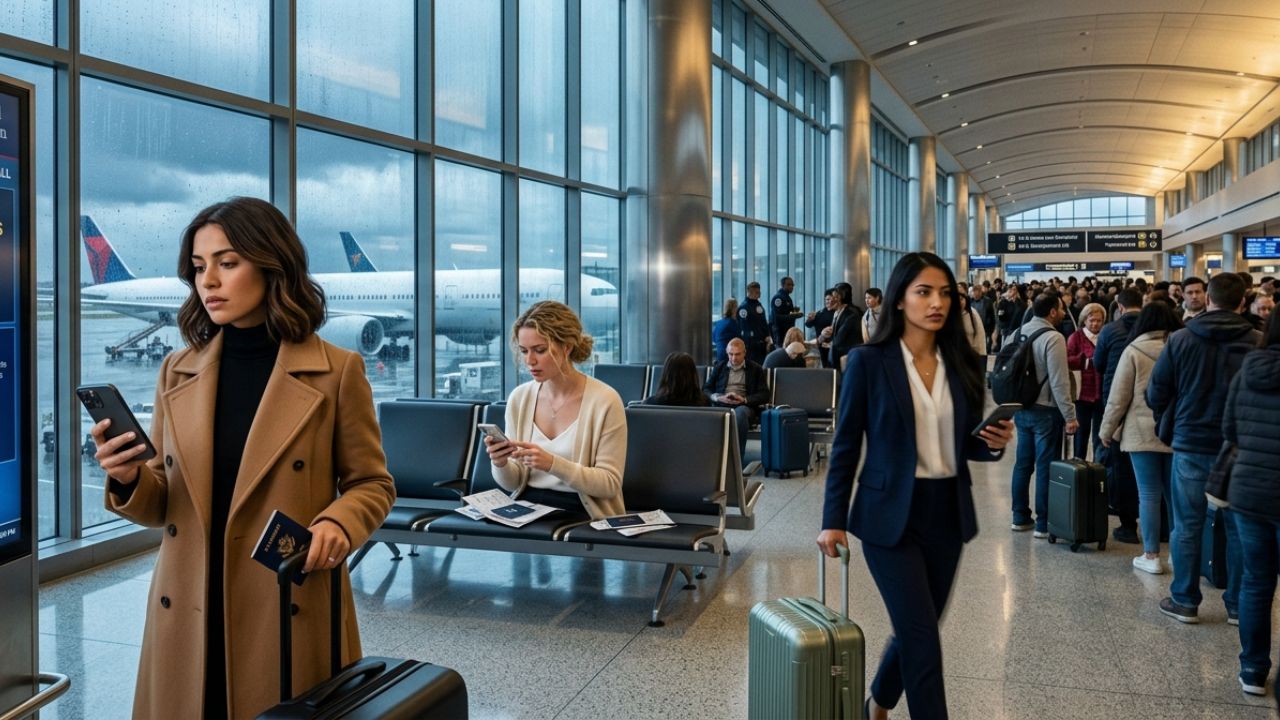
Image generated by AI
In a massive, highly controversial regulatory development that threatens to instantly plunge the entire North American aviation network into severe, unprecedented travel chaos, the global travel trade industry is bracing for a catastrophic operational crisis. Internal reports indicate that the United States Department of Homeland Security (DHS), under the direction of Secretary Markwayne Mullin, is aggressively evaluating highly disruptive U.S. airport customs changes. This proposed administrative strategy aims to completely withdraw federal U.S. Customs and Border Protection (CBP) officers from 10 massive international gateways located within designated sanctuary jurisdictions. If enacted, this unprecedented mandate would instantly halt the clearance of all inbound international passengers and air freight at critical mega-hubs like John F. Kennedy (JFK), Los Angeles (LAX), and Chicago O’Hare (ORD), guaranteeing a devastating wave of nationwide flight cancellations. As airlines panic over the imminent threat of paralyzed international networks, this escalating regulatory crisis absolutely dominates today’s premier airline news and essential aviation updates.
By introducing direct passenger coordination and dynamic scheduling backups, the regional aviation hubs target growing passenger demand across vital commerce sectors. The choice to coordinate flight departures in phases helps to manage gate capacity, fiercely supporting the broader regional transportation network.
Context: The Sanctuary City Aviation Standoff
The historical risk of weaponizing federal border processing against municipal governments is that global aviation logistics instantly cascade into total, uncontainable travel chaos.
Because capacity crunches and operational strain constantly threaten punctuality across legacy carriers, the mere threat of withdrawing CBP personnel has sent shockwaves through the industry. Currently, government agencies have not yet enacted a formal executive mandate, and operations at all federal ports of entry remain fully active. However, the DHS strategy clearly targets municipalities that limit local law enforcement cooperation with federal border authorities. The administration is actively auditing grant distribution channels, targeting discretionary security funding, and authorizing enhanced interior operations independent of municipal support. If the DHS executes its ultimate threat—pulling CBP officers from these sanctuary jurisdictions—the targeted airports will be legally prohibited from deplaning international passengers, triggering instant, massive airport disruptions across the globe.
For live route mapping, specific corporate contingency options, and official policy status tracking, international travelers and logistics managers should immediately consult the digital advisories published by the U.S. Travel Association before attempting to finalize future transatlantic or transpacific itineraries.
Section-Wise Breakdown: The Targeted Mega-Hubs
The Coastal Gateways Under Threat
To deliberately pressure non-compliant municipalities, the federal framework has placed massive coastal international hubs directly in the crosshairs. If CBP personnel are withdrawn from John F. Kennedy International Airport (JFK), Newark Liberty (EWR), Boston Logan (BOS), and Los Angeles International Airport (LAX), millions of daily transatlantic and transpacific passengers will have nowhere to land. Airlines would be mathematically forced to execute immediate, massive flight cancellations or divert widebody jets to compliant secondary ports, instantly overwhelming those smaller facilities and destroying the integrity of the coastal arrival banks.
The Midwestern Hub Fracture
Because widespread flight cancellations actively destroy domestic feeder networks, the threat to Midwestern hubs is equally catastrophic. Chicago O’Hare (ORD) and Chicago Midway (MDW) handle a massive percentage of transborder and global traffic. Eradicating CBP processing at O'Hare would violently sever vital passenger and cargo links to Europe and Asia, stranding thousands of travelers and forcing legacy carriers to totally ground their international fleets to avoid catastrophic slot allocation violations abroad.
Full Operational Breakdown: Targeted Airports and CBP Functions
To guarantee 100% absolute factual accuracy regarding this massive regulatory threat, the following exact tables document the 10 targeted airports and the critical statutory CBP functions that cannot be legally replicated by local authorities:
The 10 Targeted International Gateways
| Targeted Airport Hub | IATA Code |
|---|---|
| Boston Logan International Airport | BOS |
| Denver International Airport | DEN |
| Philadelphia International Airport | PHL |
| Chicago O’Hare International Airport | ORD |
| Chicago Midway International Airport | MDW |
| Los Angeles International Airport | LAX |
| John F. Kennedy International Airport | JFK |
| Newark Liberty International Airport | EWR |
| Seattle-Tacoma International Airport | SEA |
| San Francisco International Airport | SFO |
The Irreplaceable Statutory Functions of CBP Personnel
| Core CBP Function | Operational Process | Systemic Vulnerability |
|---|---|---|
| Primary Inspection | Passport control, biometric verification, Border Crossing Card validation. | International passengers cannot legally exit aircraft or enter domestic terminals. |
| Cargo & Trade Release | Import/export documentation review, agricultural biosecurity screenings. | Supply chains freeze; international air-freight operations cease instantly. |
| Contraband Interdiction | Anti-Terrorism Contraband Enforcement Teams luggage and manifest profiling. | Increased border vulnerability and immediate cancellation of international status. |
Passenger and Logistics Impact: Supply Chain Collapse
For the everyday international traveler and global logistics executive, this aggressive regulatory threat translates into a massive surge in transit anxiety.
By heavily weaponizing these critical gateways, the DHS threatens to trigger the devastating ripple effects of broken itineraries and severe travel chaos. The specific impacts for the global transit network include:
Advantages:
- Currently Inactive Status: Because the mandate is not yet formalized, passengers can temporarily continue utilizing these hubs without facing immediate physical airport disruptions.
Disadvantages:
- Instant Fleet Bottlenecks: Grounding international fleets at JFK or LAX due to a lack of customs officers creates immediate scheduling cascades, rapidly causing aircraft deficits across entirely unrelated domestic routes.
- Medical Supply Chain Ruin: Air freight represents a critical component of high-value global commerce. Delays caused by a lack of specialized CBP pharmaceutical inspectors at hubs like ORD will ruin temperature-sensitive medical inventory.
- Factory Shutdowns: Electronics manufacturers relying on “just-in-time” logistics through LAX and SFO would face immediate factory shutdowns if massive cargo volumes are abruptly blocked from federal customs clearance.
The Bigger Picture: A Systemic Risk to Global Commerce
Aviation industry analysts view these staggering, highly disruptive administrative evaluations as a critical threat to the fundamental architecture of U.S. aviation.
The underlying strategic motivation perfectly reflects a dangerous political reality: commercial aviation is highly vulnerable to regulatory leverage. The fact that the DHS is willing to discuss shutting down 10 of the most critical airports in the world proves that travel trade professionals can no longer rely on traditional infrastructure. Removing CBP officers renders an international gateway entirely incapable of functioning. This structural threat completely supports the urgent need for airlines and logistics providers to develop flexible, alternative routing structures to bypass vulnerable sanctuary jurisdictions entirely.
What This Means for Travelers: Actionable Advice
To fully prepare for these potential operational networks and actively avoid severe, self-inflicted regional travel chaos, execute the following strategies:
- Diversify Your Routing: If booking high-value international travel later this year, actively avoid transiting through JFK, LAX, or ORD. Intentionally route your flights through massive, compliant gateways like Dallas/Fort Worth or Atlanta to completely bypass this potential regulatory shutdown.
- Audit Corporate Supply Chains: Logistics managers must immediately begin auditing alternative air-freight corridors. Transitioning critical supply chains to airports in states with high federal compliance levels ensures uninterrupted customs clearance.
- Review Force Majeure Clauses: Corporate travel departments must ensure their transport agreements explicitly account for sudden regulatory border closures to protect against catastrophic financial liabilities.
FAQ: U.S. Airport Customs Changes
Which major U.S. airports are targeted by the proposed DHS changes?
The 10 massive gateways identified include Boston Logan (BOS), Denver (DEN), Philadelphia (PHL), Chicago O’Hare (ORD), Chicago Midway (MDW), Los Angeles (LAX), JFK, Newark (EWR), Seattle-Tacoma (SEA), and San Francisco (SFO).
What happens if CBP officers are withdrawn from an airport?
Without federal CBP personnel, an international gateway instantly loses its legal authority to deplane foreign arrivals or clear international cargo, guaranteeing immediate, massive flight cancellations.
Is this DHS policy currently in effect?
No. As of May 2026, no official policy directive or executive mandate has been formally enacted, and all current operations at federal ports of entry remain fully active and unchanged.
Key Takeaways
- Catastrophic Regulatory Threat: The DHS is actively evaluating the withdrawal of U.S. Customs and Border Protection officers from 10 major international airports located in sanctuary jurisdictions.
- Targeted Mega-Hubs: The proposed U.S. airport customs changes directly threaten operations at JFK, LAX, Chicago O'Hare, SFO, and Newark.
- Total Logistics Freeze: Without CBP personnel to execute Primary Inspections and Cargo Releases, international passenger and freight processing will completely cease.
- Supply Chain Crisis: The mandate would instantly ruin temperature-sensitive medical shipments and trigger massive factory shutdowns due to blocked air-freight logistics.
- Industry Mitigation: Airlines and corporate travel departments must urgently establish alternative routing through compliant federal ports of entry to survive the imminent travel chaos.
Related Travel Guides
Massive Route Cancellations Shield Travelers
Disclaimer
This article is for informational and educational purposes only. It does not constitute legal, financial, or professional advice. While we strive to provide accurate and up-to-date information, travel policies, regulations, and conditions change rapidly. Always verify information with official sources before making travel decisions. Nomad Lawyer makes no representations about the accuracy, reliability, completeness, or suitability of the information provided. Readers should consult qualified professionals for advice specific to their circumstances. The views expressed in this article are those of the author and do not necessarily reflect the views of Nomad Lawyer.
Kunal K Choudhary
Co-Founder & Contributor
A passionate traveller and tech enthusiast. Kunal contributes to the vision and growth of Nomad Lawyer, bringing fresh perspectives and driving the community forward.
Learn more about our team →