
US Airlines Expand In-Cabin Pet Travel Services
American Airlines, Delta, and United are expanding in-cabin pet travel programs, capitalizing on the billion-dollar pet tourism market.

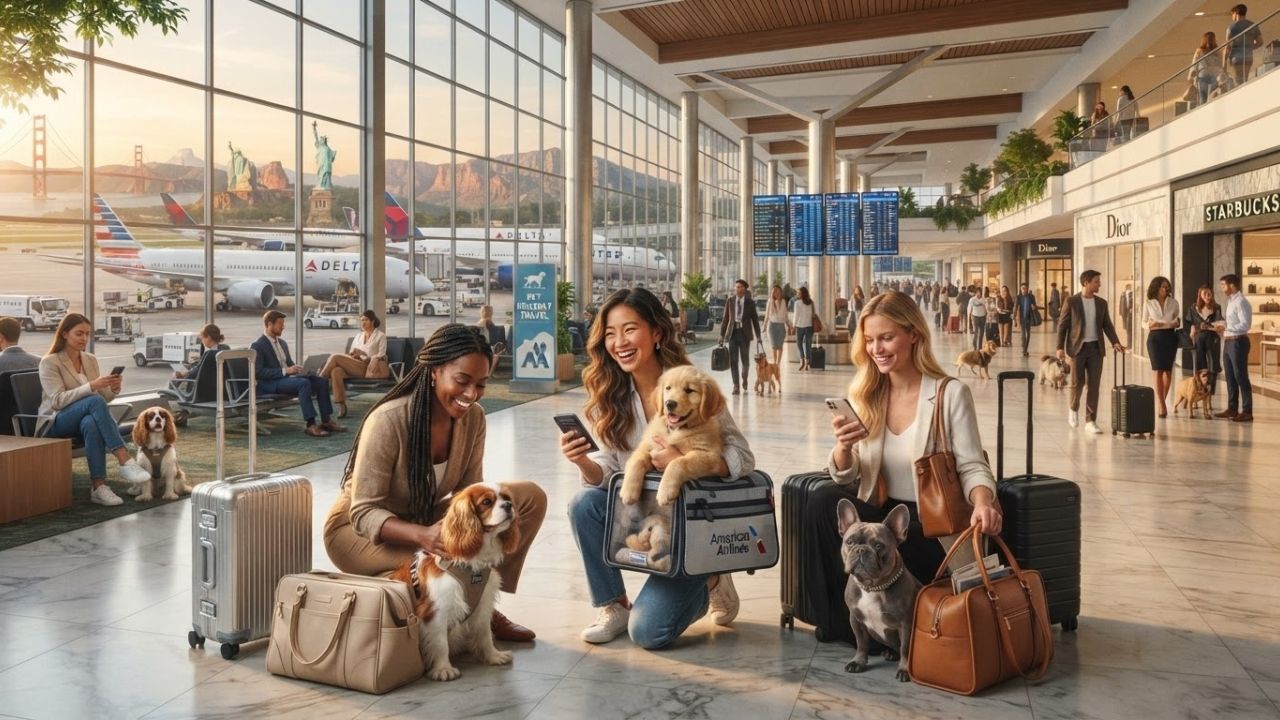
Image generated by AI
Major US carriers including American Airlines, Delta, and United are expanding in-cabin pet travel options to capture a share of the expanding pet tourism market. As domestic travelers increasingly prioritize taking their pets on holiday, airlines are standardizing reservation systems and pet check-in fees.
The Pet Travel Evolution
Our analysis of US passenger data indicates that traveling with household animals has transitioned from a niche preference to a primary driver of domestic tourism. The broader pet industry reached approximately $158 billion in 2025 and is projected to grow to $165 billion in 2026. With nearly 95 million US households owning at least one animal, travel brands are actively adjusting their services to accommodate this consumer segment.
This cultural shift is reshaping the domestic travel sector, which recorded $840 billion in tourism value-added in 2023. Survey findings show that 55% of dog owners modify their holiday itineraries to ensure their pets can travel with them. To capture this segment, hotels, airlines, and local destinations are launching dedicated services, turning pet travel into a structured multi-billion-dollar market.
Carrier Fees and Operational Policies
The major US airlines have established specific pricing and container guidelines to manage the growing volume of animals in passenger cabins:
- American Airlines Cabin Fee: Charges $150 each way for approved under-seat carriers containing small dogs or cats.
- Delta Air Lines Regulations: Requires pre-flight reservations and charges approximately $150 per direction on domestic and regional flights.
- United Airlines Space Limits: Coordinates in-cabin travel for cats and dogs for a $150 one-way fee, enforcing strict carrier dimension checks at gates.
- Alaska Airlines Pricing: Offers a lower-cost option at $100 each way, though separate pricing and quarantine rules apply to Hawaii flights.
- JetBlue Multiple Pet Option: Charges $150 per carrier and allows passengers to purchase extra seats to accommodate up to two pets in selected situations.
- Southwest Airlines Domestic Rate: Focuses on short-haul domestic routes with a $125 check-in fee per carrier, which counts as a carry-on item.
- Frontier Airlines Extended Eligibility: Permits small dogs, cats, rabbits, guinea pigs, hamsters, and household birds in cabins for $149 each way.
Passenger Rights & Advisory (Information Gain & Experience)
For the passenger flying with a pet, managing airline and federal regulations is a key step in preventing travel disruption. Our analysis of domestic aviation policies suggests travelers review their legal protections and airline obligations before heading to the airport:
- Refunds for Pet Cabin Fees: Under US Department of Transportation (DOT) guidelines, if your flight is cancelled or significantly delayed and you choose not to travel, you are entitled to a full refund of both your ticket and the pet travel fee.
- Overnight Lodging Surcharges: If a controllable airline delay forces an overnight stay, the carrier must provide a hotel voucher, but they are not legally required to cover pet cleaning fees or pet-friendly deposits charged by the hotel.
- Service Animal Classification: Current DOT rules restrict service animal status to dogs individually trained to perform tasks for individuals with disabilities. Emotional support animals are not recognized as service animals and must travel under standard cabin pet rules and pay the applicable fees.
Industry Analyst View
The standardization of pet fees at around $150 each way represents a high-margin revenue stream for domestic carriers. Because these animals remain in carriers under the seat ahead, they do not require extra luggage space or cabin crew attention, making pet fees highly profitable.
Additionally, destinations are using pet-friendly campaigns to attract travelers who prefer driving over flying. Tourism boards in states like Oregon, North Carolina, and Florida are promoting pet-friendly beaches and campsites to capture road-trip segments. As a result, hotels like the Hilton group are expanding pet programs across their properties to ensure they remain competitive against alternative vacation rentals.
Related Travel Guides
Disclaimer
This article is for informational and educational purposes only. It does not constitute legal, financial, or professional advice. While we strive to provide accurate and up-to-date information, travel policies, regulations, and conditions change rapidly. Always verify information with official sources before making travel decisions. Nomad Lawyer makes no representations about the accuracy, reliability, completeness, or suitability of the information provided. Readers should consult qualified professionals for advice specific to their circumstances. The views expressed in this article are those of the author and do not necessarily reflect the views of Nomad Lawyer.
Kunal K Choudhary
Co-Founder & Contributor
A passionate traveller and tech enthusiast. Kunal contributes to the vision and growth of Nomad Lawyer, bringing fresh perspectives and driving the community forward.
Learn more about our team →