
US Airlines Battle Travel Chaos: American, Delta, and United Deploy Massive Tech Upgrades to Eradicate Airport Disruptions and Flight Cancellations: Latest Airline News
In a massive defense against systemic travel chaos, major US carriers including American, Delta, and United are deploying sweeping operational upgrades to eradicate severe flight cancellations.

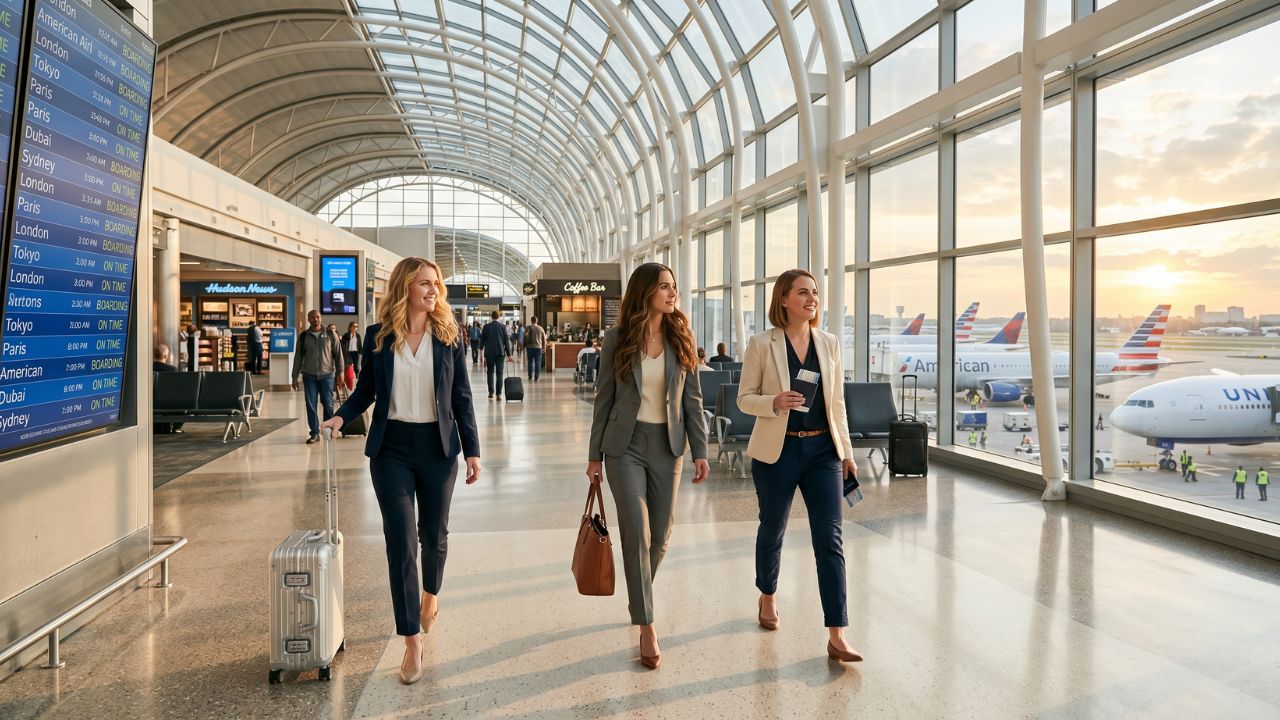
Image generated by AI
In a massive, coordinated defense against the systemic travel chaos and severe airport disruptions that have routinely crippled the domestic grid, the entire United States aviation industry is executing unprecedented operational overhauls. Reported on June 19, 2026, American Airlines has officially joined Delta, United, Southwest, SkyWest, and Republic Airways in dominating global headlines by deploying sweeping technological upgrades and rapid international route expansions. Driven by the critical need to completely eradicate the rolling flight cancellations caused by severe summer weather systems and outdated IT infrastructure, these carriers are permanently shifting their operational strategies. From American Airlines launching new services to Venezuela to Delta Air Lines successfully closing federal investigations into its catastrophic 2024 tech meltdown, the industry is fiercely battling to regain passenger trust. As major legacy carriers and their regional partners implement predictive analytics to actively bypass transit gridlock, this massive multi-airline evolution is driving today's most crucial headline in breaking airline news and essential global aviation updates.
By introducing direct passenger coordination and dynamic scheduling backups, the regional aviation hubs target growing passenger demand across vital commerce sectors. The choice to coordinate flight departures in phases helps to manage gate capacity, supporting the country's broader regional transportation network.
Context: Engineering an Escape from Terminal Gridlock
For the North American aviation sector, this simultaneous wave of massive corporate investment marks the end of an era defined by agonizing, systemic travel chaos.
Historically, massive surges in post-pandemic passenger demand brutally exposed the fragility of the American transit grid. When severe weather systems rolled across the Midwest or East Coast, the lack of operational resilience instantly triggered tens of thousands of flight cancellations, leaving passengers stranded in chaotic mega-hubs. Recognizing that these catastrophic airport disruptions actively destroy long-term corporate profitability, US airlines are no longer simply transporting passengers; they are evolving into highly insulated, technology-driven mobility businesses. Sustainability, international expansion, security enhancements, and operational resilience are now the mandatory pillars of survival. American Airlines is aggressively pursuing international expansion to diversify its network away from congested domestic hubs. Delta is fortifying its financial stability, United is heavily reinforcing its passenger support systems, and Southwest is executing a total transformation of its crisis response infrastructure. Meanwhile, regional operators like SkyWest and Republic Airways are actively combating workforce shortages to ensure the vital feeder networks do not collapse under pressure.
To view live flight schedules, verify the active delay status of your specific domestic itinerary, or to track active regional airspace restrictions, travelers must consult official aviation directories. For direct updates regarding how these massive operational upgrades affect specific route abandonments and current flight cancellations, travelers should aggressively utilize the official portals of American, Delta, and United. To explore live flight tracking and monitor the exact severity of cascading bottlenecks at major US competitor hubs, passengers can consult the official FlightAware tracking service.
Section-Wise Breakdown: The Multi-Carrier Upgrade
American Airlines: International Diversification and Security
American Airlines has emerged as a dominant force this week, specifically utilizing international expansion to bypass domestic travel chaos. The airline is aggressively expanding its Venezuela route network with new Maracaibo service and signaling immense confidence by resuming services to Haiti later this year. Domestically, the carrier celebrated the 80th anniversary of its massive Tulsa maintenance base—a critical facility for ensuring aircraft reliability—while heavily investing in Sustainable Aviation Fuel (SAF) and enhanced temporary cockpit barriers to drastically improve operational security infrastructure.
Delta and United: Tech Resilience and Weather Waivers
Delta Air Lines continues to dominate headlines by successfully navigating its operational recovery. Crucially, federal authorities recently concluded investigations connected to Delta’s catastrophic 2024 technology disruption without imposing penalties, allowing the airline to refocus entirely on network reliability and securing new credit agreements. Concurrently, United Airlines operates one of the largest networks in the world and is aggressively battling severe summer weather systems. United is utilizing advanced predictive analytics to activate passenger travel waivers instantly, allowing travelers to reroute before their connecting hubs collapse into travel chaos.
The Domestic Backbone: Southwest, SkyWest, and Republic
Southwest Airlines continues a massive, structural transformation of its technology infrastructure and crisis response systems, designed specifically to prevent the brutal domestic weather meltdowns of previous years. However, the true fragility of the network lies with the regional operators. SkyWest and Republic Airways operate thousands of regional flights under partnerships with the legacy carriers. These airlines are currently battling intense industry-wide pressures surrounding workforce development, staffing requirements, and aircraft utilization. If these regional carriers experience delays, the ripple effects instantly spread throughout the national aviation system, triggering massive flight cancellations at major hubs.
Technical Roster: US Airlines Operational Resilience Data
To ensure absolute factual accuracy regarding the exact parameters of these massive technological upgrades and the specific corporate strategies driving the eradication of flight cancellations, the following matrix details the verified operational developments:
US Airlines Operational Resilience Matrix
| Airline / Regional Partner | Strategic Focus & Disruption Mitigation Tactics |
|---|---|
| American Airlines | Expanding Maracaibo/Haiti routes; integrating SAF; celebrating Tulsa maintenance base |
| Delta Air Lines | Federal 2024 tech disruption investigation closed without penalties; issuing flexible weather waivers |
| United Airlines | Activating predictive analytics and proactive passenger travel waivers for severe summer storms |
| Southwest Airlines | Executing massive tech infrastructure overhauls and strengthening crisis response systems |
| SkyWest Airlines | Connecting crucial regional markets while actively battling staffing and utilization pressures |
| Republic Airways | Combating workforce development shortages to stabilize the heavily interdependent national grid |
Passenger Impact: The Era of the Flexible Waiver
For the millions of business commuters and leisure travelers navigating the United States, this massive injection of operational capital fundamentally alters their daily exposure to travel chaos.
The immediate passenger impact of this coordinated industry upgrade is the normalization of proactive flexibility. Historically, passengers were trapped at the airport until their flight officially canceled. Today, driven by the massive predictive systems deployed by United and Delta, travelers receive digital travel waivers hours—or even days—before severe summer weather systems strike. This allows passengers to independently rebook their itineraries entirely outside of the affected storm zones, successfully bypassing the brutal customer service queues and terminal panic that characterize major airport disruptions. Furthermore, by American Airlines launching new international routes to Maracaibo and Haiti, diaspora communities and business travelers have more direct access options, reducing their reliance on highly congested, delay-prone mega-hubs like Miami. However, passengers flying out of smaller cities must remain highly vigilant; because regional carriers like Republic and SkyWest are still battling staffing shortages, these feeder routes remain highly susceptible to sudden, localized flight cancellations.
Industry Analysis: The Economics of Climate Resilience
Aviation industry analysts view the simultaneous technological investment across all major US carriers as definitive proof that extreme weather is no longer an occasional anomaly; it is a permanent, highly destructive economic threat.
Analysts note that increasingly volatile weather patterns are forcing airlines to completely rethink operational planning. By heavily investing in artificial intelligence, predictive maintenance, and advanced weather forecasting systems, legacy carriers are actively attempting to anticipate problems before they trigger massive flight cancellations. Industry experts, including Anup Kumar Keshan, Founder and Editor-in-Chief of Travel And Tour World, emphasize that "these developments demonstrate that US airlines are proactively preparing for future challenges whilst embracing innovation." Analysts predict that the future of the US airline industry will depend heavily on the survival of the regional operators (SkyWest and Republic). If major carriers successfully upgrade their own tech but fail to support the workforce development of their regional partners, the national grid will continue to suffer from localized, cascading travel chaos.
Actionable Advice for Navigating the Upgraded Grid
While standard passengers cannot control regional pilot shortages or severe summer storms, you can execute this strategic survival checklist to actively capitalize on the upgraded US transit networks:
- Exploit Proactive Travel Waivers: If you are flying Delta, United, or American during the summer storm season, obsessively check your airline app 48 hours before departure. If a travel waiver is issued for your connecting hub (e.g., severe thunderstorms in Chicago or Atlanta), immediately re-route your itinerary through a safe hub (like Denver or Salt Lake City) for free, completely bypassing the impending travel chaos.
- Audit Your Regional Connecting Flights: Do not assume your entire itinerary is insulated from disruptions. If your ticket involves a connection on SkyWest or Republic Airways, recognize that these regional routes are highly vulnerable to crew timeout cancellations. Book the earliest possible morning flight to ensure you have multiple backup options if the regional connection fails.
- Leverage the Tulsa Maintenance Advantage: With American Airlines aggressively expanding its maintenance capabilities at its Tulsa base, their mainline fleet reliability is highly stabilized. When flying out of the Midwest, prioritize mainline American Airlines aircraft to reduce your exposure to mechanical-related airport disruptions.
- Monitor Southwest’s Tech Rollouts: As Southwest continues to overhaul its internal technology to prevent system-wide meltdowns, ensure you have the latest version of their mobile app installed. In the event of a sudden disruption, their upgraded digital infrastructure now allows for significantly faster self-rebooking, allowing you to secure a new seat before the terminal crowd reacts.
FAQ: US Airlines Operational Upgrades
Why are US airlines aggressively upgrading their operational systems?
Major carriers like American, Delta, United, and Southwest are deploying massive technological overhauls to build climate resilience and permanently eradicate the severe travel chaos and flight cancellations caused by summer storms and outdated IT infrastructure.
How is American Airlines bypassing domestic travel chaos?
American Airlines is aggressively expanding its international footprint—including new routes to Maracaibo, Venezuela, and resuming flights to Haiti—while investing heavily in Sustainable Aviation Fuel and enhanced cockpit security.
What is the biggest vulnerability remaining in the US aviation grid?
Despite massive upgrades by legacy carriers, regional operators like SkyWest and Republic Airways are still battling intense workforce shortages and staffing pressures, leaving regional feeder flights highly vulnerable to sudden cancellations.
The Reality of Combating Systemic Disruption
The massive, highly coordinated operational overhauls executed by American, Delta, United, and Southwest prove definitively that the US aviation industry is aggressively moving to eradicate the brutal era of massive travel chaos. By deploying billions to modernize predictive weather technology, issuing proactive passenger waivers, and expanding international networks, these carriers are successfully future-proofing their grids against sudden flight cancellations. Yet, as the industry desperately relies on the fragile regional operations of SkyWest and Republic Airways to connect the national map, travelers must accept a critical new reality: exploring the United States requires aggressive utilization of digital waivers, strategic rerouting away from active storm zones, and a constant awareness of the complex interdependence dictating the modern American transit network.
Key Takeaways
- Massive Tech Upgrades: The "Big Four" US airlines are deploying sweeping technological and operational overhauls to eradicate systemic travel chaos and severe flight cancellations.
- American Airlines Expansion: American is actively expanding international routes to Venezuela (Maracaibo) and Haiti, while integrating SAF and celebrating its massive Tulsa maintenance base.
- Delta and United Resilience: Delta has successfully closed investigations into its 2024 tech meltdown, while United is heavily utilizing predictive analytics to issue proactive weather waivers.
- Southwest's Overhaul: Southwest continues a massive, structural transformation of its crisis response infrastructure to prevent future domestic meltdowns.
- The Regional Vulnerability: SkyWest and Republic Airways remain the fragile backbone of the network, battling intense workforce shortages that threaten to trigger cascading airport disruptions.
Related Travel Guides
Massive Travel Chaos Paralyzes Chicago O'Hare with 1,425 Disruptions
Disclaimer
This article is for informational and educational purposes only. It does not constitute legal, financial, or professional advice. While we strive to provide accurate and up-to-date information, travel policies, regulations, and conditions change rapidly. Always verify information with official sources before making travel decisions. Nomad Lawyer makes no representations about the accuracy, reliability, completeness, or suitability of the information provided. Readers should consult qualified professionals for advice specific to their circumstances. The views expressed in this article are those of the author and do not necessarily reflect the views of Nomad Lawyer.
Kunal K Choudhary
Co-Founder & Contributor
A passionate traveller and tech enthusiast. Kunal contributes to the vision and growth of Nomad Lawyer, bringing fresh perspectives and driving the community forward.
Learn more about our team →