
Riyadh Airport Reopens After 14-Day Shutdown: Inside the Phased Terminal Restart and Saudi Inbound Travel Guide

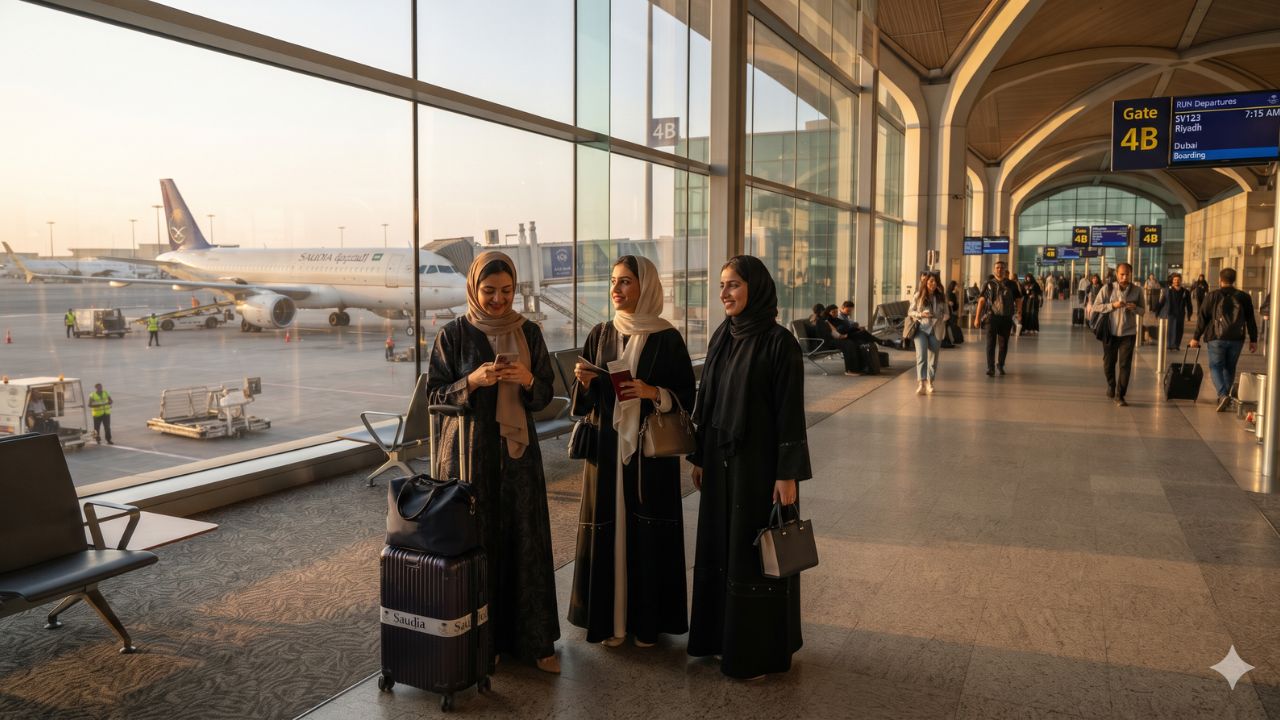
Following an unprecedented 14-day operational blackout triggered by the deadliest cross-border strikes on the Kingdom in over a decade, commercial aircraft engines fired up once again across King Khalid International Airport on Sunday. The two-week shutdown of Riyadh’s primary aviation gateway (RUH) began after coordinated Houthi drone and missile strikes on October 10 penetrated deep into the central province, tragically claiming 13 lives and leaving more than 300 people injured.
Sunday’s reopening came under active defensive vigilance, with regional air defense batteries intercepting hostile unmanned aerial craft near the capital’s perimeter just hours before civil aviation authorities issued clearance. Rather than initiating an immediate free-for-all across all five passenger complexes, aviation chiefs have instituted a tightly controlled, segregated terminal model designed to restart vital domestic pipelines and sovereign international routes while maintaining rigorous safety vetting.
The Segregated Terminal Architecture: Managing a Calculated Aviation Return
To prevent logistical congestion and ensure heightened security screening, the General Authority of Civil Aviation (GACA)—which had introduced mandatory ministerial clearances on October 17 for any aircraft entering sovereign domestic airspace—has compartmentalized King Khalid International Airport into strictly separated functional zones.
Under this controlled framework, passenger processing is divided into three distinct operational streams:
- Terminal 1 (Domestic Pipeline): Dedicated exclusively to internal flights across Saudi Arabia. Operating with unrestricted national routing, Terminal 1 unblocks internal transit between Riyadh and provincial economic hubs, heritage centers, and coastal sanctuaries.
- Terminal 2 (Sovereign Flagships): Exclusively allocated to state-backed national carriers Saudia and low-cost operator flynas. International flights operated by these domestic champions resumed immediately on Sunday, granting state authorities full direct oversight over passenger screening, cargo manifests, and flight paths.
- Terminals 3, 4, and 5 (Foreign Carrier Halts): All foreign commercial airlines remain grounded or deferred across these international buildings. Resumptions for overseas operators remain subject to ongoing safety-audit approvals and route revalidations.
This segregated strategy explains why Indian operators like Air India and Air India Express have placed their Riyadh routes on hold until at least November 7, while IndiGo has deferred direct Riyadh operations until a mid-November evaluation. Concurrently, regional Gulf operators from the United Arab Emirates, Qatar, and Bahrain are operating on rolling weekly assessments, with limited services restricted to specialized, pre-approved charters.
What Makes Riyadh the Strategic Linchpin of Vision 2030
The reopening of King Khalid International Airport is far more than an operational milestone for air traffic control—it serves as the indispensable economic engine powering Saudi Arabia's Vision 2030 transformation away from hydrocarbon reliance.
Saudi Arabia’s national aviation master plan relies on a calculated dual-hub strategy:
- King Abdulaziz International Airport (JED) in Jeddah: Governs Islamic religious pilgrimages (Umrah and Hajj) along the Hejaz corridor and channels luxury leisure tourism into emerging Red Sea archipelagos.
- King Khalid International Airport (RUH) in Riyadh: Drives multinational corporate commerce, diplomatic delegations, large-scale trade expos, and high-margin east-west intercontinental transit.
Crucially, GACA’s statutory target of lifting national aviation throughput from 140 million passengers to 330 million annually by 2030, alongside welcoming 150 million annual domestic and international visitors, depends heavily on Riyadh’s operational capacity. Furthermore, as the Kingdom prepares to scale operations for its new sovereign carrier, Riyadh Air, proving that the capital can swiftly recover from complex regional disruptions preserves global investor trust.
Reactivating Terminal 1 immediately unlocks onward domestic travel for international travelers. Riyadh serves as the indispensable internal flight hub feeding cultural travelers into the sandstone labyrinths of AlUla, the cool, mist-shrouded mountain villages of Asir, and the coral reefs of the Red Sea Project.
Terminal Architecture and Carrier Resumption Matrix at King Khalid International Airport
The structured reopening plan isolates passenger flows and dictates who can fly through Riyadh during late October 2026:
| Terminal Facility | Designated Carrier & Category | Operating Status as of Sunday | Operational Scope & Geographic Focus |
|---|---|---|---|
| Terminal 1 | Domestic Carriers (All national routes) | Active / Unrestricted Access | Restores internal domestic flights to AlUla, Abha, Dammam, and Jeddah |
| Terminal 2 | Saudia & flynas (Flagship International) | Active / Phased Reactivation | Operates state-backed international long-haul and regional routes |
| Terminals 3, 4 & 5 | Foreign Commercial Airlines | Suspended / Safety Audits Pending | International foreign carriers undergo verification; reviews through mid-Nov |
| Air India & AI Express | Foreign Carrier Operations | Suspended until November 7, 2026 | Route suspensions across central terminals under active review |
| IndiGo Operations | Foreign Carrier Operations | Suspended through mid-November | Subcontinental worker and family corridors deferred pending clearance |
| Regional Gulf Carriers | UAE, Qatar, Bahrain Feeders | Selective Charter Approvals Only | Commercial scheduled shuttles subject to rolling weekly assessments |
Visitor Insider Tips: Navigating Riyadh's Reopened Capital
For corporate travelers, cultural visitors, and delegates returning to the Saudi capital following the flight resumption, these insider tips ensure smooth passage:
- Check Terminal Assignments Prior to Departure: Do not assume international flights depart from Terminals 3 or 4. If you are flying internationally aboard Saudia or flynas, all departures and arrivals are processed strictly through Terminal 2.
- Ride the Riyadh Metro Direct from the Airport: Avoid highway congestion along Airport Road by utilizing the Riyadh Metro Yellow Line directly from the airport terminal stations. The driverless transit system links King Khalid International Airport directly to the King Abdullah Financial District (KAFD) in roughly 25 minutes.
- Explore Historic Diriyah via At-Turaif: Base your cultural itinerary around the UNESCO-listed mud-brick citadel of At-Turaif in Diriyah, inscribed by the UNESCO World Heritage Centre. Book timed evening entry tickets to explore the birthplace of the Saudi state, followed by dinner overlooking the illuminated date palm groves of Wadi Hanifa at Bujairi Terrace.
- Attend Riyadh Season Venues Mid-Week: Major entertainment hubs like Boulevard City and Boulevard World draw immense crowds on Thursday and Friday evenings. Schedule your visits between Sunday and Tuesday afternoon to enjoy international pavilions and rides without long queuing times.
- Keep Digital Copies of Ministerial Clearances: Business travelers arriving under the Kingdom’s Regional Headquarters (RHQ) mandate should carry printed and digital copies of company accreditation and GACA-approved flight itineraries to expedite terminal security clearance checkpoints.
Cultural and Environmental Context: Green Riyadh and Heritage Preservation
Riyadh is undergoing one of the most radical urban and ecological transformations in modern Middle Eastern history. Far from an endless stretch of concrete and asphalt, the capital is actively executing the Green Riyadh initiative, planting 7.5 million indigenous desert trees, rehabilitating natural wadi drainage basins, and drastically reducing ambient urban temperatures.
Cultural tourism, promoted through the official Visit Saudi campaign, centers on deep respect for Najdi architectural heritage. At sites like Diriyah and the historical Al-Murabba palace quarter, conservationists use traditional sun-dried mud bricks and tamarisk wood beams to preserve historic structures against desert weather extremes.
The reopening of King Khalid International Airport restores access to these cultural treasures while proving that modern Saudi Arabia can maintain civil resilience under regional strain. By isolating passenger buildings, utilizing electrified metro connections, and focusing on domestic route revival, Riyadh demonstrates that its ambition to stand as a global cultural capital remains firmly on course.
FAQ: King Khalid International Airport Reopening and Travel 2026
Is King Khalid International Airport fully open for all airlines?
No. The airport operates a phased reopening: Terminal 1 handles domestic travel, Terminal 2 serves international flights for Saudia and flynas, while Terminals 3, 4, and 5 remain paused for foreign carriers pending security reviews.
How do I travel from King Khalid Airport to central Riyadh?
The Riyadh Metro Yellow Line connects airport terminal stations directly to the King Abdullah Financial District (KAFD) in approximately 25 minutes, bypassing commuter road traffic.
Can foreign tourists take domestic connecting flights from Riyadh?
Yes. Terminal 1 is open for unrestricted domestic travel, allowing international visitors already in the Kingdom to connect to AlUla, Abha in Asir, Tabuk, and coastal Red Sea destinations.
When will foreign airlines resume flying to Riyadh?
Foreign carriers are undergoing safety evaluations. Air India and Air India Express have paused flights through November 7, 2026, while IndiGo and regional Gulf airlines are conducting reviews extending into mid-November.
Across the desert skies of the Najd, the return of commercial aviation to Riyadh proves that ancient crossroads never truly close; they simply gather strength before opening wider to the world.
Related Travel Guides
- IndiGo Freezes All Flights Across Four Major Saudi Gateways: Full Passenger and Pilgrim Guide 2026
- Air India Suspends Saudi Arabia Flights: Full Refunds, Bahrain Rerouting, and Umrah Guide 2026
- Swiss Airline Middle East Flight Suspensions: Dubai Advisories and Route Rerouting 2026
- Saudi Arabia Travel Disruptions: Managing Hotel Refunds and Passenger Rights 2026
Disclaimer
This article is for informational and educational purposes only. It does not constitute legal, financial, or professional advice. While we strive to provide accurate and up-to-date information, travel policies, regulations, and conditions change rapidly. Always verify information with official sources before making travel decisions. Nomad Lawyer makes no representations about the accuracy, reliability, completeness, or suitability of the information provided. Readers should consult qualified professionals for advice specific to their circumstances. The views expressed in this article are those of the author and do not necessarily reflect the views of Nomad Lawyer.
Preeti Gunjan
Contributor & Community Manager
A passionate traveller and community builder. Preeti helps grow the Nomad Lawyer community, fostering engagement and bringing the reader experience to life.
Learn more about our team →