
United and American Airlines Merger Speculation Stirs Major Upheaval in U.S. Aviation Sector
Breaking airline news and aviation industry updates for 2026.

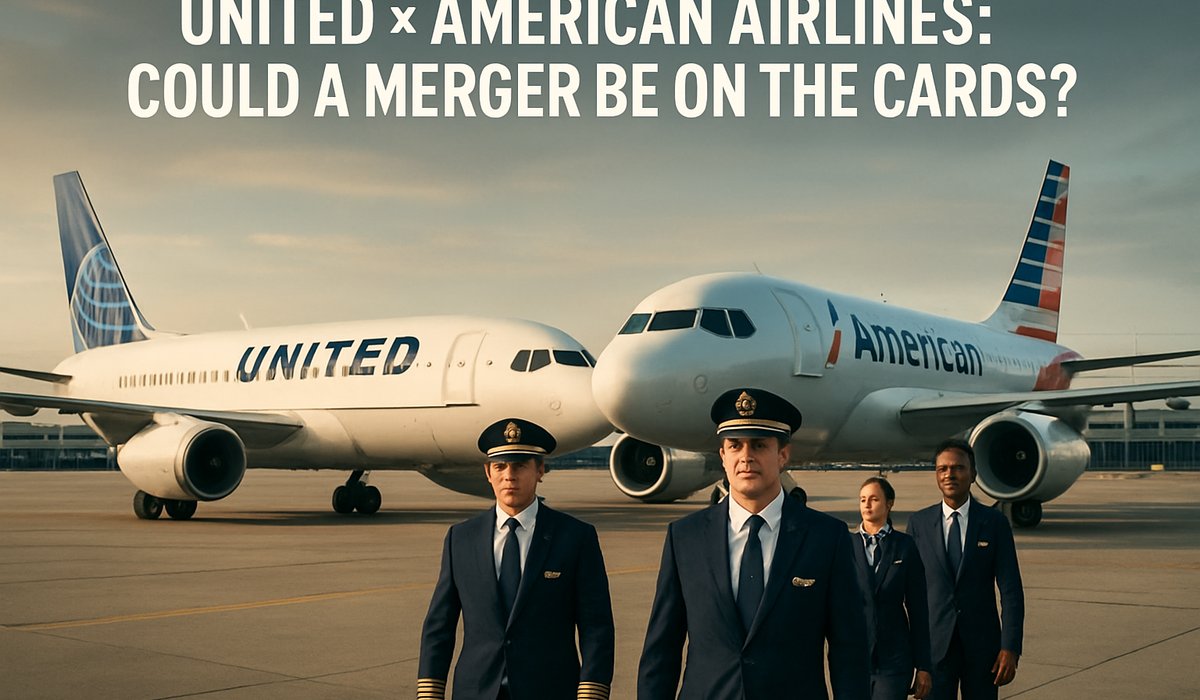
Image generated by AI
United and American Airlines Merger Speculation Stirs Major Upheaval in U.S. Aviation Sector
Consolidation talks between two industry giants could trigger unprecedented changes to airline competition and consumer fares
Merger Discussions Emerge Amid Industry Consolidation Pressures
Speculation surrounding a potential merger between United Airlines and American Airlines has ignited fresh turbulence in the already volatile U.S. aviation landscape, with reports indicating that United CEO Scott Kirby has directly discussed the proposal with the Trump administration. Such a combination would unite two of America's three largest carriers, fundamentally restructuring an industry already dominated by a handful of mega-carriers and potentially reshaping competitive dynamics for years to come.
The proposed tie-up signals mounting pressures within the airline sector, where carriers continue grappling with elevated jet fuel prices, rising operational costs, and ongoing inflationary pressures on labor and maintenance expenses. Consolidation in aviation has historically followed industry crises—from the post-9/11 era through the COVID-19 pandemic—with mergers often cited as necessary for survival and long-term viability.
Industry-Shaping Implications for Consumers and Competition
A merger between United and American Airlines would create an aviation behemoth with unparalleled market reach, particularly on transatlantic routes and major domestic corridors. The combined entity would boast unmatched frequent-flyer programs, expanded hub networks spanning Newark, Chicago, Dallas, and Charlotte, and consolidated purchasing power that could influence aircraft pricing and supply agreements across the industry.
Such consolidation could intensify existing concerns about airline baggage fees, ancillary charges, and overall ticket pricing. Consumer advocates warn that reduced competition typically correlates with higher fares and fewer consumer protections, though airline executives argue that scale efficiencies can eventually lower operational costs.
Regulatory Hurdles Loom Large
Any merger proposal faces substantial regulatory scrutiny from the Department of Justice and the Department of Transportation, particularly under heightened antitrust enforcement. The aviation industry has experienced limited major consolidation in recent years, with the last significant domestic carrier merger occurring in 2013 when Southwest Airlines acquired AirTran Airways.
Regulatory authorities would scrutinize potential overlaps on major routes, competitive impact assessments, and whether consumers would benefit from the combination. Kirby's direct engagement with the Trump administration suggests a calculated political strategy, though approval remains far from certain.
What Consolidation Means for the Broader Sector
If approved, such a merger would likely accelerate industry consolidation discussions, potentially positioning Delta and Southwest Airlines to explore strategic partnerships or acquisitions. The outcome could fundamentally redefine the competitive structure underpinning American aviation for the next decade.
Frequently Asked Questions
Could a United-American Airlines merger actually receive government approval? Merger approval depends entirely on antitrust considerations. The current administration's stance on aviation consolidation remains unclear, though historical precedent suggests significant regulatory barriers exist for deals reducing competition.
How would a merger impact airline baggage fees and ticket prices? Consolidation typically reduces competitive pressure on pricing. Customers could potentially face higher fares and expanded ancillary charges, though airlines argue scale economies eventually benefit consumers.
What percentage of the U.S. airline market would a merged entity control? Combined, United and American would control approximately 30-35% of domestic capacity, depending on the calculation methodology and route-specific measurements.
How do jet fuel prices factor into merger discussions? Elevated fuel costs incentivize carriers to pursue operational efficiencies through consolidation, making mergers more financially attractive during high-cost periods.
Has the airline industry experienced major mergers recently? The aviation sector has seen limited consolidation since 2013. The industry remains dominated by four primary carriers: American, Delta, Southwest, and United.
Related Travel Guides
Flight Delay Compensation Guide 2026
Understanding Airline Route Changes
Airport Security Process Updated (2026)
External Resources
Disclaimer
This article is for informational and educational purposes only. It does not constitute legal, financial, or professional advice. While we strive to provide accurate and up-to-date information, travel policies, regulations, and conditions change rapidly. Always verify information with official sources before making travel decisions. Nomad Lawyer makes no representations about the accuracy, reliability, completeness, or suitability of the information provided. Readers should consult qualified professionals for advice specific to their circumstances. The views expressed in this article are those of the author and do not necessarily reflect the views of Nomad Lawyer.
Raushan Kumar
Founder & Lead Developer
Full-stack developer with 11+ years of experience and a passionate traveller. Raushan built Nomad Lawyer from the ground up with a vision to create the best travel and law experience on the web.
Learn more about our team →