
JetBlue Expands Transatlantic Dominance With 13 European Routes, Flights Up to 9 Hours Nonstop
Breaking airline news and aviation industry updates for 2026.

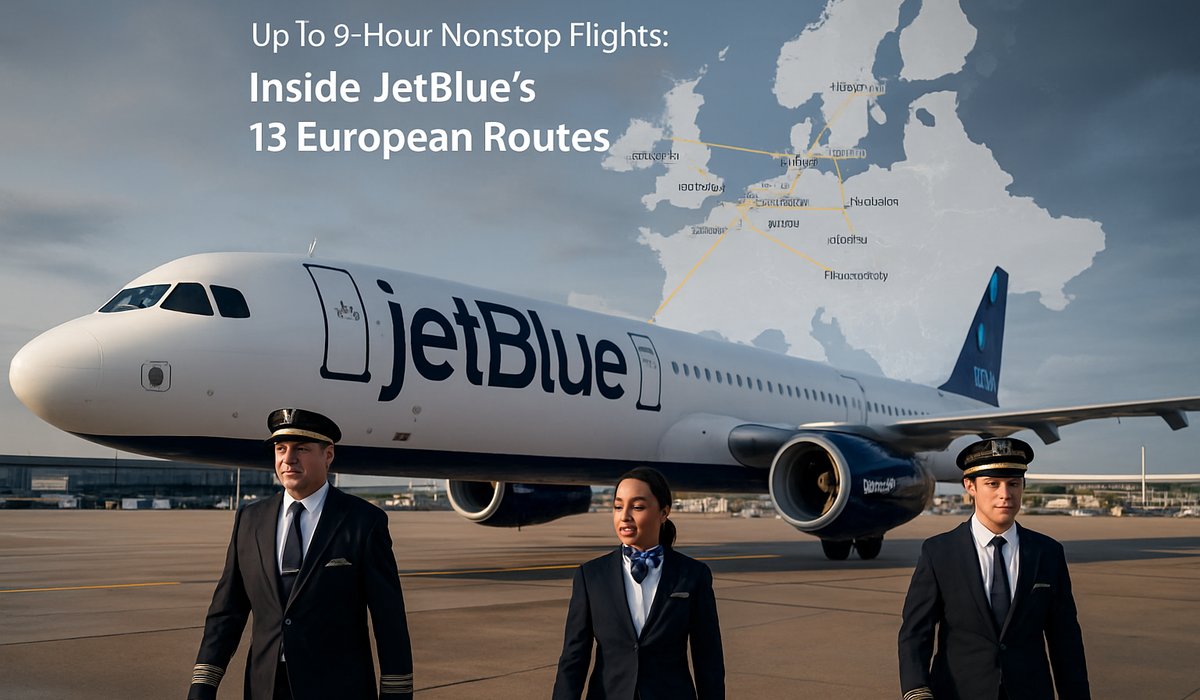
Image generated by AI
JetBlue Expands Transatlantic Dominance With 13 European Routes, Flights Up to 9 Hours Nonstop
Post-pandemic surge reshapes East Coast-Europe connectivity as low-cost carrier challenges legacy airlines
JetBlue's Aggressive European Expansion Reshapes Transatlantic Aviation
JetBlue Airways is cementing its position as a formidable competitor in the lucrative transatlantic market, with scheduling data revealing the carrier will operate 13 dedicated routes connecting European destinations to America's East Coast this year. The aggressive expansion marks a dramatic shift in the aviation landscape following the post-pandemic recovery, establishing the New York-based airline as a serious challenger to traditional legacy carriers on one of the world's most competitive flight corridors.
According to analysis from Cirium, an aviation data and intelligence firm specializing in flight operations tracking, JetBlue's European network now encompasses point-to-point routes spanning up to nine hours of nonstop flight time. This expansion represents one of the most significant developments in transatlantic aviation strategy since carriers resumed international operations following COVID-19 disruptions.
Strategic Repositioning in a Recovering Market
The transatlantic sector has undergone considerable transformation over recent years. While traditional carriers long dominated Europe-to-North America flights, low-cost and value-oriented carriers have increasingly penetrated this historically premium market segment. JetBlue's calculated expansion reflects broader industry trends toward route diversification and increased competition driven by fuel efficiency improvements in modern aircraft fleets.
The timing of JetBlue's European push comes as airlines across the sector navigate volatile jet fuel prices and shifting travel demand patterns. By establishing direct connections between secondary European cities and East Coast American hubs—rather than relying solely on major transatlantic gateways—JetBlue is capturing underserved market segments and generating incremental revenue opportunities.
Implications for Consumers and Industry Competition
JetBlue's strategy has immediate consequences for air travelers. The introduction of additional nonstop capacity typically exerts downward pressure on transatlantic fares while improving connectivity options for passengers seeking alternatives to legacy carriers. The expansion also intensifies competition for baggage fees, ancillary revenue streams, and frequent flyer loyalty programs across the industry.
For traditional players including American Airlines, Delta Air Lines, and United Airlines, JetBlue's European footprint expansion represents a competitive threat requiring strategic response. The ripple effects extend to airport infrastructure providers, ground handling services, and fuel suppliers across both continents.
Cirium's data demonstrates that transatlantic aviation capacity continues expanding as consumer demand for international travel remains robust, despite economic headwinds affecting certain regions.
Frequently Asked Questions
Q: How many European routes does JetBlue currently operate? A: JetBlue operates 13 dedicated routes between Europe and America's East Coast, with individual flights reaching up to nine hours nonstop.
Q: How does JetBlue's transatlantic expansion affect airline ticket prices? A: Increased nonstop capacity typically increases price competition, potentially lowering fares for consumers on routes where JetBlue competes directly with legacy carriers.
Q: What impact does this have on baggage fees and ancillary charges? A: Expanded competition in transatlantic markets intensifies pressure on all carriers' ancillary revenue strategies, potentially affecting baggage policies and additional fee structures.
Q: Which legacy airlines face the most competition from JetBlue's European expansion? A: American Airlines, Delta Air Lines, and United Airlines face the most direct competitive pressure on overlapping East Coast-Europe routes.
Q: How do jet fuel prices influence JetBlue's transatlantic strategy? A: Fuel costs significantly impact route profitability; modern aircraft efficiency improvements enable carriers like JetBlue to maintain competitive pricing despite volatile fuel markets.
Related Travel Guides
Flight Delay Compensation Guide 2026
Understanding Airline Route Changes
Airport Security Process Updated (2026)
External Resources
Disclaimer
This article is for informational and educational purposes only. It does not constitute legal, financial, or professional advice. While we strive to provide accurate and up-to-date information, travel policies, regulations, and conditions change rapidly. Always verify information with official sources before making travel decisions. Nomad Lawyer makes no representations about the accuracy, reliability, completeness, or suitability of the information provided. Readers should consult qualified professionals for advice specific to their circumstances. The views expressed in this article are those of the author and do not necessarily reflect the views of Nomad Lawyer.
Preeti Gunjan
Contributor & Community Manager
A passionate traveller and community builder. Preeti helps grow the Nomad Lawyer community, fostering engagement and bringing the reader experience to life.
Learn more about our team →