
United Teams Up With American and More As Airlines Cut Flights And Prepare Travellers For Higher Holiday Airfares
United Teams Up With American and More As Airlines Cut Flights And Prepare Travellers For Higher Holiday Airfares

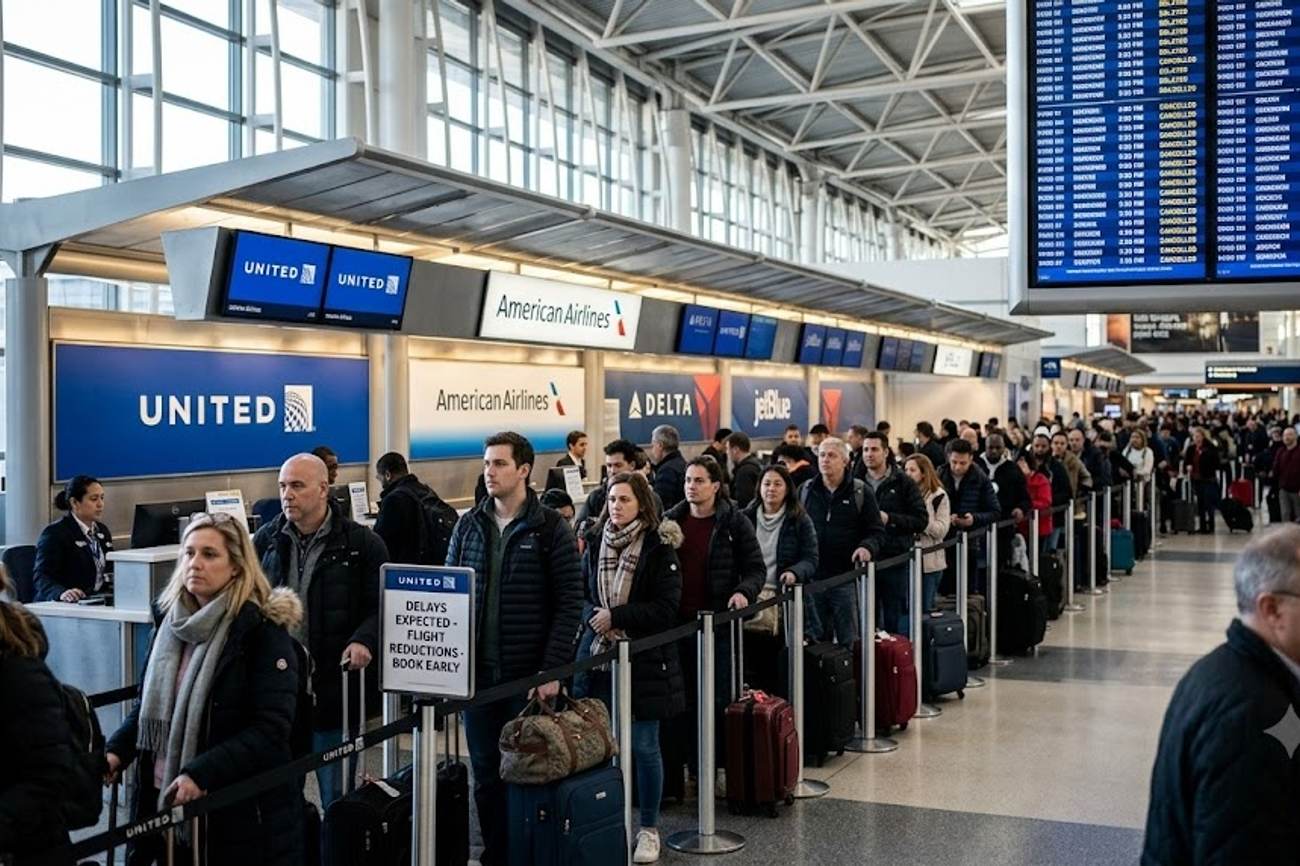
Image generated by AI
[Chicago, October 2023] — United Airlines and American Airlines are leading a coordinated industry shift to slash underperforming flight routes and tighten seat capacity as soaring jet fuel costs threaten holiday profit margins.
The strategic pivot comes as major North American carriers reassess their winter schedules to offset rising operating expenses. By eliminating "weaker" services and concentrating aircraft on high-demand corridors, airlines are intentionally reducing the total number of available seats. This capacity contraction, paired with peak seasonal demand, is expected to drive holiday airfares higher for millions of passengers.
The Fuel Cost Catalyst
The immediate trigger for these schedule revisions is the volatility of jet fuel prices, which remain one of the most significant overhead expenses for global aviation. When fuel costs spike, the financial viability of marginal routes—those with lower load factors or tighter margins—evaporates.
Airlines are no longer operating routes simply for the sake of network coverage. Instead, they are employing a precision-based capacity management strategy. This involves a rigorous analysis of passenger behavior, aircraft availability, and real-time fuel pricing to determine which flights generate sufficient returns to justify the fuel burn.
According to guidelines from the Federal Aviation Administration (FAA), operational efficiency is key to maintaining safety and stability during peak periods. However, for the carriers, "efficiency" currently translates to reducing the frequency of flights on routes that do not meet strict profitability thresholds.
Market Impact and Affected Carriers
The shift toward "route efficiency" is not limited to a single carrier but is a broader trend across the US aviation sector. The following airlines have confirmed they are actively reviewing or adjusting their capacity:
| Airline | Capacity Response Strategy |
|---|---|
| United Airlines | Conducting comprehensive route reviews; adjusting schedules based on strict profitability and demand metrics. |
| American Airlines | Evaluating capacity decisions specifically through the lens of rising fuel expenses and operational costs. |
| Southwest Airlines | Reassessing long-term growth plans and future flight schedules to align with economic pressures. |
While these carriers are not implementing network-wide shutdowns, the cumulative effect of these "surgical" cuts is a reduction in total seat availability. This is particularly evident on secondary routes that connect smaller regional airports to major hubs.
What This Means for Travelers
For the average passenger, corporate "capacity management" translates to a more expensive and less flexible travel experience. When airlines remove flights from a schedule, the remaining seats become more valuable, allowing carriers to raise prices through dynamic pricing algorithms.
Passenger Impact Assessment:
- Price Surges: With fewer seats available during the December holiday window, ticket prices are expected to climb. The combination of high demand and low supply creates a "perfect storm" for fare hikes.
- Reduced Flexibility: Passengers will find fewer departure time options. If a flight is canceled or delayed, the lack of alternative flights on the same route will make rebooking significantly more difficult.
- Increased Budgetary Pressure: Beyond the base fare, passengers may face higher ancillary fees as airlines look for additional revenue streams to offset fuel losses.
- Booking Urgency: The traditional "wait and see" approach to holiday booking is now a high-risk strategy. Seats are filling faster, and the remaining inventory is priced at a premium.
Travelers are strongly encouraged to utilize tools provided by the Department of Transportation (DOT) to understand their rights regarding refunds and cancellations during this period of schedule volatility.
The Premium Segment Strategy
Despite the cuts to general capacity, the aviation industry is not applying these pressures equally across all cabins. Data indicates that carriers are continuing to prioritize "high-value" segments. Business-class and first-class offerings remain largely protected, as premium travelers provide a higher revenue-per-seat ratio, making these flights more resilient to fuel price spikes.
Airlines are doubling down on premium lounges and enhanced in-flight services to attract corporate and luxury travelers. This creates a bifurcated travel experience: while economy passengers face fewer options and higher costs, the premium experience is being leveraged as a primary hedge against operating losses.
The Path Forward for Winter Travel
As the industry moves toward the peak December window, the focus will remain on "demand matching." This means airlines will continue to monitor fuel markets daily and may make further last-minute adjustments to their schedules.
The industry is moving away from the growth-at-all-costs model of the previous decade, shifting instead toward a lean operational model. This approach prioritizes the bottom line over market share, meaning some regional destinations may see a permanent reduction in service frequency if they cannot prove their financial viability.
For those booking now, the strategy is clear: identify alternative airports, remain flexible with travel dates by +/- 3 days, and secure bookings immediately to avoid the steepest price climbs.
FAQ: Holiday Air Travel 2023
Why are my holiday flight options more limited this year? Airlines like United and American are cutting "weaker" routes to save money on rising fuel costs. By operating fewer, more crowded flights, they maximize profit per aircraft, which unfortunately reduces the total number of flights available to passengers.
Will ticket prices definitely go up? While not guaranteed for every route, the reduction in seat capacity combined with high holiday demand typically forces prices upward. Airlines use dynamic pricing, so as seats disappear, the cost for the remaining tickets increases.
Are all airlines cutting flights? The trend is widespread among major US carriers, including United, American, and Southwest. They are focusing on "capacity management," meaning they are prioritizing high-profit routes over less successful ones.
How can I find cheaper fares despite these cuts? Book as early as possible, consider flying into secondary airports, and remain flexible with your departure and return dates. Comparing multiple carriers and using fare-tracking tools is essential.
Fly early, book fast, and expect a tighter market.
#UnitedAirlines #AmericanAirlines #SouthwestAirlines #FuelCosts2023 #USAViation #HolidayAirfares
Related Travel Guides
- Los Angeles Holds The Top Position Followed by Atlanta, Detroit and More As Delta’s Biggest Hubs Drive Global Connectivity
- El Valle de Antón Follows Santa Fe and More as Hidden Panama Adventures Beckon Travellers Worldwide
- China’s Global Travel Comeback Propels Europe Forward With Rising Demand for Premium Holiday Experiences: All You Need to Know
Disclaimer
This article is for informational and educational purposes only. It does not constitute legal, financial, or professional advice. While we strive to provide accurate and up-to-date information, travel policies, regulations, and conditions change rapidly. Always verify information with official sources before making travel decisions. Nomad Lawyer makes no representations about the accuracy, reliability, completeness, or suitability of the information provided. Readers should consult qualified professionals for advice specific to their circumstances. The views expressed in this article are those of the author and do not necessarily reflect the views of Nomad Lawyer.
Kunal K Choudhary
Co-Founder & Contributor
A passionate traveller and tech enthusiast. Kunal contributes to the vision and growth of Nomad Lawyer, bringing fresh perspectives and driving the community forward.
Learn more about our team →