Indian Railways Faces Compensation Order After Delayed Train Journey Causes Passenger Hardship

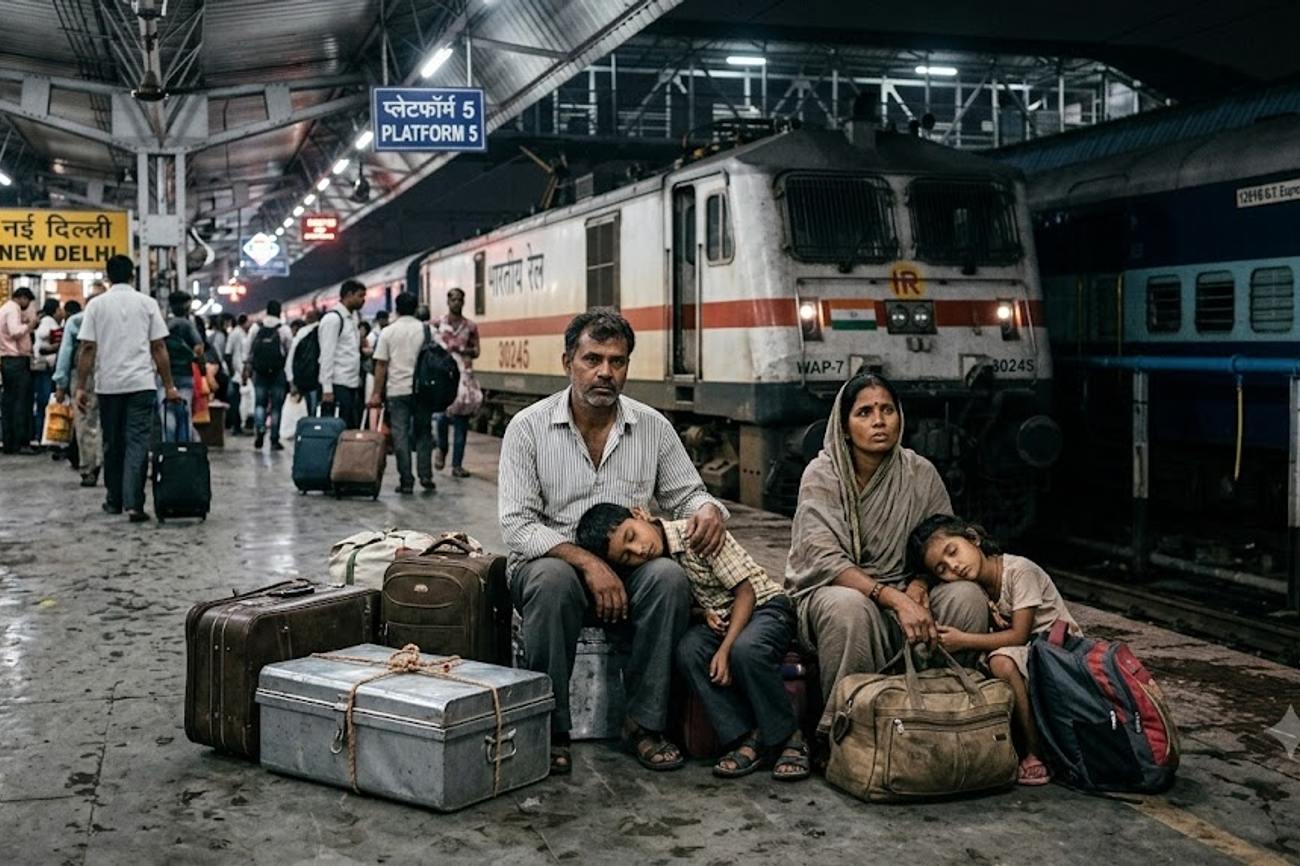
Image generated by AI
title: "Indian Railways Ordered to Pay Compensation for 9-Hour Delay" date: 2026-09-02 category: "Aviation and Global Travel" [Jharkhand, September 2, 2026] — The Seraikella-Kharsawan District Consumer Commission has ordered Indian Railways to pay ₹35,000 in compensation to a passenger following a nearly nine-hour delay of the ISPAT Express. The ruling establishes a significant precedent by confirming that travelers can claim damages for mental and physical distress caused by service failures, even if they cannot prove direct financial losses.
The legal action stems from a journey on September 23, 2024, where a sleeper class passenger traveling from Tatanagar to Sambalpur experienced a massive disruption. The 12871 ISPAT Express, which was scheduled to depart Tatanagar at 10:18 am and arrive at its destination by 3:50 pm that same day, instead arrived at Sambalpur after a delay of 528 minutes. This operational failure extended the passenger's travel time by nearly nine hours beyond the published timetable.
The Failure of the 12871 ISPAT Express
The dispute centered on a specific failure in service delivery by Indian Railways, the state-owned rail operator. The passenger filed a formal complaint asserting that the prolonged wait created unnecessary hardship and severely degraded the travel experience.
During the hearings, the consumer commission analyzed the timing of the 12871 ISPAT Express and determined that the delay was not caused by unavoidable circumstances. The commission found that the railway authorities failed to provide evidence that the 528-minute delay was the result of an "act of God" or an external emergency beyond their operational control. Consequently, the court classified the incident as a clear "deficiency in service."
Legal Arguments and Railway Objections
Railway authorities attempted to block the compensation claim by raising several procedural and jurisdictional objections. Their defense focused on three primary arguments:
- Jurisdictional Challenge: The railways argued that consumer commissions are not the appropriate venue for resolving service disputes, suggesting instead that such claims should be handled via internal railway-specific legal mechanisms.
- Procedural Lapses: Authorities claimed the passenger failed to satisfy necessary notice conditions required before filing a lawsuit against a government organization.
- Lack of Financial Evidence: The defense emphasized that the passenger provided no evidence of measurable monetary loss resulting from the delay.
The Seraikella-Kharsawan District Consumer Commission dismissed all these objections. The ruling clarified that passengers are entitled to an effective mechanism for redress when public services fail. Crucially, the commission ruled that physical discomfort, mental stress, and general inconvenience are compensable injuries in their own right, regardless of whether the passenger lost money on a hotel booking or a missed business meeting.
Affected Travelers, Airlines and Logistics
The impact of this ruling extends beyond a single passenger, potentially altering how Ministry of Railways operations are scrutinized under Indian consumer law.
| Impact Category | Specifics |
|---|---|
| Primary Party | Sleeper class passenger on the Tatanagar to Sambalpur route |
| Service Involved | 12871 ISPAT Express |
| Financial Penalty | ₹30,000 (Compensation) + ₹5,000 (Legal Expenses) |
| Legal Precedent | All passengers using inter-city rail services in India |
| Regulatory Body | Seraikella-Kharsawan District Consumer Commission |
Practical Traveler Advisory and Strategic Insights
For the average traveler, this ruling represents a shift in the power dynamic between the passenger and the state-run transport provider. Historically, claiming compensation for delays in India has been difficult without proving a "tangible" loss—such as a missed flight or a lost day of wages.
Plain-Language Impact:
- Mental Stress is Now Quantifiable: You no longer need a receipt for a lost hotel booking to claim compensation. If a delay is severe enough to cause physical or mental distress, you have a legal basis for a claim.
- Burden of Proof Shift: The ruling suggests that once a delay is proven (via tickets and arrival records), the burden shifts to the railway to prove the delay was "unavoidable."
- Consumer Law Over Railway Law: This confirms that the Consumer Protection Act takes precedence over internal railway guidelines when passengers seek relief for service deficiencies.
Payment Terms and Future Enforcement
The commission has set a strict deadline for the disbursement of funds. Indian Railways must complete the payment of the total ₹35,000 within 45 days of the September 2, 2026, order.
To ensure compliance, the commission added a punitive financial clause: if the payment is not settled within the 45-day window, the railway authorities will be forced to pay an additional 12 per cent annual interest on the amount until the debt is cleared. This ensures that the government entity cannot indefinitely stall the payout through bureaucratic delays.
This decision signals a tightening of accountability for inter-city rail providers. By recognizing that "service quality" is a contractual obligation, the court has opened the door for more passengers to seek damages for systemic delays that have long been treated as inevitable by the transport ministry.
FAQ: Indian Railways Compensation 2026
Do I need to prove I lost money to get compensation for a train delay? No. According to the recent Seraikella-Kharsawan ruling, passengers can claim compensation for mental and physical stress and general inconvenience, even if no direct financial loss is documented.
What evidence is required to file a claim for a delayed train? You must provide travel records, such as your ticket and documentation proving the actual arrival time versus the scheduled arrival time to establish the duration of the delay.
Can I use a consumer court instead of railway internal complaints? Yes. The commission has ruled that complaints regarding passenger inconvenience due to railway delays fall under the jurisdiction of consumer protection laws.
How long does the railway have to pay the court-ordered compensation? In this specific case, the railway was given 45 days to pay. Failure to do so results in a 12 per cent annual interest penalty.
A landmark victory for passenger rights over bureaucratic indifference.
Related Travel Guides
- US Joins Canada and Central America as Atlanta Welcomes Visitors for Major Autumn Festivals and Cultural Tourism in 2026
- Chicago Marathon 2026 to Bring 55,000 Runners from Over 130 Countries as Global Sports Tourism Takes Over the City: All You Need to Know
- Alabama’s Gulf Shores National Shrimp Festival 2026 Set To Drive Coastal Travel Boom With Food Music And Beach Experiences
This article is for informational purposes. Flight routes, passenger regulations, visa rules, and transit advisories are subject to change by airlines and aviation authorities. Readers are advised to verify schedules and travel documentation with relevant carriers and border agencies before departure.
Related Stories

European Mass Protests Disrupt Travel Across France, Italy, Belgium, and Turkey in 2026

Storm Bruna 2026: Iberia Faces 200mm Rainfall and 6m Swells Triggering Mass Travel Chaos