
United Express Captain Orders Pizza for Passengers During Major Tarmac Delay in Watertown 2026
A United Express captain transformed a frustrating two-hour tarmac delay in Watertown, South Dakota, into a positive passenger experience by coordinating local pizza deliveries to the aircraft.

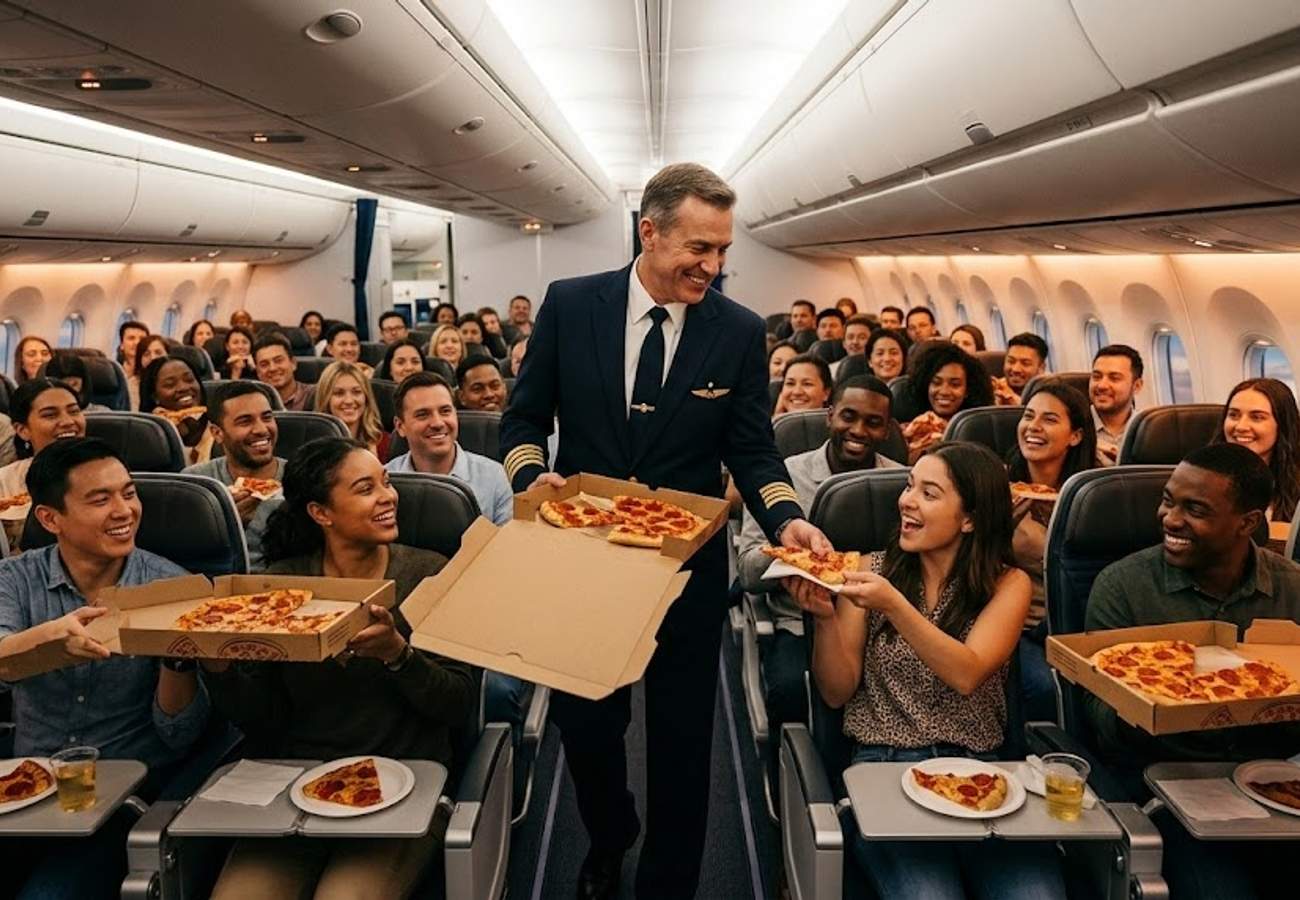
Image generated by AI
A routine regional flight became a viral example of crisis management when a United Express captain opted for local catering over standard airline snacks during a prolonged ground hold.
A weather-related disruption in Watertown, South Dakota, recently turned a potentially volatile cabin environment into a shared community experience. While passengers aboard a United Express regional jet bound for Denver faced a grounding of more than two hours, the captain took the unconventional step of ordering pizza for every person on board.
The incident highlights a growing trend in aviation where "human-centric" decisions by flight crews are used to mitigate the psychological toll of irregular operations (IROPS), particularly at smaller airports where terminal amenities are limited.
Managing the Tarmac Tension in Watertown
The delay occurred as the aircraft awaited departure clearance for Denver. In the confined space of a regional jet, two hours on the tarmac often leads to heightened passenger anxiety and frustration, especially when travelers are unable to return to the terminal for food or movement.
Social media reports indicate that the cabin mood had shifted toward resignation as standard onboard snacks proved insufficient for the length of the wait. Recognizing the deteriorating atmosphere, the captain coordinated with a local pizzeria near the Watertown airport to have fresh pizzas delivered directly to the aircraft door.
The delivery was managed via catering staff, who brought the boxes up to the plane. Passengers described a scene of unexpected unity, passing slices across armrests and tray tables. Notably, witnesses reported that the captain ensured all passengers were served before taking a slice himself.
Contrasting Passenger Experiences in IROPS
The positive reception of the Watertown incident stems largely from its contrast with other recent United flight disruptions. The industry has seen a rise in "stranded" narratives, where passengers feel abandoned by corporate protocols during diversions.
One such comparison involves a flight from Edinburgh to Chicago earlier this summer. In that instance, a weather diversion to Green Bay, Wisconsin, resulted in a nearly 20-hour ordeal. While some pizza was eventually provided, reports indicated there was not enough to feed the entire passenger manifest, leading to significant dissatisfaction.
The difference between the two events underscores a critical point in aviation management: the "Information Gain" for the passenger isn't just about the food, but the perception of empathy and initiative from the crew.
The Rise of the "Pizza Flight" Phenomenon
This event is part of an emerging informal folklore within the aviation community. "Pizza flights" occur when captains use their own discretion—and sometimes their own funds—to provide substantial meals during diversions or medical emergencies.
Previous recorded instances include:
- A United captain ordering approximately 30 pizzas during a long-term diversion to ensure all travelers were fed.
- Various carriers arranging emergency deliveries from nearby chains when airport concessions are closed or overwhelmed.
While these gestures are not part of standard operating procedures (SOPs), they represent a tactical use of captain's discretion to maintain cabin order and passenger goodwill.
Impact on Brand Loyalty and Travel Psychology
In an era of volatile weather and staffing challenges, passengers are increasingly sensitive to how airlines handle delays. Trust is no longer built solely on on-time performance, but on the quality of the recovery process.
Travel analysts suggest that small, high-impact gestures—like a local pizza delivery—can disproportionately improve brand perception. In a highly regulated environment, these moments of human improvisation cut through the impersonal nature of commercial travel.
For United Express, the Watertown incident serves as a case study in how front-line staff can soften the impact of circumstances outside their control, turning a logistical failure into a PR win.
A simple box of pizza proved more effective than a corporate apology in bridging the gap between a stranded passenger and a satisfied customer.
Related Travel Guides
Disclaimer
This article is for informational and educational purposes only. It does not constitute legal, financial, or professional advice. While we strive to provide accurate and up-to-date information, travel policies, regulations, and conditions change rapidly. Always verify information with official sources before making travel decisions. Nomad Lawyer makes no representations about the accuracy, reliability, completeness, or suitability of the information provided. Readers should consult qualified professionals for advice specific to their circumstances. The views expressed in this article are those of the author and do not necessarily reflect the views of Nomad Lawyer.
Raushan Kumar
Founder & Lead Developer
Full-stack developer with 11+ years of experience and a passionate traveller. Raushan built Nomad Lawyer from the ground up with a vision to create the best travel and law experience on the web.
Learn more about our team →