
United Airlines Launches In-App Standby for Earlier Flights Following Disruptions in 2026
United Airlines introduces a digital standby tool allowing disrupted passengers to bid for up to three earlier flights without sacrificing their confirmed rebooked seats.

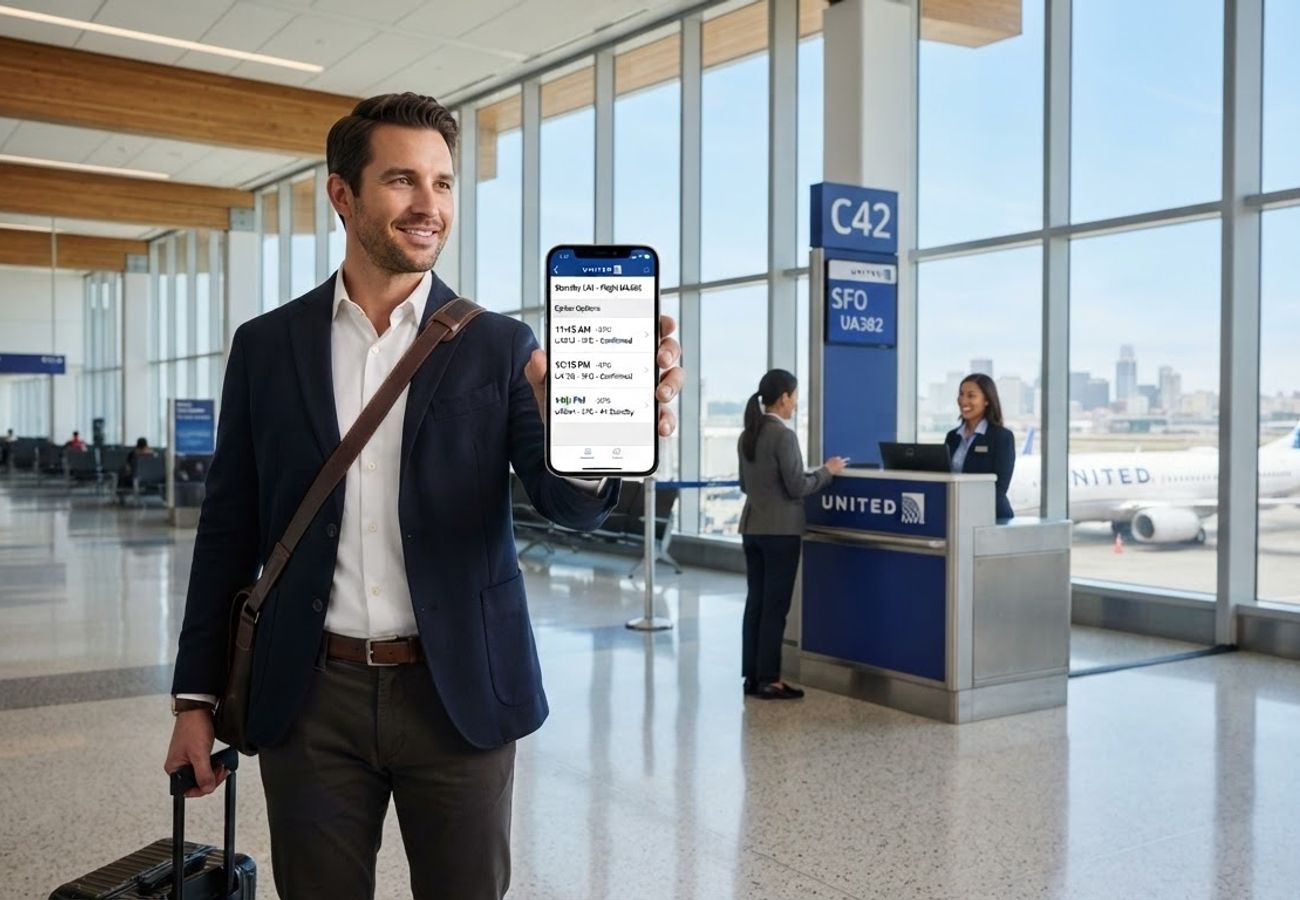
Image generated by AI
United Airlines has launched a digital standby feature allowing passengers disrupted by delays or cancellations to target up to three earlier flights without risking their confirmed rebooked seat.
The Shift Toward Digital Recovery
Starting September 1, 2026, United Airlines transitioned from traditional gate-agent dependency to a self-service recovery model. When a flight is canceled or significantly delayed, the airline's system automatically rebooks the passenger on a later departure. Previously, passengers wanting an earlier flight had to wait in physical queues or call centers to check for availability.
The new app functionality activates exclusively during "irregular operations." Once a traveler is assigned an alternative flight, the disruption-management section of the app surfaces an option to join the standby list for up to three earlier departures to the same destination. This allows the passenger to maintain their confirmed later seat as a safety net while the system monitors for open spots on preferred earlier flights. If a seat clears, the app sends a notification and updates the boarding pass instantly.
Cultural and Environmental Value of Self-Service
For the traveler, the real impact is the removal of "airport anxiety"—the psychological stress of standing in long lines during a crisis. By digitizing the standby process, United reduces the physical congestion at gate podiums and check-in counters, creating a calmer airport environment.
From an operational standpoint, this shift supports a more sustainable approach to airport management. Reducing the need for massive staffing surges during weather events lowers the carbon footprint associated with emergency personnel deployment and optimizes the flow of human traffic within terminals. This move aligns with broader goals from regional aviation bodies to modernize the passenger experience through "frictionless travel," where the smartphone becomes the primary interface for all crisis management.
Visitor Insider Tips for Navigating Disruptions
To maximize the effectiveness of these digital tools, travelers should consider the following strategies:
- Prioritize App Updates: Ensure your app is updated to the latest version before departing for the airport; these features are often rolled out in staggered phases.
- The "Three-Flight" Strategy: When selecting your three standby options, choose a mix of "aggressive" (very soon) and "realistic" (mid-day) departures to increase your odds of clearing.
- Loyalty Leverage: While the app handles the list, standby priority still typically follows a hierarchy of loyalty status and fare class. Premier members should monitor their position in the queue more closely.
- Voucher Coordination: If you are eligible for meal or hotel vouchers due to the delay, claim them via the app first. Pursuing an earlier flight via standby does not necessarily disqualify you from receiving disruption compensation.
- Off-Peak Monitoring: During massive weather events, the app can lag. Refresh your status 60 minutes before the desired earlier flight's departure, as that is when final seat counts are often settled.
Tourism Outlook and Stress Tests
The timing of this rollout serves as a high-stakes trial. United expects to transport over 3.4 million passengers between September 3 and 8, 2026, for the Labor Day holiday—an increase of roughly 300,000 travelers compared to the previous year.
This surge provides a real-world stress test for the system's resilience. If the tool successfully diverts thousands of passengers away from service desks during one of the busiest travel windows of the year, it will likely set the blueprint for the 2026 Thanksgiving and December holiday seasons. The long-term goal is a transition where "irregular operations" no longer result in terminal gridlock, but are managed as a background digital process.
The era of the airport standby line is rapidly fading into a digital queue.
Related Travel Guides
Disclaimer
This article is for informational and educational purposes only. It does not constitute legal, financial, or professional advice. While we strive to provide accurate and up-to-date information, travel policies, regulations, and conditions change rapidly. Always verify information with official sources before making travel decisions. Nomad Lawyer makes no representations about the accuracy, reliability, completeness, or suitability of the information provided. Readers should consult qualified professionals for advice specific to their circumstances. The views expressed in this article are those of the author and do not necessarily reflect the views of Nomad Lawyer.
Preeti Gunjan
Contributor & Community Manager
A passionate traveller and community builder. Preeti helps grow the Nomad Lawyer community, fostering engagement and bringing the reader experience to life.
Learn more about our team →