
Breaking Airline News: Mid-Air Terror as United Airlines Boeing 737 MAX 9 Diverts to Albuquerque, Sparking Massive Travel Chaos
Breaking airline news: Amidst terrifying operational fragility, United Airlines Flight UAL1181—a Boeing 737 MAX 9—executes an unexplained mid-air diversion, violently plunging stunned passengers into massive travel chaos in Albuquerque.

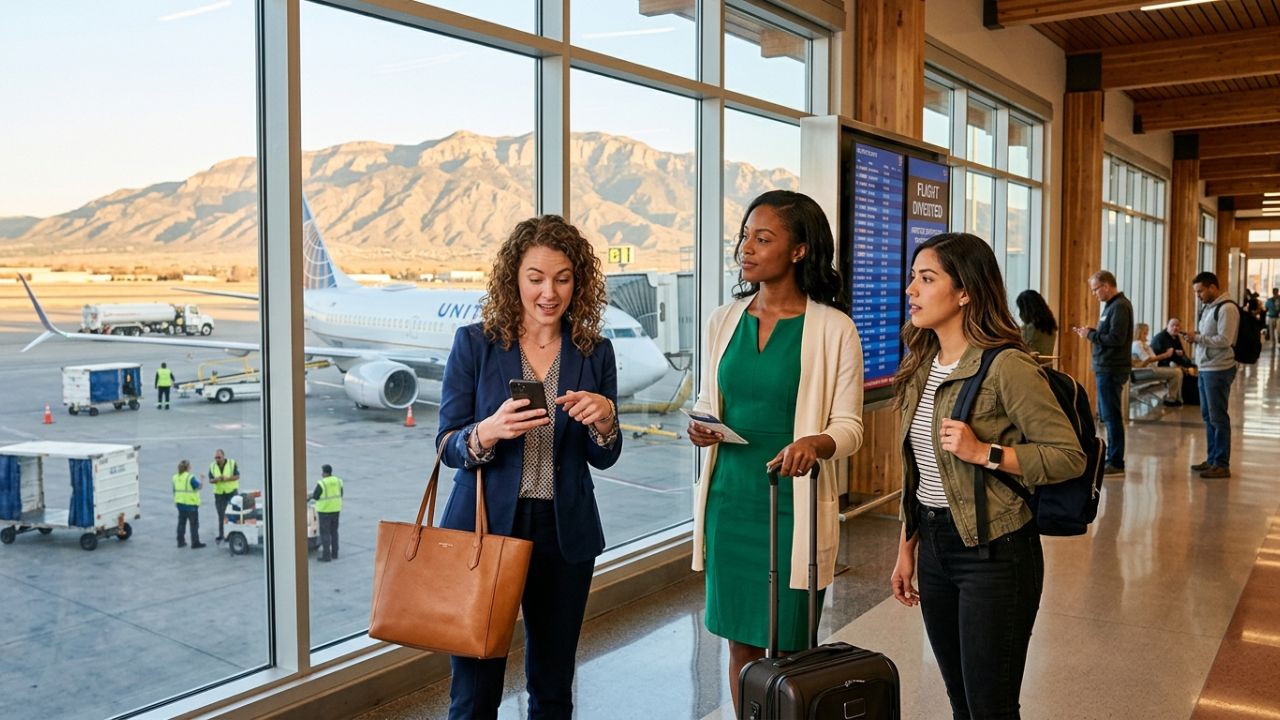
Image representing the intense psychological shock and massive operational disruption as United Airlines Flight UAL1181 executes an emergency mid-air diversion, violently stranding passengers in the heart of New Mexico travel chaos.
Breaking Airline News: Mid-Air Terror as United Airlines Boeing 737 MAX 9 Diverts to Albuquerque, Sparking Massive Travel Chaos
As paralyzing terminal bottlenecks, severe airspace congestion, and catastrophic operational fragility violently transform domestic transit into a grueling endurance test, a highly terrifying mid-air incident has just struck the US Southwest. In a harrowing demonstration of how rapidly a routine flight can devolve into extreme airport disruptions, United Airlines Flight UAL1181 executed an unexplained, high-speed mid-air diversion. Shortly after departing Las Vegas en route to Houston, the Boeing 737 MAX 9 aircraft suddenly aborted its trajectory, aggressively diverting to Albuquerque, New Mexico. This highly abnormal operational decision left a cabin full of passengers absolutely stunned and violently plunged into massive travel chaos as they touched down far from their intended destination, completely severing their critical air links to Texas and exposing the terrifying vulnerability of modern commercial aviation.
In a brutal demonstration of how desperately regional passengers require absolute operational reliability to survive systemic transit failures, this aggressive mid-air diversion represents far more than a minor scheduling glitch. For tourists attempting to return from Las Vegas or business executives navigating tight connections through the massive Houston hub, the sudden suspension of a flight mid-air creates an unbearable level of psychological stress and subsequent airport disruption. When major carriers execute a sudden diversion, the resulting ripple effect aggressively paralyzes the terminal upon landing. As passengers deplaned in Albuquerque, furious and disoriented, they faced agonizing extended waiting times, terrifying rebooking difficulties, and totally ruined onward connections out of Texas. While the real reason behind the unexpected operational decision remains completely unknown, the combination of mid-air terror and ground-level gridlock underscores the extreme fragility of the domestic aviation network.
Expanded Overview: Weaponizing Operational Secrecy
The terrifying crisis of overwhelming passenger stress currently testing regional airports brutally exposes the severe limitations of localized air networks, especially when communication completely breaks down during an emergency. Recognizing this absolute vulnerability, travel analysts and aviation enthusiasts are aggressively monitoring the data surrounding Flight UAL1181, attempting to decode why a fully loaded Boeing 737 MAX 9 passenger jet would suddenly abandon its mission so early in the flight plan.
Section-Wise Breakdown: Navigating the Airborne Collapse
To fully comprehend the massive logistical and psychological damage of this operational failure, corporate travel planners and regional tourists must rigorously review exactly how this flight diversion drove massive travel chaos.
The Las Vegas Departure: A Routine Flight Aborted To understand the absolute severity of this event, one must look at the exact flight telemetry. On June 12, 2026, Flight UA1181 pushed back and departed from Gate D55 in Las Vegas. The Boeing 737 MAX 9 aircraft, officially registered as N77575, initially appeared to be conducting a routine domestic extraction to Houston, Texas. Flight records indicate that the aircraft departed at approximately 8:10 AM PDT.
The Anatomy of a Diversion: 91 Minutes to Albuquerque Shortly after departure, as the aircraft proceeded eastward, the flight’s trajectory violently changed. The aircraft did not continue deep into its intended route; instead, the crew executed an aggressive early diversion. The Boeing 737 MAX 9 remained airborne for only about one hour and thirty-one minutes before landing at Albuquerque International Sunport. Flight records show the aircraft arrived safely at Gate E1 at 10:26 AM MDT. This highly premature arrival meant the aircraft landed approximately 1 hour and 41 minutes ahead of its originally scheduled arrival time in Houston. Aviation analysts regard early diversions as critical evidence that flight crews identified a condition warranting immediate, aggressive assessment before risking further transit.
Flight Operational Disruption Matrix
To guarantee that travelers can aggressively track the specific metrics driving this massive operational collapse, the following matrix details the exact, verified flight data regarding the UAL1181 diversion.
| Operational Disruption Metric | Verified Flight Data |
|---|---|
| Operating Carrier | United Airlines |
| Flight Designation | UAL1181 (UA1181) |
| Aircraft Type & Registration | Boeing 737 MAX 9 (N77575) |
| Intended Route | Las Vegas (LAS) to Houston (IAH) |
| Actual Diversion Target | Albuquerque International Sunport (ABQ) |
| Departure Data (LAS) | Gate D55 / Approx. 8:10 AM PDT (June 12, 2026) |
| Emergency Landing Data (ABQ) | Gate E1 / 10:26 AM MDT (Flight duration: 1h 31m) |
| Schedule Discrepancy | Landed 1 hour 41 minutes ahead of planned Houston arrival |
Passenger Impact: Escaping the Ground-Level Nightmare
For the passengers aboard the Boeing 737 MAX 9, the psychological shock of realizing their aircraft was executing an emergency diversion to New Mexico was immense. Travelers suffering from the horrifying prospect of navigating aggressive rebooking queues after their Houston transit was suddenly aborted were immediately plunged into panic upon landing.
Instead of arriving at the massive United hub in Houston to catch vital connecting flights, passengers were violently thrust into the terminals of Albuquerque. The combined impact of this mid-air cancellation created horrifying scheduling challenges, leading directly to missed connections, violently extended wait times, and massive operational adjustments. While no injuries or emergency evacuations were reported, the lack of immediate public explanation from United Airlines heavily exacerbated the extreme travel chaos on the ground.
Industry Analysis: The Extreme Cost of Safety
From a strategic aviation perspective, the activation of an emergency diversion protocol cannot be understood without examining the broader push for absolute operational safety. Diversions occur for a wide range of reasons, including technical concerns, adverse weather conditions, or medical emergencies. Modern aircraft like the MAX 9 generate extensive diagnostic information, allowing crews to make aggressive, rapid decisions to abort.
Anup Kumar Keshan, Founder and Editor-in-Chief of Travel And Tour World, observed that the diversion of United Airlines Flight UAL1181 to Albuquerque highlighted the aviation industry’s strong safety-first approach. He noted that while the unexpected route change raised understandable questions among passengers and forced them to endure severe travel chaos, the safe landing demonstrated how airlines and flight crews rely on precautionary decision-making to manage operational uncertainties and maintain the highest levels of passenger safety.
Conclusion: The Fragility of Domestic Transit
As the extremely critical domestic transit network continues to face terrifying strain from unprecedented operational volatility, the aggressive mid-air diversion of United Airlines Flight UAL1181 represents a massive warning. It signals a critical reality: even routine domestic flights can violently devolve into extreme travel chaos within 90 minutes of takeoff. With passengers left stranded in Albuquerque awaiting answers, this event proves that the future of resilient commercial aviation relies entirely on securing absolute operational reliability. Travelers facing these massive airport disruptions must maintain intense vigilance, understanding that mid-air safety protocols, while critical, will always trigger devastating logistical meltdowns on the ground.
Key Takeaways
- Terrifying Mid-Air Diversion: United Airlines Flight UAL1181 (Boeing 737 MAX 9) abruptly aborted its flight to Houston, aggressively diverting to Albuquerque.
- Rapid Turnaround: The aircraft (Registration N77575) departed Las Vegas at 8:10 AM PDT and landed in Albuquerque at 10:26 AM MDT, a flight duration of roughly 1 hour and 31 minutes.
- Unexplained Chaos: United Airlines has not provided an official public explanation, leaving passengers in a state of severe uncertainty.
- Terminal Meltdown: The sudden diversion violently thrust passengers into massive airport disruptions, ruining connections in Houston as they arrived 1 hour and 41 minutes ahead of schedule in the wrong city.
- Safety Over Schedule: Industry experts emphasize that early diversions prove aviation safety systems are actively prioritizing passenger lives over itinerary completion, despite the resulting travel chaos.
Related Travel Guides
- How Airline Consolidations Are Sparking Major Travel Chaos Across the Globe
- Navigating Severe Flight Cancellations: A Passenger's Guide to Surviving Airport Disruptions
- The Ultimate Guide to Beating Airport Congestion During the 2026 Summer Surge
Z/KLAS/KABQ) and Flightradar24 (https://www.flightradar24.com/data/flights/ua1181). Specific operational circumstances regarding the diversion remain under investigation by the airline. Passengers facing potential flight cancellations or extreme delays are strongly advised to meticulously verify flight status directly through official airline channels to successfully navigate potential airport disruptions.*
Disclaimer
This article is for informational and educational purposes only. It does not constitute legal, financial, or professional advice. While we strive to provide accurate and up-to-date information, travel policies, regulations, and conditions change rapidly. Always verify information with official sources before making travel decisions. Nomad Lawyer makes no representations about the accuracy, reliability, completeness, or suitability of the information provided. Readers should consult qualified professionals for advice specific to their circumstances. The views expressed in this article are those of the author and do not necessarily reflect the views of Nomad Lawyer.
Kunal K Choudhary
Co-Founder & Contributor
A passionate traveller and tech enthusiast. Kunal contributes to the vision and growth of Nomad Lawyer, bringing fresh perspectives and driving the community forward.
Learn more about our team →