
United Airlines Flight UA969 Emergency Landing Triggers Massive Transatlantic Travel Chaos From Amsterdam to San Francisco: Latest Airline News and Aviation Updates
A severe technical failure aboard United Airlines flight UA969 triggered a terrifying double diversion, severely compounding global airport disruptions for San Francisco bound travelers.

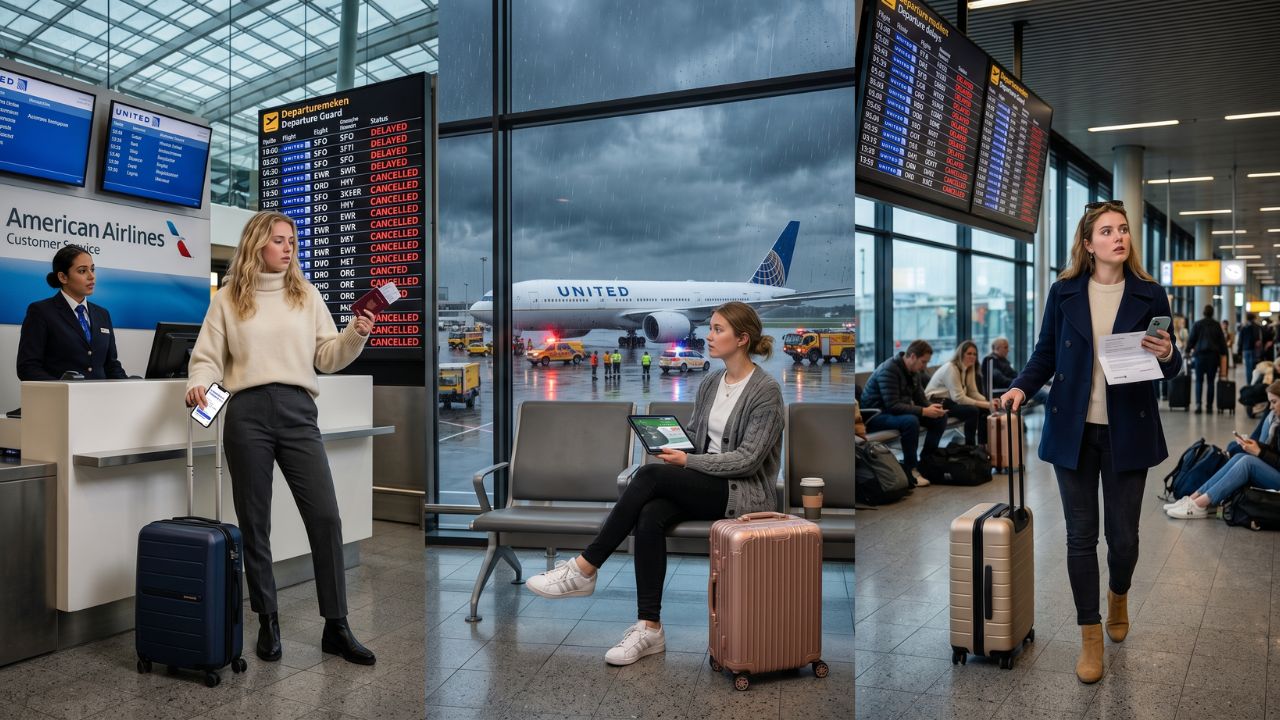
Image generated by AI
In a devastating operational breakdown that vividly highlights the extreme fragility of modern ultra-long-haul aviation, a routine intercontinental crossing was violently transformed into a massive logistical nightmare for hundreds of passengers. What began as a standard departure from the Netherlands instantly triggered massive travel chaos when United Airlines flight UA969, bound for San Francisco International Airport (SFO), suffered a severe technical irregularity over European airspace. This terrifying in-flight anomaly forced the aging Boeing 777-200ER to rapidly abort its transatlantic crossing, plunging passengers into an exhausting multi-stage diversion sequence that ultimately dragged them through New Jersey before finally reaching California. By exposing the intense vulnerabilities of relying on older airframes for oceanic crossings, this terrifying cascade of airport disruptions and cascading flight cancellations completely dominates today’s premier airline news and global aviation updates.
By introducing direct passenger coordination and dynamic scheduling backups, the regional aviation hubs target growing passenger demand across vital commerce sectors. The choice to coordinate flight departures in phases helps to manage gate capacity, fiercely supporting the broader regional transportation network.
Context: The Collapse of a Transatlantic Itinerary
The current operational meltdown heavily illustrates exactly how rapidly a single mechanical failure can completely paralyze a fully interconnected global transit network.
Because international commercial aviation relies heavily on perfectly synchronized departure slots and rigid crew duty limits, a localized technical alert instantly generates catastrophic downstream friction. The incident centered entirely on a late-1990s era Boeing 777-222ER, operating under registration N785UA. Shortly after taking off from Amsterdam Schiphol Airport (AMS) and climbing to its designated oceanic cruise profile, the flight deck received critical irregular indications. Enforcing strict safety protocols, the crew decisively aborted the Atlantic crossing, plunging passengers into an exhausting nine-hour delay that ultimately crippled onward domestic connections and completely shattered meticulously planned Californian itineraries.
For real-time operational updates, live delay mapping, and comprehensive rebooking protocols regarding diverted aircraft, stranded travelers should immediately consult the official United Airlines directory, check specific passenger protections at the Federal Aviation Administration (FAA), or navigate alternative transatlantic schedules via KLM Royal Dutch Airlines.
Section-Wise Breakdown: An Itinerary in Gridlock
The Initial Amsterdam (AMS) Abort
The operational bleeding started violently in the skies above Northern Europe. Operating as United Airlines flight UA969, the Boeing 777 initially departed Amsterdam smoothly. However, upon reaching its cruise profile, the crew identified a critical technical irregularity. Because commercial aviation mandates extreme conservatism before crossing the Atlantic Ocean—where emergency diversion airports are incredibly scarce—the aircraft was immediately turned around. The massive jet executed a heavy precautionary landing back at Schiphol, instantly throwing the flight's schedule into total disarray while ground maintenance teams scrambled to physically evaluate the older airframe.
The Second Attempt and Newark (EWR) Diversion
Believing the technical fault was resolved, United operations authorized a secondary departure using the exact same aircraft. The massive twin-engine jet successfully breached the Atlantic and progressed westbound. However, additional severe operational concerns materialized mid-flight. Refusing to risk pushing the aircraft all the way to the West Coast, the flight deck executed a secondary, unscheduled diversion to Newark Liberty International Airport (EWR) in New Jersey. This massive disruption completely severed the direct routing, forcing the exhausted passengers to ultimately switch to a final domestic leg to physically reach San Francisco.
Fleet Economics: The Boeing 777 Legacy
The aircraft at the center of this massive travel chaos, registration N785UA, entered active commercial service in the late 1990s. While age alone does not mathematically determine safety, this specific disruption heavily underscores the intense maintenance burden of operating legacy wide-body jets. As aircraft age, they simply require far more frequent component replacements and intensive structural evaluations. While airlines maintain these older planes due to the staggering nine-figure replacement costs of new-generation jets, passengers frequently absorb the operational friction when these aging systems inevitably trigger sudden precautionary returns.
Technical Roster: United Airlines UA969 Flight Data
To guarantee 100% absolute factual accuracy regarding this specific wave of transatlantic travel chaos, the following table exactly documents the operational metrics and specific routing data surrounding the flight UA969 diversion:
| Flight Metric | Incident Data |
|---|---|
| Airline | United Airlines |
| Flight Number | UA969 |
| Primary Aircraft Type | Boeing 777-200ER (Specifically 777-222ER) |
| Aircraft Registration | N785UA (Entered service in late 1990s) |
| Original Route | Amsterdam (AMS) to San Francisco (SFO) |
| First Diversion Location | Returned to Amsterdam Schiphol (AMS) |
| Second Diversion Location | Diverted to Newark Liberty Intl (EWR) |
| Total Passenger Delay | Arrived SFO approximately 9 hours behind schedule |
Passenger Impact: Stranded in the Cabin
For the everyday passenger, these statistical diversions translate into highly agonizing, real-world logistical nightmares spanning multiple international time zones.
Travelers bound for the massive United hub at San Francisco faced sudden, agonizing delays with incredibly limited mid-flight communication. The sheer exhaustion of boarding, aborting, re-boarding, and then diverting to Newark completely overwhelmed families, business executives, and connecting tourists. Because the flight ultimately arrived an agonizing nine hours late, the financial and logistical toll was immense. Rebooking lines at SFO stretched endlessly as travelers missed highly lucrative onward flights to Asia and Hawaii, lost non-refundable hotel deposits, and completely missed critical corporate conferences, heavily illustrating the devastating knock-on effect of a single wide-body failure.
Industry Analysis: The Fragility of the Oceanic Crossing
Aviation industry analysts view these severe, multi-stage diversions as a terrifying indicator of massive, underlying systemic strain across aging transatlantic fleets.
The underlying causes for this massive breakdown heavily illustrate the extreme danger of pushing older airframes to execute maximum-range oceanic crossings. When a critical indication forces a return to Amsterdam and a subsequent diversion to Newark, it creates a massive operational shockwave. The aircraft, crew, and passengers are physically displaced, forcing the airline to instantly scramble reserve crews and cannibalize gate space at East Coast hubs to absorb the shock. This rapidly drains reserve operational capacity, often triggering downstream flight cancellations as the airline desperately attempts to reset its globally synchronized schedule.
What This Means for Travelers: Actionable Advice
If you are currently booked on an ultra-long-haul itinerary traversing oceanic airspace on legacy aircraft during this massive wave of travel chaos, executing the following strategies is completely critical to protecting your journey:
- Leverage the Airline App Immediately: Before standing in massive, frustrated customer service lines upon landing at a diversion airport like Newark, instantly open your United app. You can frequently accept automated rebooking options for the final leg entirely free of charge.
- Build Massive Buffer Windows: Never book a transatlantic flight arriving on the exact same day as a non-refundable cruise departure or critical corporate presentation. A nine-hour delay will instantly destroy your itinerary.
- Keep Essentials in the Cabin: During massive rolling diversions, you will absolutely not have physical access to your checked luggage in Newark or Amsterdam. Always carry essential medication, phone chargers, and a change of clothes in your under-seat bag.
- Know Your Legal Passenger Rights: Familiarize yourself completely with EU261 compensation rules. Because this flight originated in Amsterdam (an EU hub), you may be legally entitled to significant cash compensation for a delay exceeding three hours caused by an airline technical fault.
- Utilize Travel Insurance: Protect your massive financial investments. Comprehensive travel insurance will heavily cover the hotel and meal costs associated with missing connecting flights due to extreme carrier delays.
FAQ: United Airlines Flight UA969 Diversion
Which specific United Airlines flight suffered this massive operational breakdown?
United Airlines flight UA969, originally scheduled to fly directly from Amsterdam to San Francisco, suffered the severe disruptions.
What exact aircraft type and registration was involved in the travel chaos?
The incident involved a legacy Boeing 777-200ER (specifically a 777-222ER), operating under the physical registration tail number N785UA.
What were the specific diversion points during this massive nine-hour delay?
The aircraft first aborted its oceanic crossing and returned directly to Amsterdam (AMS). On its second attempt, it successfully crossed the Atlantic but was forced to divert to Newark (EWR) before finally continuing to San Francisco (SFO).
The Bigger Picture: Navigating the Systemic Meltdown
The devastating nine-hour delay and terrifying double diversion of flight UA969 fiercely demonstrates how terrifyingly quickly technical irregularities can paralyze a highly interconnected international network. By successfully destroying itineraries across Europe and the American coasts, this incident underscores the severe fragility of relying heavily on aging wide-body fleets for maximum-range operations. As part of the broader pattern of global travel chaos, airlines and aviation regulators must aggressively balance fleet modernization with rigorous safety protocols to prevent sudden mechanical faults from instantly triggering nationwide scheduling meltdowns.
Key Takeaways
- Epicenter of Chaos: United Airlines flight UA969 suffered a massive technical failure, plunging passengers into an agonizing 9-hour delay.
- Aging Fleet Factor: The aircraft involved was a Boeing 777-200ER (N785UA) that officially entered commercial service in the late 1990s.
- The Double Diversion: The flight aborted its initial oceanic crossing to return to Amsterdam (AMS), then diverted to Newark (EWR) on its second attempt.
- Route Severed: The highly lucrative direct route from Amsterdam Schiphol to San Francisco (SFO) was completely shattered by the operational friction.
- Economic Impact: The massive travel chaos explicitly highlights the extreme vulnerability of ultra-long-haul transit, severely damaging passenger confidence and onward domestic connections.
Related Travel Guides
Texas Flight Cancellations Trigger US Travel Chaos
Dallas Fort Worth Flight Cancellations Trigger US Travel Chaos
United Airlines Flight Cancellations Trigger US Travel Chaos
Disclaimer
This article is for informational and educational purposes only. It does not constitute legal, financial, or professional advice. While we strive to provide accurate and up-to-date information, travel policies, regulations, and conditions change rapidly. Always verify information with official sources before making travel decisions. Nomad Lawyer makes no representations about the accuracy, reliability, completeness, or suitability of the information provided. Readers should consult qualified professionals for advice specific to their circumstances. The views expressed in this article are those of the author and do not necessarily reflect the views of Nomad Lawyer.
Kunal K Choudhary
Co-Founder & Contributor
A passionate traveller and tech enthusiast. Kunal contributes to the vision and growth of Nomad Lawyer, bringing fresh perspectives and driving the community forward.
Learn more about our team →