
United Airlines Flight UA1190 Boeing 737-900 Diverts to Columbus Due to Newark Weather 2026
United Airlines flight UA1190 from Phoenix to Newark diverted to John Glenn Columbus International Airport on July 28, 2026, due to severe thunderstorms affecting Newark Liberty International.

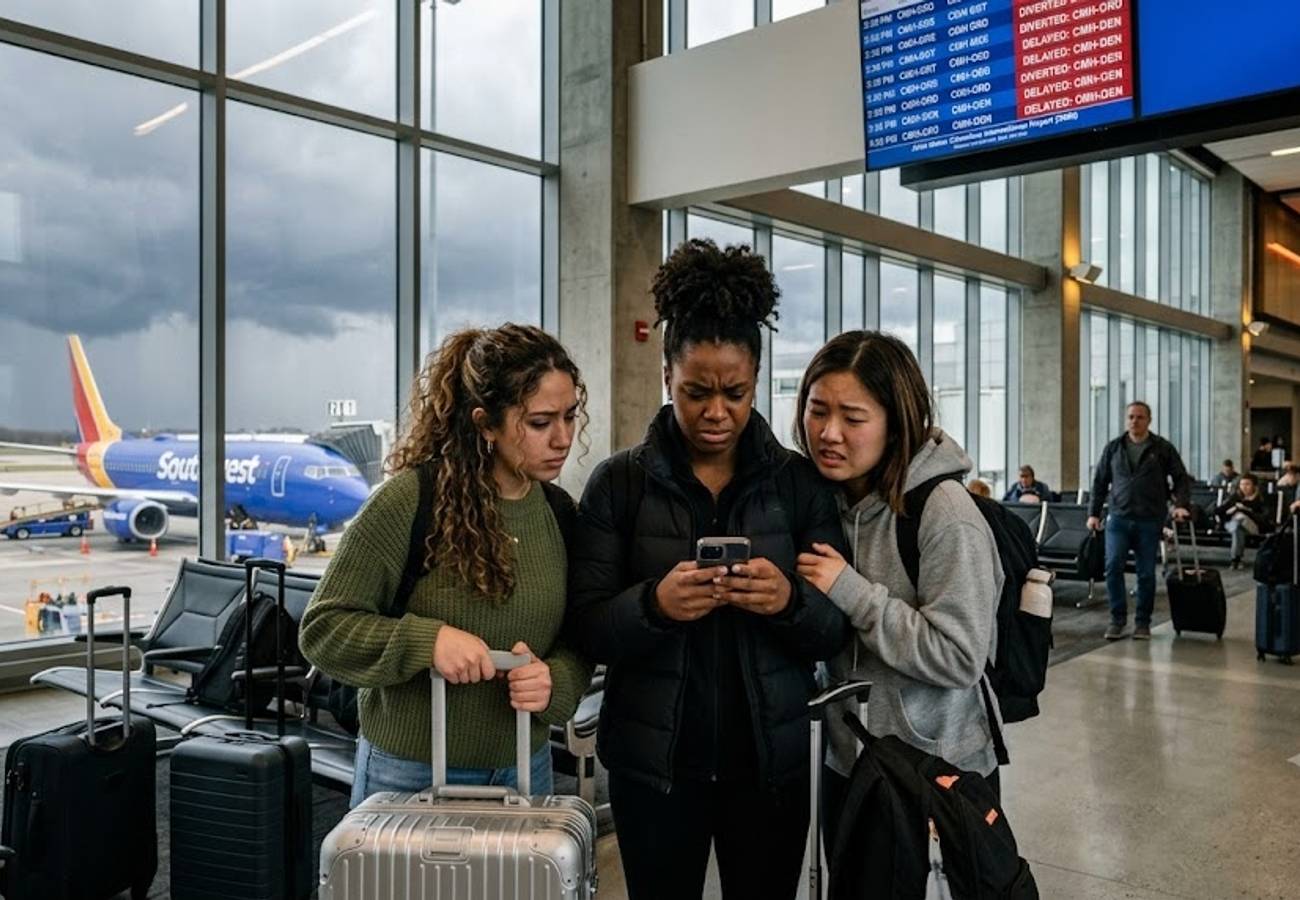
Image generated by AI
Severe weather at Newark Liberty International Airport forced United Airlines flight UA1190 to divert to Columbus, Ohio, on July 28, 2026. The incident highlights the vulnerability of East Coast hubs to summer thunderstorm patterns.
United Airlines flight UA1190, operated by a Boeing 737-900 (Registration N38417), was forced to change course during its scheduled route from Phoenix, Arizona, to Newark, New Jersey. Instead of landing at Newark Liberty International Airport, the aircraft diverted to John Glenn Columbus International Airport.
The diversion occurred amidst significant operational restrictions at Newark, where thunderstorms disrupted arrival and departure sequences. These weather-related challenges created a backlog of traffic, prompting crews to seek alternative landing sites to maintain safety protocols.
Flight Operational Data
The following details confirm the scheduled and actual parameters of the flight:
- Flight Number: UA1190
- Aircraft Model: Boeing 737-900
- Aircraft Registration: N38417
- Departure Point: Phoenix Sky Harbor International Airport
- Scheduled Departure: 11:40 AM MST
- Intended Destination: Newark Liberty International Airport
- Scheduled Arrival: 7:35 PM EDT
- Diversion Point: John Glenn Columbus International Airport
- Date of Incident: July 28, 2026
The Logistics of the Newark Disruption
Newark Liberty International serves as a critical gateway for the New York metropolitan area, handling massive volumes of domestic and international traffic. On July 28, the airport's capacity was severely throttled by thunderstorms.
When a major hub like Newark faces weather-induced Ground Delay Programs (GDP) or Arrival Rate reductions, the ripple effect extends across the entire US aviation network. For flight UA1190, the decision to divert to Columbus was an operational necessity to avoid excessive holding patterns and to ensure fuel reserves remained within safety limits.
Columbus International Airport acted as the primary relief valve in this scenario. As a regional aviation point in Ohio, it provides the necessary infrastructure to support diverted domestic narrow-body aircraft like the 737-900 when primary hubs become inaccessible.
Impact on Passenger Logistics
For the passengers on UA1190, the diversion transformed a standard cross-country flight into a multi-stage journey. The primary impacts include:
- Timeline Shifts: Significant delays in reaching the New York area, impacting time-sensitive business meetings and leisure bookings.
- Ground Transport: Disruption of pre-arranged airport transfers and hotel check-in schedules in New Jersey and New York City.
- Connectivity: Potential loss of onward international connections that typically transit through Newark.
Why This Matters: Industry Analysis
From a logistical perspective, this diversion is not an isolated event but a symptom of "hub congestion fragility." Our analysis of the route map suggests that when Newark—one of the most constrained airports in the US—experiences weather disruptions, the impact is magnified because there are few nearby alternatives with the capacity to handle large-scale diversions without causing secondary delays.
For travelers, the real impact is the "cascading delay." A diversion in Columbus doesn't just delay the arrival; it removes the aircraft and crew from their next scheduled leg, potentially cancelling subsequent flights. This creates a vacuum in the schedule that can take 24 to 48 hours to resolve.
From an aviation safety standpoint, the use of John Glenn Columbus International Airport demonstrates the essential role of secondary airports. Without these "safety valves," aircraft would be forced into dangerous fuel-critical holding patterns over the Northeast corridor.
Forward Outlook
Expect continued volatility in East Coast flight schedules throughout the 2026 summer season. Airlines are increasingly relying on predictive weather modeling to divert flights earlier in the journey—rather than orbiting the destination airport—to save fuel and reduce passenger stress.
Travelers utilizing Newark as a gateway should build "buffer time" into their itineraries, particularly for international connections. The trend suggests that "weather resilience" will become a key competitive metric for airlines as they optimize their diversion strategies to minimize passenger displacement.
Safe travels require flexibility and a clear understanding of hub dependencies.
Related Travel Guides
Disclaimer
This article is for informational and educational purposes only. It does not constitute legal, financial, or professional advice. While we strive to provide accurate and up-to-date information, travel policies, regulations, and conditions change rapidly. Always verify information with official sources before making travel decisions. Nomad Lawyer makes no representations about the accuracy, reliability, completeness, or suitability of the information provided. Readers should consult qualified professionals for advice specific to their circumstances. The views expressed in this article are those of the author and do not necessarily reflect the views of Nomad Lawyer.
Raushan Kumar
Founder & Lead Developer
Full-stack developer with 11+ years of experience and a passionate traveller. Raushan built Nomad Lawyer from the ground up with a vision to create the best travel and law experience on the web.
Learn more about our team →