
Fort Lauderdale-Hollywood International Airport Records 81 Flight Delays and 4 Cancellations Disrupting Key Tourism Corridors Across the United States and Caribbean
Fort Lauderdale-Hollywood International Airport experienced 81 delays and 4 cancellations on July 5, 2026, disrupting travel across the U.S. and Caribbean.

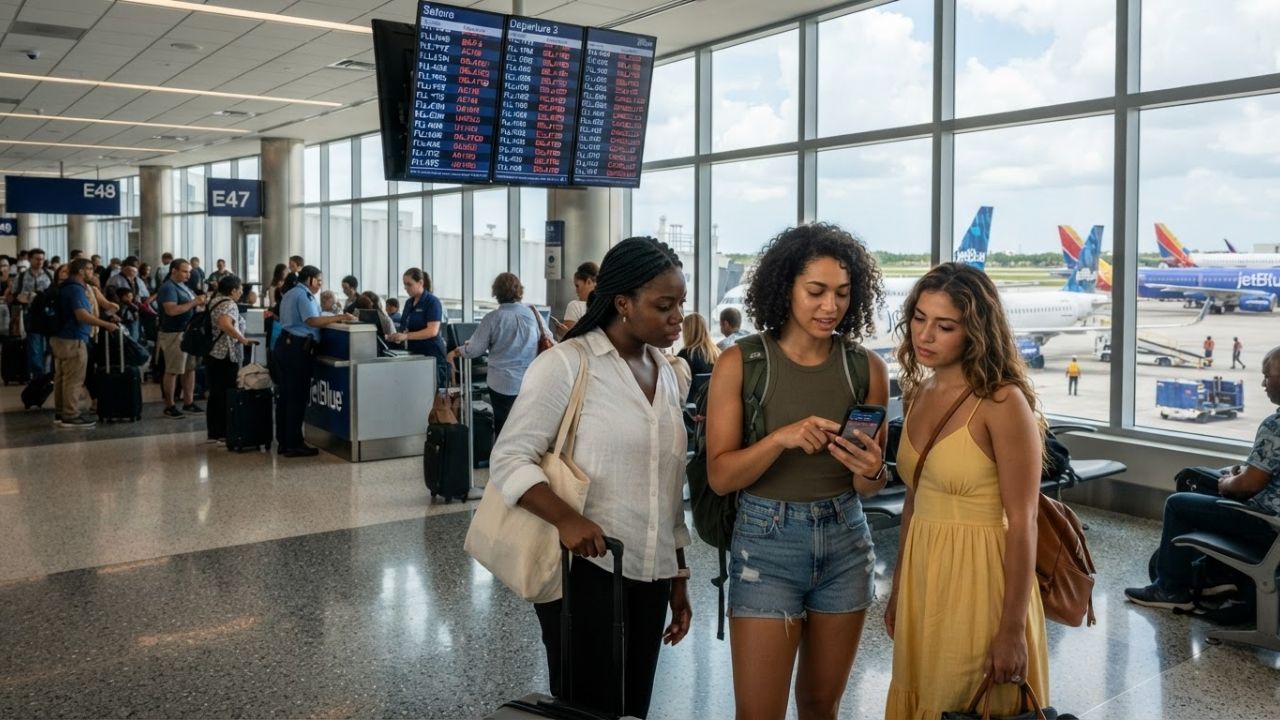
Image generated by AI
Airline travelers moving through South Florida are experiencing widespread scheduling volatility today. Fort Lauderdale-Hollywood International Airport has recorded 81 flight delays and 4 cancellations, impacting domestic routes and Caribbean connections.
Florida Airspace Congestion and Weather Disrupt Flight Scheduling
According to reports, the flight disruptions occurred on July 5, 2026, amidst heavy summer holiday travel demand.
Official statistics published on the Fort Lauderdale-Hollywood International Airport (FLL) network portal confirm the schedule adjustments.
The airport recorded 81 total delayed flights and 4 cancellations, causing passenger backlogs inside the main terminal areas.
Operational traffic constraints managed by the Federal Aviation Administration (FAA) show that high airspace density contributed to the delays.
Localized convective weather patterns over South Florida also forced air traffic controllers to increase flight spacing.
The tables below display the airport disruption parameters and regional delay statistics.
Fort Lauderdale Airport Operational Disruption Statistics
| Airport Hub Gateway | Total Recorded Delays | Total Flight Cancellations | Primary Disruption Causes | Affected Travel Markets |
|---|---|---|---|---|
| Fort Lauderdale (FLL) | 81 delayed flights | 4 cancelled flights | Airspace congestion, weather | US, Canada, Bahamas, Caribbean |
Regional Impact and Flight Delay Percentages
| Destination Gateway Airport | Delay Impact Percentage | Flight Cancellations | Flight Volumes Affected | Geographic Aviation Region |
|---|---|---|---|---|
| New York (JFK) | 36% of flights delayed | 0 cancellations | 4 flights delayed | Northeast United States |
| New York (LGA) | 25% of flights delayed | 0 cancellations | 2 flights delayed | Northeast United States |
| Newark Liberty (EWR) | 28% of flights delayed | 0 cancellations | 2 flights delayed | Northeast United States |
| Baltimore (BWI) | 40% of flights delayed | 0 cancellations | Scattered delays | Mid-Atlantic United States |
| Washington Dulles (IAD) | 25% of flights delayed | 0 cancellations | Scattered delays | Mid-Atlantic United States |
| Chicago Midway (MDW) | 66% of flights delayed | 0 cancellations | 2 flights delayed | Midwest United States |
| Chicago O'Hare (ORD) | 16% of flights delayed | 0 cancellations | 1 flight delayed | Midwest United States |
| Atlanta (ATL) | 10% of flights delayed | 0 cancellations | 2 flights delayed | Southeast United States |
| Toronto Pearson (YYZ) | 20% of flights delayed | 0 cancellations | 1 flight delayed | Canada (Transborder) |
| Nassau (NAS) | 37% of flights delayed | 12% cancelled | 3 delays, 1 cancellation | Bahamas Corridor |
| Princess Juliana (SXM) | 100% of flights delayed | 0 cancellations | Single aircraft disruption | Caribbean Region |
| Queen Beatrix (AUA) | 100% of flights delayed | 0 cancellations | Single aircraft disruption | Caribbean Region |
| Rafael Hernandez (BQN) | 100% of flights delayed | 0 cancellations | Single aircraft disruption | Puerto Rico Corridor |
| Viracopos (VCP) | 100% of flights delayed | 0 cancellations | Single aircraft disruption | South America / Brazil |
| José María Córdova (MDE) | 33% of flights delayed | 0 cancellations | Scattered delays | South America / Colombia |
Major Domestic Hubs Experience Rotational Passenger Delays
The disruption at FLL created a ripple effect across major East Coast and Midwest aviation hubs.
In New York, JFK recorded four delays, while Newark Liberty and LaGuardia reported multiple scheduling adjustments.
In the Midwest, Chicago Midway saw 66% of its FLL-linked flights delayed, while Chicago O'Hare also reported delays.
These delays were largely caused by aircraft rotation issues, where late-arriving planes missed their subsequent departure slots.
Airlines were forced to adjust gate assignments and crew rotations to minimize the impact on domestic routes.
Caribbean Regional Airports Report Elevated Sensitivity to Schedule Changes
Island airports with lower daily flight frequencies were particularly vulnerable to the delays at FLL.
Princess Juliana Airport in Sint Maarten and Queen Beatrix Airport in Aruba both experienced 100% delay rates on FLL routes.
In the Bahamas, Nassau International recorded three delayed arrivals and one flight cancellation.
Because many Caribbean gateways rely on a small number of narrow-body aircraft, a single delay in Florida can disrupt local return flights.
This sensitivity highlights the reliance of Caribbean tourism corridors on South Florida aviation infrastructure.
Transborder Canadian Services Register Secondary Flight Delays
Cross-border routes were also affected, with Toronto Pearson International recording a 20% delay rate on FLL flights.
These transborder delays complicate connection schedules for passengers heading to international destinations.
Customs processing delays can worsen when flights arrive outside their scheduled arrival windows.
Airlines advised passengers to check their connection statuses before boarding their initial flights.
Why This Matters
Our analysis of the flight data indicates that South Florida airports serve as a critical gateway for the entire Caribbean region. When FLL experiences systemic delays, it quickly impacts smaller island terminals that lack alternative route networks.
Airlines operating high-frequency leisure routes must maintain tight turnaround schedules to keep fares competitive.
However, these narrow margins mean that minor delays can easily cascade across multiple states and countries.
For passengers, understanding the role of aircraft rotation is essential for managing travel expectations during summer storm seasons.
Ultimately, these delays underscore the need for improved airspace management in the crowded Florida corridor.
Industry Outlook
Market trends suggest that carriers will adjust flight schedules to include larger buffers during peak holiday travel seasons. Airlines are also investing in regional standby crews to quickly replace delayed staff.
Expect flight schedules to return to normal once the holiday travel peak subsides and weather patterns stabilize. The Southeast aviation corridor is projected to see ongoing infrastructure upgrades.
Key Takeaways
- System Congestion: FLL Airport experienced 81 flight delays and 4 cancellations on July 5, 2026.
- Widespread Impact: The disruptions affected flights to the U.S. East Coast, Canada, and the Caribbean.
- Northeast Delays: New York gateways, including JFK and LGA, reported delays of up to 36%.
- Caribbean Sensitivity: Island airports like Nassau and Aruba recorded high delay rates due to single-aircraft delays.
- Causes Identified: Weather patterns and high airspace volume contributed to the scheduling changes.
FAQ
Why are flights delayed at Fort Lauderdale Airport today?
Flights are delayed due to high passenger volume, regional airspace congestion, and summer weather patterns in Florida.
Which international routes are most affected by the delays?
Routes connecting FLL with Canada, the Bahamas, Mexico, and Caribbean destinations like Aruba are experiencing disruptions.
What should affected passengers do?
Passengers should check flight statuses online, allow extra time for connecting flights, and contact their airlines to rebook early if needed.
Did the cancellations impact flights to the Bahamas?
Yes, Nassau (NAS) recorded three delayed flights and one flight cancellation linked to FLL operations.
Disclaimer
This article is for informational and educational purposes only. It does not constitute legal, financial, or professional advice. While we strive to provide accurate and up-to-date information, travel policies, regulations, and conditions change rapidly. Always verify information with official sources before making travel decisions. Nomad Lawyer makes no representations about the accuracy, reliability, completeness, or suitability of the information provided. Readers should consult qualified professionals for advice specific to their circumstances. The views expressed in this article are those of the author and do not necessarily reflect the views of Nomad Lawyer.
Kunal K Choudhary
Co-Founder & Contributor
A passionate traveller and tech enthusiast. Kunal contributes to the vision and growth of Nomad Lawyer, bringing fresh perspectives and driving the community forward.
Learn more about our team →