
United Airlines Eliminates Middle Seats on 50 Airbus A321XLR Aircraft to Boost Passenger Privacy
United Airlines is introducing a new seating configuration on 50 Airbus A321XLR jets, permanently blocking middle seats in select rows to offer enhanced privacy and workspace.

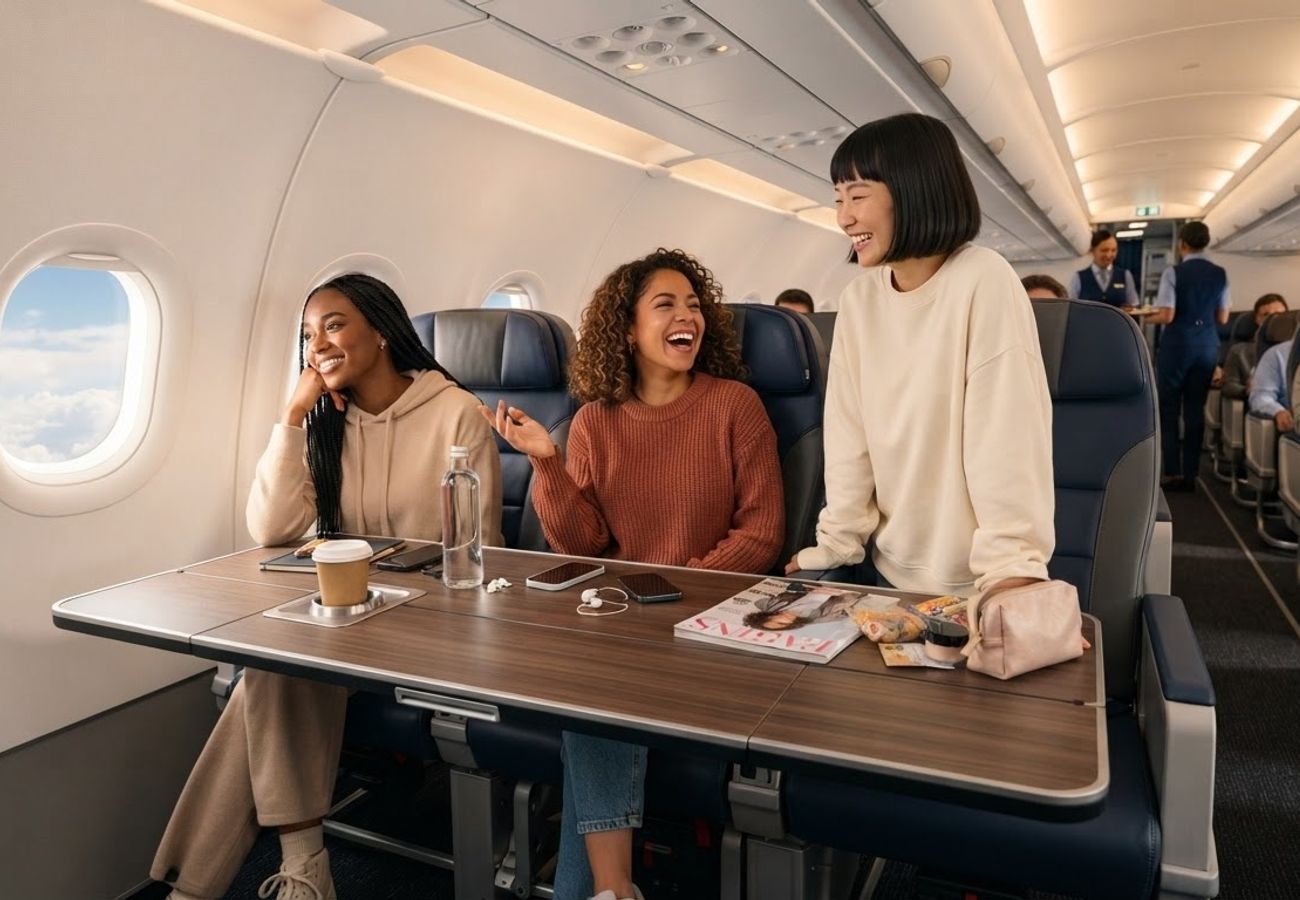
Image generated by AI
The traditional struggle for armrest dominance in the center seat is nearing an end for a segment of travelers. United Airlines is pivoting its cabin architecture to prioritize personal space and mental well-being, moving away from the maximum-density seating models that have defined commercial flight for decades.
By redesigning the interior of its newest narrowbody fleet, the carrier is creating a "middle-ground" luxury tier. This strategy targets passengers who desire more privacy than standard economy provides but do not require the full expense of a business-class pod.
Redefining the Economy Plus Experience
United Airlines is introducing a specialized upgrade within its Economy Plus section specifically designed to eliminate the social friction of the middle seat. In select rows, the center position will remain permanently vacant, ensuring that passengers in the window and aisle seats never have a direct neighbor.
To maximize the utility of this reclaimed space, the airline is replacing the empty seat with a custom-engineered, leather-like table. This surface spans from armrest to armrest and includes integrated dual cup holders, effectively transforming the row into a shared workspace or dining area for the two remaining passengers.
This configuration will be deployed across 50 incoming Airbus A321XLR aircraft. While this is a first for a major U.S. carrier in the domestic market, the approach mirrors established European models used by airlines such as Finnair and Lufthansa, which have long utilized blocked center seats for regional premium travel.
Strategic Fleet Integration and Passenger Impact
The rollout of these "middle-seat-free" rows provides a hybrid experience. Passengers in these sections retain the three additional inches of legroom standard to Economy Plus while gaining significant lateral space.
This move is part of a broader effort by United to diversify its cabin offerings. The airline recently unveiled "Relax Rows" for its Boeing 777 and 787 widebody fleets, which allow economy passengers to convert three seats into a flat sleeping surface.
According to Andrew Nocella, Executive Vice President and Chief Commercial Officer, these investments are designed to provide greater value and a wider array of options across every cabin in the fleet.
The Economics of "Empty Space"
From a revenue management perspective, this shift allows United to monetize "stillness." Ancillary fees and unbundled seat upgrades now account for approximately 10% of total revenue for major U.S. carriers. By creating a tiered economy experience, the airline can capture higher margins from travelers willing to pay a premium for privacy.
Beyond ticket pricing, there is a significant operational incentive. Reducing the total seat count on these aircraft to exactly 150 triggers a change in staffing requirements. Under Federal Aviation Administration (FAA) regulations, commercial planes require one flight attendant per 50 passenger seats. By removing two seats, United can operate the A321XLR with four crew members instead of five, reducing long-term labor costs.
Airbus A321XLR Cabin Configuration Details
| Feature | Specification |
|---|---|
| Carrier | United Airlines |
| Aircraft Model | Airbus A321XLR (Narrowbody) |
| Fleet Size | 50 Aircraft |
| Primary Innovation | Permanently blocked middle seats in select rows |
| Enhanced Amenities | Fixed leather-like table with dual cup holders |
| Legroom | Standard Economy Plus (+3 inches over basic economy) |
| Crewing Impact | Reduced to 4 flight attendants (based on 150-seat cap) |
Consumer Rights and Route Availability
The Airbus A321XLR fleet will initially serve transcontinental domestic routes before expanding to secondary European destinations. As these new seating tiers launch, passengers should keep the following regulatory points in mind:
- Equipment Changes: If an airline swaps an aircraft and cannot provide the purchased seat upgrade, passengers are entitled to a refund of the upgrade fee per U.S. Department of Transportation (DOT) guidelines.
- Safety Standards: All interior modifications, including the removal of seats and the addition of fixed tables, must comply with FAA safety and crewing frameworks.
The shift toward "spatial luxury" suggests that for the modern flyer, the absence of a neighbor is becoming as valuable as the destination itself.
Key Takeaways
- Privacy First: United is removing middle seats in specific rows on 50 Airbus A321XLRs to create a premium economy hybrid.
- Added Utility: The gap is filled by a leather-like table with cup holders for improved productivity.
- Labor Efficiency: Reducing the seat count to 150 allows the airline to reduce crew requirements from five flight attendants to four.
- Market Trend: This follows the "unbundling" trend where airlines charge specifically for space and privacy.
FAQ
When can I book these middle-seat-free rows? United Airlines plans to open ticket sales for this upgraded layout later in 2026.
Which planes will have this feature? The feature is exclusive to the 50 incoming Airbus A321XLR narrowbody aircraft.
How does this differ from Business Class? Unlike Business Class, these are still economy-style seats with Economy Plus legroom, but with the added benefit of a guaranteed empty middle seat.
Related Travel Guides
Disclaimer
This article is for informational and educational purposes only. It does not constitute legal, financial, or professional advice. While we strive to provide accurate and up-to-date information, travel policies, regulations, and conditions change rapidly. Always verify information with official sources before making travel decisions. Nomad Lawyer makes no representations about the accuracy, reliability, completeness, or suitability of the information provided. Readers should consult qualified professionals for advice specific to their circumstances. The views expressed in this article are those of the author and do not necessarily reflect the views of Nomad Lawyer.
Kunal K Choudhary
Co-Founder & Contributor
A passionate traveller and tech enthusiast. Kunal contributes to the vision and growth of Nomad Lawyer, bringing fresh perspectives and driving the community forward.
Learn more about our team →