Alaska Air Confronts $1.8 Billion Fuel Surge: Job Cuts, Hawaiian Merger Expansion, and Passenger Travel Guide

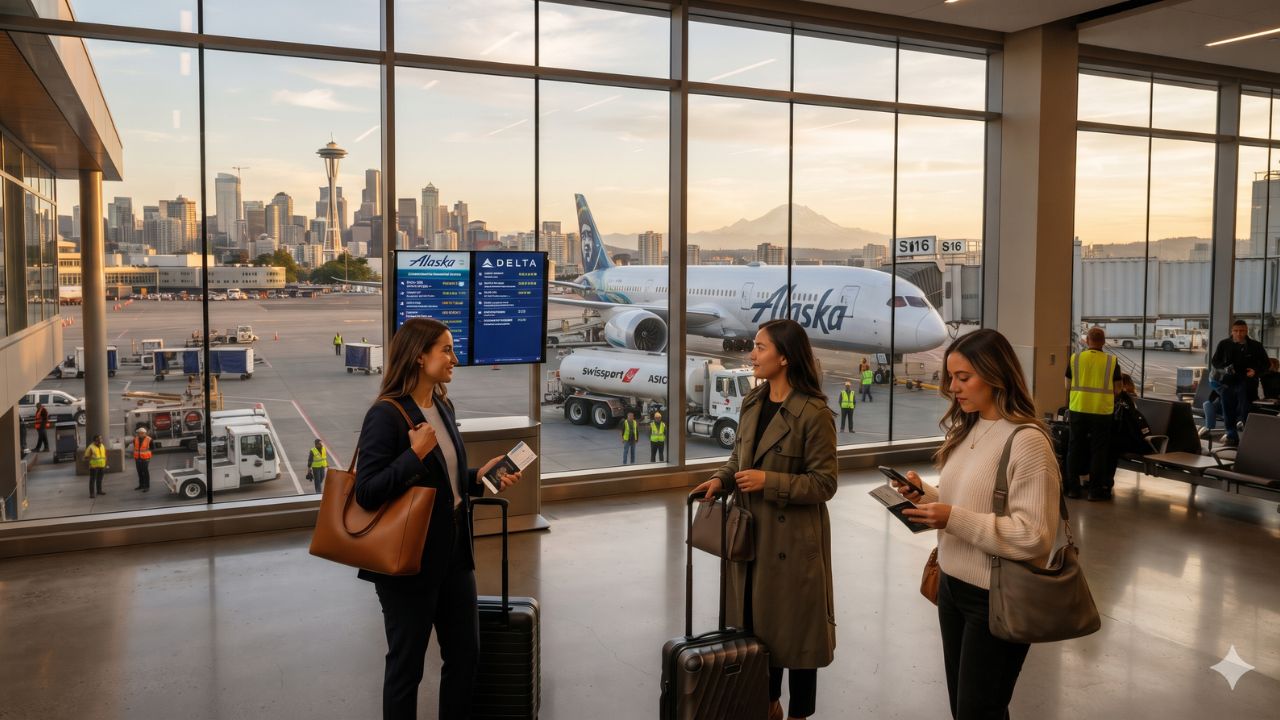
While passenger revenues climbed 14 percent to hit US$4.3 billion during the third quarter of 2026, Alaska Air Group still tumbled into a US$147 million net loss—battered by jet kerosene costs projected to exceed its original budget by a staggering US$1.8 billion. The stark divergence between packed passenger cabins and negative profit margins has prompted the Seattle-based carrier to trim 200 corporate jobs and brace for potential full-year adjusted losses approaching US$700 million. Yet despite these immediate headwinds, the combined Alaska–Hawaiian airline group is pressing forward with an ambitious capital expenditure drive, pouring more than US$600 million into flagship airport lounges, fleet modernization, and a long-range strategy to establish 15 intercontinental destinations by 2030.
Fuel Price Volatility vs Commercial Expansion: The Numbers Behind the Crunch
Commercial aviation economics in late 2026 are defined by a severe cost-revenue mismatch. Across the domestic and transpacific aviation sectors, consumer travel demand remains exceptionally resilient. However, escalating geopolitical refinery tensions and crude supply cuts have driven Alaska Air’s economic fuel projections for the fourth quarter to between US$4.65 and US$4.85 per gallon.
In quarterly audited filings released on 20 October 2026, the group confirmed that while third-quarter revenue expanded 14 percent year-on-year to US$4.3 billion, higher operating expenses resulted in a US$147 million net loss under standard US accounting principles. To protect working capital, the airline is restricting fourth-quarter flight capacity growth to a conservative 1.0 to 1.5 percent while eliminating 200 non-operational positions.
Simultaneously, management is safeguarding its long-term commercial roadmap under the "Alaska Accelerate" banner. The airline has already achieved structural integration milestones with Hawaiian Airlines, establishing a unified single operating certificate, integrated passenger service systems, and reciprocal 1:1 loyalty program transfers.
| Financial & Operational Indicator | Official Metric / Capital Allocation | Reporting Context & Timeframe | Strategic Traveler & Industry Implication |
|---|---|---|---|
| Q3 2026 Operating Revenue | US$4.3 billion | 14% growth compared to Q3 2025 | Confirms high passenger travel demand across domestic and Pacific networks. |
| Q3 2026 Net Loss | US$147 million | Reported under US GAAP standards | Illustrates how operational cost inflation wipes out passenger revenue gains. |
| Excess Full-Year Fuel Expense | US$1.8 billion above original budget | Projected across full-year 2026 operations | Primary financial obstacle threatening full-year losses near US$700 million. |
| Q4 Projected Economic Fuel Cost | US$4.65 – US$4.85 per gallon | Fourth quarter 2026 forecast | Pressures ticket pricing and forces capacity restraint across non-essential routes. |
| Q4 Capacity Growth Target | 1.0% – 1.5% year-on-year | Fourth quarter 2026 forecast | Airlines limit seat additions to protect yields rather than pursue market share. |
| Corporate Workforce Adjustment | 200 positions eliminated | Targeted administrative restructuring | Protects front-line flight crews, ground agents, and flight safety operations. |
| Honolulu Premium Lounge Project | ~13,000 square feet | Construction began 26 Oct 2026; opens H1 2028 | Elevates inter-island and international premium passenger hospitality. |
| Seattle Flagship Lounge Complex | ~41,000 square feet | Scheduled opening late 2027 | Anchors Seattle-Tacoma as a premier West Coast transpacific gateway. |
| Kahuʻewai Hawaiʻi Commitment | >US$600 million capital investment | Multi-year fleet and facility allocation | Upgrades island airport spaces, guest technology, and widebody aircraft cabins. |
| 2030 Long-Haul Target | At least 15 intercontinental routes | Alaska Accelerate strategic blueprint | Connects Pacific Northwest and Hawaii directly to Europe, Asia, and Latin America. |
What Makes the Alaska–Hawaiian Combination Experientially Different
The merger between Alaska Airlines and Hawaiian Airlines represents a rare union of two culturally distinct carriers, each possessing passionate regional followings. Rather than erasing Hawaiian’s brand identity, Alaska is preserving the iconic Pualani logo on island aircraft while leveraging Hawaiian's widebody Airbus A330 and Boeing 787-9 Dreamliner fleets to transform Port of Seattle into an intercontinental departure springboard.
Under the Kahuʻewai Hawaiʻi Investment Plan, the airline group is injecting more than US$600 million directly into Hawaiian aviation infrastructure. On 26 October 2026, Hawaiian Airlines broke ground on a custom 13,000-square-foot premium lounge at Daniel K. Inouye International Airport in Honolulu, scheduled to open in early 2028. This complements a sprawling 41,000-square-foot flagship lounge complex currently under development at Seattle-Tacoma International Airport, set to welcome travelers in late 2027.
Crucially, the expansion is governed by legally binding public-interest mandates enforced by the US Department of Transportation. Finalized in September 2024, these federal stipulations guarantee that vital inter-island routes connecting Oahu, Maui, Kauai, and Hawaii Island maintain protected capacity baselines, preventing fare spikes on critical healthcare and commuter routes while shielding HawaiianMiles and Mileage Plan members from loyalty point devaluations.
Visitor Insider Tips: Bookings, Lounges, and Passenger Rights
- Financial Losses Do Not Mean Canceled Flights: Do not panic or cancel your upcoming flight because headlines report airline quarterly losses. A corporate financial forecast is an accounting statement, not an individual cancellation notice. All scheduled flights operate as ticketed unless you receive official schedule notifications directly from the airline.
- Enforcing Automatic DOT Cash Refunds: Under updated Department of Transportation consumer protection regulations, if an airline cancels your flight or implements a "significant schedule change" (defined as departure timing changes exceeding three hours domestically, an airport substitution, or an added layover), you are legally entitled to an automatic cash refund. The carrier must return funds to your original credit card within seven business days (or within 20 calendar days for cash/check purchases) if you decline alternate routing.
- Master 1:1 Mileage Transfers Between Programs: Travelers can link their Alaska Mileage Plan and HawaiianMiles accounts to transfer reward points instantly at a 1:1 ratio with zero fees. This allows flyers to combine points from Seattle business trips with Hawaiian vacation miles, unlocking redemption opportunities across global oneworld alliance partners like British Airways, Japan Airlines, and Qantas.
- Navigating Seattle Construction Lounges: While SEA Airport constructs its massive 41,000-square-foot central lounge complex opening in late 2027, avoid the peak-hour crowds at the D Concourse lounge. Head instead to the renovated Alaska Lounge in the North Satellite terminal (near Gate N13), accessible via the underground automated train, which offers sweeping floor-to-ceiling views of Mount Rainier and quieter barista stations.
- Book Pacific Shoulder-Season Windows: Elevated fuel prices of $4.65 to $4.85 per gallon mean peak holiday flights to Maui and Honolulu will carry premium price tags. Secure lower fares by booking travel during May or between late September and mid-November, when transpacific leisure demand softens and seat promotions become accessible.
Cultural and Environmental Context: Community Lifelines and Fleet Economics
In Hawaii and remote Alaska, commercial aviation is not a luxury—it is an indispensable public utility. For island residents, air travel is the sole method for visiting extended family on neighboring islands, attending specialized medical appointments in Honolulu, or transporting high school athletic teams to competitions.
The Kahuʻewai commitment, developed in consultation with Hawaii Tourism Authority and indigenous cultural advisers, reflects this civic responsibility. By guaranteeing baseline inter-island flight frequencies and safeguarding community travel programs, the merged carrier balances commercial discipline with the cultural imperative of mālama (caring for the community and land).
Simultaneously, the economic burden of $1.8 billion in excess fuel costs accelerates Alaska Air’s environmental fleet transition. The airline is aggressively retiring older, less efficient aircraft in favor of fuel-efficient Boeing 737 MAX 9 and Airbus A321neo narrowbodies equipped with high-bypass CFM LEAP and Pratt & Whitney GTF engines.
These modern aircraft cut fuel consumption and carbon emissions by 15 to 20 percent per seat-mile while significantly reducing noise footprints around coastal communities in Puget Sound and the Hawaiian islands. By pairing fleet modernizations with low-carbon sustainable aviation fuel agreements, the carrier demonstrates that weathering near-term fuel volatility is intrinsically linked to building a sustainable long-term fleet.
FAQ: Alaska Air and Hawaiian Airlines Operations 2026–2027
Will Alaska Air cancel scheduled flights because of its third-quarter financial loss?
No. Financial results reflect corporate accounting and fuel expenses; scheduled flights continue operating normally. Check your booking status directly through the Alaska Airlines or Hawaiian Airlines mobile apps.
How does the 1:1 points transfer between Alaska and Hawaiian work?
Members can link their Mileage Plan and HawaiianMiles accounts online through either airline’s website, transferring points back and forth instantly at an exact 1:1 ratio with zero transaction fees.
When will the new flagship lounges open in Seattle and Honolulu?
The 41,000-square-foot Seattle-Tacoma lounge complex is scheduled to open in late 2027, while Hawaiian Airlines’ 13,000-square-foot premium lounge in Honolulu is slated to open in the first half of 2028.
What are my refund rights if my Alaska or Hawaiian flight schedule changes significantly?
Under US Department of Transportation rules, if your flight is canceled or shifted by more than three hours and you decline alternative travel, you are entitled to a full cash refund returned within seven business days.
Beyond the balance sheets and shifting jet fuel curves, the true strength of an airline lies in its promise to keep distant islands, mountain valleys, and coastal communities forever bound together.
Related Travel Guides
The Best Seattle Airport Lounge Hacks and Hawaiian Inter-Island Award Tricks, According To Reddit (Coming Soon)
This article is for informational purposes. Flight routes, passenger regulations, visa rules, and transit advisories are subject to change by airlines and aviation authorities. Readers are advised to verify schedules and travel documentation with relevant carriers and border agencies before departure.
Related Stories
Hawaiian Airlines Breaks Ground on New Honolulu Lounge: Impact on HNL Connections and Passenger Rights 2026

Alaska Airlines 2027 Route Expansion: Nonstop Anchorage Flights to Tokyo, Dallas, Austin, and Nashville