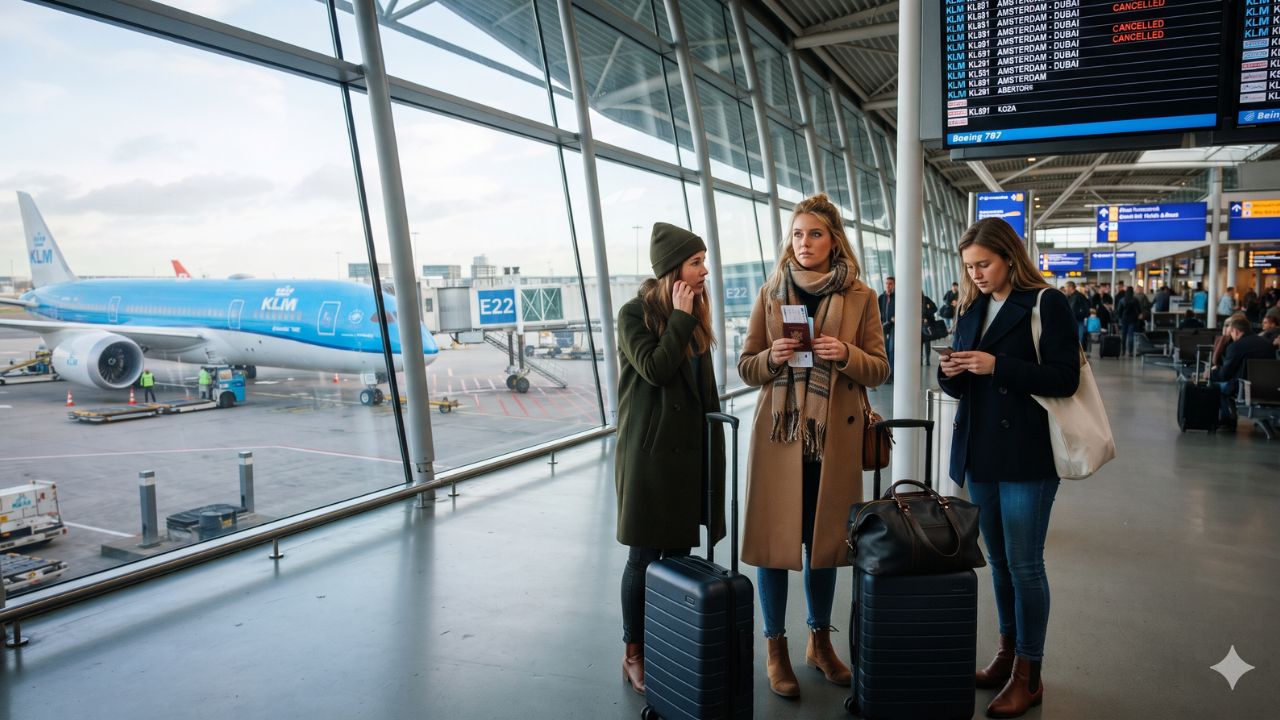
Asian Airlines Race to Overhaul In-Flight Entertainment: 4K OLEDs, Bluetooth, and Starlink Connectivity for 2027

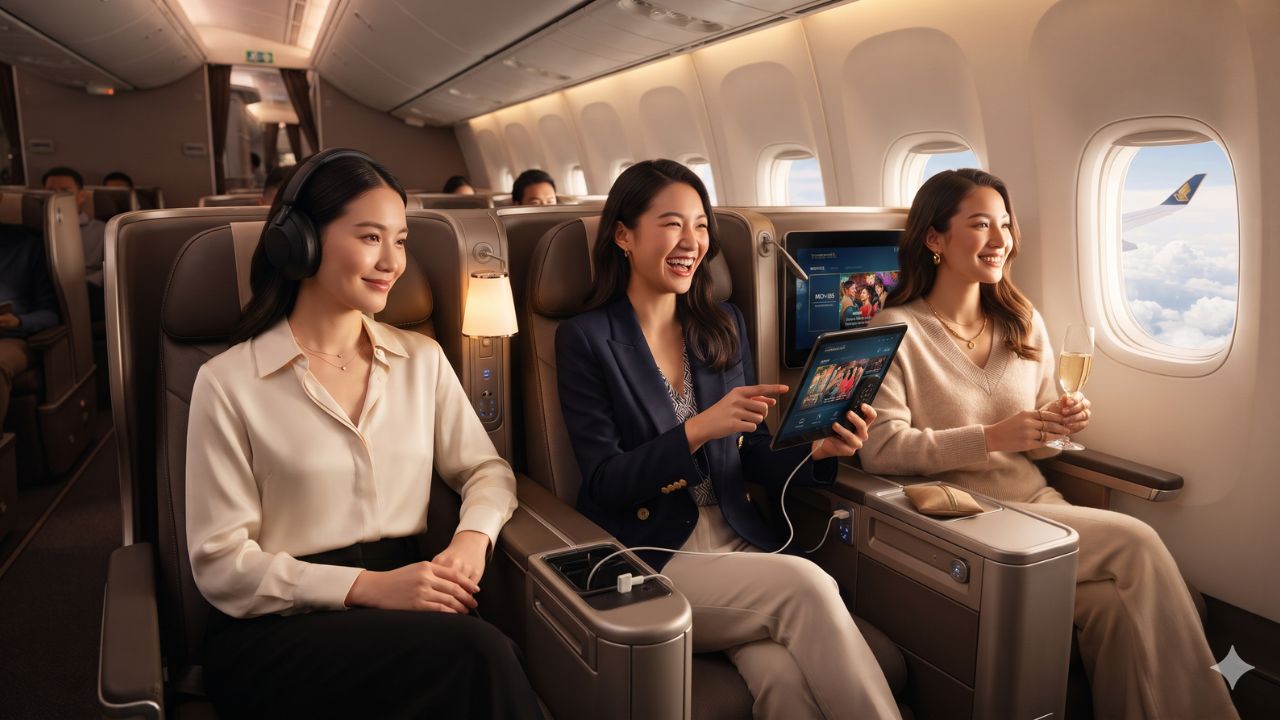
While passengers on legacy transatlantic flights still wrestle with scratchy two-prong headphone jacks and washed-out LCD monitors, Japan Airlines now seats First Class travelers in front of massive 43-inch 4K displays with built-in headrest speakers, while Panasonic Avionics logged over 500,000 orders for its ultra-thin Astrova OLED screens in October 2026. Across the Asia-Pacific region and the Arabian Gulf, premier international carriers—led by Singapore Airlines, Air India, Emirates, Cathay Pacific, and Saudia—are executing multi-billion-dollar cabin transformations. By pairing cinematic 4K touchscreens and personal Bluetooth headphone connectivity with low-latency Starlink satellite broadband, airlines are converting long-haul passenger cabins into high-definition digital lounges.
The Digital Cabin Revolution: Next-Generation IFE Deployments Across Asia
Commercial aviation has crossed a definitive threshold where digital hardware and high-speed connectivity dictate passenger loyalty just as heavily as seat pitch or culinary service. Long-haul travelers who stream 4K video on handheld devices and wear custom noise-canceling wireless headphones at home no longer tolerate sluggish seatback monitors or limited thirty-movie catalogues.
In response, Singapore Airlines announced a comprehensive upgrade to its celebrated KrisWorld system in October 2026. Scheduled for progressive rollout from 2027 onward across 41 retrofitted Airbus A350-900 long-haul and ultra-long-range (ULR) jets—as well as incoming Boeing 777-9 aircraft—the platform delivers ultra-sharp 4K touchscreens, spatial audio algorithms, direct Bluetooth pairing, and an expanded library boasting over 2,500 on-demand titles. The airline will complement these screens with high-speed, low-orbit satellite Wi-Fi powered by Starlink starting in early 2027.
Concurrently, Air India is advancing its fleet renewal strategy through its Vista entertainment platform. Having unveiled its first retrofitted Boeing 787-8 widebody in April 2026 equipped with Thales AVANT Up displays, the carrier is preparing the rollout of its unified Vista Digital Platform during the second half of 2027 across retrofitted Boeing 777s, 787s, and factory-fresh Airbus A350 airframes.
Other Asian and Gulf carriers are accelerating deployments with equally ambitious hardware specifications:
- Cathay Pacific: Completed a fleetwide seatback entertainment and Wi-Fi milestone in August 2025, crowning its Aria Suite Business Class with private 24-inch 4K HDR displays and integrated Bluetooth audio.
- Emirates: Operates its upgraded ice system with more than 6,500 channels on its new Airbus A350 fleet, pairing Panasonic Avionics Astrova screens with rapid search interfaces.
- Saudia: Marked the commercial debut of Panasonic Astrova technology on 15 Airbus A321XLR aircraft in June 2026, backed by a separate 46-aircraft retrofit agreement incorporating Panasonic Arc 3D interactive flight maps.
- Riyadh Air: Outfitting its future Boeing 787 Dreamliner fleet with 4K OLED screens, wireless device charging docks, and synchronized multi-screen entertainment.
- Malaysia Airlines: Introduced 4K entertainment across its Airbus A330neo fleet, providing 17.3-inch displays in Business Class and 13.3-inch monitors in Economy.
| Airline & Home Country | Flagship Entertainment Platform & Tech | Supported Aircraft & Fleet Scope | Rollout Status & Implementation Window | Primary Passenger & Cabin Enhancements |
|---|---|---|---|---|
| Singapore Airlines (Singapore) | Next-gen KrisWorld + Starlink Wi-Fi | 41 retrofitted A350-900s & Boeing 777-9 | Phased Starlink early 2027; IFE rollout 2027 onward | 4K touchscreens, spatial audio, Bluetooth pairing, >2,500 titles, wellness tracks. |
| Air India (India) | Vista platform + Thales AVANT Up displays | A350s, retrofitted Boeing 787-8/777s | Operating now; Vista Digital Platform arrives H2 2027 | Ultra-HD displays, wireless streaming, personalized content, unified interface. |
| Emirates (UAE) | Upgraded ice + Panasonic Astrova | Airbus A350 fleet, retrofitted A380s/777s | Operating on A350; fleetwide retrofits underway | >6,500 channels, Panasonic Astrova OLED displays, Bluetooth audio sync. |
| Japan Airlines (Japan) | 4K displays + built-in headrest speakers | Airbus A350-1000 | Active on flagship international routes | Up to 43-inch screens in First Class, app-paired playlists, personalized recommendations. |
| Cathay Pacific (Hong Kong) | Aria Suite 4K IFE + fleetwide Wi-Fi | Boeing 777-300ER & A350 fleets | Milestone completed August 2025 | 24-inch 4K screens in Business Class, Bluetooth audio, high-speed connectivity. |
| Saudia (Saudi Arabia) | Panasonic Astrova + Arc 3D flight maps | 15 A321XLRs + 46 retrofit airframes | Debuted June 2026 on A321XLR; retrofits ongoing | Interactive 3D maps, individualized digital profiles, energy-efficient displays. |
| Malaysia Airlines (Malaysia) | 4K touchscreen monitors + Bluetooth | Airbus A330neo fleet | Entering service across regional and long-haul routes | 17.3-inch Business Class screens, 13.3-inch Economy screens, family entertainment. |
| Thai Airways (Thailand) | THAI Vision Connect wireless streaming | Airbus A320 and widebody fleets | Launched June 2025; ongoing software refinement | Personal device streaming, responsive software, interactive games. |
| All Nippon Airways (Japan) | Expanded streaming content library | Domestic and international fleets | Implemented December 2025 – January 2026 | Streaming-platform partnerships, original Japanese drama, expanded movies. |
| Philippine Airlines (Philippines) | Accessible embedded IFE + enhanced captions | Airbus A350-1000 and A321 retrofits | Progressive rollout through 2025–2026 | High-contrast accessibility modes, expanded subtitles, modern touch displays. |
What Makes These Entertainment Platforms Technically Distinct
The technological leap between legacy seatback units and modern systems lies in hardware architecture, weight reduction, and wireless versatility. Older cathode-ray and early-generation liquid crystal displays relied on heavy bundles of copper coaxial cabling and cumbersome under-seat electronics boxes that stole passenger legroom.
In contrast, platforms like Panasonic Astrova and Thales AVANT Up use lightweight fiber-optic backbones and ultra-slim OLED (Organic Light Emitting Diode) panels. Because OLED pixels emit their own light without requiring bulky fluorescent backlights, they produce infinite contrast ratios, deep blacks, and wide viewing angles that eliminate color distortion when seatmates recline.
Equally transformative is the introduction of universal Bluetooth audio transmitters. Historically, passengers with high-end wireless headphones had to carry third-party plug-in transmitters or settle for cheap airline-distributed disposable earbuds that ended up in landfills. With modern Bluetooth pairing integrated into the screen software, passengers can link their personal AirPods, Bose, or Sony headphones in seconds. High-speed USB-C Power Delivery ports supplying up to 60 to 100 watts of charging power allow travelers to keep laptops and tablets fully charged without bulky AC wall adapters.
Visitor Insider Tips: Maximizing In-Flight Tech on Long-Haul Asian Flights
- Pre-Pair Your Watchlist via Mobile Apps: Both Singapore Airlines (via the SingaporeAir app) and Japan Airlines permit passengers to browse full movie listings and build customized viewing playlists on their smartphones up to two weeks before departure. Once aboard, simply tap your phone against the seatback screen or enter a short pairing code to sync your playlist instantly.
- Pack a 3.5mm Headphone Cable as Backup: While Bluetooth pairing is expanding rapidly across newer aircraft like the A350-1000 and A330neo, older Boeing 777 or A330 airframes operating secondary routes may still feature traditional wired connections. Keep a compact 3.5mm auxiliary cable and a two-prong airline adapter in your carry-on to avoid being caught without audio.
- Utilize In-Flight Wellness Audio for Jet Lag: Next-generation systems from Singapore Airlines and JAL include dedicated circadian rhythm programming. Switch on guided sleep meditations, binaural audio landscapes, and seated stretching tutorials during the middle third of long overnight flights across the Pacific or Indian Ocean to encourage natural melatonin production.
- Leverage In-Seat USB-C Fast Charging: Do not dig around the cabin floor for hidden international AC plug sockets. Modern seatback setups on carriers like Malaysia Airlines and Saudia place dedicated high-wattage USB-C ports directly beneath the screen, allowing you to fast-charge mobile phones and mirror devices without crawling under your seat.
- Check Aircraft Rotations Before Booking: When booking multi-leg itineraries on carriers modernizing their fleets, check the specific aircraft type listed on the schedule. For example, flying Air India between Delhi and London on a retrofitted Boeing 787-8 or factory-fresh A350 offers the full Thales AVANT Up experience, whereas un-refurbished legacy widebodies may still feature older cabin hardware.
Cultural and Environmental Context: Eco-Efficiency and Digital Inclusion
The shift toward advanced cabin entertainment intersects directly with airline sustainability and environmental stewardship. By replacing heavy legacy electronics boxes and copper cabling with slimline OLED panels and fiber-optic wiring, airlines shave hundreds of kilograms off the empty weight of every widebody aircraft.
Across an intercontinental fleet operating thousands of annual long-haul sectors, this weight reduction cuts tens of thousands of gallons of aviation kerosene, lowering carbon emissions without compromising passenger comfort. In addition, native Bluetooth pairing dramatically curtails the manufacturing and disposal of millions of single-use plastic headphones annually.
From a cultural perspective, Asian airlines are designing platforms that reflect regional demographics and social values. Carriers like Philippine Airlines and Singapore Airlines have incorporated comprehensive digital accessibility features, including high-contrast screen color palettes, audio-described narrations for visually impaired passengers, and closed-caption options in multiple regional languages. By combining localized cinema with thoughtful accessibility, Asian aviation ensures that high-altitude digital connectivity welcomes every traveler.
FAQ: In-Flight Entertainment Upgrades in Asia 2026–2027
Can I connect my AirPods to seatback screens on Asian airlines?
Yes. Newer aircraft and retrofitted cabins on Singapore Airlines, Emirates, Japan Airlines, Cathay Pacific, and Malaysia Airlines feature direct Bluetooth pairing compatible with AirPods and other wireless headphones.
When will Singapore Airlines introduce Starlink satellite Wi-Fi?
Singapore Airlines plans to begin phased installations of low-latency Starlink satellite broadband across its long-haul fleet starting in early 2027.
Which airline offers the largest seatback entertainment screens?
Japan Airlines leads the industry with 43-inch 4K displays in First Class and 24-inch screens in Business Class aboard its flagship Airbus A350-1000 widebodies.
Do all Air India flights have the new Vista entertainment system?
The upgraded Thales system is flying on all Airbus A350s and retrofitted Boeing 787-8s, with the unified Vista Digital Platform rolling out across remaining widebody jets through late 2027.
Thirty thousand feet above the clouds, the magic of flight is no longer measured solely by the distance traveled, but by the quiet wonder of feeling entirely at home in the sky.
Related Travel Guides
Emirates Brings Airbus A350 to Durban in March 2027: Premium Economy Completes South Africa Trio
The Best In-Flight Tech Accessories and Long-Haul Power Hacks, According To Reddit (Coming Soon)
This article is for informational purposes. Flight routes, passenger regulations, visa rules, and transit advisories are subject to change by airlines and aviation authorities. Readers are advised to verify schedules and travel documentation with relevant carriers and border agencies before departure.
Related Stories
LOT Polish Airlines Launches Fly&Rail in Switzerland and Sweden: AccesRail Intermodal Booking Guide
Alaska Air Confronts $1.8 Billion Fuel Surge: Job Cuts, Hawaiian Merger Expansion, and Passenger Travel Guide