
UK Summer Travel Crisis 2026: Jet Fuel Surge and EU Border System Collide at Manchester, Birmingham Airports
British holidaymakers face unprecedented summer disruptions as soaring jet fuel costs, geopolitical airspace restrictions, and the EU's new Entry-Exit System create perfect operational storm.

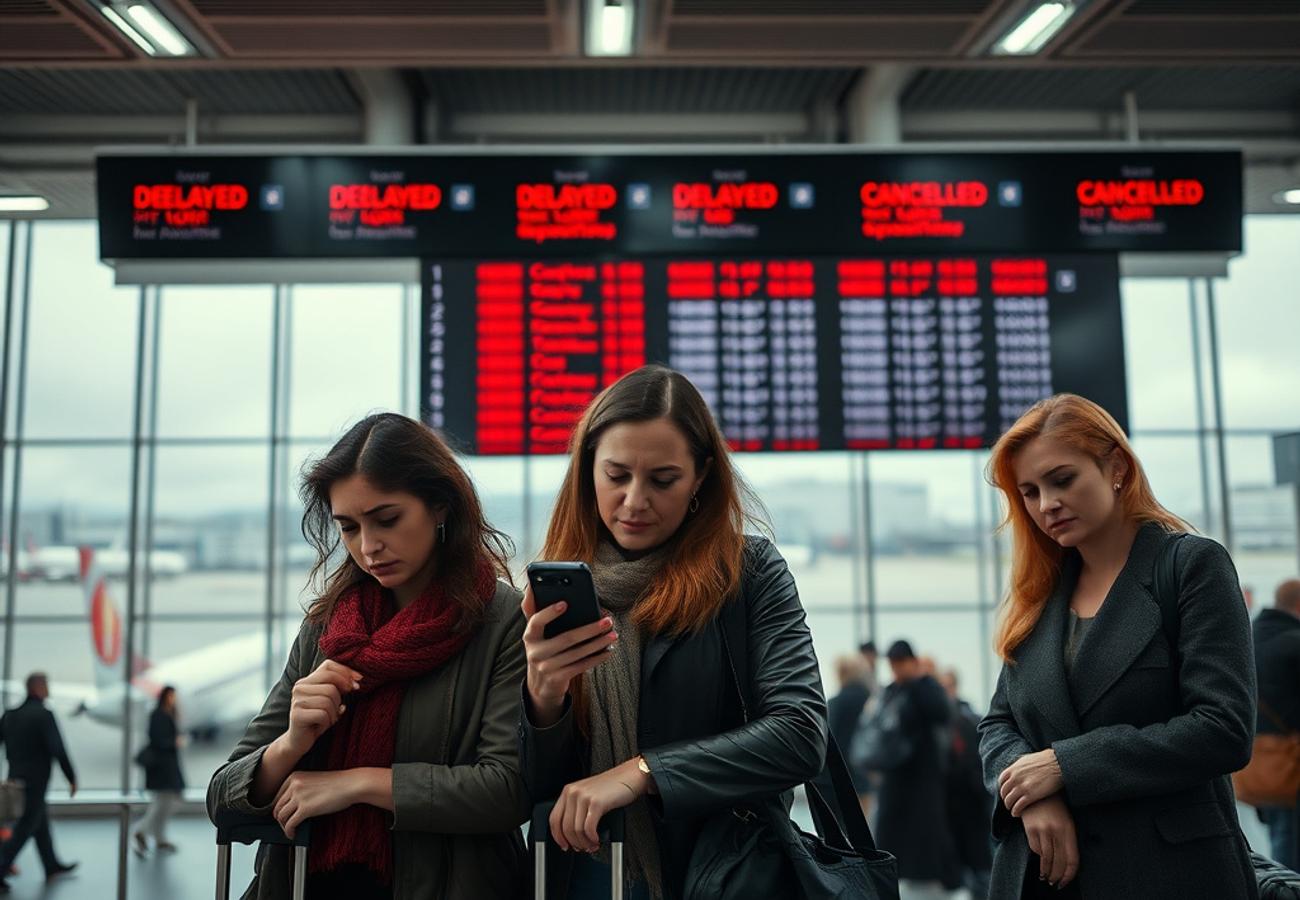
Image generated by AI
The Perfect Storm: How Three Crises Converged on British Holidays
The summer of 2026 is shaping up to be one of the most turbulent travel seasons in modern British aviation history. I've been tracking the situation closely, and what's unfolding across UK airports is genuinely alarming: a convergence of surging global jet fuel prices, geopolitical airspace closures forcing dangerous flight reroutes, and the rollout of the European Union's automated Entry-Exit System (EES) has created an operational nightmare for millions of holidaymakers.
Together Travel research reveals the damage is already severe. On-time flight performance has collapsed across major British aviation hubs heading into peak summer season. Families who booked their Mediterranean escapes months ago are now facing the grim reality: their flights are being cancelled, delayed beyond recognition, or trapped in six-hour biometric queues at European borders.
Reddit: "Booked Manchester to Málaga in April, now getting alerts every other day. Either the flight's delayed six hours or the return is cancelled entirely. This is madness." — r/unitedkingdom
Why British Airports Are Grinding to a Halt
The root cause isn't a single problem—it's a cascading collapse of three separate systems failing simultaneously.
Geopolitical Airspace Restrictions Force Fuel-Burning Detours
Commercial airlines have been forced to permanently abandon historically efficient flight corridors. Escalating geopolitical conflicts in the Middle East have rendered previously standard flight paths too dangerous to navigate. Major carriers now reroute entire flights around volatile, restricted airspaces—adding hours of unnecessary transit time and burning catastrophic quantities of aviation fuel in the process.
These elongated flight paths consume fuel at rates that devastate carrier profit margins. A flight that previously burned 85,000 kilograms of jet fuel now requires 95,000+ kilograms to reach the same destination.
Jet Fuel Prices Are Strangling Airline Economics
The global price of jet fuel has experienced sharp, unpredictable volatility precisely during the aviation industry's most profitable trading quarter. For low-cost carriers operating on razor-thin margins, this represents an existential threat. When operational costs spike without corresponding revenue increases, airlines face brutal choices: raise ticket prices (losing customers), reduce flight frequencies (cancelling routes), or accept massive quarterly losses.
Most carriers are choosing consolidation. Half-empty flights are being merged into single departures. Regional holiday routes are being permanently scrapped. The mathematical reality: fewer seats available when demand peaks.
The EU's New Entry-Exit System Creates Border Chaos
On June 10, 2026, the European Union's Entry-Exit System went live across all continental airports. This isn't a simple passport check upgrade—it's a complete reimagining of border crossing mechanics.
The EES legally mandates that all first-time arrivals undergo comprehensive digital biometric registration: high-resolution facial scans, full electronic fingerprinting, and comprehensive data logging. For British travelers post-Brexit, this is a mandatory requirement with no exceptions.
Early reports from major continental hubs are terrifying. British holidaymakers have documented grueling six-hour waits at several prominent European gateway airports. Families who cleared security in two hours are now spending their entire morning in biometric queues.
Airlines like easyJet have issued urgent advisories: flights cannot wait for passengers trapped in border queues. Once the boarding gate closes, it closes.
Which British Airports Are Most Vulnerable?
A comprehensive historical analysis of Civil Aviation Authority data exposes severe variations in airport resilience heading into peak season.
Manchester Airport sits at the absolute bottom of UK on-time performance rankings: just 71.5% on-time arrivals. This means nearly three out of every ten flights suffer significant schedule deviations. For a hub handling 25+ million annual passengers, this represents catastrophic operational strain.
Birmingham Airport ranks second-worst with a 27.5% overall delay risk score.
The vulnerability extends southward: London Stansted, Bournemouth, and Bristol Airport populate the top five worst-performing list. These high-traffic terminals are entering absolute peak summer season with zero operational buffer.
Industry experts emphasize a grim reality: when a flight delay occurs at these congested hubs, there's no capacity anywhere else in the system to absorb disruption. Minor baggage handling glitches cascade into widespread cancellations within hours.
The Financial Mathematics Forcing Route Cancellations
Here's where the situation becomes genuinely desperate for travelers. Airlines aren't cancelling flights out of malice—they're responding to brutal economic realities.
Navigating prolonged flight paths to bypass conflict zones requires significantly higher fuel burn. When these inflated operational costs combine with rising airport landing fees, operating historically low-yield regional holiday routes becomes mathematically unsustainable. A flight from Birmingham to Palma that previously generated modest profit now operates at substantial loss once fuel surcharges and extended routing are factored in.
To protect corporate balance sheets, airlines are consolidating capacity. Flight frequencies are being quietly reduced. Half-empty services are being merged into singular departures. The result: sudden, deeply frustrating cancellations for travelers who booked months in advance.
European carriers are legally required to offer passenger protections—rebooking onto alternative services or full monetary refunds. But during chaotic peak season, finding vacant seats on flights to popular Mediterranean resorts is mathematically impossible. Families are stranded at departure gates across the country with no viable alternatives.
What Smart Travelers Must Do Now
While macroeconomic and geopolitical forces remain entirely outside individual control, intelligent preparation can mitigate personal disaster.
Purchase comprehensive travel insurance immediately. Tourism consumer advocates stress that premium coverage at the moment of booking is non-negotiable. Verify explicit coverage for geopolitical cancellations, airline delays exceeding 12+ hours, and supplier insolvencies. Basic, low-cost policies frequently leave families exposed to massive out-of-pocket losses.
Book through fully bonded package holiday providers. The Association of British Travel Agents heavily advises against standalone flight-and-hotel arrangements. Package bookings enjoy robust legal protection under the ATOL scheme, guaranteeing full refunds if holidays are cancelled.
Carry diverse payment methods. Electronic travel money cards, physical backup cash, and multiple credit cards provide essential financial safety nets during terminal crises. A credit card alone becomes liability when systems fail.
Stay aggressively informed. Download official airline apps. Enable push notifications for real-time schedule updates. Arrive at airports a full three hours before international departures. Assume delays of 4-6 hours as baseline expectations, not worst-case scenarios.
Build schedule flexibility into bookings. If possible, book return flights for 24 hours after your last planned activity, not immediately after. This single decision prevents thousands of families from missing flights due to boarding delays.
The summer of 2026 will test British travelers like nothing in recent memory. But those who prepare intelligently will navigate the chaos successfully.
The skies over Britain are turbulent—but armed with information and insurance, you can still reach that Mediterranean beach.
Related Travel Guides
Disclaimer
This article is for informational and educational purposes only. It does not constitute legal, financial, or professional advice. While we strive to provide accurate and up-to-date information, travel policies, regulations, and conditions change rapidly. Always verify information with official sources before making travel decisions. Nomad Lawyer makes no representations about the accuracy, reliability, completeness, or suitability of the information provided. Readers should consult qualified professionals for advice specific to their circumstances. The views expressed in this article are those of the author and do not necessarily reflect the views of Nomad Lawyer.
Raushan Kumar
Founder & Lead Developer
Full-stack developer with 11+ years of experience and a passionate traveller. Raushan built Nomad Lawyer from the ground up with a vision to create the best travel and law experience on the web.
Learn more about our team →