
Travel Lingus Transforms Transatlantic Routes: Starlink Wi-Fi Revolutionizes Dublin-JFK Service
Aer Lingus integrates Starlink on Dublin-New York JFK flights in March 2026, offering complimentary high-speed internet. How free connectivity reshapes transatlantic airline competition and passenger expectations.

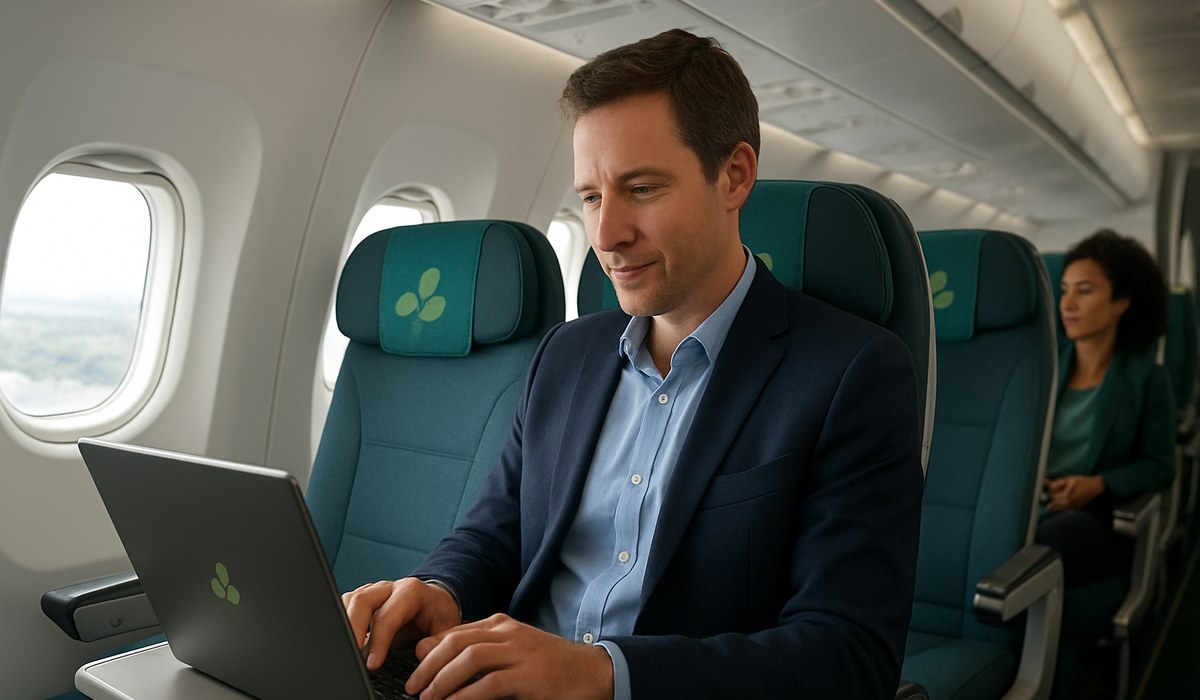
Image generated by AI
Quick Summary
- Aer Lingus deploys Starlink satellite connectivity on all Dublin-JFK transatlantic routes beginning March 2026
- Premium, complimentary Wi-Fi becomes standard across all cabin classes—no paid tier required
- Competitive pressure mounts on US carriers and European rivals to match or exceed new connectivity baseline
- Integration reflects broader airline sector shift toward data-driven passenger experience differentiation
Aer Lingus's Starlink Play: Why Free Wi-Fi is Now Table Stakes on Transatlantic Routes
The Irish flag carrier has fundamentally altered the competitive landscape on one of Europe's busiest transatlantic corridors. Starting this month, every passenger boarding an Aer Lingus aircraft from Dublin to New York's John F. Kennedy International Airport gains access to high-speed satellite internet at no additional cost—a move that signals connectivity is no longer negotiable luxury but mandatory infrastructure.
The decision represents more than a marketing refresh. For nearly two decades, airlines treated in-flight Wi-Fi as a revenue stream, bundling it as a premium add-on or limiting speeds to maintain operational margins. Aer Lingus, operating roughly 14 daily rotations on the Dublin-JFK corridor serving approximately 2,800 passengers per day, is betting that universal, free access to SpaceX's Starlink network will become the defining competitive advantage on the transatlantic market.
"Passengers expect seamless connectivity," noted Aer Lingus operations leadership in a statement released to industry analysts. The carrier is installing Starlink-enabled hardware on its Boeing 787 Dreamliner fleet—the primary aircraft operating Dublin-JFK service. Technical specifications indicate download speeds exceeding 100 Mbps per aircraft, distributed across cabin sections via onboard gateway equipment, ensuring even economy passengers receive consistent performance.
The rollout timing matters significantly. Spring travel season—spanning March through May—represents peak transatlantic movement for North American and European leisure and business travelers. By launching satellite connectivity when demand peaks, Aer Lingus captures maximum press coverage and passenger awareness. Early adopter status also creates first-mover advantage: competitors responding to this shift will inherently appear reactive rather than innovative.
How Connectivity is Reshaping Passenger Expectations and Airline Competition
Satellite internet accessibility fundamentally redefines what "premium service" means in 2026. Historically, cabin class differentiation relied on seat width, meal quality, and ground lounge access. Those amenities remain relevant, yet increasingly savvy travelers—particularly frequent business commuters on transatlantic routes—prioritize uninterrupted data access above traditional luxury markers.
The International Air Transport Association (IATA) has documented rising passenger expectations regarding onboard connectivity. Industry surveys indicate 73% of long-haul travelers consider reliable Wi-Fi essential to their flight experience, with 41% stating they would switch airlines specifically for superior connectivity. Aer Lingus's move directly targets this demand segment—professionals managing international business operations, remote workers, and digital nomads who cannot afford transatlantic flight time as offline productivity loss.
Competing carriers now face immediate market pressure. British Airways, Lufthansa, and Air France have historically charged premium fares for transatlantic service, partially justified by superior ground and cabin amenities. Yet if complimentary satellite connectivity becomes standard on rival routes, their pricing advantage erodes. US legacy carriers—United, American, and Delta—face the most acute competitive threat, as they currently limit complimentary Wi-Fi to premium cabin passengers and elite frequent flyer members.
The cascading effect extends beyond individual carriers. If European airlines (Aer Lingus, KLM, Iberia) rapidly adopt satellite connectivity as a competitive necessity, North American carriers must respond or accept capacity displacement. This mirrors historical pattern changes: when carriers introduced premium economy, competitors followed within 18-24 months; when legroom became publicly quantified, the market shifted en masse toward transparency and standardization.
Related initiatives underscore this broader connectivity-driven differentiation trend. When examining how airlines restructure long-haul networks, Air Premia Expands Americas-Southeast Asia Connectivity demonstrates how specialized carriers leverage technology partnerships and operational efficiency to capture premium market segments. Similarly, understanding Airline Economy Seat Pitch 2026 Comparison reveals how carriers now package physical and digital amenities as integrated passenger value propositions rather than separate services.
What US Carriers Must Do to Match Premium Connectivity Standards
American aviation leadership faces a strategic inflection point. The 14 daily Dublin-JFK rotations represent substantial transatlantic capacity; if Aer Lingus captures disproportionate market share through connectivity advantage, it demonstrates quantifiable revenue impact of technology integration.
United Airlines currently operates comparable Dublin-Newark and Dublin-Houston service through its Star Alliance partnership framework. American Airlines maintains Charlotte and Philadelphia gateways for transatlantic European connectivity. Delta operates Boston and Atlanta hubs with European feed traffic. All three carriers have deployed satellite connectivity pilots on select long-haul aircraft, yet none offer universal complimentary access across all cabin classes.
The operational and financial implications are substantial. Installing Starlink hardware across a carrier's widebody fleet incurs capital expenditure estimated between $35,000-$50,000 per aircraft. For a fleet of 300+ widebody aircraft, total capital deployment reaches $10.5 million to $15 million. Yet the revenue protection and capacity differentiation value—preventing passenger defection to Aer Lingus—justifies investment acceleration.
Technical implementation requires coordination with flight operations, avionics certification teams, and ground support infrastructure. SpaceX maintains operational transparency through its commercial aviation program; carriers can reference publicly documented integration timelines from Alaska Airlines, Hawaiian Airlines, and Canadian carriers that pioneered Starlink deployment on North American routes. Most carriers implementing satellite connectivity report 4-6 month certification cycles from hardware installation to revenue service.
The cost-recovery model differs from historical Wi-Fi infrastructure. Unlike traditional air-to-ground networks requiring ground station networks and roaming agreements, Starlink operates as a direct-to-satellite system with transparent per-aircraft licensing. Carriers pay SpaceX monthly service fees (estimated $50,000-$75,000 annually per aircraft based on industry sources) but eliminate customer-facing Wi-Fi charges entirely, simplifying revenue management and reducing billing infrastructure costs.
Implementation Timeline and Passenger Impact on Dublin-JFK Service
Aer Lingus's phased rollout targets completion across its Dublin-JFK fleet by June 2026, with initial service commencing on 12 Boeing 787-9 Dreamliners. The 787 fleet operates roughly 85% of the daily Dublin-JFK rotation capacity; remaining rotations utilize older Boeing 757-200 aircraft, which Aer Lingus plans to equip with satellite capability by Q4 2026.
Passenger experience changes measurably from day one. Historical cabin Wi-Fi networks delivered inconsistent performance: peak congestion during cruise phases frequently degraded speeds to 2-5 Mbps, making video streaming impossible and real-time collaboration challenging. Starlink's satellite architecture bypasses ground network bottlenecks entirely. Real-time flight data accessible via
Disclaimer
This article is for informational and educational purposes only. It does not constitute legal, financial, or professional advice. While we strive to provide accurate and up-to-date information, travel policies, regulations, and conditions change rapidly. Always verify information with official sources before making travel decisions. Nomad Lawyer makes no representations about the accuracy, reliability, completeness, or suitability of the information provided. Readers should consult qualified professionals for advice specific to their circumstances. The views expressed in this article are those of the author and do not necessarily reflect the views of Nomad Lawyer.
Preeti Gunjan
Contributor & Community Manager
A passionate traveller and community builder. Preeti helps grow the Nomad Lawyer community, fostering engagement and bringing the reader experience to life.
Learn more about our team →