
UK Met Office Issues Thunderstorm Warnings for London and Major Tourist Hubs August 2026
Severe thunderstorms and flash flooding are forecast across London and southern England, threatening transport infrastructure and tourist itineraries this week.
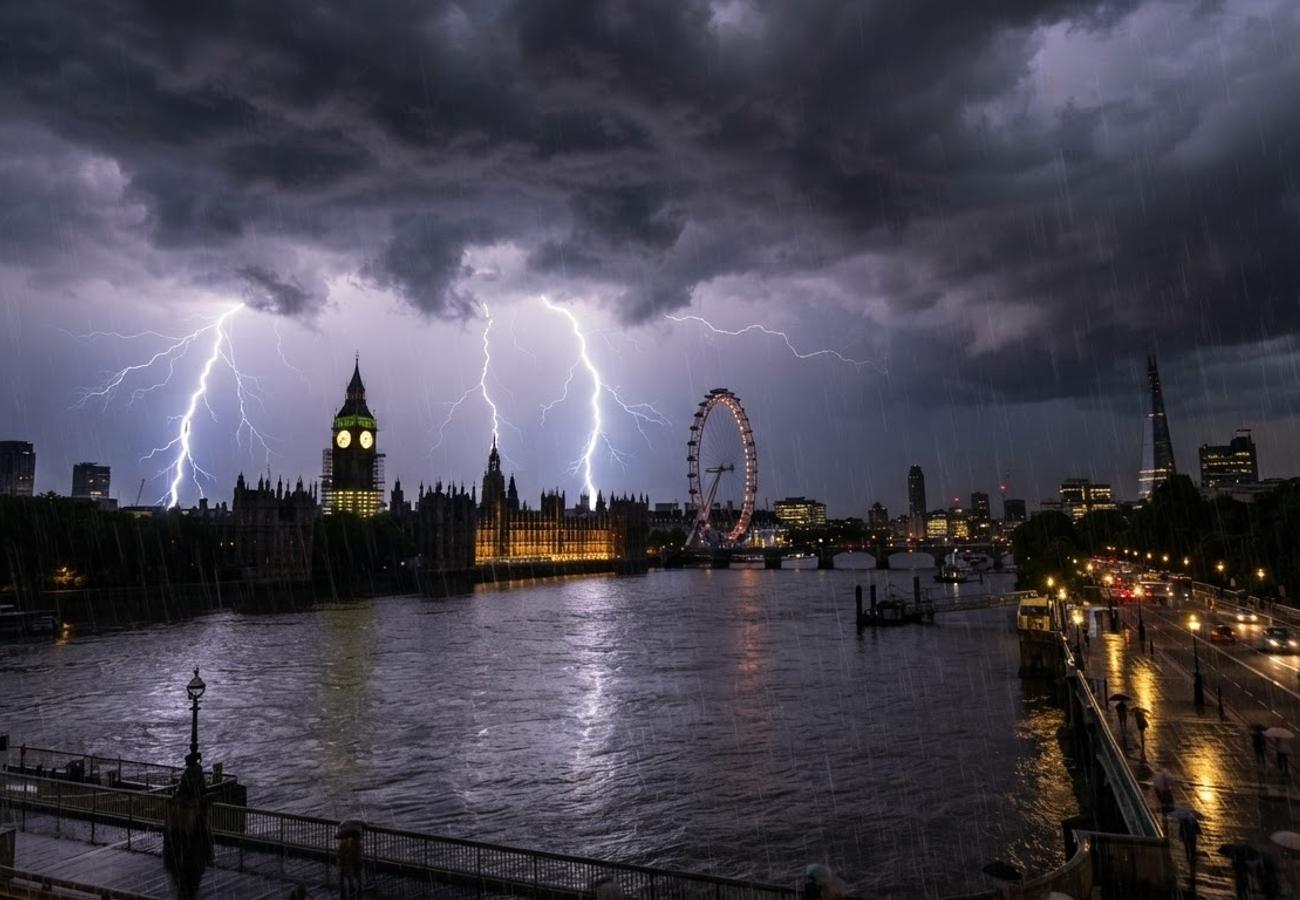
Image generated by AI
Heavy rainfall and thunderstorms are set to disrupt travel across significant portions of the UK this week. The Met Office has issued yellow weather warnings for Wednesday and Thursday, targeting London, southern England, East Anglia, the Midlands, northern England, and parts of Wales.
The current meteorological system is moving north from France, pushing warm, humid air across the British Isles. This volatility is expected to trigger intense localized precipitation, with some areas potentially receiving 20-30mm of rain per hour. In more exposed locations, totals could reach 40-50mm within a 2-3 hour window, while some sites may see as much as 75mm of rain by Thursday.
Critical Warning Windows
The Met Office has established two distinct alert periods:
- Wednesday, August 26: Warning active from 03:00 BST to 22:00 BST. This covers a broad corridor through southern and central England and east Wales. Early activity is expected in Cornwall and the West Country before shifting toward southeast England and London.
- Thursday, August 27: Warning active from 06:00 BST to 22:00 BST. This phase targets parts of Wales, the Midlands, and northern England.
Our analysis indicates a high risk of "slow-moving" storms on Thursday. These systems concentrate rainfall over single locations, which frequently overwhelms urban drainage systems and leads to rapid flash flooding.
The Drought Paradox: Why Dry Ground Increases Risk
A critical factor in this week's risk profile is the preceding weather. England has faced an exceptionally dry summer, which paradoxically increases the likelihood of flash flooding.
According to Environment Agency data:
- Up to August 20, England received only 17% of its long-term average rainfall for August.
- Reservoir storage dropped to 62.6% as of August 18, falling below seasonal averages.
- In the week ending August 13, England received just 4mm of rain (6% of the long-term average).
- 71% of England was officially in drought status, affecting over 27 million people with water-use restrictions.
From a logistical perspective, prolonged heat hardens and compacts exposed soil. When intense rain hits this "baked" surface, the water cannot infiltrate the ground and instead runs off immediately. In urban environments like London, where sealed surfaces (pavement and roads) dominate, this creates immediate surface water accumulation.
Travel Risk Matrix
| Travel Risk | Impact Driver | Primary Affected Sectors |
|---|---|---|
| Flash Flooding | Intense rain overwhelming drainage | Road, rail, and walking routes |
| Lightning | Operational interruptions | Airports, attractions, open-air events |
| Hail | Reduced visibility and vehicle damage | Road travel and outdoor tourism |
| Gusty Winds | Infrastructure and vehicle instability | Motorways, bridges, and aviation |
| Surface Water | Rapid accumulation on carriageways | Car, coach, and taxi journeys |
| Slow-moving Storms | Concentrated rainfall | Regional and rural travel |
Aviation and Passenger Rights
Thunderstorms introduce significant operational challenges for UK airports. Beyond direct weather impacts like lightning and reduced visibility, "knock-on" delays occur when aircraft are held up at previous departure points.
For travelers, the legal distinction between "care" and "compensation" is vital under UK passenger protection rules:
| Situation | Potential Passenger Protection |
|---|---|
| Qualifying flight delay | Provision of food and drink |
| Overnight disruption | Provision of accommodation and transport |
| Delay exceeding five hours | Right to request a refund |
| Weather-related safety risk | Fixed compensation may NOT apply |
| Cancelled flight | Refund or alternative routing options |
| Self-transfer disruption | Limited protection |
The UK Civil Aviation Authority notes that weather conditions incompatible with safe flight are often classified as "extraordinary circumstances." While this may exempt airlines from paying fixed compensation, the obligation to provide "duty of care" (meals and hotels) remains.
Ground Transport Logistics
The most immediate risk for tourists is local transit. Flash flooding typically targets low-lying routes and areas under bridges. In rural regions, debris and fallen branches often obstruct carriageways during gusty storms.
Rail passengers should anticipate disruptions to signaling equipment and track conditions. We recommend building significant buffers into itineraries—particularly for transfers from central London to regional airports or attractions—to account for sudden closures or delays.
Avoid entering flooded roads where depth is uncertain; moving water can hide structural road damage and compromise vehicle stability.
Why This Matters
For the modern traveler or digital nomad, this event highlights the volatility of "shoulder season" weather in the UK. The transition from extreme drought to flash flooding creates a specific type of infrastructure stress that standard weather apps often underreport.
The real impact here is the localized nature of the disruption. A "Yellow Warning" does not mean uniform rain; it means a high probability of intense cells. One city block may remain dry while the next is impassable. For those with tight schedules or high-value connections, the risk is not the rain itself, but the sudden, total paralysis of a specific transit artery.
Industry Outlook
We expect a surge in short-term flight cancellations and rail delays across the South East and Midlands through Thursday evening. Airlines will likely lean on "extraordinary circumstances" clauses to avoid payouts, making comprehensive travel insurance essential for this window. Moving forward, the UK's struggle with "baked" soil and sudden intense bursts suggests that urban drainage infrastructure in tourist hubs will face increasing pressure as weather patterns become more erratic.
Stay flexible and monitor real-time transit alerts to avoid being stranded by localized flash floods.
Related Travel Guides
Disclaimer
This article is for informational and educational purposes only. It does not constitute legal, financial, or professional advice. While we strive to provide accurate and up-to-date information, travel policies, regulations, and conditions change rapidly. Always verify information with official sources before making travel decisions. Nomad Lawyer makes no representations about the accuracy, reliability, completeness, or suitability of the information provided. Readers should consult qualified professionals for advice specific to their circumstances. The views expressed in this article are those of the author and do not necessarily reflect the views of Nomad Lawyer.