
UAE Weather Alert 2026: Dense Fog and Heat Trigger Dynamic Speed Limits in Dubai and Abu Dhabi
Severe weather alerts across the UAE have triggered emergency speed reductions and heavy vehicle bans on key highways connecting Dubai and Abu Dhabi to ensure road safety.

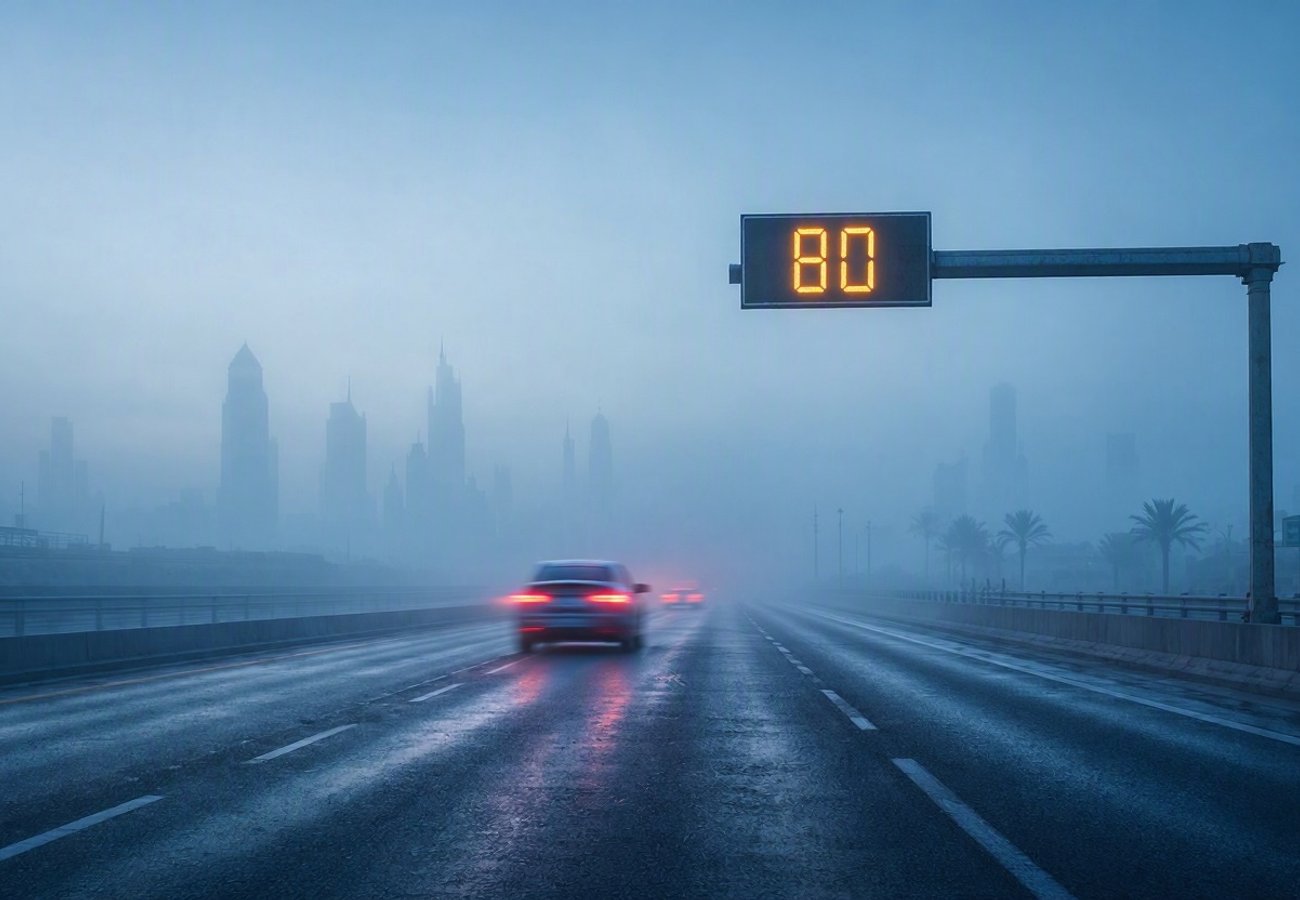
Image generated by AI
[Abu Dhabi, October 7, 2026] — The National Centre of Meteorology (NCM) has issued red and yellow alerts across Dubai and Abu Dhabi as dense fog and extreme thermal heat disrupt road travel across the United Arab Emirates. Horizontal visibility has plummeted below 200 metres on primary inter-emirate highways, prompting immediate safety interventions by transport authorities.
The atmospheric instability is expected to persist until Thursday morning, affecting both coastal and inland corridors. Current data shows maximum daytime temperatures hitting 43°C in Dubai and Sharjah, while Abu Dhabi has recorded highs of 42°C coupled with a stifling 80% relative humidity.
Severe Weather Triggers Dynamic Speed Enforcement
To prevent multi-vehicle collisions during low-visibility windows, the Abu Dhabi Police have activated dynamic speed reduction systems. These automated systems instantly recalibrate speed radars to match electronic gantry signs, removing all traditional speed buffer margins.
Drivers on critical arteries are now restricted to a maximum of 80 km/h during active weather warnings. Failure to comply results in immediate fines starting at 400 dirhams, scaling up to 3,000 dirhams based on the severity of the speeding violation. Furthermore, a total movement ban is currently in effect for worker buses and heavy trucks during periods of heavy fog.
Emergency Speed Limit Adjustments by Route
| Corridor Name | Route Code | Standard Limit | Fog Enforcement Limit | Radar Buffer Margin |
|---|---|---|---|---|
| Abu Dhabi–Dubai Highway | E11 | 140 km/h | 80 km/h | 0 km/h |
| Abu Dhabi–Al Ain Road | E22 | 160 km/h | 80 km/h | 0 km/h |
| Sheikh Khalifa bin Zayed Road | E12 | 120 km/h | 80 km/h | 0 km/h |
| Sweihan Road | E20 | 120 km/h | 80 km/h | 0 km/h |
What This Means for Travelers
For tourists and residents currently booking road trips or renting vehicles, the current weather pattern creates three distinct risk zones. The most dangerous period is between 05:00 and 09:00, where radiative fog makes highway transit high-risk. Midday travel (09:00 to 15:30) is hampered by extreme thermal stress, which increases tire pressure and mechanical wear due to scorching asphalt.
Passenger Impact Summary:
- Strict Fine Regime: Using hazard lights while driving in fog is prohibited and carries a 500 dirham fine and four black points on the driver's license. Hazard lights are reserved for stationary emergency vehicles only.
- Travel Timing: The optimal window for safe transit is between 15:30 and 21:00, as temperatures drop and visibility stabilizes.
- Vehicle Requirements: Drivers must use low-beam headlights and fog lights. High-beams are strictly discouraged as they reflect off moisture particles, further blinding the driver.
High-Altitude and Coastal Alternatives
While urban corridors face hazards, the Ras Al Khaimah Tourism Development Authority and other bodies suggest shifting excursions to high-altitude destinations where temperatures are significantly lower.
Recommended Safe Destinations
| Destination | Altitude/Location | Expected Temp | Primary Attraction |
|---|---|---|---|
| Jebel Jais | 1,934m (RAK) | 21°C – 33°C | Viewing Decks |
| Jebel Hafeet | 1,249m (Al Ain) | 24°C – 35°C | Scenic Pass |
| Khorfakkan | East Coast (Sharjah) | 32°C – 35°C | Mountain Tunnels |
| Hatta Dam | Hajar Range (Dubai) | 26°C – 36°C | Kayaking |
| Al Qudra Lakes | Desert (Dubai) | 28°C – 39°C | Wildlife Viewing |
Regulatory Outlook and Safety Protocols
The Ministry of Interior and the Roads and Transport Authority (RTA) continue to monitor the interaction between the surface low-pressure system and upper-air pressure extensions. This meteorological combination is drawing warm maritime air from the Arabian Gulf inland, which, when combined with nighttime radiative cooling, creates the current fog crisis.
International travelers are urged to check official police feeds before departing. Car rental agencies have been advised to brief foreign drivers on the "zero-buffer" radar policy to avoid massive unexpected fines.
FAQ: UAE Road Safety 2026
What is the fine for speeding during fog alerts? Fines begin at 400 dirhams and can reach 3,000 dirhams. There is no speed buffer; radars are set to trigger at 81 km/h when the limit is 80 km/h.
Can I use hazard lights while driving in the fog? No. Using hazard lights while the vehicle is in motion results in a 500 dirham fine and four black points on your license.
When is the safest time to drive between emirates? The highly recommended window is from 15:30 to 21:00, after the morning fog has lifted and the peak midday heat has subsided.
Which vehicles are banned during heavy fog? Heavy transport trucks and worker buses are subject to total movement bans during peak fog periods to prevent mass-casualty accidents.
Drive slow, stay visible, and watch the gantries.
Related Travel Guides
Disclaimer
This article is for informational and educational purposes only. It does not constitute legal, financial, or professional advice. While we strive to provide accurate and up-to-date information, travel policies, regulations, and conditions change rapidly. Always verify information with official sources before making travel decisions. Nomad Lawyer makes no representations about the accuracy, reliability, completeness, or suitability of the information provided. Readers should consult qualified professionals for advice specific to their circumstances. The views expressed in this article are those of the author and do not necessarily reflect the views of Nomad Lawyer.
Kunal K Choudhary
Co-Founder & Contributor
A passionate traveller and tech enthusiast. Kunal contributes to the vision and growth of Nomad Lawyer, bringing fresh perspectives and driving the community forward.
Learn more about our team →