
UK West Midlands Rail Chaos: Extreme Heatwave Forces Service Cuts Across Birmingham, Coventry, Wolverhampton June 2026
Dangerous 39°C temperatures trigger emergency timetable reductions across West Midlands Railway and Chiltern Networks, forcing reduced services and widespread delays.

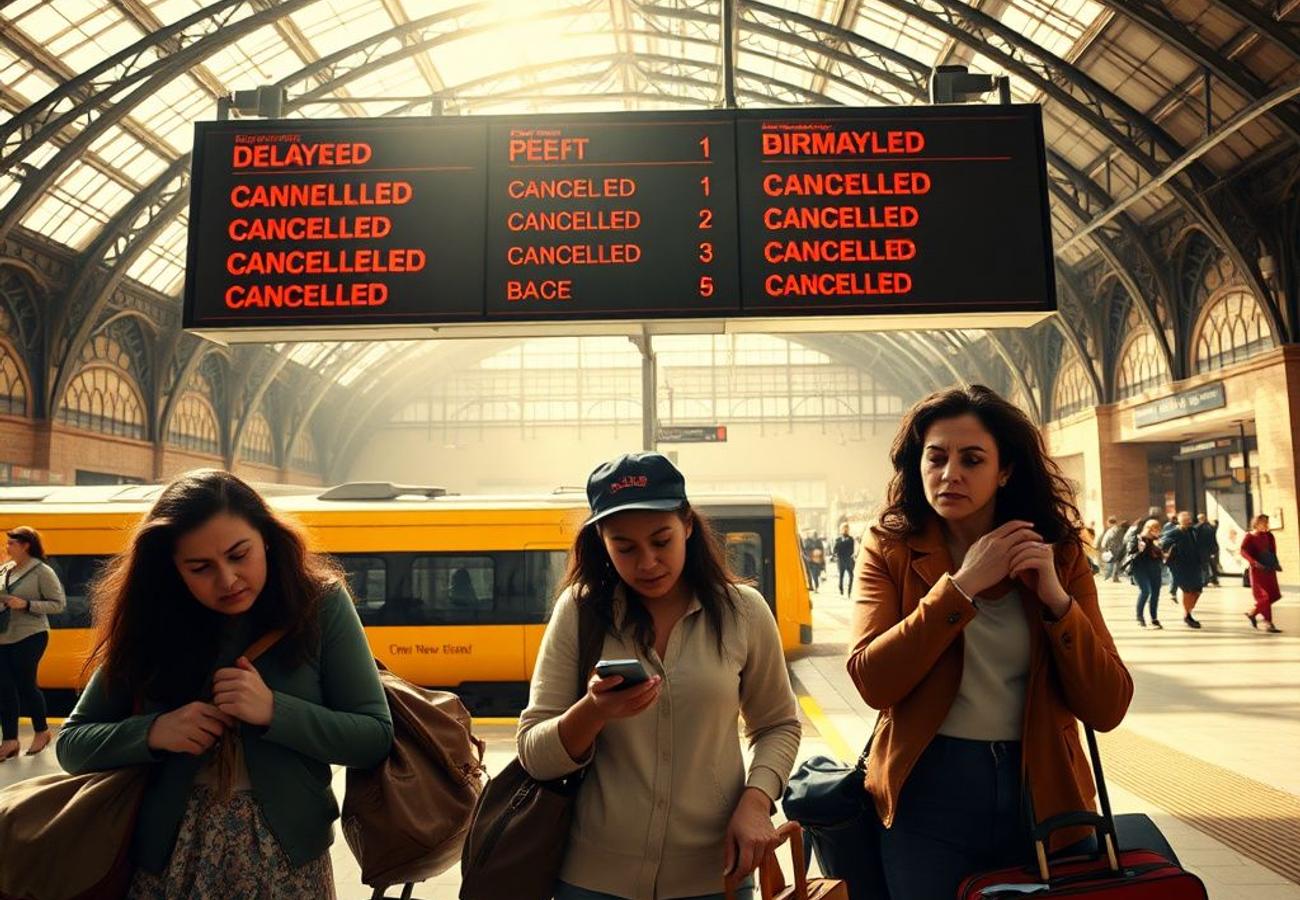
Image generated by AI
Steel rails are buckling. Overhead electrical wires are sagging. And right now, across the West Midlands, tens of thousands of commuters are facing a transportation nightmare they didn't anticipate.
It's June 23, 2026, and the UK is gripped by an extreme heatwave that's brought one of Europe's most critical transport corridors to its knees.
The Perfect Storm: Extreme Heat Meets Rail Infrastructure Collapse
The Met Office has issued a rare red extreme heat warning across the region, with temperatures forecast to approach 39°C—dangerously close to the threshold where railway infrastructure fails. This isn't hyperbole. This is infrastructure collapse in slow motion.
When steel rails expand under prolonged extreme heat, they don't just bend slightly. They buckle. They warp. They create conditions where trains cannot safely operate at normal speeds. Overhead electrical systems—already fragile in these conditions—sag or overheat entirely, forcing speed restrictions and service shutdowns across entire networks.
Network Rail has confirmed what commuters already suspected: all railway lines in the West Midlands will remain technically open, but they'll operate on drastically reduced timetables. The decision prioritizes safety over convenience, but that cold fact doesn't help the thousands of stranded passengers.
Reddit: "Just checked my journey planner. My usual 30-minute commute is now showing 90+ minutes with three cancelled trains. This is absolutely brutal." — r/unitedkingdom
Birmingham, Coventry, Wolverhampton: A Region Under Transport Siege
West Midlands Railway has implemented severe service reductions across multiple routes. The Cross City Line—one of the region's busiest commuter corridors—is now operating at severely reduced frequency. Services linking Wolverhampton, Walsall, and Redditch to Birmingham's central hub are running fewer trains with longer intervals between departures.
Chiltern Railways, which operates the critical London-Birmingham corridor, has also slashed operations. What normally guarantees reliable commuter connections between the capital and the Midlands is now a gamble. Delays are now guaranteed. Cancellations are happening at short notice, sometimes without warning as temperatures spike throughout the day.
The impact is staggering. Passengers should expect crowded trains with reduced seating, slower journey times, and the constant possibility of last-minute cancellations. Travel authorities are now pleading with commuters to avoid unnecessary journeys entirely during peak heat hours.
Why Rail Infrastructure Fails in Extreme Heat
This isn't a mystery. The physics are straightforward, and the UK rail network has documented these risks extensively.
Steel expands when heated. A typical railway line can expand by several centimeters over just a few miles when temperatures surge above normal operational thresholds. When that expansion occurs on tracks that are bolted or welded in fixed positions, the result is predictable: buckling, deformation, and dangerous track conditions.
Overhead electrical systems face parallel challenges. Catenary wires—the electrical lines that power trains—sag under heat. When they sag too far, they risk contact with train pantographs, causing electrical arcing and system failures. Speed restrictions become mandatory to reduce mechanical stress on both track and electrical infrastructure.
Network Rail isn't cutting services because they want to. They're cutting services because operating trains at normal speeds on heat-damaged infrastructure creates genuine safety hazards—derailment risks, electrical failures, and system collapses that would be far more catastrophic than temporary service reductions.
The Wider Transport Crisis Beyond Rails
The heatwave isn't just attacking the rail network. Roads are experiencing surface softening, which increases vehicle breakdown risks. Bus services are running with reduced capacity due to heat-related operational pressures. The entire West Midlands transport ecosystem is under siege.
However, rail remains the most heavily disrupted system because tracks and overhead electrical infrastructure have the least flexibility to adapt to extreme temperature swings. Unlike road networks, which can distribute stress across multiple vehicles and routes, rail infrastructure operates on fixed physical infrastructure that has precise operational tolerances.
Passenger Advisory: What You Need to Know Right Now
Transport authorities across the West Midlands are issuing clear guidance: travel only if absolutely necessary. For those who must travel:
Check live updates on official journey planners before every departure. Carry sufficient water. Avoid midday peak hours when temperatures are highest. Allow significantly extra journey time—what normally takes 30 minutes may now require 90 minutes or more.
Vulnerable passengers, elderly travelers, and those with health conditions are being prioritized for assistance at major stations including Birmingham New Street and Coventry Central. Station staff have been instructed to provide additional support during peak heat conditions.
Alternative Transport and Workarounds
With rail services decimated, passengers are being encouraged to explore alternatives where feasible: bus networks (though capacity-constrained), car-sharing arrangements, and deliberate scheduling adjustments to avoid peak travel times entirely.
For longer-distance commuters considering the London-Birmingham route, delays are now built into any journey plan. Chiltern Railways is updating its systems in real time, but passengers should add at least 45-60 minutes to normal journey estimates.
When Will Normal Service Resume?
That's the question every commuter is asking. Network Rail has stated that full operations will gradually return once temperatures fall and infrastructure stabilizes. But "gradual" is the operative word here.
Even as heat peaks pass, rail infrastructure requires monitoring and verification before speeds can be returned to normal levels. This process can take days, not hours. Short-term delays and cancellations will remain likely even as the worst of the heatwave subsides.
Disruption is expected to continue for several days as the heatwave peaks across the UK. The current timeline suggests that normal service patterns won't resume until regional temperatures have fallen significantly and infrastructure has been inspected for damage.
The Larger Picture: UK Rail Vulnerability
This crisis reveals something uncomfortable about modern rail infrastructure in the UK: it's increasingly vulnerable to climate extremes. As heatwaves become more frequent and more intense—a documented trend in European weather patterns—rail networks will face repeated pressure requiring repeated emergency interventions.
Network Rail's proactive approach—cutting services before infrastructure fails rather than after—is sound risk management. But it's also an acknowledgment that the existing rail infrastructure has limited capacity to withstand the climate conditions we're now experiencing regularly.
The UK's rail network is operating on yesterday's infrastructure standards in tomorrow's climate.
Related Travel Guides
Disclaimer
This article is for informational and educational purposes only. It does not constitute legal, financial, or professional advice. While we strive to provide accurate and up-to-date information, travel policies, regulations, and conditions change rapidly. Always verify information with official sources before making travel decisions. Nomad Lawyer makes no representations about the accuracy, reliability, completeness, or suitability of the information provided. Readers should consult qualified professionals for advice specific to their circumstances. The views expressed in this article are those of the author and do not necessarily reflect the views of Nomad Lawyer.
Raushan Kumar
Founder & Lead Developer
Full-stack developer with 11+ years of experience and a passionate traveller. Raushan built Nomad Lawyer from the ground up with a vision to create the best travel and law experience on the web.
Learn more about our team →