
Flight disruptions mount: 34 UAE services cancelled amid regional strain
Flight disruptions mount across UAE airports as 34 services face cancellation in May 2026. Dubai, Abu Dhabi, and Sharjah hubs affected. Regional carriers adjust operations.

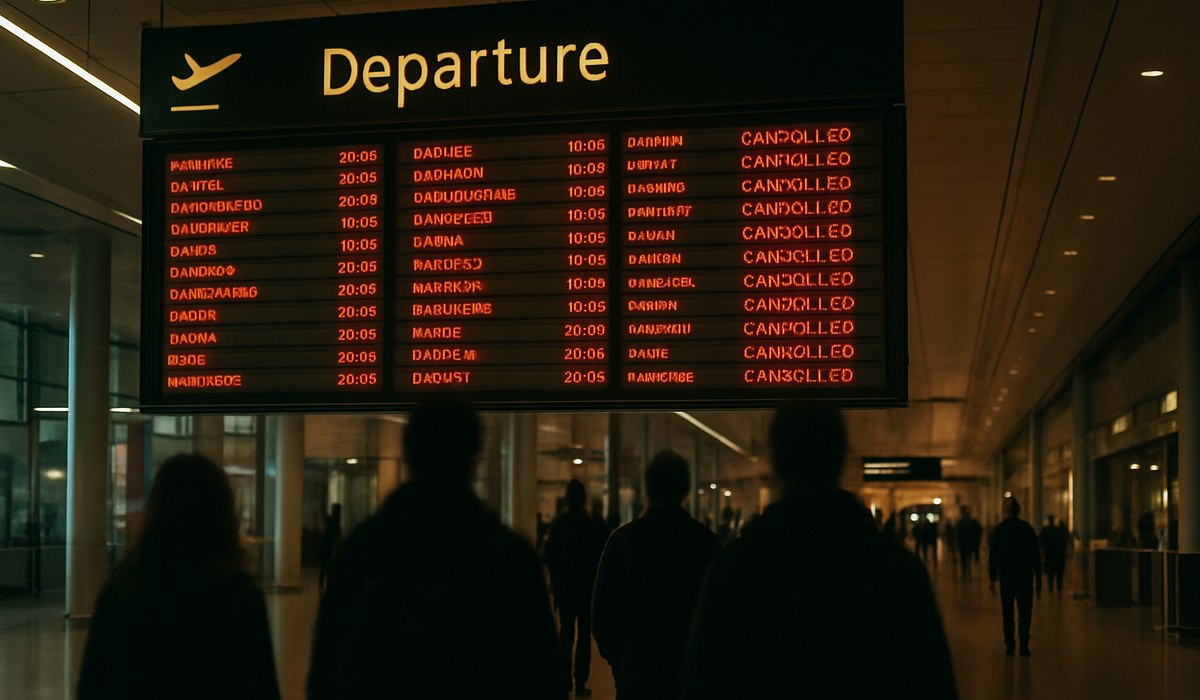
Image generated by AI
Wave of Cancellations Strikes UAE's Three Major Airports
Flight disruptions mount across the United Arab Emirates as 34 scheduled services face cancellation, affecting travelers across Dubai International, Abu Dhabi's Zayed International, and Sharjah International airports. The disruptions involve regional and low-cost carriers including Flydubai, IndiGo, Air Arabia, and Saudia, creating operational challenges for passengers targeting high-demand markets in India, Saudi Arabia, Africa, and Eastern Europe. Airport departure boards reveal clusters of cancelled flights during similar time windows, suggesting coordinated scheduling adjustments as airlines manage capacity constraints amid Middle East aviation volatility. Multiple passengers report sudden rebookings onto later flights, longer layover connections, or rerouting through secondary hubs as carriers consolidate operations to preserve critical resources and maintain wider turnaround buffers in unpredictable airspace conditions.
Understanding the Operational Pressure Behind Service Cancellations
Regional carriers face mounting operational strain from multiple converging factors that have triggered this latest round of flight disruptions mount across the UAE corridor. Middle East geopolitical instability continues to create unpredictable airspace restrictions and flight path diversions, forcing airlines to absorb additional fuel costs and extended flight times. Simultaneously, ground handling bottlenecks at Dubai and Abu Dhabi airports have constrained turnaround efficiency, while crew scheduling complexities emerge from route suspensions in neighboring regions. Rather than risk cascading delays affecting multiple daily rotations, airlines opted for selective flight cancellations during peak periods. This strategic approach allows carriers to thin out schedules, preserve aircraft availability, and reduce passenger displacement across their networks while operations stabilize.
Check live flight status updates in real-time through FlightAware for current cancellation information and rebooking options.
Key Routes Hit: India Corridors Face Heaviest Impact
The most significant clustering of services cancelled appears on trunk routes connecting UAE hubs to Indian metropolitan areas, particularly Mumbai, Delhi, and Kochi flights. These routes represent the busiest international connections from the UAE, serving migrant worker populations, business travelers, and visiting friends and relatives (VFR) segments that generate consistent daily demand. Overnight and early morning departure slots experienced the heaviest cancellations, as multiple carriers simultaneously trimmed frequencies or removed individual rotations from their schedules. Passengers originally booked on these Indian routes report three-day rebooking windows, with some flights rescheduled through secondary Gulf hubs rather than direct connections.
Beyond India, significant cancellations impact Riyadh and Jeddah services, Nairobi links, Bucharest connections, and Amman routes. These medium-haul sectors typically rely on stable hub operations across the UAE's three airports to maintain daily or near-daily flight frequencies. The current wave of cancellations has compressed connectivity options, forcing some travelers onto multi-leg itineraries involving connection delays and overnight layovers. Passengers transiting through UAE hubs toward European destinations face particularly extended journeys as consolidation squeezes available seat inventory on onward connections.
How Regional Carriers Are Managing Operational Consolidation
Flydubai has systematically reduced departures on short-haul regional corridors where schedule overlap with competing carriers creates operational redundancy. The carrier has prioritized maintaining core morning and evening peaks while paring back midday and late-night rotations. IndiGo, rapidly expanding its Gulf operations, has pulled specific Abu Dhabi and Dubai rotations serving Indian Tier-1 and Tier-2 cities, creating notable gaps on high-frequency routes. Air Arabia, Sharjah's home-based carrier, has adopted a selective approach—maintaining essential network spines while canceling individual flights on operationally pressured days.
Saudia's cancellations focus on services between Saudi cities and UAE airports, particularly affecting religious travel and business corridors. Collectively, these carriers' scheduling adjustments have consolidated from 34 individual cancellations into a coordinated thinning of peak-period capacity. Airlines have implemented accelerated rebooking protocols, offering same-day alternatives on partner carriers when available, or automatic rescheduling onto next-available inventory with hotel accommodation for overnight delays exceeding six hours. This structured approach aims to minimize passenger displacement while preserving operational stability.
Real-Time Flight Tracking and Status Monitoring
Travelers affected by flight disruptions should monitor cancellation updates through multiple platforms. FlightAware provides live departure and arrival tracking with historical delay patterns for affected routes. The FAA and US DOT maintain comprehensive databases on international carrier compliance with compensation regulations, though UAE carriers follow different regulatory frameworks. For real-time notifications, passengers should enable alerts through their airline's mobile app and check directly with ground staff at their airport, as rebooking options update continuously as operational windows change.
Passenger Rights and Compensation Options
Travelers booked on cancelled flights possess explicit rights under several regulatory frameworks. European Union Regulation 261/2004 mandates compensation for cancelled flights departing from EU airports or arriving at EU destinations aboard EU-based carriers—typically €250-€600 depending on flight distance. Passengers originating from India are entitled to protection under India's Civil Aviation Ministry regulations, which require equivalent rebooking or refund options. UAE-based carriers follow GCC Air Transport Agreement protocols, which mandate carrier responsibility for passenger care including meals, accommodation, and communication during delays exceeding 12 hours.
Affected passengers should immediately contact their airline's customer service, request written documentation of cancellation reasons, and collect all receipts for meals, accommodation, or transportation expenses incurred due to delays. Many carriers offer automatic refunds to original payment methods within 14 days of cancellation, though some may pressure passengers toward travel vouchers instead. Passengers unwilling to accept rebooking should explicitly request refund options in writing.
| Affected Airport | Approximate Cancellations | Primary Airlines Involved | Heaviest-Hit Routes | Typical Rebooking Window | Compensation Framework |
|---|---|---|---|---|---|
| Dubai International | 16 | Flydubai, IndiGo, Saudia | Mumbai, Delhi, Riyadh | 2-4 days | GCC Air Transport Agreement |
| Abu Dhabi Zayed | 12 | IndiGo, Air Arabia, Saudia | Delhi, Jeddah, Nairobi | 2-5 days | Airline-specific policies |
| Sharjah International | 6 | Air Arabia, IndiGo | Kochi, Amman, Bucharest | 1-3 days | GCC Air Transport Agreement |
| Combined UAE Impact | 34+ | Multiple regional carriers | India-Gulf-Europe corridors | 2-5 days | Mixed regulatory systems |
| Estimated Passengers Affected | 4,200-5,100 | Regional network carriers | South Asia, Gulf, Africa, Eastern Europe | Variable rebooking | Negotiable on case basis |
What This Means for Travelers: Action Checklist
Immediate steps for passengers affected by UAE flight disruptions:
-
Verify cancellation status by logging into your airline account or calling customer service within 2 hours of scheduled departure—some cancellations remain unconfirmed until 24 hours before flight time.
-
Document everything including booking reference, cancellation confirmation email, and screenshots of flight status showing cancellation notification timestamps for future compensation claims.
-
Explore rebooking options across all three UAE airports (Dubai, Abu Dhabi, Sharjah) rather than accepting single-airport rebooking, as alternate carriers may offer faster routing.
-
Request written confirmation of your rebooking, including new
Disclaimer
This article is for informational and educational purposes only. It does not constitute legal, financial, or professional advice. While we strive to provide accurate and up-to-date information, travel policies, regulations, and conditions change rapidly. Always verify information with official sources before making travel decisions. Nomad Lawyer makes no representations about the accuracy, reliability, completeness, or suitability of the information provided. Readers should consult qualified professionals for advice specific to their circumstances. The views expressed in this article are those of the author and do not necessarily reflect the views of Nomad Lawyer.
Raushan Kumar
Founder & Lead Developer
Full-stack developer with 11+ years of experience and a passionate traveller. Raushan built Nomad Lawyer from the ground up with a vision to create the best travel and law experience on the web.
Learn more about our team →