
Global Rail Revolution: US Joins Europe in $100B Infrastructure Surge
The United States, Brazil, Canada, UK, Poland, and Switzerland are dramatically accelerating railway investment in June 2026, signaling a historic shift toward high-speed rail and sustainable transport infrastructure worldwide.

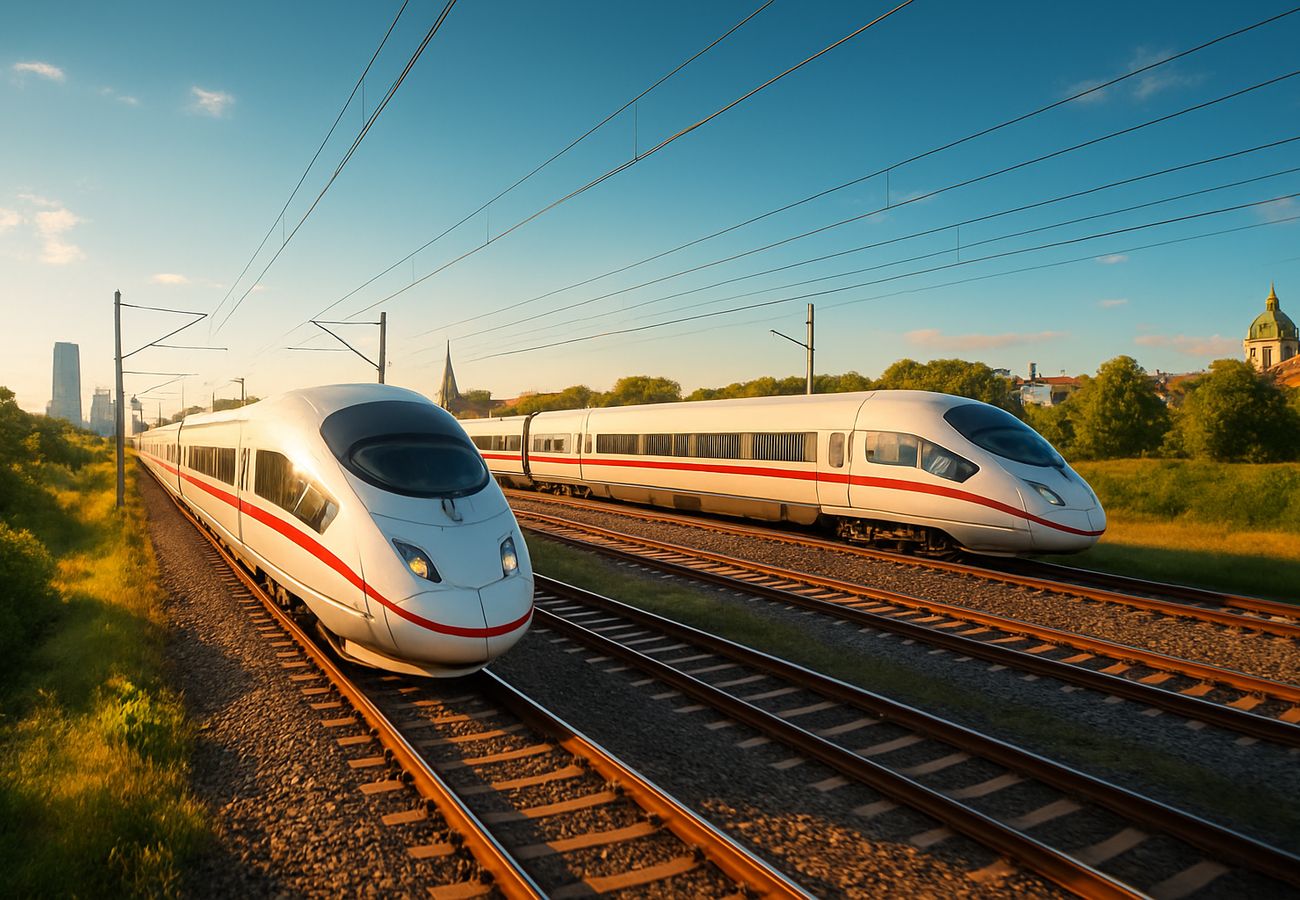
Image generated by AI
The world's major economies just made a stunning bet on an old technology. The United States, Brazil, Canada, the UK, Poland, Switzerland, and six other nations are pouring billions into railway infrastructure during June 2026—marking the largest coordinated global rail investment push in decades.
What's driving this sudden pivot? Governments worldwide are concluding that trains—not planes, not cars—are the future of mass transport. And they're betting accordingly.
America Rediscovers the Tracks
The United States Northeast Corridor just received one of the most significant federal funding packages in recent memory. This 457-mile stretch connecting Boston to Washington DC remains America's busiest passenger railway—and it's crumbling.
Federal authorities confirmed major investment commitments targeting capacity improvements, asset modernisation, and long-distance service expansion. The timing is urgent. In May 2026, a fire involving an Amtrak work train near New York Penn Station exposed critical vulnerabilities in one of the nation's most essential transport arteries.
Reddit: "The Northeast Corridor fire was a wake-up call. We've been neglecting US rail infrastructure for 40 years." — r/trains
That single incident reignited a national conversation about rail resilience. Policymakers now openly acknowledge that modern rail infrastructure isn't just about moving people—it's about economic productivity, urban development, and climate goals. The American government is finally aligning policy with reality: trains reduce congestion, improve travel efficiency, and create employment at scales that highways cannot match.
Transportation experts estimate the Northeast Corridor modernisation alone will support regional GDP growth by $8-12 billion annually within five years.
Europe Builds the World's First True Rail Network
Europe is moving faster than Washington. Across the continent, governments are abandoning the fragmented, nationalised rail approach that dominated the 20th century.
The new mission: create seamless cross-border rail connectivity that makes international train travel as simple as domestic flights. Policymakers in Poland, Switzerland, Austria, and France are harmonising operational standards, simplifying ticketing systems, and breaking down regulatory barriers between national operators.
The objective is ruthlessly simple: crush short-haul aviation. A London-to-Paris trip or Berlin-to-Amsterdam journey should be faster and cheaper by train than by plane. The data backs this ambition—high-speed rail captures 60-75% of market share on major European routes where service quality is competitive with flights.
The UK's HS2 Paradox
High Speed 2 (HS2) remains Britain's most contentious infrastructure project. The government confirmed revised technical specifications designed to reduce costs and accelerate delivery. Operating speeds will be lower than originally promised, but construction continues across multiple network sections.
The political debate has evolved. Supporters now focus on operational necessity: the West Coast Main Line is congested beyond capacity, and Britain needs additional rail infrastructure regardless of HS2's final cost. Critics argue the public expenditure cannot be justified.
What's undeniable: Britain's rail network is fundamentally undersized for a nation of 67 million people. Investment isn't optional—it's mandatory.
France Leads the European Model
France and SNCF (the national railway operator) are executing a masterclass in modern rail strategy. Regional connectivity expansion, cross-border service integration, and passenger experience modernisation are all advancing simultaneously.
French authorities explicitly position rail as climate policy. Every high-speed rail investment is tied to carbon reduction targets. The strategy works—France operates one of the world's most extensive high-speed networks, and passenger growth continues accelerating.
Germany's Reliability Crisis
Deutsche Bahn faces relentless pressure. Germany's massive rail system handles some of Europe's heaviest passenger and freight volumes, yet chronic delays and maintenance backlogs plague operations. Ironically, this crisis is driving investment. Berlin views modernisation as non-negotiable for achieving climate goals and reducing road congestion.
German authorities are now advocating aggressive European rail integration—recognising that national networks must operate as a coordinated European system to compete with road transport.
Spain's Surprising Success
Spain has quietly become Europe's high-speed rail success story. Market liberalisation—allowing multiple operators to compete on major routes—dramatically improved service quality and pricing. Passenger demand on Madrid-Barcelona, Madrid-Valencia, and Barcelona-Valencia routes remains exceptionally strong.
Spain's model is attracting international attention. The country demonstrates that large-scale rail transformation is achievable when policy enables competition rather than enforcing monopoly operations.
Italy Balances Speed and Access
Italy is pursuing a dual strategy: expanding high-speed rail between major cities while simultaneously modernising regional networks. This approach recognises a critical truth that many governments ignore: you cannot build a prosperous economy on high-speed rail alone.
Milan-Rome, Rome-Naples, and Turin-Milan routes generate high revenue. But regional connectivity—the trains that connect smaller cities and villages to economic opportunity—drives long-term social and economic development.
Brazil and Canada Join the Movement
Beyond Europe, Brazil and Canada are accelerating rail infrastructure investment. Canada is prioritising freight corridor modernisation and regional passenger service improvements. Brazil is expanding commuter rail networks in São Paulo and Rio de Janeiro while exploring high-speed corridors connecting major metropolitan regions.
Both nations view rail as essential infrastructure for supporting economic growth and reducing urban congestion.
What Changed?
Three factors converged in 2026:
First, climate imperatives became undeniable. Rail produces 5-10 times fewer emissions per passenger-mile than cars and significantly less than aviation. Governments can no longer ignore this advantage.
Second, short-haul aviation is economically fragile. Rising fuel costs, labour expenses, and environmental taxation are making 1-4 hour flights uncompetitive against high-speed rail.
Third, political consensus shifted. Conservative and progressive governments alike now recognise that rail infrastructure generates long-term economic returns exceeding initial investment costs. The ideology changed. Rail went from "nostalgia" to "strategic necessity."
The Global Implications
When the United States, Europe's major economies, Brazil, Canada, and other nations simultaneously surge railway investment, it signals industrial transformation. Supply chain demand for rail infrastructure components—steel, signalling systems, rolling stock, electrical equipment—is about to spike dramatically.
This creates opportunities for manufacturers, engineering firms, and technology companies. It also means rail travel will likely become faster, cheaper, and more reliable over the next 5-10 years.
For nomadic professionals and business travellers, the implications are profound. High-speed rail networks in Europe and North America will increasingly compete with aviation on convenience, price, and frequency. Destination accessibility will expand beyond major airports to secondary cities connected by modern rail infrastructure.
The age of trains is back—and this time, governments are betting serious money on it.
Related Travel Guides
Greece Overtakes Spain, Turkey as UK's Top Summer Destination
Air China CA 898: How São Paulo-Madrid Route Redefines Intercontinental Travel
Delta Boeing 787-10 Order: 30 Dreamliners Transform Long-Haul Fleet
Disclaimer
This article is for informational and educational purposes only. It does not constitute legal, financial, or professional advice. While we strive to provide accurate and up-to-date information, travel policies, regulations, and conditions change rapidly. Always verify information with official sources before making travel decisions. Nomad Lawyer makes no representations about the accuracy, reliability, completeness, or suitability of the information provided. Readers should consult qualified professionals for advice specific to their circumstances. The views expressed in this article are those of the author and do not necessarily reflect the views of Nomad Lawyer.
Raushan Kumar
Founder & Lead Developer
Full-stack developer with 11+ years of experience and a passionate traveller. Raushan built Nomad Lawyer from the ground up with a vision to create the best travel and law experience on the web.
Learn more about our team →