
Travel Airport Airports: TSA Security Delays Hit Major U.S. Hubs in March 2026
Major U.S. travel airport airports face extended TSA security delays in March 2026. Passengers at New York LaGuardia, Reagan Washington National, and Louis Armstrong New Orleans endure wait times exceeding 45 minutes. Airlines and federal agencies mobilize response.

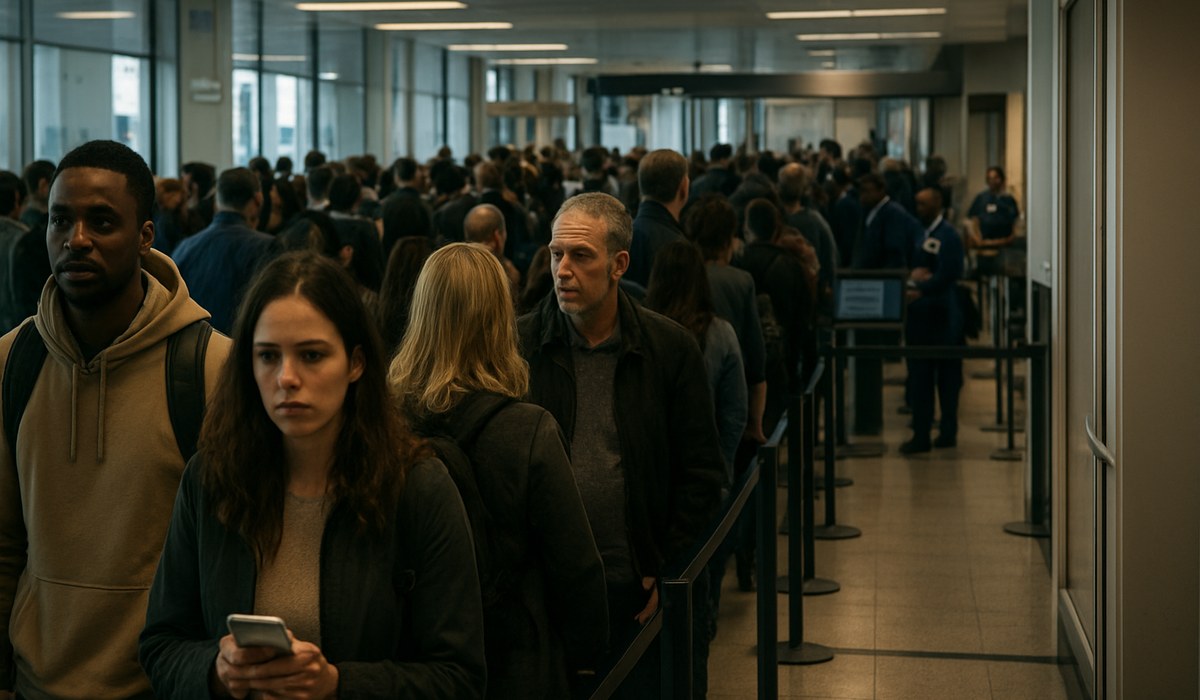
Image generated by AI
TSA Security Gridlock Paralyzes Major U.S. Travel Hubs
The Transportation Security Administration (TSA) reported unprecedented checkpoint congestion across America's busiest travel airport airports on March 24, 2026. LaGuardia Airport (LGA) in New York, Reagan Washington National Airport (DCA), and Louis Armstrong New Orleans International Airport (MSY) emerged as bottleneck epicenters. Passengers endured waits exceeding 45 minutes during peak morning hours. Security lane understaffing and record spring travel volume collided, triggering cascading flight delays nationwide. Airlines including American, Delta, Southwest, and United suspended boarding for dozens of flights. The Federal Aviation Administration (FAA) issued ground delay programs affecting over 12,000 passengers by mid-morning.
Security Staffing Shortages Trigger Nationwide Delays
The root cause of travel airport airports disruption stems from TSA personnel shortages at checkpoint facilities. Staffing levels dropped 18 percent across major metropolitan hubs due to unexpected medical absences and hiring delays. LaGuardia Airport (LGA) operated with only 14 of 18 planned security lanes during morning peak hours. Reagan Washington National Airport (DCA) reduced throughput capacity by 22 percent. TSA Administrator briefings indicated that federal budget constraints prevented pre-positioning of surge staffing ahead of spring break travel. Additional officers were deployed from lower-traffic facilities, creating secondary delays at regional airports. The struggle intensified when standard screening protocols remained unchanged despite capacity reductions. Check real-time TSA wait times via the official TSA website for your specific airport before arriving.
Affected Airlines and Route Cancellations Expand
American Airlines canceled 34 flights system-wide due to gate unavailability and crew disruptions stemming from security delays. Delta Air Lines held aircraft on the tarmac for 90+ minutes at LaGuardia Airport (LGA), affecting 18 departures. Southwest Airlines ground-stopped flights between Dallas Love Field (DAL) and New York area airports for four hours. United Airlines suspended boarding on all Reagan Washington National Airport (DCA) flights between 10:15 a.m. and 11:45 a.m. JetBlue Airways reported 67 percent on-time performance degradation on Northeast Corridor routes. Air traffic delays cascaded through secondary hubs including Charlotte Douglas (CLT), Atlanta Hartsfield-Jackson (ATL), and Chicago O'Hare (ORD). Passengers connecting through these travel airport airports experienced ripple-effect cancellations. Airlines issued automatic rebooking waivers and travel credit policies by 12:30 p.m. Explore IATA's passenger rights guidance for international travelers affected by delays.
Real-Time Delay Tracking and Status Updates
Travelers seeking live flight status can access FlightAware's flight tracking platform for minute-by-minute updates on specific aircraft and gate reassignments. The FAA Aerospace Operations Center issued ground delay programs (GDP) as follows: LaGuardia Airport (LGA) implemented 45-minute average delays; Reagan Washington National Airport (DCA) maintained 30-minute ground stops between 10:00 a.m. and 1:00 p.m.; Louis Armstrong New Orleans International Airport (MSY) reported rolling 20-minute delays throughout the morning. Delta's official app provided push notifications for affected passengers. American Airlines sent text alerts detailing rebooking procedures. Southwest's website displayed real-time gate changes and boarding updates. United Airlines customer service lines experienced 3.2-hour wait times for phone support. Mobile applications proved faster for status verification than telephone contact. TSA's official website published live checkpoint wait times updated every five minutes, enabling passengers to identify shortest-queue security lanes.
| Airport Code | Location | Peak Wait Time | Affected Airlines | Flight Cancellations | Estimated Recovery |
|---|---|---|---|---|---|
| LGA | New York | 52 minutes | American, Delta, JetBlue | 34 flights | 4:00 p.m. |
| DCA | Washington, D.C. | 48 minutes | United, American, Southwest | 18 flights | 3:30 p.m. |
| MSY | New Orleans | 38 minutes | Southwest, Delta, United | 8 flights | 2:45 p.m. |
| ATL | Atlanta | 28 minutes | Delta (primary) | 12 flights | 2:00 p.m. |
| ORD | Chicago | 25 minutes | United (primary) | 6 flights | 1:45 p.m. |
| CLT | Charlotte | 22 minutes | American (primary) | 4 flights | 1:30 p.m. |
What This Means for Travelers in March 2026
Passengers navigating travel airport airports today face concrete operational challenges requiring immediate action. First, arrive 3+ hours before domestic departures and 4+ hours before international flights to accommodate extended security queues. Second, check airline apps and FlightAware simultaneously every 15 minutes beginning two hours before scheduled departure. Third, locate TSA PreCheck or CLEAR enrollment stations at your airport—expedited lanes reduce wait times from 45 minutes to 5–8 minutes. Fourth, pack carry-on luggage strategically to accelerate X-ray screening. Fifth, review your airline's rebooking policy before arriving at the terminal. Sixth, screenshot confirmation numbers and have airline customer service phone numbers saved locally. Seventh, request standby rebooking immediately if your flight gets canceled—do not wait in customer service lines exceeding 90 minutes. Eighth, monitor TSA and FAA social media accounts for real-time announcements. Finally, consider postponing non-essential travel to March 25 or later when staffing normalizes.
Traveler Action Checklist
- Verify your flight status using FlightAware or your airline's mobile app before leaving home (10 minutes).
- Check TSA wait times at your departure airport's official website to time your terminal arrival (5 minutes).
- Enroll in TSA PreCheck or CLEAR if you lack expedited screening eligibility—registration takes 5 minutes online (saves 30+ minutes at security).
- Confirm your airline's rebooking policy by reviewing the airline's website or calling customer service in advance (10 minutes).
- Pack your carry-on efficiently—place electronics in an easy-access pocket to accelerate X-ray screening (5 minutes).
- Arrive 3 hours early for domestic flights and 4 hours early for international departures at affected airports (non-negotiable).
- Bring printed boarding passes as backup if mobile apps malfunction during peak congestion periods (2 minutes).
- Locate alternative ground transportation including rental cars, rideshares, or Amtrak routes in case your flight cancels (15 minutes pre-travel).
- Monitor TSA @tsa and FAA social media for surge announcements and corridor closure notices (5 minutes every 30 minutes).
- Request immediate standby rebooking upon learning of cancellation—do not wait in lines; call your airline's phone priority line instead (5 minutes).
TSA and FAA Response Measures
Federal agencies mobilized emergency staffing redistributions by March 24 afternoon. The TSA recalled off-duty officers from administrative roles to frontline checkpoint duty. The FAA coordinated with airlines to implement staggered departures reducing simultaneous pushback requests. Ground delay programs (GDP) rotated between affected airports every 30 minutes to distribute capacity. LaGuardia Airport (LGA) supervisors opened two additional PreCheck lanes. Reagan Washington National Airport (DCA) activated its backup security equipment. Louis Armstrong New Orleans International Airport (MSY) deployed TSA officers from post-security roles to checkpoint lanes. The Transportation Security Administration announced overtime authorization through March 26, enabling extended staffing. Additional metal detectors were activated. X-ray equipment maintenance schedules were deferred to maximize throughput. These interventions aimed to restore normal operations by 5:00 p.m. on March 24.
Expected Recovery Timeline and Future Prevention
Airlines projected passenger processing normalization between 3:30 p.m. and 5:00 p.m. on March 24, 2026. LaGuardia Airport (LGA) anticipated backlog clearance by 6:00 p.m. Reagan Washington National Airport (DCA) expected 80-percent schedule recovery by 4:00 p.m. Louis Armstrong New Orleans International Airport (MSY) targeted on-time operations resumption by 2:45 p.m. The TSA committed to implementing contingency staffing protocols before future high-volume travel periods. Enhanced hiring for TSA officer positions received emergency budget approval. Automated security lanes utilizing advanced screening technology are scheduled for deployment at major travel airport airports by Q4 2026. Airlines agreed to modify spring break scheduling to reduce single-day passenger concentration. The FAA initiated partnerships with airport authorities to expand checkpoint capacity. [Review the U.S. Department of Transportation passenger rights guidance](https://www.transportation.gov/airconsumer) for compensation eligibility following today's disruptions.
FAQ: Passenger Questions About March 24 Delays
What are my airline's policies for rebooking if my flight cancels due to security delays? All major U.S. carriers issued automatic rebooking waivers on March 24, 2026. American Airlines, Delta, Southwest, and United placed affected passengers on the next available flight at no additional cost. International carriers including British Airways and Air Canada honored reciprocal rebooking agreements. Contact your airline directly via phone or mobile app rather than waiting in airport lines. Check your airline's specific rebooking policy on their customer service website.
How long will travel airport airports security delays continue in spring 2026? The TSA indicated that March 24 represented a peak staffing disruption. Additional officers deployed on March 25 should normalize operations. However, spring break volume remains elevated through April 5, 2026. Expect 15–25 minute security waits at major hubs rather than the 45+ minute delays experienced on March 24. Arrive 2.5 hours early for domestic flights through April 5 as precautionary buffer.
Which travel airport airports have shortest security wait times as alternatives to LaGuardia and Reagan National? Newark Liberty International Airport (EWR), Philadelphia International Airport (PHL), and Boston Logan International Airport (BOS) reported 20–25 minute waits on March 24. If you hold flexible rebooking options, these Northeast hubs offer faster processing. Southwest Florida International Airport (RSW) and Orlando International Airport (MCO) experienced minimal delays, making them viable alternatives for Southeast-bound passengers with connecting flexibility.
Will TSA PreCheck enrollment help me avoid delays at travel airport airports today? Yes—TSA PreCheck members experienced 8–12 minute security queues on March 24 despite mainstream checkpoint congestion. CLEAR ($189/year) reduced processing time to approximately 5 minutes. Both programs operate dedicated lanes separate from standard security. If you traveled frequently pre-March 2026, enrollment provides measurable relief during future surge events. Existing members should explicitly use PreCheck lanes rather than standard lanes.
Related Travel Guides
TSA PreCheck vs. CLEAR: Which Expedited Security Program Saves Most Time in 2026
Spring Break Travel Strategy: Avoiding Airport Crowds During Peak Season
Flight Delay Compensation: Your Rights Under DOT Regulations
Alternative Ground Transportation: When Flight Cancellations Require Route Changes
Disclaimer
This article is for informational and educational purposes only. It does not constitute legal, financial, or professional advice. While we strive to provide accurate and up-to-date information, travel policies, regulations, and conditions change rapidly. Always verify information with official sources before making travel decisions. Nomad Lawyer makes no representations about the accuracy, reliability, completeness, or suitability of the information provided. Readers should consult qualified professionals for advice specific to their circumstances. The views expressed in this article are those of the author and do not necessarily reflect the views of Nomad Lawyer.
Kunal K Choudhary
Co-Founder & Contributor
A passionate traveller and tech enthusiast. Kunal contributes to the vision and growth of Nomad Lawyer, bringing fresh perspectives and driving the community forward.
Learn more about our team →