
United States Faces Airport Chaos: $1 Billion Emergency TSA Funding Deployed
United States faces unprecedented airport chaos in March 2026 as President Trump authorizes $1 billion to address TSA pay crisis causing 3+ hour security delays nationwide.

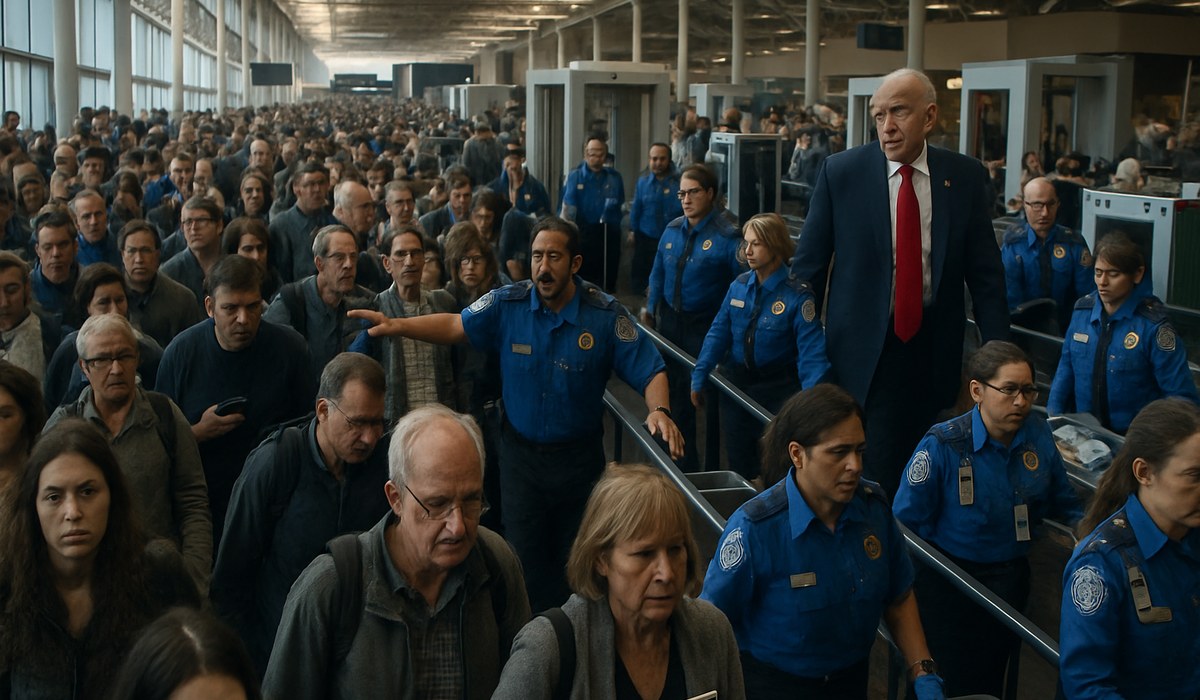
Image generated by AI
**> Quick Summary
• TSA security checkpoint wait times exceed three hours at major U.S. airports due to critical staffing shortages • President Trump authorizes emergency $1 billion funding to address Transportation Security Administration pay crisis • Tens of thousands of passengers have missed flights, with carriers reporting record rebooking volumes • Travelers should arrive four hours early for domestic flights and consider alternative departure points during crisis period**
American travelers are abandoning flights at unprecedented rates as Transportation Security Administration checkpoints collapse under the weight of acute staffing shortages. Lines stretching through terminal buildings for hours have paralyzed operations at the nation's busiest aviation hubs, forcing the White House to deploy emergency federal resources. The $1 billion intervention announced Friday represents the administration's most aggressive attempt yet to salvage a security system teetering on the edge of operational failure.
Crisis Timeline: How TSA Staffing Shortages Paralyzed U.S. Airports
The current disruption stems from a staffing exodus that began accelerating in late February 2026. Transportation Security Administration screening officers—facing wages that have stagnated below inflation for consecutive years—began resigning in record numbers. By mid-March, more than 6,800 screeners had left their posts, representing an 18% reduction in available personnel at key facilities.
Checkpoint processing capacity plummeted as remaining staff worked mandatory overtime shifts. Atlanta's Hartsfield-Jackson International Airport recorded average security wait times of 187 minutes during peak morning hours this week. Los Angeles International Airport reported similar bottlenecks, with checkpoint queues snaking through baggage claim areas and into ground transportation zones.
The TSA Workers Union submitted formal complaints on March 14th documenting unsafe working conditions as screeners faced verbal abuse from frustrated passengers. Within days, slowdowns spread to secondary airports as personnel called in sick or transferred to better-compensated federal positions. By March 20th, the FAA's System Operations Center classified the situation as a Level 3 disruption—the highest crisis designation short of national emergency.
President Trump convened an emergency cabinet meeting on March 25th with Transportation Secretary nominees and Homeland Security officials. The resulting executive order authorized immediate disbursement of $1 billion from discretionary transportation funds. According to FAA operational status updates, the money will fund immediate wage increases averaging 22% for frontline screeners and expedited hiring of 4,200 additional personnel over the next 90 days.
Which Airports Are Hit Hardest by Security Delays
FlightAware's real-time delay monitoring reveals a geographic pattern to the chaos. The ten airports experiencing the most severe checkpoint congestion share common characteristics: high passenger volumes, aging infrastructure, and proximity to metropolitan areas with competitive job markets that drain TSA applicants.
Hartsfield-Jackson Atlanta International (ATL) leads the crisis with average security wait times reaching 212 minutes during morning departure banks. The airport processes approximately 275,000 passengers daily, but current staffing supports only 65% of normal screening capacity. American Airlines and Delta Air Lines have already reduced their ATL schedules by 8% through mid-April.
Los Angeles International (LAX) ranks second, where Terminal B checkpoint closures have funneled all domestic passengers through just three operational lanes. Wait times peaked at 198 minutes on Wednesday morning. Southwest Airlines reports that 14% of its LAX departures this week pushed back late due to passengers stuck in security queues.
Chicago O'Hare (ORD) checkpoint delays average 176 minutes, complicated by the airport's decentralized terminal layout. United Airlines—which operates O'Hare as a major hub—has deployed customer service teams to rebook passengers who miss connections due to security bottlenecks. The carrier processed 11,400 rebookings at ORD between Monday and Thursday this week alone.
Miami International (MIA), John F. Kennedy (JFK), Newark Liberty (EWR), San Francisco International (SFO), Denver International (DEN), and Dallas/Fort Worth (DFW) complete the top-ten list. Each facility reports security processing times exceeding 150 minutes during peak periods. Smaller regional airports like Austin-Bergstrom (AUS) and Nashville International (BNA) are experiencing secondary impacts as travelers seek alternative departure points, overwhelming their limited checkpoint infrastructure.
Similar disruptions affecting international travel have created compound problems for U.S.-bound passengers, as seen in recent gridlock across Spanish airports due to labor actions.
$1 Billion Solution: What the Emergency Funding Will Actually Fix
The emergency appropriation breaks down into three distinct spending categories designed to address immediate pain points while building long-term capacity. Federal officials emphasize that travelers should expect gradual improvement rather than overnight resolution.
Approximately $440 million will fund immediate compensation increases for existing TSA officers. Starting April 1st, entry-level screeners will receive a 22% base pay increase, bringing hourly wages from $17.50 to $21.35 in most markets. High-cost metropolitan areas will see adjustments up to $24.80 per hour. Retention bonuses worth $3,500 per officer will be paid to personnel who commit to 18-month contracts.
Another $380 million supports an accelerated hiring initiative targeting 4,200 new screeners by June 30th. The Transportation Security Administration will open application windows in 87 cities next week, with compressed background checks and training timelines. Officials project the first cohort of 680 new officers will reach checkpoint duty by April 18th, providing modest relief at the hardest-hit facilities.
The remaining $180 million funds technology upgrades intended to increase per-lane throughput. Computed tomography scanners—which allow passengers to leave laptops and liquids in carry-on bags—will be installed at 34 additional checkpoints by mid-May. These systems process travelers 40% faster than conventional X-ray machines. Biometric exit verification systems will also be deployed to free up officers currently assigned to manual document checks.
Technology solutions similar to SriLankan Airlines' AI-powered operational efficiency systems are being explored to optimize checkpoint lane assignments and predict surge periods more accurately.
Transportation Department projections suggest average security wait times will decrease below 60 minutes by late May, though summer travel season could create new pressure points. The funding carries no congressional authorization requirement, having been drawn from the Transportation Security Administration's existing operational budget authority expanded under emergency provisions.
Traveler Survival Guide: 7 Strategies to Navigate Airport Chaos
Passengers booked on flights through May should implement defensive planning to protect their itineraries. These seven tactics address the current crisis environment:
1. Arrive Four Hours Before Domestic Departures
Standard two-hour arrival recommendations no longer provide adequate buffer. Airlines recommend minimum four-hour advance arrival for domestic flights and five hours for international departures through at least April 30th. American Airlines sent automated notifications to customers with bookings at affected airports, advising the extended timeline.
2. Book First Flights of the Day
Morning departure banks before 7:30 AM experience shorter delays because overnight staffing resets checkpoint capacity. Flights after 10 AM face cumulative congestion as passenger volumes overwhelm available screening lanes. Delta Air Lines data shows that 6:00 AM departures have 73% better on-time performance than noon flights this week.
3. Consider Alternative Airports
Travelers with flexible departure options should evaluate secondary facilities within driving distance. Instead of LAX, passengers might use Ontario (ONT), John Wayne (SNA), or even San Diego (SAN) if routing permits. The smaller airports maintain wait times under 45 minutes despite increased traffic as travelers seek alternatives to major hubs.
For those considering warm-weather getaways during this disruption period, exploring Caribbean vacation packages from less-affected departure points provides a stress-reducing alternative to congested mainland hubs.
4. Enroll in TSA PreCheck or CLEAR
Expedited screening programs bypass standard checkpoint queues. TSA PreCheck lanes at major airports average 18-minute wait times versus 180+ minutes in regular lanes. CLEAR biometric verification adds another time-saving layer. Both programs accept applications online with appointment availability within 72 hours at most enrollment centers.
5. Document Everything
Passengers who miss flights due to security delays should photograph checkpoint queues with visible timestamps. Airlines cannot charge change fees for missed connections if delays were beyond passenger control, but documentation strengthens compensation claims. Passenger rights under DOT regulations require carriers to rebook travelers at no cost when security delays cause missed departures.
6. Pack Strategically
Minimize carry-on items to speed your individual screening process. Check bags whenever possible to move through checkpoints with only essential personal items. Remove prohibited items—liquids over 3.4 ounces, sharp objects, sporting equipment—before arriving to avoid secondary screening that adds 15-20 minutes.
7. Monitor Real-Time Updates
Download your airline's mobile app and enable push notifications for gate changes and delay alerts. Check airport websites for checkpoint wait time displays before leaving for the terminal. Some facilities publish live camera feeds showing current queue lengths, allowing last-minute arrival time adjustments.
FAQ: TSA Pay Crisis and Airport Delays
How long will the airport security delays last?
Federal officials project significant improvement by late May 2026 as new screeners complete training and technology upgrades increase checkpoint efficiency. However, summer travel season beginning in June could create renewed pressure. Travelers should plan for extended security wait times through at least Memorial Day weekend.
Will airlines refund tickets if I can't make my flight due to security delays?
Airlines typically rebook passengers without change fees when security delays cause missed departures, but full refunds depend on ticket type and carrier policy. Basic economy fares generally receive rebooking only. Document the delay with photos and arrival time records to support your claim.
Which airports should I avoid right now?
The ten airports with the worst delays are Atlanta (ATL), Los Angeles (LAX), Chicago O'Hare (ORD), Miami (MIA), New York JFK, Newark (EWR), San Francisco (SFO), Denver (DEN), Dallas/Fort Worth (DFW), and Las Vegas (LAS). Consider connecting through smaller hubs or using alternative regional airports when booking new travel.
Does TSA PreCheck actually save time during this crisis?
Yes. TSA PreCheck lanes maintain average wait times of 18-22 minutes even at the most congested airports. Standard checkpoint queues exceed three hours at major facilities. The $78 five-year enrollment fee provides substantial time savings during the current crisis and offers long-term convenience for frequent travelers.
What caused the TSA staffing shortage?
Transportation Security Administration wages failed to keep pace with inflation and private sector compensation, leading to high turnover rates. Screeners faced mandatory overtime without adequate pay increases, prompting mass resignations. The crisis accelerated in February 2026 when more than 6,800 officers left their positions within a six-week period.
Related Articles:
Disclaimer
This article is for informational and educational purposes only. It does not constitute legal, financial, or professional advice. While we strive to provide accurate and up-to-date information, travel policies, regulations, and conditions change rapidly. Always verify information with official sources before making travel decisions. Nomad Lawyer makes no representations about the accuracy, reliability, completeness, or suitability of the information provided. Readers should consult qualified professionals for advice specific to their circumstances. The views expressed in this article are those of the author and do not necessarily reflect the views of Nomad Lawyer.
Kunal K Choudhary
Co-Founder & Contributor
A passionate traveller and tech enthusiast. Kunal contributes to the vision and growth of Nomad Lawyer, bringing fresh perspectives and driving the community forward.
Learn more about our team →