
TSA 18.7M Passenger Surge for Independence Day 2026: Expect Historic Airport Chaos July 2-6
The TSA projects screening 18.7 million passengers during Independence Day 2026, with July 2 marking the busiest day ever. Here's how to survive the chaos.

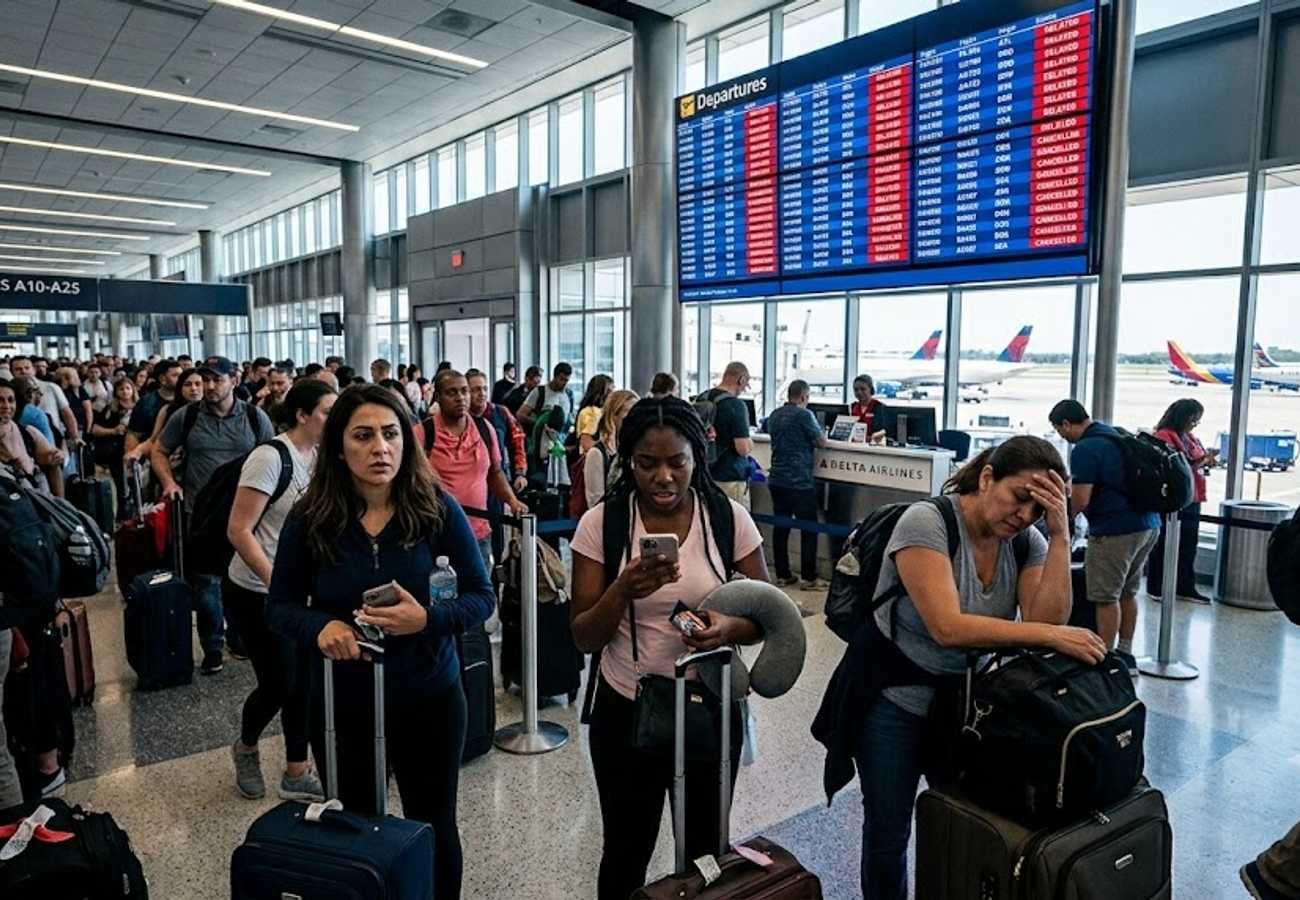
Image generated by AI
The Transportation Security Administration (TSA) just dropped a sobering forecast that should make every holiday traveler sit up and pay attention. Between June 30 and July 6, 2026, U.S. airport security checkpoints will screen nearly 18.7 million passengers — a staggering volume driven by America's 250th birthday celebrations colliding head-on with FIFA World Cup 2026 fever.
But here's the real shock: Thursday, July 2, 2026, will smash all historical records as the single busiest security screening day ever recorded, with over 3 million passengers expected to pass through checkpoints in just twenty-four hours.
The Perfect Storm: Why 2026 Is Breaking All Precedent
This isn't ordinary summer travel congestion. We're witnessing a genuine collision of historic moments. Domestic travelers are flooding airports to celebrate the Semiquincentennial — America's 250th year of independence. Simultaneously, international football fans are descending on host cities across the nation for World Cup matches. It's the ultimate convergence of national pride and global sports mania.
The numbers tell an even grimmer story when you factor in economics. According to the Consumer Price Index, airline fares have jumped by an average of 26.7 percent compared to last year. Yet skyrocketing ticket costs have done virtually nothing to deter eager travelers. Millions are determined to celebrate this milestone, wallet consequences be damned.
Reddit: "I'm flying out July 2nd and I'm genuinely terrified. Should I just get to the airport at 4 AM?" — r/travel
The Danger Zone: Which Days Will Break Your Travel Plans
Federal data is crystal clear about the timeline. While the entire seven-day window from June 30 through July 6 will be congested, Thursday, July 2 stands alone as catastrophic. The TSA projects screening well over 3 million passengers on that single day — a volume that will obliterate standard airport operations.
United Airlines alone will fly approximately six million passengers across its network during this seven-day window. When you distribute that volume across peak departure times, you're looking at gridlock that makes typical holiday travel seem quaint. Standard one-hour arrival recommendations are completely obsolete.
The real danger? Missing your connection isn't just inconvenient — it's a potential multi-day disaster. With flights running at maximum capacity and minimal slack in the schedule, a single missed flight could strand you for days as rebooking options evaporate instantly.
How the TSA Is Preparing (And Why It Still Won't Be Enough)
The TSA isn't sitting passively. The agency has mobilized substantial reinforcements including National Deployment Officers and additional explosive detection canine teams concentrated within the 14 core World Cup host city airports. This tactical positioning should theoretically ease bottlenecks at priority hubs.
Technology is also stepping in. Airports are deploying new Bulk Alarm Resolution Technology (BRT) engineered by Agilent Technologies, which allows officers to scan bulk liquids and food items rapidly — eliminating the slow manual bag checks that historically created security queue stalls. Touchless identity verification systems have expanded to sixty-five major domestic hubs, theoretically accelerating the screening process.
But here's the reality: even with these upgrades, volume is volume. More technology can't manufacture additional checkpoint lanes or multiply the hours in a day.
Military Benefits and Trusted Traveler Programs: Your Legal Fast-Pass
If standard security lines terrify you, trusted traveler programs offer concrete advantages. The TSA has actively expanded its "Serve with Honor, Travel with Ease" campaign to offer military-connected perks.
Active military service members and eligible survivor families now receive front-of-the-line access at 33 military-adjacent airports. Additionally, military spouses are being offered a twenty-five-dollar discount on official PreCheck applications.
The newly launched Veterans Ambassador Initiative deploys specially trained Passenger Support Specialists at major airport screening hubs, providing hands-on assistance to travelers who need it. If you require specialized physical assistance during security screening, you must contact the dedicated TSA Cares helpline at least 72 hours before your scheduled departure — not the night before.
Economic Headwinds: Inflation and Geopolitical Tensions Squeeze Airlines (And Wallets)
Beyond the pure volume problem, commercial aviation faces underlying economic pressures that complicate operations. Ongoing inflation and complex global geopolitical tensions have driven up jet fuel costs and limited fleet capacities.
Major commercial carriers have been forced to consolidate specific routes while drastically raising base ticket prices. The result? Airlines are operating with almost zero margin for error. United Airlines is running nearly 5,000 daily flights to accommodate roughly 550,000 passengers per day — a rigid operational schedule where weather delays or mechanical issues cascade instantly into system-wide chaos.
When capacity is this tight, missed connections aren't just unfortunate. They're potential catastrophes that might leave you stranded at an unfamiliar airport with no available seats on outbound flights for hours or days.
Survival Blueprint: What to Do Right Now
Surviving this historic rush requires aggressive planning executed before you arrive at the terminal.
Arrive absurdly early. The standard two-hour recommendation for domestic flights is now a minimum. If you're flying from major international hubs like New York JFK or Los Angeles LAX, three hours is genuinely safer. If you're connecting through a World Cup host city, add an additional hour to your connection buffer.
Digitize everything. Ensure your identification documents are completely up to date and stored digitally. Update any touchless ID profiles on your phone immediately. You want zero friction when you approach the verification desk.
Pre-screen your carry-on baggage ruthlessly. Holiday gifts, food items, and sports gear often violate liquid rules. Double-check every item before you pack to prevent triggering manual bag inspections that will trap you in security queues for additional minutes you can't afford to lose.
Join a trusted traveler program if you haven't. Even if you're not military-connected, programs like TSA PreCheck (approximately eighty-five dollars for five years) can provide dedicated screening lanes at major airports. The math is simple: spending eighty-five dollars now could prevent you from missing a flight worth thousands of dollars and multiple days of lost time.
Check TSA official travel guidance for current regulations before you pack. The rules shift periodically, and outdated assumptions will destroy your timeline.
The Bottom Line: Don't Be a Statistic
July 2-6, 2026, will be brutal. Airports will overflow. Security lines will snake through terminals. Flights will operate at maximum capacity with zero margin for rebooking.
But you don't have to be a statistic. Aggressive planning, early arrival, military benefits when available, and ruthless baggage discipline can stack the odds in your favor. The travelers who survive this surge with their sanity intact will be the ones who treated preparation as seriously as they treat the destination.
This isn't the year to wing it at the airport.
Plan obsessively, arrive absurdly early, and may the security gods smile upon your July travels.
Related Travel Guides
Disclaimer
This article is for informational and educational purposes only. It does not constitute legal, financial, or professional advice. While we strive to provide accurate and up-to-date information, travel policies, regulations, and conditions change rapidly. Always verify information with official sources before making travel decisions. Nomad Lawyer makes no representations about the accuracy, reliability, completeness, or suitability of the information provided. Readers should consult qualified professionals for advice specific to their circumstances. The views expressed in this article are those of the author and do not necessarily reflect the views of Nomad Lawyer.
Raushan Kumar
Founder & Lead Developer
Full-stack developer with 11+ years of experience and a passionate traveller. Raushan built Nomad Lawyer from the ground up with a vision to create the best travel and law experience on the web.
Learn more about our team →