
Flights Cancelled Across the UK as easyJet, British Airways, Virgin Atlantic, Aer Lingus, Air Canada, Vueling Airlines, and Others Suspend 21 Flights and Face 432 Delays, Affecting Major Routes in London and Manchester
Flights Cancelled Across the UK as easyJet, British Airways, Virgin Atlantic, Aer Lingus, Air Canada, Vueling Airlines,

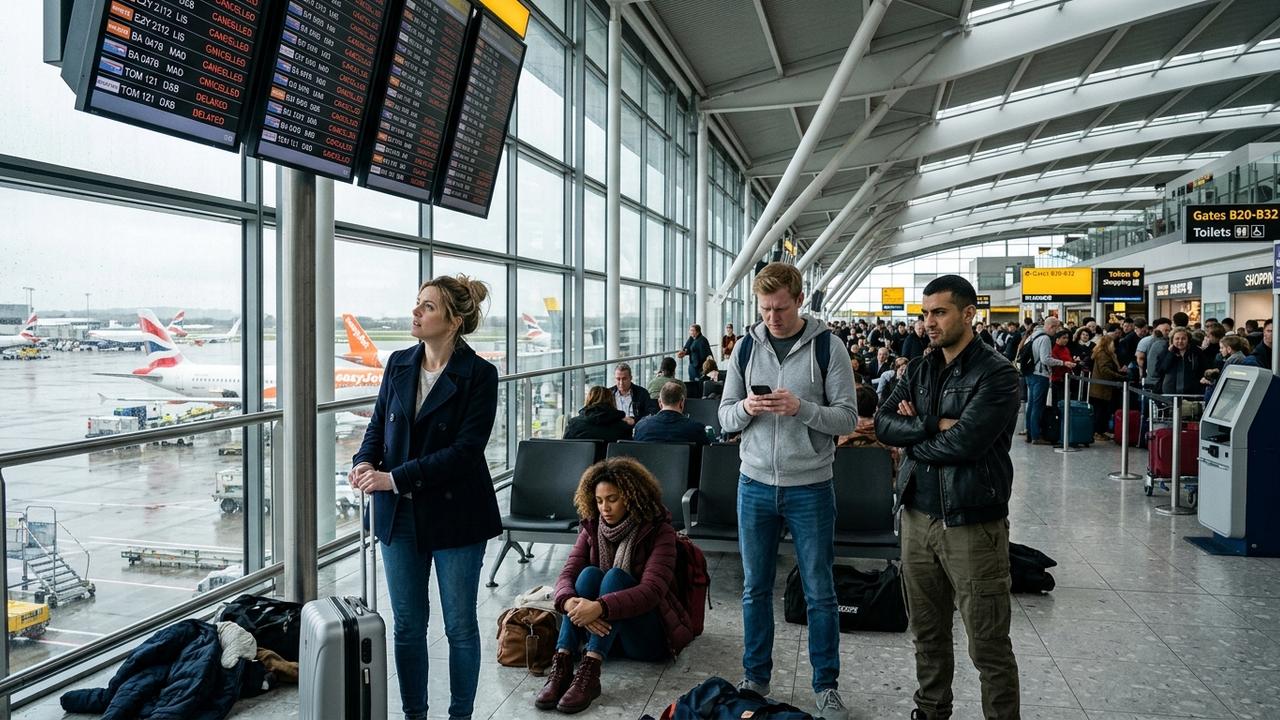
Image generated by AI
[London, June 22, 2026] — UK flight cancellations and delays are currently disrupting major aviation hubs as flight tracking data confirms 21 suspended services and 432 postponed departures across London Gatwick, London Heathrow, and Manchester Airport. Major carriers including easyJet, British Airways, Virgin Atlantic, Aer Lingus, Air Canada, and Vueling Airlines are managing the cascading operational strain, forcing thousands of travelers to adjust itineraries amid sustained network pressures. Airport authorities and airline operations centers are actively rerouting aircraft and redistributing ground staff to minimize terminal congestion.
The disruption stems from a convergence of peak seasonal demand and intricate scheduling bottlenecks at the United Kingdom’s primary gateway airports. Aviation experts note that when major hubs experience simultaneous operational slowdowns, even minor technical inspections or crew availability constraints trigger cascading delays across multiple terminals. London Heathrow and London Gatwick alone process over 450,000 passengers daily during high-volume travel windows, leaving minimal buffer time for schedule corrections. Manchester Airport similarly operates at near-maximum capacity, amplifying the impact when carriers encounter ground handling or air traffic control delays. Industry observers emphasize that these events reflect broader systemic challenges facing European aviation, where recovery from previous industry shocks has not fully restored operational resilience during peak scheduling periods.
London Airports Process Highest Volume of Schedule Interruptions
London Heathrow and London Gatwick absorbed the heaviest concentration of cancellations and delays, while Manchester Airport experienced targeted disruptions across transatlantic and European routes. Flight tracking platforms show that British Airways and Virgin Atlantic faced significant scheduling setbacks at Heathrow, with ground operations struggling to clear accumulated aircraft queues. Gatwick reported the most extensive delay figures, largely driven by high-frequency short-haul operations from low-cost carriers. Manchester’s terminal complexes processed fewer total movements but encountered disproportionate hold times due to coordinated slot restrictions and baggage handling backlogs. Aviation authorities confirm that air traffic management protocols remain active, though seasonal congestion continues to stretch controller workloads beyond standard thresholds.
Major Carriers Manage Concentrated Delay Statistics
Operational data reveals that easyJet managed the largest share of schedule disruptions, recording 191 delayed departures at London Gatwick and an additional 72 delays at Manchester. British Airways followed with 149 delayed flights concentrated at Heathrow, reflecting the carrier’s heavy reliance on hub-and-spoke routing through central London terminals. Virgin Atlantic, Air Canada, and Aer Lingus reported smaller but still significant delay counts, ranging from three to seven postponed services each. American Airlines experienced one cancellation without recorded delays, while Norse Atlantic Airways and Vueling Airlines each faced single-flight suspensions at Manchester. These figures underscore how high-density carriers experience amplified exposure to cascading network failures during peak operational windows.
| Airport | Airline | Cancelled Flights | Delayed Flights |
|---|---|---|---|
| London Gatwick | easyJet | 6 | 191 |
| London Heathrow | British Airways | 4 | 149 |
| London Heathrow | Virgin Atlantic | 3 | 6 |
| London Heathrow | Air Canada | 2 | 3 |
| London Heathrow | Aer Lingus | 1 | 7 |
| London Heathrow | American Airlines | 1 | 0 |
| Manchester | easyJet | 2 | 72 |
| Manchester | Norse Atlantic Airways | 1 | 1 |
| Manchester | Vueling Airlines | 1 | 3 |
Passenger Navigation and Carrier Rebooking Frameworks
Aviation regulatory frameworks and carrier policies provide clear pathways for travelers navigating sudden schedule changes. Industry standards require airlines to monitor passenger communications through automated email alerts, mobile applications, and terminal departure boards. Passengers experiencing cancellations are advised to bypass physical ticket counters and utilize digital rebooking tools, which typically process alternative routing faster during high-volume disruption periods. European Union regulations and United Kingdom consumer protection statutes entitle affected travelers to compensation when disruptions fall within airline-controlled parameters, such as mechanical failures or crew scheduling oversights. Conversely, delays caused by external factors like air traffic management restrictions or severe weather conditions typically exempt carriers from financial penalties, though hospitality and accommodation vouchers remain standard practice. Travelers are strongly encouraged to verify alternative transportation options, including cross-channel rail services and intercity bus networks, when air rerouting options remain fully booked.
Operational Impact Across Transportation and Hospitality Sectors
The cumulative effect of 21 cancellations and 432 delayed services extends beyond individual passenger inconvenience, triggering measurable ripple effects across the United Kingdom’s transportation and hospitality sectors. Hotel occupancy rates in central London and Greater Manchester typically adjust within 24 hours of confirmed flight suspensions, as business travelers and leisure tourists secure alternative lodging or modify conference schedules. Ground transportation networks experience temporary surges in demand, with airport express rail services and long-distance coach operators reporting increased bookings as displaced passengers seek overland alternatives. Aviation economists note that repeated operational strain during peak travel months increases fatigue among cabin crew and ground staff, potentially compounding future scheduling vulnerabilities. Airport authorities are currently deploying additional customer service representatives and mobile rebooking units to manage terminal congestion, though capacity limitations persist during sustained disruption windows.
Airline Network Adjustments During Peak Travel Windows
Airline operators are actively adjusting fleet deployment and crew rotation schedules to mitigate further cascading failures across the United Kingdom routing network. Industry analysts project that sustained seasonal demand, combined with ongoing infrastructure modernization projects at major European airports, will continue testing carrier operational buffers through the remainder of the travel season. Aviation authorities recommend that passengers maintain flexible booking parameters and enable real-time flight status notifications to navigate future schedule volatility efficiently. While current disruptions remain within historical seasonal variance ranges, the concentration of delays across multiple major hubs signals a continued need for enhanced air traffic coordination and ground handling optimization. Travelers and commercial operators alike should anticipate tighter scheduling margins and prepare contingency routing options as peak travel periods approach.
UK flight cancellations and delays disrupt London and Manchester routes as major airlines manage 21 suspensions and 432 postponements amid peak seasonal demand.
Related Travel Guides
Disclaimer
This article is for informational and educational purposes only. It does not constitute legal, financial, or professional advice. While we strive to provide accurate and up-to-date information, travel policies, regulations, and conditions change rapidly. Always verify information with official sources before making travel decisions. Nomad Lawyer makes no representations about the accuracy, reliability, completeness, or suitability of the information provided. Readers should consult qualified professionals for advice specific to their circumstances. The views expressed in this article are those of the author and do not necessarily reflect the views of Nomad Lawyer.
Raushan Kumar
Founder & Lead Developer
Full-stack developer with 11+ years of experience and a passionate traveller. Raushan built Nomad Lawyer from the ground up with a vision to create the best travel and law experience on the web.
Learn more about our team →