
The Psychology of Travel Friction: How Flight Pet Peeves and Financial Clashes Break Holiday Relationships

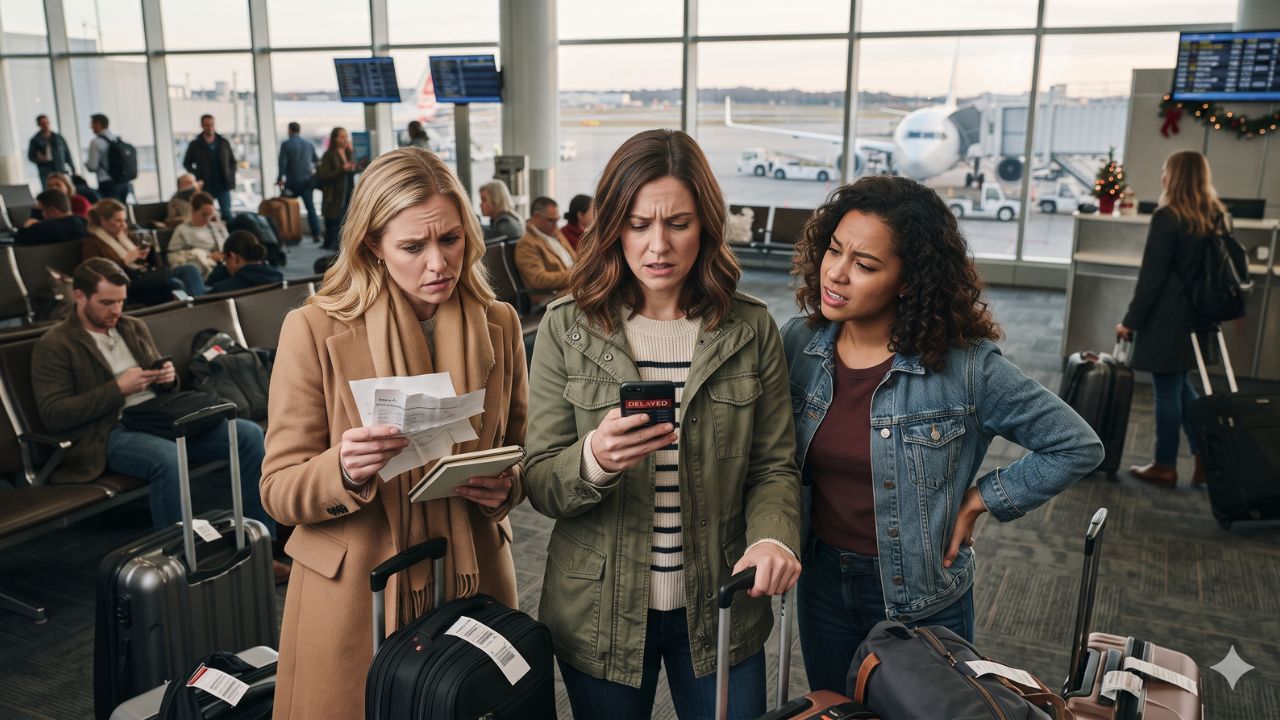
With 94% of American travelers harboring at least one flight-related grievance and nearly one-third actively contemplating ending a friendship or romance following a trip, shared vacations have become a high-stakes test of interpersonal compatibility. Drawing on the global Turbulence Test study conducted by Booking.com across more than 29,000 respondents in 33 nations between July and August 2025, the findings show that 23% of travelers identify persistent personal negativity as their primary red flag on holiday.
Rather than viewing vacations purely as leisure escapes, 69% of surveyed travelers intentionally use trips to evaluate the long-term viability of their partners. Relationship specialist Dr. Jess Carbino characterized the holiday environment as an engine of relationship acceleration, observing that months of latent domestic friction surface within days. When compressed airline cabins, sudden schedule delays, and ambiguous financial boundaries collide, minor behavioral habits frequently trigger irreparable relational breakdowns.
The Anatomy of Travel Friction: Financial, Social, and Hygiene Triggers
The research exposes how unexpected expenditures and service interactions dictate companion dynamics under travel stress.
Financial friction represents the most direct catalyst for travel disillusionment. A striking 58% of respondents reported hesitation to plan future journeys with a companion who expects others to foot the bill. Simultaneously, 42% expressed irritation when traveling partners introduced unapproved expenses or premium upgrades without prior consultation, turning shared budgets into contentious negotiations.
Airport decorum forms another major pressure point. Over 53% of American travelers expressed disdain for companions who treat airport and airline ground employees discourteously during operational disruptions. Gate boarding habits also generate friction: passengers who prematurely crowd gate lanes before their assigned boarding zone is called—informally labeled "gate lice"—attract widespread peer disapproval.
Accommodation hygiene constitutes a third pillar of dispute. Nearly half of surveyed travelers object to companions who dismiss checking mattress seams and headboards for bed bug infestations, while 39% view untidy shared hotel rooms and unkempt bathrooms as negative habits. On the road, 50% expressed frustration with companions who leave trash inside rental vehicles. Paradoxically, 73% of travelers indicated they do not mind companions removing their shoes in-flight, highlighting that personal comfort practices are tolerated when they do not impose hygiene burdens on shared spaces.
Generational Divides in Companion Frustrations
The survey reveals distinct fractures along demographic lines, demonstrating that age shapes how travelers define acceptable holiday behavior.
| Generational Cohort | Primary Travel Grievance | Statistical Prevalence | Operational Root Cause & Relational Consequence |
|---|---|---|---|
| Baby Boomers | Punctuality failures & intrusive noise | 53% cited lateness or loud music | Strict adherence to schedules; low tolerance for unmanaged public audio |
| Millennials | Overly chatty companions | ~25% objected to chatting with strangers | Desire for curated solitude, scheduled relaxation, and predictable social energy |
| Generation Z | Content-first travel behaviors | 12% cited social media staging as nightmare | Backlash against artificial staging that disrupts genuine sensory immersion |
| All US Travelers | In-flight irritations (Collective) | 94% report at least one flight grievance | Seat reclining conflicts, gate crowding, and unscheduled cabin disruption |
| Cross-Cohort Benchmark | Chronic verbal negativity | 23% cite as #1 relationship red flag | Pessimism amplifies transit stress during flight delays or weather changes |
The contrast between Millennials and Generation Z highlights evolving norms around public engagement. While a quarter of Millennials dislike traveling with companions who strike up spontaneous conversations with strangers, Gen Z travelers push back against companions who commodify the trip for social media feeds, viewing performative photography as an obstacle to authentic travel.
Consumer Protection and Airline Operating Realities
While personal habits drive interpersonal conflict, underlying operational triggers often originate from airline performance realities.
Data compiled by the U.S. Department of Transportation (USDOT) reveals that monthly consumer complaints concentrate around flight delays, involuntary cancellations, and misdirected baggage. When carriers experience ground-stop holds regulated by the Federal Aviation Administration (FAA), passenger stress levels elevate sharply.
To minimize conflict when disruptions occur, travelers should establish structural safeguards:
- Pre-Trip Financial Declarations: Establish a shared digital ledger (such as Splitwise) before booking flights, explicitly defining whether shared expenses include dining alcohol, baggage add-ons, or cabin seat selection.
- Consensual Upgrades: Agree in advance that any private seat upgrades or premium rental car options remain personal expenditures that cannot be retroactively billed to the group.
- Separation Windows: Build independent half-day blocks into group itineraries, allowing introverted travelers to rest while extroverted companions explore local commercial districts.
- Standardized Hygiene Inspections: Normalize brief room inspections upon hotel check-in—placing luggage on elevated luggage racks while inspecting mattress piping—to eliminate pest concerns.
Expert Analysis: The Economic Psychology of High-Stress Travel
The findings from the Booking.com study illuminate the economic psychology governing consumer travel decisions.
For travelers booking companion itineraries, the direct consequence of unaddressed friction is itinerary abandonment. When 33% of travelers consider terminating a relationship during a trip, the financial loss extends beyond interpersonal damage: it results in non-refundable ticket cancellations, early hotel checkouts, and emergency expenditures on separate return flights.
The pricing pressure this creates means the travel industry is rapidly unbundling products to cater to companion anxiety. Airlines that charge auxiliary fees for seat selection, carry-on bags, and priority boarding exacerbate group tension by introducing hidden costs into the shared travel pool. When one companion purchases an extra-legroom seat while the other sits in a basic economy middle seat, the perceived inequity strains companion camaraderie long before arrival.
Furthermore, corporate travel providers and hospitality brands that offer transparent, all-inclusive pricing shield traveling groups from micro-budget disputes. Tour operators and boutique hotels that provide itemized billing, integrated digital payment splits, and flexible cancellation policies directly reduce the interpersonal friction that derails group travel.
Key Takeaways
- 94% Have Flight Grievances: Nearly all American travelers harbor flying-related pet peeves, led by rude behavior toward airline staff, gate crowding, and loud video playback.
- Negativity as #1 Red Flag: 23% of respondents identified chronic complaining and pessimism as their primary travel red flag, outranking messiness and poor punctuality.
- Relationship Breaking Point: Nearly one-third of travelers have considered ending a friendship or romance following a trip, while 69% intentionally use travel as a compatibility test.
- Financial Frustrations: 58% hesitate to travel again with a companion who expects others to pay, and 42% dislike unannounced upgrades or surprise expenses.
- Generational Differences: Boomers prioritize punctuality (53%), Millennials dislike excessively talkative companions (25%), and Gen Z rejects social media posturing (12%).
FAQ: Travel Pet Peeves & Etiquette 2026
What is the biggest travel red flag according to the Booking.com survey?
Chronic negativity is the leading travel red flag, cited by 23% of travelers as the most damaging companion behavior during a vacation.
How many travelers consider ending relationships after a vacation?
Nearly one-third of surveyed travelers have considered ending a friendship or romantic partnership due to behavioral conflicts experienced during a trip.
What are the most common financial pet peeves when traveling together?
58% of travelers dislike companions who expect others to cover shared bills, while 42% are annoyed when partners add surprise expenses or upgrades without asking.
What is "gate lice" in airline travel?
"Gate lice" is informal aviation terminology describing passengers who crowd boarding gates and queue zones before their designated boarding group has been called.
Related Travel Guides
- US State Department Travel Advisories: China, Hong Kong, and Morocco 2026
- Windsor Waterfront Capital Investment and Cross-Border Tourism 2026
- Travel Pet Peeves Relationship Red Flags and Etiquette Guide Reddit 2026
When travel strips away everyday routines, the destination matters far less than the grace, patience, and mutual respect of the person sharing your journey.
Disclaimer
This article is for informational and educational purposes only. It does not constitute legal, financial, or professional advice. While we strive to provide accurate and up-to-date information, travel policies, regulations, and conditions change rapidly. Always verify information with official sources before making travel decisions. Nomad Lawyer makes no representations about the accuracy, reliability, completeness, or suitability of the information provided. Readers should consult qualified professionals for advice specific to their circumstances. The views expressed in this article are those of the author and do not necessarily reflect the views of Nomad Lawyer.
Preeti Gunjan
Contributor & Community Manager
A passionate traveller and community builder. Preeti helps grow the Nomad Lawyer community, fostering engagement and bringing the reader experience to life.
Learn more about our team →