
Venezuela Posts 33.2% Tourism GDP Surge as Bilateral Charters and Ecotourism Reshape Continental Travel

While viral reports claimed Venezuela had suddenly captured nearly two-thirds of South American tourism arrivals, official migration metrics confirm the nation accounts for between 1.5% and 3.0% of continental inbound volume. The statistical confusion stemmed from a misinterpretation of econometric models from the World Travel and Tourism Council (WTTC), which projects Venezuela will lead South America with a 33.2% expansion in Travel and Tourism Gross Domestic Product (GDP). That rapid growth rate reflects a sharp percentage recovery against a contracted historical baseline rather than a dominant physical share of regional passenger volume. Across South America's broader aviation network, which processes over 120 million seats annually, established hubs in Brazil and Colombia continue to handle more than 60% of international arrivals.
Behind the headline distortions, however, lies an authentic structural realignment. Rather than competing directly with high-volume transit hubs, Venezuelan authorities and private operators have cultivated direct bilateral charter corridors from non-traditional feeder markets, expanded domestic holiday mobilization, and fortified protected ecotourism enclaves. For travelers and travel investors assessing South American routes, understanding the mechanics of this recovery requires separating macro-economic percentage spikes from absolute seat capacity, yield performance, and on-the-ground operational logistics.
Deconstructing the 63% Market Share Myth: Growth Velocity vs. Physical Volume
The narrative that Venezuela had overtaken regional powerhouses to command 63% of continental leisure arrivals spread across international forums due to a fundamental conflation of economic velocity with headcounts. In economic reporting, a high compound growth rate applied to an undersized baseline yields dramatic statistical jumps without transforming the macro balance of arrivals. Following years of severe air route contractions and diplomatic realignments, even modest additions of dedicated charter flights create double-digit percentage surges in sector GDP.
Data coordinated by the Ministerio del Poder Popular para el Turismo (MINTUR) alongside regional intelligence from UN Tourism underscores that South American tourist arrivals remain concentrated in mature markets. Brazil, Colombia, Argentina, and Peru process millions of annual travelers through integrated long-haul networks and corporate event calendars. By contrast, Venezuela's receptive rebound operates within tightly defined parameters. Capturing roughly 1.5% to 3.0% of continental volume represents genuine operational progress for local operators, but framing this rebound as continental dominance misleads travelers about route frequencies, hotel inventories, and border infrastructure.
The true significance of the WTTC forecast centers on domestic wealth generation and capital reinvestment. A 33.2% rise in travel GDP outpaces regional averages because tourism spending directly re-energizes coastal, island, and highland service economies that operated far below capacity for nearly a decade.
Aviation Architecture: How Bilateral Charters Bypass Legacy Hubs
South America's traditional commercial aviation model depends on high-capacity hub-and-spoke networks anchored in São Paulo-Guarulhos and Bogotá-El Dorado. These mega-airports aggregate long-haul international flights from North America and Western Europe before dispersing passengers across secondary domestic routes. Venezuela has established an alternative distribution model built on point-to-point, bilateral charter agreements that completely bypass traditional transit bottlenecks.
Receptive tour operators such as Pegas Touristik have organized long-range charter programs that inject between 120,000 and 180,000 direct passenger seats annually into Porlamar on Isla de Margarita and Maiquetía Airport serving Caracas. Utilizing wide-body aircraft carrying between 300 and 450 holidaymakers per departure, direct weekly and bi-weekly rotations link Venezuela to primary source cities in Eurasia and the Caribbean. Flights originating in Moscow and Warsaw bring pre-packaged tour groups directly to Caribbean beach enclaves under pre-arranged security, transport, and lodging protocols.
Today, non-traditional source markets across Eurasia and the Caribbean account for more than 65% of Venezuela's international receptive charter volume. This pivot reflects both diplomatic realignments and intentional market segmentation. By packaging flights, local transfers, and all-inclusive lodging into single transactions, tour wholesalers shield international visitors from the operational friction that previously hindered independent itineraries.
| Comparative Sector Metric | South American Regional Standard | Venezuela Market Performance | Operational & Commercial Significance |
|---|---|---|---|
| Annual Aviation Seat Capacity | Over 120 million seats continent-wide | 120,000 to 180,000 receptive charter seats | Point-to-point charters bypass hub congestion in Bogotá and São Paulo |
| Continental Inbound Arrival Share | Brazil & Colombia command >60% | 1.5% to 3.0% of continental arrivals | Reflects niche specialization rather than mass-market continental dominance |
| Travel & Tourism GDP Growth Rate | Moderate single-digit continental average | 33.2% projected expansion | High percentage surge driven by low baseline and new charter capacity |
| Sector Employment Growth | 8.3% of total regional workforce (18.5M jobs) | 34.8% expansion (+40,000 direct positions) | Direct job creation in eco-guiding, hospitality, and maritime transport |
| Peak Lodging Occupancy Rates | Mature capitals (Rio, Buenos Aires) at 62%–72% | Los Roques >78%; Morrocoy coastal zone 45%–55% | Exclusive island eco-lodges capture premium yields despite regional disparity |
| Domestic Leisure Travel Mobilization | Varied across regional travel corridors | Over 3.6 million holiday trip movements | Domestic holiday spending supplies over 70% of independent operator revenue |
| Ecotourism Volume & Protected Land | ~35% of continental leisure journeys | Canaima: 3M hectares, 15,000–25,000 annual visitors | High-yield, low-impact adventure travel protecting UNESCO conservation zones |
| Digital Booking & Payment Completion | Regional online travel penetration >52% | Digital gateways lift completion rates by >40% | Dual-currency FinTech tools mitigate historical foreign exchange barriers |
According to route utilization reports tracked by the International Air Transport Association (IATA), direct point-to-point charters generate exceptionally high load factors because tickets are sold as complete vacation bundles rather than unbundled airline seats. For foreign passengers, this eliminates the risk of missed regional connections in third-party countries.
Micro-Market Yields: High-End Ecotourism and Domestic Revenue Backbones
National occupancy figures obscure an acute divergence between Venezuela's elite nature reserves and standard coastal resorts. In mature urban centers across South America, hotel occupancy hovers steadily between 62% and 72%, supported by steady corporate conferences and scheduled business travel. Venezuela displays a dual-speed hospitality model where distinct micro-markets post radically different commercial returns.
In the Los Roques Archipelago, strict building restrictions and conservation rules limit bed capacity, allowing boutique luxury lodges (posadas) to achieve occupancy rates surpassing 78% during peak charter months. Visitors to Los Roques pay premium international rates for bonefishing, kitesurfing, and marine biodiversity exploration. In contrast, coastal destinations like Morrocoy National Park report average occupancies between 45% and 55%, relying heavily on weekend travelers from nearby industrial centers and fluctuating family holiday budgets.
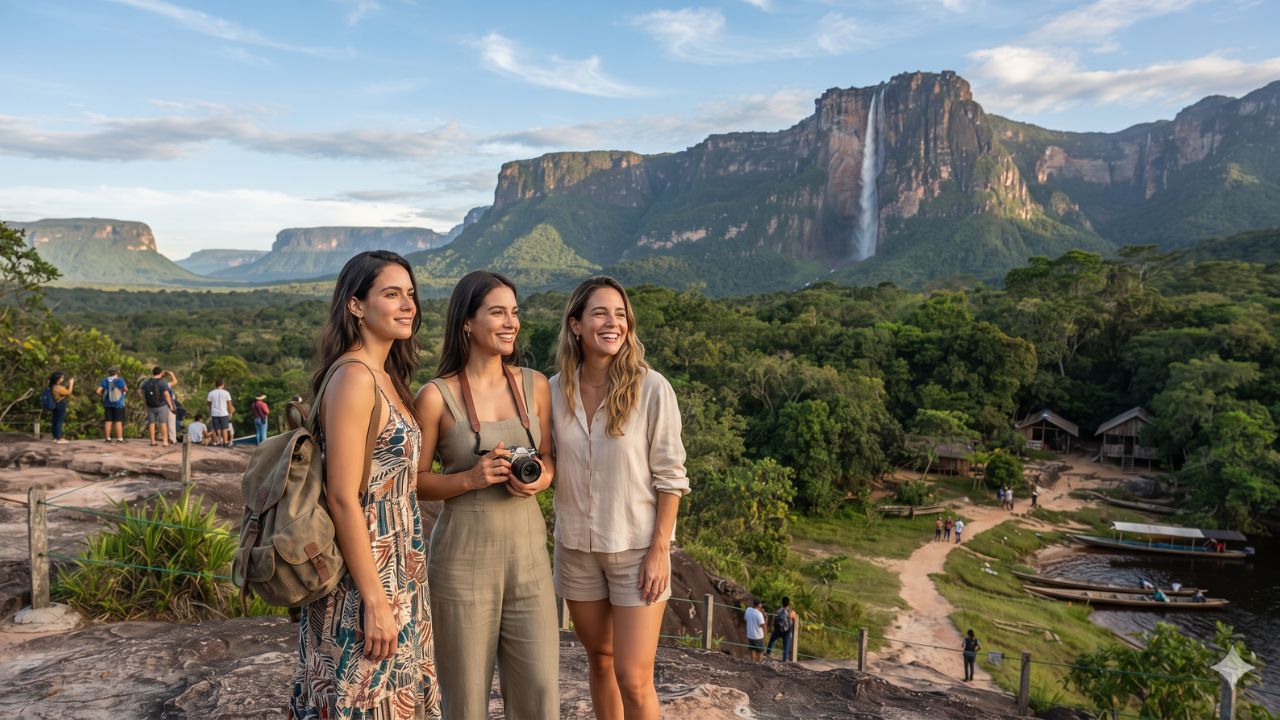
Deep inland, Canaima National Park stands as the crown jewel of the country's high-yield adventure sector. Spanning 3 million hectares of protected wilderness as a designated UNESCO World Heritage site, the park encompasses the world's tallest uninterrupted waterfall, Angel Falls (Kerepakupai Merú). Guided river expeditions and light aircraft fly-ins accommodate between 15,000 and 25,000 high-yield adventure travelers annually. Because logistics require motorized dugout canoes (curiaras), specialized bush pilots, and indigenous Pemon guides, visitor spending diffuses directly into remote forest communities rather than offshore holding entities.
Simultaneously, internal mobility provides the financial foundation that keeps regional properties solvent during international shoulder seasons. Official records log over 3.6 million domestic traveler movements during peak holiday periods like Carnival and Easter. In regional corridors such as the highlands of Aragua, Colonia Tovar, Chichiriviche, and Puerto La Cruz, domestic travelers generate over 70% of total hospitality revenue for independent hotel owners. This strong internal travel habit insulates small operators from shifts in foreign foreign-policy alignments.
Expert Analysis: Regulatory Standardization and FinTech Modernization
Venezuela's receptive tourism strategy balances structural state regulation with agile private-sector financial adaptations. For years, the primary impediments facing foreign visitors were currency exchange volatility, payment terminal rejections, and uneven service quality. Recent regulatory and technical interventions have begun addressing these friction points.
Through the Registro Turístico Nacional, tourism regulators have evaluated and standardized more than 1,250 official travel itineraries, advancing toward a national objective of certifying 3,000 distinct routes. More than 8,000 operators across diverse geographic regions—including Barinas, the Paraguaná Peninsula, and the Mount Roraima trekking plateau—have completed comprehensive service audits. Standardizing guide qualifications, safety protocols, and park environmental fees directly bolsters foreign consumer trust on demanding wilderness expeditions.
On the financial front, the widespread integration of dual-currency payment architecture has transformed visitor commerce. While online booking penetration across South America exceeds 52%, Venezuelan commercial hubs like Caracas and Lechería have adopted digital point-of-sale solutions that handle international credit cards alongside local digital balances. Independent hospitality providers report that foreign transaction completion rates have risen by more than 40% over recent quarters. Foreign travelers are no longer forced to carry thick stacks of physical cash for basic restaurant tabs, local transport, or craft purchases.
Employment projections reflect these operational upgrades. The WTTC estimates that travel and tourism sustains 18.5 million jobs across Central and South America, accounting for 8.3% of total employment. Within Venezuela, the sector's 34.8% projected workforce expansion translates into over 40,000 new direct jobs in hospitality management, culinary execution, maritime shuttle services, and eco-guiding. In coastal fishing villages and Andean communities surrounding Mérida, tourism employment delivers dependable household income that rivals conventional agricultural wages.
Key Takeaways
- Clarified Continental Position: Venezuela captures between 1.5% and 3.0% of total South American international tourist arrivals; sensational claims of a 63% market share stem from confusing GDP growth rates with physical passenger volume.
- Leading Economic Growth Rate: The World Travel and Tourism Council projects Venezuela's Travel and Tourism GDP will surge by 33.2%, leading South America in percentage terms due to a rapid rebound from an undersized baseline.
- Dedicated Charter Pipeline: Long-range charter flights operated by carriers like Pegas Touristik supply 120,000 to 180,000 annual direct seats from Eurasian and Caribbean gateways directly to Isla de Margarita and Maiquetía.
- High-Yield Micro-Markets: Luxury posadas in Los Roques report occupancy spikes above 78% during peak season, while Canaima National Park processes 15,000 to 25,000 high-yield expedition travelers to Angel Falls annually.
- Domestic Economic Anchor: Over 3.6 million domestic trips during Carnival and Easter provide over 70% of operational revenue for independent hospitality businesses outside primary charter hubs.
- Operational Modernization: Dual-currency digital payment terminals have lifted foreign transaction completion rates by over 40%, while the Registro Turístico Nacional has certified 1,250 official travel routes.
FAQ: Venezuela Travel and Continental Tourism Economics 2026
Does Venezuela account for 63% of South American tourist arrivals?
No. Official records confirm Venezuela captures between 1.5% and 3.0% of continental arrivals. The 63% figure was a statistical misinterpretation confusing percentage GDP growth rates with total physical visitor headcounts.
How are international tourists currently flying into Venezuela?
Most international holidaymakers arrive via dedicated point-to-point charters linking European, Eurasian, and Caribbean gateways directly to Porlamar on Isla de Margarita or Maiquetía Airport in Caracas, bypassing congested continental transit hubs.
What are the main destinations for international adventure travelers?
Primary international destinations include Canaima National Park for Angel Falls expeditions, the Los Roques Archipelago for marine sports and luxury posadas, and guided trekking itineraries across the Mount Roraima Plateau.
How has the payment experience improved for foreign visitors?
Widespread deployment of dual-currency digital point-of-sale systems in urban centers and resorts has increased foreign transaction completion rates by over 40%, allowing tourists to use international credit cards and mobile FinTech platforms.
By discarding viral distortions and focusing on audited charter capacity, travelers discover a targeted ecotourism and island network quietly rebuilding its operational foundations.
Related Travel Guides
Disclaimer
This article is for informational and educational purposes only. It does not constitute legal, financial, or professional advice. While we strive to provide accurate and up-to-date information, travel policies, regulations, and conditions change rapidly. Always verify information with official sources before making travel decisions. Nomad Lawyer makes no representations about the accuracy, reliability, completeness, or suitability of the information provided. Readers should consult qualified professionals for advice specific to their circumstances. The views expressed in this article are those of the author and do not necessarily reflect the views of Nomad Lawyer.
Raushan Kumar
Founder & Lead Developer
Full-stack developer with 11+ years of experience and a passionate traveller. Raushan built Nomad Lawyer from the ground up with a vision to create the best travel and law experience on the web.
Learn more about our team →