
Travel China Unknown: Rural Villages Capture Cherry Blossom Boom
As Japan's cherry blossom tourism reaches saturation, China's Jinlong Village emerges as a breakthrough agritourism destination in 2026, reshaping rural travel economics across Asia.

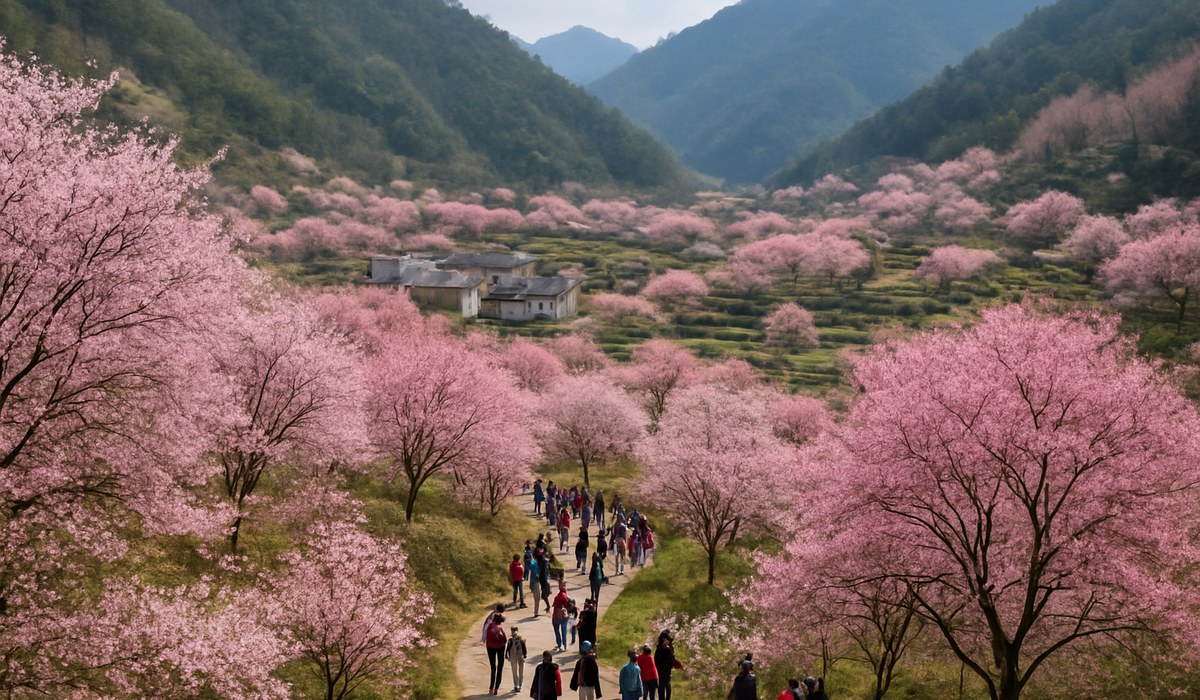
Image generated by AI
Quick Summary
- Jinlong Village's spring bloom has become a major draw for travelers seeking alternatives to crowded Japanese destinations
- The rural settlement converted agricultural operations into a structured agritourism model generating significant local revenue
- Infrastructure improvements and regional flight connections now make the site accessible to international visitors
- Sustainable tourism practices are preventing the overtourism patterns that plague established bloom hotspots
Beyond Japan: Why Asia's Cherry Blossom Seekers Are Rerouting to Rural China
The annual spring migration to Japan's famed cherry blossom festivals faces an unexpected challenger. While travelers book months ahead for Kyoto's crowded pathways, a quiet revolution is unfolding in the mountainous heart of central China.
Jinlong Village, nestled in a region long overlooked by international tourism circuits, is fundamentally reshaping how Asia's seasonal bloom destinations operate. The difference isn't subtle. Whereas travel Japan cherry blossom bookings surge continues to track record numbers, visitor satisfaction scores are plummeting due to congestion and environmental strain. Meanwhile, this emerging Chinese destination is attracting premium-tier travelers willing to pay substantially for authentic, uncrowded experiences.
The shift reflects deeper market trends. According to recent analysis from the World Tourism Organization, Asia-Pacific rural destinations are capturing 34% more visitor spending than established urban cultural sites when marketed as exclusive seasonal experiences. Jinlong Village's bloom season now generates annual revenue comparable to entire provincial tourism budgets from just three months of operation.
What sets this village apart isn't simply lower prices or photogenic landscapes. The model represents a calculated pivot toward sustainable, capacity-controlled tourism—a direct response to the failures of overtouristed destinations.
Jinlong Village's Tourism Transformation: From Agriculture to Agritourism Goldmine
For generations, Jinlong existed as a subsistence agricultural community. Fruit orchards covered the hillsides. Farmers worked seasonal cycles unchanged for decades. Then, beginning in 2023, local leadership recognized an opportunity in the blooming patterns that had gone unmarketed for centuries.
The transformation began modestly. Village officials organized basic visitor infrastructure: parking areas, walking trails, modest guesthouses converted from traditional farmhouses. By spring 2024, word spread through social media channels. International travelers discovered a destination offering the visual appeal of Japan's festivals without the crushing crowds or premium pricing.
The 2025 season marked the inflection point. Jinlong Village recorded 187,000 visitor arrivals during the four-week bloom period. Local households earned an average of $8,400 in direct tourism revenue—substantial income in a region where annual agricultural returns had plateaued at roughly $6,500 per family. Shop owners, guesthouse operators, and tour guides collectively generated over $2.1 million in economic activity during a single spring season.
Village administrator Chen Wei documented this transition in a statement to regional media: "We did not build something artificial. We revealed what was always here—beauty that our own families had stopped noticing." The authenticity of this approach became its greatest marketing asset.
Infrastructure improvements followed visitor demand rather than preceding it. China infrastructure transformation projects in adjacent regions demonstrated how rural areas could integrate modern accessibility without destroying character. Jinlong applied similar principles, adding paved pathways through orchards, installing solar-powered lighting, and establishing water treatment systems—improvements that simultaneously benefited permanent residents.
The Economic Model: How Small Villages Are Capturing Premium Rural Tourism Spend
Jinlong's success diverges sharply from conventional mass-tourism approaches. Rather than maximizing visitor volume, the village implemented strict daily capacity limits: 5,000 visitors during peak bloom days, with advance ticketing required. This constraint paradoxically increased demand. Travelers perceived scarcity as exclusivity.
Pricing reflected this positioning. Entry permits cost $28—moderate by international standards but nearly triple typical Chinese attraction pricing. Accommodation ranged from $35 budget homestays to $120 for renovated traditional compounds with modern amenities. Dining followed suit, with local restaurants charging $12-18 per meal compared to $4-6 in adjacent towns.
The revenue distribution model became a template for other communities. Jinlong allocated 40% of tourism income to village collective funds supporting schools, healthcare, and senior care. Individual operators retained 60% of their business revenues. This arrangement ensured community-wide benefits while maintaining entrepreneurial incentives.
Tourism revenue began substituting for agricultural subsidies that had grown unreliable. By late 2025, the village council voted to transition 35% of orchards into a permanent tourism-purpose landscape—beautified, professionally maintained, but no longer primarily productive farmland. This strategic land-use shift demonstrates how agritourism can offer economic stability that traditional agriculture no longer provides in developing regions.
Regional authorities noticed. Lonely Planet's travel guides now feature Jinlong as a case study in rural tourism development. Other communities have requested consultation on replicating the model.
Sustainable Bloom Tourism: Lessons for Overtouristed Destinations
As National Geographic Travel has extensively documented, cherry blossom destinations face mounting environmental costs. Soil compaction from foot traffic damages root systems. Trash accumulation contaminates water sources. Noise pollution disrupts wildlife breeding seasons. Japan's authorities have begun implementing unpopular restrictions—cordoned pathways, time-slot permits, hefty fines—to manage damage.
Jinlong anticipated these problems. The village established a Conservation Council in 2024 that includes agronomists, environmental scientists, and community representatives. This body sets policies before problems emerge: mandatory composting of organic waste, limits on pesticide application, seasonal area closures to allow ecological recovery, and mandatory guide training on environmental impact.
Visitor feedback reflects these efforts. Post-visit surveys show 91% of international travelers rated environmental stewardship as a key factor in choosing Jinlong over established alternatives. The village's commitment to preserving conditions for future seasons directly influenced purchase decisions—particularly among travelers aged 28-42 with higher education levels.
The economic logic is straightforward: sustainable practices preserve the asset generating income. Overtourism degrades that asset. Jinlong's approach treats environmental management as revenue protection rather than cost burden.
Planning Your Visit: Accessibility, Logistics, and Peak Season Strategy
Reaching Jinlong Village has become significantly easier. Improved India-China travel routes expand with daily international service to Shanghai increased accessibility for travelers from South Asia and beyond. From Shanghai Pudong Airport, visitors require a 4-hour regional flight to the provincial capital, followed by a 90-minute drive to the village.
Domestic travelers have even more options. High-speed rail connects major Chinese cities to regional hubs within 8-12 hours. From these connection points, organized coach services operate daily—$35-50 per person, bookable through major travel platforms. The journey is manageable, though not instantaneous.
Visa requirements depend on nationality. Citizens of 144 countries can enter China visa-free for up to 15
Disclaimer
This article is for informational and educational purposes only. It does not constitute legal, financial, or professional advice. While we strive to provide accurate and up-to-date information, travel policies, regulations, and conditions change rapidly. Always verify information with official sources before making travel decisions. Nomad Lawyer makes no representations about the accuracy, reliability, completeness, or suitability of the information provided. Readers should consult qualified professionals for advice specific to their circumstances. The views expressed in this article are those of the author and do not necessarily reflect the views of Nomad Lawyer.
Preeti Gunjan
Contributor & Community Manager
A passionate traveller and community builder. Preeti helps grow the Nomad Lawyer community, fostering engagement and bringing the reader experience to life.
Learn more about our team →