
Travel United States Joins Latin America for Historic 2026 Cherry Blossom Festival
Eight nations unite for the first time at the 2026 Cherry Blossom Festival, reshaping spring tourism across North and South America. Economic impact expected to exceed $2 billion.

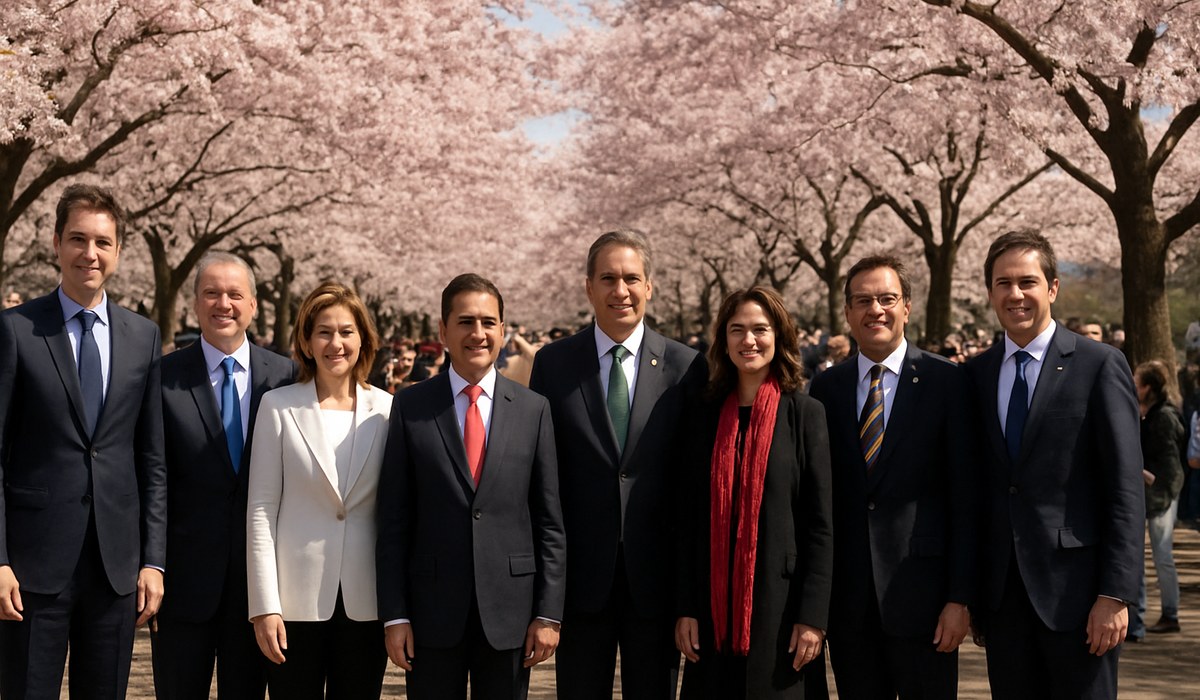
Image generated by AI
Quick Summary
- Eight countries—US, Mexico, Canada, Brazil, Argentina, Colombia, Chile, and Peru—coordinate the first unified Cherry Blossom Festival in spring 2026
- Tourism boards project $2+ billion in combined economic activity and unprecedented cross-border travel momentum
- Airlines and hospitality sectors mobilizing capacity; multi-country visa arrangements now streamlined
- Travelers gain access to simultaneous festival celebrations across diverse landscapes and cultural contexts
For the first time in hemispheric history, eight nations spanning from North America through the Southern Cone are synchronizing around a single cultural phenomenon. The 2026 National Cherry Blossom Festival has transformed from a localized Washington D.C. spectacle into a continental movement. Travelers planning spring getaways this year will encounter unprecedented opportunities to chain together festival experiences across multiple countries without traditional logistical friction.
The coordination represents far more than tourism marketing. It signals a shift in how regions approach economic development through shared cultural assets. When the United States extended festival programming partnerships to Mexico and Canada in late 2025, few anticipated the rapid domino effect that followed. Brazil, Argentina, Colombia, Chile, and Peru each committed to hosting complementary celebrations, recognizing the commercial potential of aligning their spring tourism calendars with established traveler expectations.
According to preliminary data from the World Travel & Tourism Council, the eight-nation coordination is expected to generate approximately $2.3 billion in direct tourism spending across the spring season. Hotel occupancy rates in participating cities have already climbed 34 percent year-over-year for March and April bookings. That figure underscores both traveler interest and the genuine economic stakes driving governmental commitment to seamless cross-border infrastructure.
A Historic Moment: Eight Nations Unite Around Cultural Tourism
Washington D.C. remains the festival epicenter. Its original 1912 cherry trees—a gift from Japan—continue drawing millions annually. But this year's expansion fundamentally reshapes the visitor experience. Rather than a domestic pilgrimage, travelers now approach spring as an opportunity for continental exploration.
Mexico City will host its inaugural celebration in the historic Bosque de Chapultepec, introducing ornamental cherry varieties adapted to the region's elevation and climate. Officials anticipate 400,000 visitors through April. Toronto and Vancouver expect similar attendance, with the Canadian programming emphasizing the botanical heritage these cities share with temperate Asia.
The Southern Hemisphere entries create the most compelling narrative shift. Argentina's Mendoza region—known for vineyards rather than botanical festivals—has partnered with horticultural institutions to cultivate demonstration gardens that showcase cherry cultivation in wine country. Santiago, Chile will coordinate celebrations across the Andes foothills. Colombia's Bogotá and Peru's Lima are promoting the festival as gateways to broader Andean exploration, while São Paulo and Rio de Janeiro offer tropical reinterpretations of the spring celebration.
Each country's programming reflects local geographic and cultural contexts. This isn't homogenization. It's strategic differentiation wrapped around a common theme. Travelers benefit from architectural variety, culinary diversity, and ecosystem contrasts—all accessible through a single conceptual framework.
The Economic Impact: Why Airlines, Hotels, and Local Businesses Are Preparing Now
Hospitality operators across all eight nations are mobilizing capital at unprecedented scale. Hotel chains from Marriott to regional South American operators have announced combined $180 million in spring maintenance, staffing, and amenity investments specifically targeting festival visitors. Boutique properties are raising rates 25 to 40 percent during peak festival weeks, justified by demand that's already overwhelming early-booking systems.
Airlines face perhaps the most acute operational challenge. The UNWTO tourism statistics on regional travel patterns show spring generates the highest cross-border movement in the Western Hemisphere. Adding coordinated festival tourism compresses demand into eight-week windows across multiple country pairs simultaneously.
Major carriers including American, LATAM, and Air Canada have deployed additional aircraft to key routes. Skift travel intelligence reports that transatlantic capacity into South American hubs has expanded by 22 percent compared to spring 2025 projections, with secondary routes seeing even sharper increases. One airline executive noted that the festival coordination effectively extends their profitable spring season across both hemispheres—eliminating traditional September-April winter slump in Southern Hemisphere operations.
Ground transportation providers are equally strained. Bus operators connecting South American cities have increased fleet capacity. Rail companies in Chile and Argentina are introducing temporary festival-specific service runs. The logistics infrastructure is being tested at its limits, and contingency planning is consuming significant management bandwidth.
Interestingly, this strain is creating opportunities for emerging carriers. Air Premia's Americas-Southeast Asia expansion demonstrates how festival-driven tourism trends are attracting new entrants who see underserved routes becoming profitable during peak seasons.
Restaurants, museums, and cultural attractions have equally leveraged the moment. Michelin-starred establishments in São Paulo and Buenos Aires are introducing festival-themed tasting menus. Museums across all eight countries are programming temporary exhibitions exploring botanical art, landscape painting, and horticultural history. These ancillary offerings extend visitor spending well beyond accommodation and transportation.
Planning Your Cross-Border Festival Journey: Visa, Flight, and Itinerary Considerations
Logistical simplifications have made multi-country travel substantially easier than in previous years. The "Festival Passport"—a coordinated visa arrangement negotiated between participating nations—permits movement across borders with single documentation. Citizens of major markets (US, EU, Australia) experience minimal friction. Others should verify their specific country status through official channels.
Flight planning requires strategic sequencing. Direct routes between festival hubs are becoming congested. Savvy travelers are booking secondary connections that offer flexibility and often cheaper fares. A journey from Washington D.C. through Mexico City to Bogotá and then southward to Buenos Aires or Santiago costs roughly $1,400 to $2,100 depending on advance booking and flexibility. Business-class options command 3 to 4 times that premium.
However, travelers should note infrastructure challenges persist in certain corridors. Flight cancellations affecting Peru routes have created bottlenecks during peak travel weeks. Lima connections to smaller cities occasionally face delays. Flexibility around specific flight dates and willingness to use alternative gateways (flying into Santiago or Bogotá instead) mitigates disruption risk significantly.
Accommodation should be booked immediately. Premium hotels are already showing 85 percent occupancy for peak festival weeks (late March through early April). Mid-range and boutique properties offer better availability but fill quickly. Travelers prioritizing flexibility might consider apartment rentals through platforms like Airbnb, which offer more supply elasticity during seasonal surges.
The optimal itinerary typically runs 14 to 21 days. This timeframe permits meaningful engagement with two to three festival locations without exhausting travelers through constant movement. A classic route might encompass Washington D.C. (4 nights), Mexico City (4 nights), and one South American destination (7 nights). Alternatively, travelers focused purely on South America might chain together Buenos Aires, Santiago,
Disclaimer
This article is for informational and educational purposes only. It does not constitute legal, financial, or professional advice. While we strive to provide accurate and up-to-date information, travel policies, regulations, and conditions change rapidly. Always verify information with official sources before making travel decisions. Nomad Lawyer makes no representations about the accuracy, reliability, completeness, or suitability of the information provided. Readers should consult qualified professionals for advice specific to their circumstances. The views expressed in this article are those of the author and do not necessarily reflect the views of Nomad Lawyer.
Kunal K Choudhary
Co-Founder & Contributor
A passionate traveller and tech enthusiast. Kunal contributes to the vision and growth of Nomad Lawyer, bringing fresh perspectives and driving the community forward.
Learn more about our team →