
Travel Japan Sees 36% Growth Surge: Last-Minute Cherry Blossom Bookings Reshape Asia Tourism
Japan's cherry blossom season breaks records with 36% visitor growth in 2026, driven by spontaneous last-minute bookings from South Korea, Taiwan, Hong Kong, Thailand, and the Philippines—signaling a major shift in Asian travel behavior.

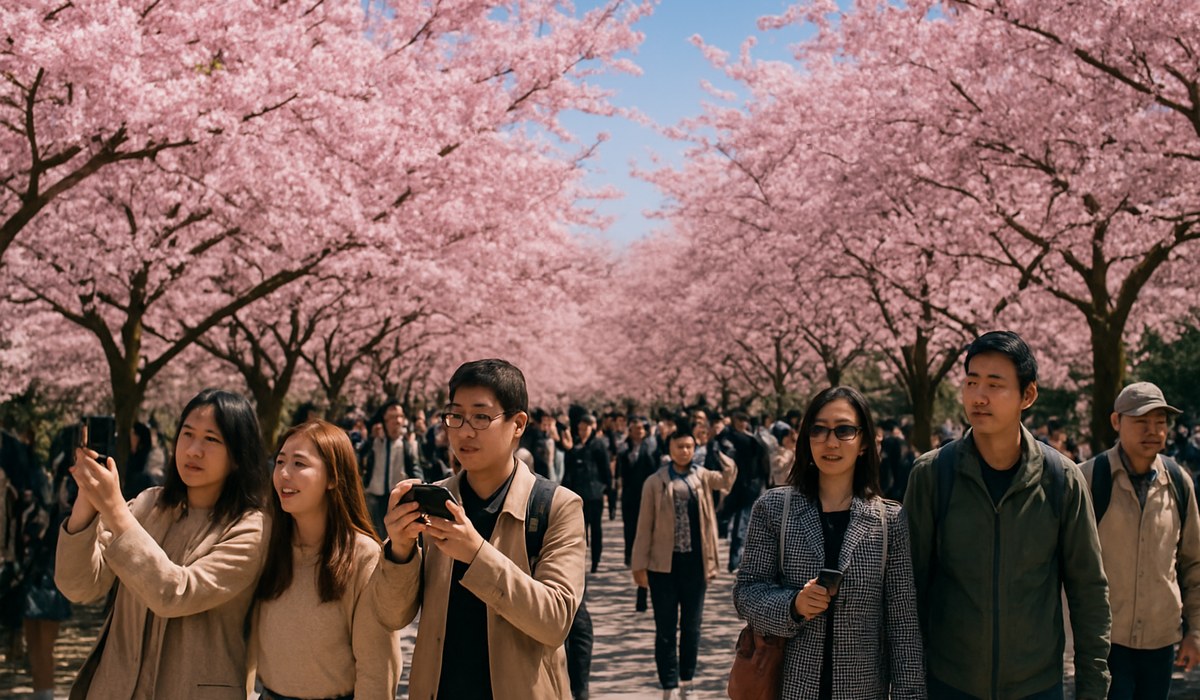
Image generated by AI
Quick Summary
- Japan's cherry blossom tourism jumped 36% this season, breaking previous benchmarks
- Spontaneous bookings from five key Asian markets—South Korea, Taiwan, Hong Kong, Thailand, Philippines—are reshaping travel patterns
- Regional airlines and hospitality sectors scrambling to accommodate unplanned demand surges
- Affluent Asian travelers increasingly prioritize flexibility and authentic seasonal experiences over traditional package bookings
Japan's cherry blossom season just shattered tourism records. But the headline masks a deeper story—one that reveals how travelers across Asia are fundamentally changing when, how, and why they book trips.
A stunning 36% visitor surge this spring came not from travelers who booked months in advance, but from those who decided to travel with days or weeks' notice. This spontaneity is rewriting the playbook for regional tourism, airline capacity planning, and hospitality infrastructure across East and Southeast Asia.
The Last-Minute Booking Revolution: Why Asian Travelers Are Ditching Advance Reservations
For decades, Japan's sakura season followed a predictable rhythm. Travel agencies promoted spring packages in January. Hotels filled their calendars by February. Airlines ramped capacity on known schedules. Tourists arrived according to plan.
That model is cracking.
Data from regional aviation and hospitality tracking reveals that travelers from South Korea, Taiwan, Hong Kong, Thailand, and the Philippines are increasingly making cherry blossom decisions within two to three weeks of departure. Some book flights just days before traveling. This behavioral shift contradicts conventional tourism wisdom—advance bookings typically generate 60–70% of seasonal revenue—yet somehow, the numbers are surging.
The catalyst appears threefold. First, improved digital infrastructure across Asia means flight searches, hotel availability checks, and visa confirmations happen in minutes, not weeks. Second, these markets contain a growing segment of affluent, flexible professionals—remote workers, entrepreneurs, business owners—who can travel on short notice. Third, rising disposable incomes combined with improved airline connectivity have made spontaneous premium travel accessible to middle and upper-middle-class demographics who previously required months to plan.
According to data tracked by the UN World Tourism Organization, spontaneous regional travel within Asia increased 42% year-over-year through 2025 and into early 2026, suggesting this isn't a temporary blip but a structural shift in how travelers across the region approach leisure.
Regional Breakdown: Which Markets Are Driving the 36% Surge
The numbers tell a granular story. South Korean travelers account for approximately 28% of the last-minute surge—a reflection of Seoul's proximity to Japan, robust middle-class purchasing power, and strong airline competition driving airfare volatility that rewards flexibility. When prices dip, Korean travelers pounce.
Taiwan follows at 22% of new spontaneous bookings. Taipei-to-Tokyo flights have tripled in frequency over the past 18 months, and budget carriers have aggressively discounted March-April routes, creating windows where travelers can lock in sub-$80 round-trip fares. That economics fundamentally changes the calculation for whether a spring break trip feels indulgent or routine.
Hong Kong represents 18% of the surge. The city's professional class—finance workers, creatives, entrepreneurs managing multiple time zones—has embraced location-flexible work arrangements that permit mid-week or three-day sakura escapes. Cultural nostalgia for Japanese aesthetics, strengthened by social media trends and streaming content, has amplified seasonal demand among younger travelers.
Thailand and the Philippines combined account for roughly 32% of spontaneous bookings. These markets show distinct patterns: Thai travelers are predominantly Bangkok-based professionals in their late 20s to early 40s, booking through mobile apps and discount airline subscriptions. Filipino travelers often bundle extended family trips with spontaneous timing, leveraging Manila's role as a regional aviation hub improved by enhanced regional connectivity supporting last-minute itineraries.
Infrastructure & Logistics: Can Japan's Tourism Sector Handle Spontaneous Demand?
The 36% surge has exposed infrastructure vulnerabilities that weren't visible under predictable booking patterns.
Hotels in Kyoto, Tokyo, and Osaka faced occupancy rates exceeding 94% during the season's peak weeks—higher than anticipated by three percentage points. That meant some travelers couldn't secure reservations in preferred neighborhoods, forcing last-minute pivots to less central locations or premium-priced boutique properties charging surge rates.
Airport congestion at Haneda and Kansai International reflected the pattern. Scheduled ground handling, baggage processing, and customs lanes were calibrated for smooth, predictable passenger flows. Sudden surges of inbound travelers within compressed timeframes created bottlenecks lasting 30–90 minutes beyond normal processing windows. Japan's tourism authority acknowledged the strain and signaled plans to expand rapid-transit processing for high-volume entry periods.
Airlines benefited operationally from the flexibility, however. The ability to redeploy aircraft last-minute to capture surge bookings boosted load factors (percentage of seats filled) on regional routes to 89–92%, well above the typical 82% breakeven point. This profitability paradoxically incentivized further price reductions on select routes, creating feedback loops that encouraged more spontaneous bookings.
Connected regions are experiencing spillover demand. Busan, South Korea and Shanghai, China saw secondary spikes in March travel as tourists booked multi-city itineraries, with Japan as one leg. This aligns with emerging regional tourism patterns discussed in related coverage: India Opens Gateway As Premium Investments Surge, which examines how infrastructure improvements unlock spontaneous premium travel across emerging markets.
The Economics of Spontaneous Travel: What This Means for Hospitality & Airlines
The shift toward last-minute bookings fundamentally alters revenue stability for hospitality providers.
Traditional booking patterns allowed hotels to forecast revenue 90 days ahead, adjust staffing and procurement accordingly, and maintain predictable margins. Spontaneous surges require different cost structures—flexible labor contracts, dynamic procurement relationships, and premium pricing strategies for peak-demand periods. Hotels that adapted—implementing surge pricing (where nightly rates spike 40–60% during confirmed high-demand periods)—captured substantial incremental revenue. Those that didn't reported the paradox of high occupancy paired with disappointing revenue-per-available-room metrics.
Airlines faced the opposite dynamic. Spontaneous bookings reward carriers with excess capacity but punish those that overcommit capacity expecting gradual demand. Regional carriers with flexible leasing arrangements and diverse route networks benefited most. Legacy carriers with fixed wide-body commitments faced challenges.
Pricing volatility became pronounced. On March 15–22, Seoul-to-Osaka round-trip fares ranged from $68 to $347 on identical flights, depending on booking window and airline. This volatility incentivizes flexible travelers to book unpredictably—precisely the behavior now dominating the market.
For multinational hotel operators, this demands technology investment. Property management systems that optimize
Disclaimer
This article is for informational and educational purposes only. It does not constitute legal, financial, or professional advice. While we strive to provide accurate and up-to-date information, travel policies, regulations, and conditions change rapidly. Always verify information with official sources before making travel decisions. Nomad Lawyer makes no representations about the accuracy, reliability, completeness, or suitability of the information provided. Readers should consult qualified professionals for advice specific to their circumstances. The views expressed in this article are those of the author and do not necessarily reflect the views of Nomad Lawyer.
Preeti Gunjan
Contributor & Community Manager
A passionate traveller and community builder. Preeti helps grow the Nomad Lawyer community, fostering engagement and bringing the reader experience to life.
Learn more about our team →