
Energy China Built: World's Largest Outdoor Escalator Transforms Wushan
China's 905-meter Goddess escalator in Wushan moves 9,000 commuters daily through mountainous terrain in 21 minutes. This engineering marvel represents a breakthrough in urban mobility solutions for challenging topography.

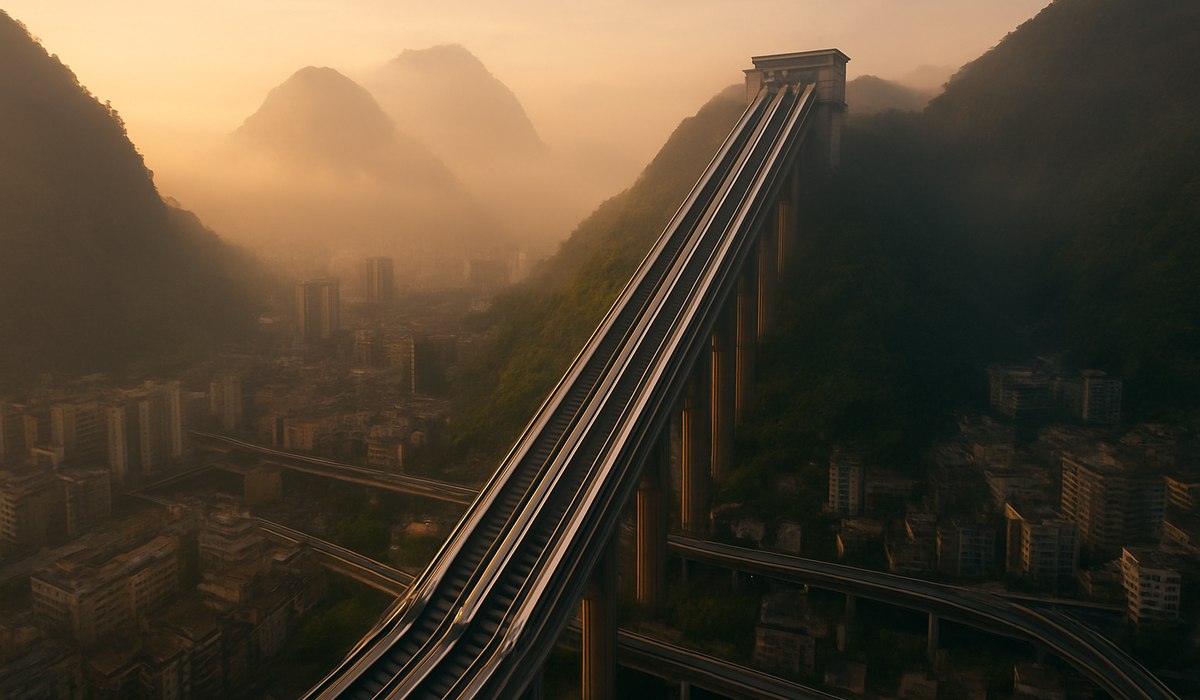
Image generated by AI
The Energy China Built to Create the World's Most Impressive Urban Escalator System
China's Wushan district has unveiled the planet's longest outdoor escalator system, a 905-meter transportation marvel that ascends through one of Chongqing's most challenging mountainous neighborhoods. The Goddess escalator, as locals call it, represents an unprecedented engineering achievement that moves approximately 9,000 daily commuters up steep terrain in just 21 minutes. This mass transit solution demonstrates how modern infrastructure innovation tackles geographic obstacles that would traditionally require exhausting walks through steep alleyways.
The escalator network carries visitors and residents from street level to elevated urban districts, eliminating fatigue-inducing climbs across Wushan's vertically-stacked neighborhoods. During China's recent Spring Festival celebrations, the system transported 450,000 users in a single month, validating its critical role in the city's transportation ecosystem.
Engineering Marvel: How Energy China Built the World's Longest Outdoor Escalator
The Goddess escalator isn't a singular moving staircase but rather an integrated network of approximately 24 individual escalators and lifts functioning as one cohesive system. This modular approach allowed engineers to adapt the installation to Wushan's irregular topography while maintaining seamless passenger flow throughout the entire 21-minute journey.
Huang Wei, lead engineer for the China Railway Eryuan Engineering Group, emphasized the project's unprecedented nature to international media outlets: "As far as I know, there are no similar projects nationwide, either exceeding or equal to ours, either under construction or already started. It's the first of its kind."
The escalator's mechanical components were manufactured by Switzerland's Schindler company, a global leader in vertical transportation technology. Schindler's Shanghai facility produced the specialized escalating mechanisms, representing a successful collaboration between Swiss precision engineering and Chinese infrastructure ambition. This partnership exemplifies how energy China built into this project combined international expertise with domestic construction capabilities. The same company has already supplied 1,400 escalators to Chongqing's metro system, establishing proven reliability in the region.
The project cost and construction timeline reflect substantial investment in mountainous urban solutions, though exact figures remain undisclosed by municipal authorities.
Daily Operations: Moving 9,000 Commuters Up the Mountain
Wushan's Goddess escalator serves as essential infrastructure for thousands of daily travelers navigating one of China's steepest urban districts. At approximately $0.43 per directional journey, the system offers affordable mass transit compared to alternative transportation methods or purchasing property in lower districts.
The escalator particularly benefits Wushan's legendary "bangbang men"—porters who traditionally carry goods on bamboo poles across the city's treacherous slopes. Sixty-year-old porter Ran Guanghui noted the transformative impact on his profession, sharing that the escalator significantly reduces physical strain when transporting heavy merchandise through commercial districts. For decades, porters relied entirely on foot traffic through narrow alleyways and steep staircases, making the mechanized lift system genuinely revolutionary for this working population.
Office workers, students, elderly residents, and rural visitors now access upper neighborhoods without exhaustion. The system's success during peak travel periods demonstrates its capacity to handle mass transit demands that would overwhelm traditional stairway infrastructure.
Technology & Cost: Swiss Engineering Meets Chinese Innovation
The energy China built into this escalator system represents a fascinating intersection of Swiss mechanical precision and Chinese construction ambition. Schindler's engineering ensures reliable daily operation under continuous heavy use, while Chinese project managers overcame extraordinary logistical challenges inherent to mountainous installation.
The escalator operates continuously throughout business hours, requiring sophisticated maintenance protocols and electrical infrastructure supporting simultaneous operation of multiple escalator sections. Power consumption justifies the investment through reduced healthcare costs associated with strain injuries and increased commercial activity in previously isolated upper-district neighborhoods.
Comparative analysis shows the Goddess escalator costs substantially more than traditional stairway construction but generates economic returns through increased retail accessibility, reduced pedestrian congestion, and improved quality of life metrics. Municipality officials view this investment as essential infrastructure comparable to metro systems in flatter Chinese cities, adapted for geographic realities of mountainous terrain.
For visitors seeking understanding of modern mass transit solutions, this project offers compelling evidence of how infrastructure innovation addresses specific urban challenges through international collaboration and substantial capital investment.
Urban Mobility Solutions for Mountainous Terrain
Wushan's previous flagship escalator project, the Crown escalator constructed during the 1990s, established precedent for mechanized vertical transportation in Chongqing's most challenging districts. The Goddess escalator represents exponential advancement in both scale and capacity, transforming urban accessibility across an entire neighborhood rather than single building entrances.
The system's success has inspired inquiries from other mountainous Chinese cities facing similar topography challenges. Visitors from surrounding rural settlements expressed genuine interest in replicating the technology in their own communities, recognizing how such infrastructure could unlock economic development in previously isolated areas.
This energy China built into Wushan's vertical transportation network demonstrates commitment to solving infrastructure problems through innovative engineering rather than accepting geographic limitations as permanent barriers to urban development. The project validates investment in specialized mass transit solutions tailored to specific regional conditions.
Key Data: Wushan Goddess Escalator by the Numbers
| Metric | Details |
|---|---|
| Total Length | 905 meters (half-mile equivalent) |
| Ascent Time | 21 minutes end-to-end |
| Daily Commuters | Approximately 9,000 users |
| System Components | 24 individual escalators and lifts |
| Cost Per Journey | $0.43 USD (single direction) |
| Spring Festival Users | 450,000 passengers in one month |
| Manufacturer | Schindler (Switzerland) |
| Project Lead | China Railway Eryuan Engineering Group |
| Primary Benefit Sector | Commercial, residential, porter communities |
| Comparable Systems | None currently exceed this scale globally |
What This Means for Travelers Visiting Chongqing
If you're planning travel to Chongqing and exploring mountainous urban districts, the Goddess escalator system offers remarkable insights into Chinese infrastructure innovation:
-
Experience Modern Mass Transit Engineering: Allocate time to ride the complete 21-minute journey, observing how engineers adapted Swiss technology to extreme topography. The ascent provides unique perspectives of Wushan's vertical neighborhoods impossible from ground level.
-
Reduce Physical Fatigue: Rather than exhausting climbs through steep alleyways, use the escalator to access upper-district restaurants, shops, and viewpoints. This proves particularly valuable for elderly travelers or those with mobility considerations.
-
Observe Working Traditions: Watch skilled porters navigating the escalator system while carrying merchandise, representing a unique cultural element of Chongqing's commercial heritage.
-
Time Your Visit: Avoid peak morning and evening hours when the system carries maximum commuter traffic. Mid-afternoon and weekend mornings offer more relaxed experiences for photography and observation.
-
Understand Infrastructure Investment: The Goddess escalator demonstrates how Chinese municipalities invest in solutions addressing specific geographic challenges—valuable context for understanding broader development patterns across mountainous regions.
Frequently Asked Questions
Is the Wushan Goddess escalator accessible to tourists?
Yes, the system operates as public mass transit with uniform pricing for all users. Tourist access requires only minimal Mandarin understanding, as signage includes directional information and pricing displays. Most international visitors successfully navigate the system independently.
How often does the escalator system require maintenance?
Schindler-manufactured components typically require monthly preventative maintenance with quarterly comprehensive inspections. Service interruptions remain minimal due to continuous monitoring systems, though occasional single-escalator
Raushan Kumar
Founder & Lead Developer
Full-stack developer with 11+ years of experience and a passionate traveller. Raushan built Nomad Lawyer from the ground up with a vision to create the best travel and law experience on the web.
Learn more about our team →