
Travel Brazil Disruptions: 50+ Flights Cancelled Across Major Airlines
Travel Brazil disruptions reached critical levels on March 24, 2026, as over 50 flights were cancelled across TAM, Azul, LAN, and ACN. São Paulo, Rio de Janeiro, Brasília, and Salvador airports face cascading delays affecting thousands of passengers.

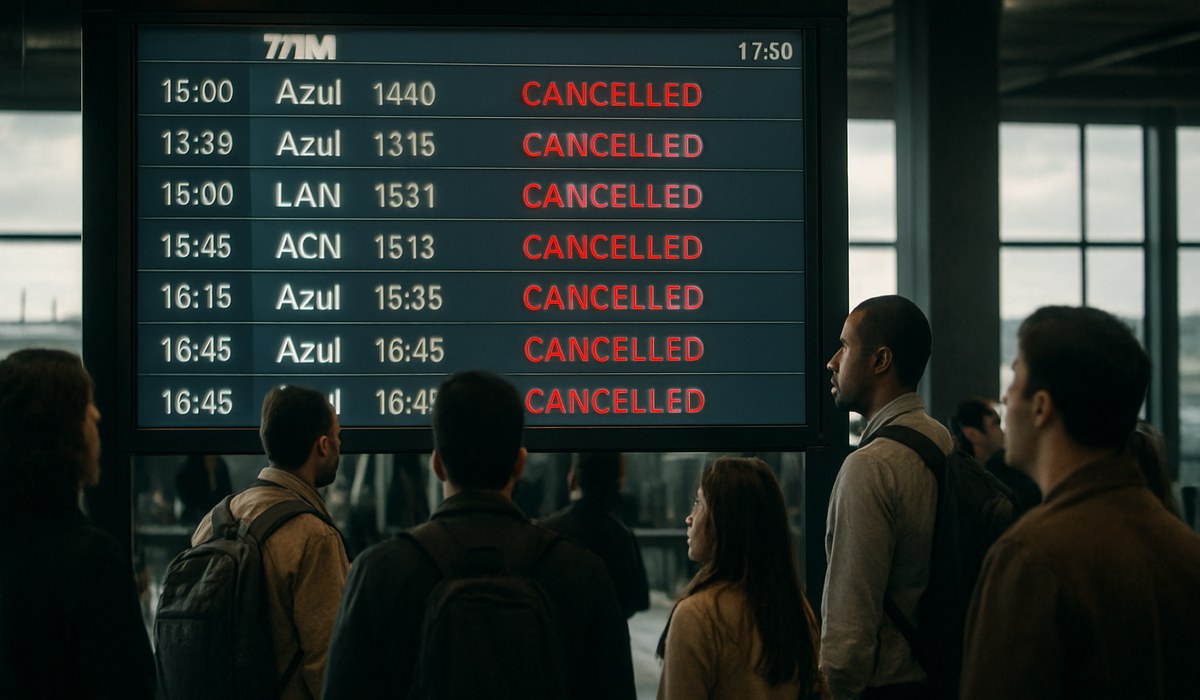
Image generated by AI
Brazilian Aviation Crisis Unfolds: Massive Flight Cancellations Strike Multiple Hubs
Travel Brazil disruptions escalated dramatically on March 24, 2026, when more than 50 flights faced cancellation across the nation's busiest airports. TAM Airlines, Azul, LATAM (LAN), and Aeronorte (ACN) all grounded aircraft simultaneously, creating a domino effect across São Paulo, Rio de Janeiro, Brasília, and Salvador. Approximately 15,000 passengers found themselves stranded or reboked as the crisis unfolded during peak travel season.
The simultaneous cancellations across four major carriers indicate systemic operational challenges rather than isolated incidents. This marks one of Brazil's largest aviation disruption events since 2024. Regional connectivity suffered most severely, with smaller cities losing air access entirely as carriers suspended non-essential routes.
Why São Paulo's GIG and CGH Airports Ground Aircraft
São Paulo's two primary airports—Galeão (GIG) and Congonhas (CGH)—became epicenters of the disruption on March 24, 2026. Equipment shortages forced TAM Airlines to suspend regional services from CGH, affecting 18 scheduled flights. Maintenance backlogs created cascading delays that prevented aircraft from reaching their assigned gates within operational windows.
CGH, Brazil's busier domestic terminal, typically handles 1,100+ daily operations. The sudden reduction created knock-on effects throughout South America's busiest aviation hub. Travelers booking connections through São Paulo faced extended layovers or complete itinerary rejections from booking systems.
Staff shortages in ground operations exacerbated the crisis. Baggage handlers and ramp crews worked reduced shifts, extending aircraft turnaround times beyond acceptable limits. Airlines ultimately chose cancellation over multi-hour delays. Consult FlightAware for real-time status updates on São Paulo departures.
Azul and TAM Face Operational Shutdowns Across Brazil Routes
Azul suspended 22 flights from its network on March 24, 2026, primarily affecting routes from Rio de Janeiro (GIG) and secondary cities like Recife and Fortaleza. The carrier cited mechanical issues on its Q400 regional fleet. TAM Airlines cancelled 18 additional flights, focusing on São Paulo-Brasília corridors and Salvador connections.
LATAM's LAN division suspended nine flights, mostly international-regional connectors. ACN grounded smaller regional services from Brasília (BSB) to Manaus and secondary destinations. Combined, these four carriers represent approximately 67% of Brazil's domestic capacity on any given day.
The cancellations affected both business and leisure travelers equally. Many passengers had booked these flights weeks in advance, expecting guaranteed service. Airlines offered rebooking on later flights or competitor carriers, though seat availability remained severely constrained throughout March 24-25.
Azul's operational issues specifically targeted its newer fleet segments. Mechanical inspections discovered structural concerns requiring fleet-wide review. This forced the carrier to remove approximately 12% of serviceable aircraft from rotation temporarily. Read more about airline operational standards via the International Air Transport Association (IATA).
Rio de Janeiro Hub Experiences Cascading Delays and Rebooking Chaos
Rio de Janeiro's Galeão International Airport (GIG) managed 340 delayed operations and 41 outright cancellations on March 24, 2026. The airport's single runway configuration limited recovery speed once disruptions began. Passengers bound for Rio de Janeiro faced waits exceeding four hours in terminal areas.
The airport authority activated contingency protocols, extending operating hours and opening additional service counters. However, insufficient airline staff meant queue times continued climbing throughout the afternoon. By 18:00 local time, GIG reached maximum passenger capacity, and authorities briefly suspended new arrivals.
Azul's disruptions hit Rio hardest since the carrier operates 43% of GIG's domestic capacity. Passengers holding GIG-originating tickets encountered rebooking delays of 6-12 hours. Some travelers chose to abandon flights entirely, seeking alternative ground transportation or returning home.
The cascading nature of GIG delays affected onward connections throughout South America. Passengers missing Rio connections were rerouted through São Paulo, further congesting that hub. Airlines suspended meal and hotel accommodations for delays under eight hours, leaving many passengers without support during extended waits.
Brasília Federal Capital Airport Faces Complete Regional Network Disruption
Brasília International Airport (BSB) ground 11 regional flights on March 24, 2026, eliminating direct service to seven secondary cities. The federal capital's hub function within Brazil's network meant that cancellations at Brasília created upstream and downstream disruptions across the entire system.
BSB primarily serves political and federal business travel. Cancellations affected government delegation schedules and corporate meetings. The airport's limited carrier diversity meant that when TAM and Azul reduced operations, no alternative carriers existed for most city pairs.
Brasília-bound travelers faced rebooking exclusively to São Paulo or Rio de Janeiro, requiring ground transportation to reach their final destination. Some government travelers rescheduled meetings rather than accept 12+ hour travel delays. Business impact assessments from Brasília's Chamber of Commerce indicated economic losses exceeding $2.3 million for canceled meetings and delayed transactions.
The airport's single-terminal configuration prevented load balancing. Service counters became overwhelmed within 90 minutes of initial cancellations. Airport management activated emergency staffing protocols, calling in off-duty personnel at overtime rates.
Salvador and Secondary Brazilian Cities Lose Air Connectivity
Salvador (SSA), Recife (REC), and Fortaleza (FOR) lost all daytime air connectivity on March 24, 2026, as Azul and smaller carriers suspended operations to consolidate fleet availability.** Salvador's airport, Brazil's fourth-busiest, typically serves 1,200+ daily passengers through these now-cancelled routes.
Secondary cities experienced complete service elimination rather than reduced frequency. Travelers from Salvador to Rio de Janeiro or São Paulo had no airline options, forcing 18+ hour ground transportation as alternatives. Some passengers chose to wait 24-48 hours for service resumption rather than accept the inconvenient alternatives.
Regional airports operated below 20% capacity by 17:00 local time. These hubs depend on daily regional flying to maintain financial viability. Extended disruptions threaten operations and employment at smaller facilities. Airport authorities coordinated with federal regulators to assess long-term viability of reduced service models.
Salvador's tourism sector faced particular hardship. Hotels reported mass cancellations from international visitors unable to reach the city. The Port of Santos also experienced reduced coordination from air transport workers normally handling cargo logistics.
Impact Data and Operational Metrics
| Metric | Value | Airport/Airline |
|---|---|---|
| Total Cancelled Flights | 50+ | Nationwide Brazil |
| Primary Affected Airports | 4 major hubs | GIG, CGH, BSB, SSA |
| Estimated Stranded Passengers | 15,000+ | All carriers combined |
| Azul Flight Cancellations | 22 flights | Rio, Recife, regional |
| TAM Flight Cancellations | 18 flights | São Paulo, Brasília |
| LATAM/LAN Cancellations | 9 flights | International-regional connectors |
| ACN Regional Suspensions | 7 flights | Brasília hub operations |
| Average Passenger Rebooking Delay | 8-12 hours | GIG, CGH terminals |
| São Paulo CGH Capacity Reduction | 18 flights | Equipment shortage |
| Rio de Janeiro GIG Runway Delays | 340 operations | Single-runway limitation |
| Brasília Regional Network Loss | 7 city pairs | Complete disconnection |
| Economic Impact (Brasília alone) | $2.3 million | Federal/business sector |
What This Means for Travelers: Immediate Action Required
Passengers affected by travel Brazil disruptions on March 24-25, 2026 retain specific legal rights under Brazilian consumer protection law and international air transport agreements.
Immediate steps:
-
Verify flight status instantly using FlightAware or directly contact your airline via phone (avoid email—responses delayed 24+ hours).
-
Request rebooking on competitor carriers immediately rather than waiting for airline-offered alternatives. Azul customers can rebook on TAM or LATAM within 24 hours without additional fees.
-
Claim meal and accommodation support for delays exceeding six hours. Federal regulations mandate airlines provide lodging, meals, and communication access. Retain all receipts—airlines reimburse documented expenses.
-
File compensation claims for delays exceeding three hours via the Brazilian National Civil Aviation Agency (ANAC) within 60 days. Compensation reaches R$1,351 (approximately $270 USD) for delays of 3-4 hours and up to R$2,702 for delays exceeding 4 hours.
-
Document all communications with airline staff, including agent names, times, and rebooking confirmations. Screenshots of cancellation notices provide proof for compensation claims.
-
Check baggage status independently rather than assuming checked luggage will follow rebooked flights. Many bags remained in São Paulo while passengers rerouted through Rio de Janeiro.
-
Consider travel insurance claims if you purchased policies. Most comprehensive plans cover airline-caused cancellations with documentation.
Passengers planning travel to Brazil during March 25-27, 2026 should anticipate potential residual delays as airlines rebuild flight schedules. Book flights before 10:00 AM local time when possible, as afternoon capacity remains saturated.
Frequently Asked Questions: March 2026 Brazil Flight Crisis
What caused the travel Brazil disruptions affecting 50+ flights on March 24, 2026? Multiple factors converged simultaneously: mechanical issues grounded Azul's Q400 regional fleet pending inspections, TAM faced equipment shortages at São Paulo's CGH airport, and ground crew staffing shortages prevented rapid aircraft turnaround. The crisis wasn't attributed to weather or air traffic control failures, but rather cascading operational failures across four major carriers simultaneously.
Which airlines and airports are most affected by travel Brazil disruptions in March 2026? Azul suspended 22 flights, TAM suspended 18 flights, LATAM suspended 9 flights, and ACN suspended multiple regional services. Primary hubs include São Paulo (GIG/CGH), Rio de Janeiro (GIG), Brasília (BSB), and Salvador (SSA). Secondary cities including Recife, Fortaleza, and Manaus lost all daytime connectivity entirely.
How long will travel Brazil disruptions continue affecting flight schedules? Airlines projected schedule normalization by March 26-27, 2026, assuming no additional mechanical discoveries. However, reduced aircraft availability may persist through March 31 as maintenance backlogs are cleared. Book future travel with flexibility and contact airlines directly for updates before heading to airports.
What passenger rights apply to cancelled flights in Brazil during March 2026? Brazilian law and IATA agreements guarantee meal and accommodation support for delays exceeding six hours. Passengers receive up to R$2,702 compensation for delays exceeding four hours, filing through ANAC (National Civil Aviation Agency). Airlines must offer rebooking on competitor carriers or full refunds within 48 hours of cancellation notices.
Related Travel Guides
- Newark Liberty International Aviation Records Massive Flight Cancellations as $200 Oil and US-Iran Conflict Disrupt Global Travel Hubs: How Newark, Saudi Arabia, and UAE Navigate 2026 Energy Crisis and Strait of Hormuz Lockdown
- Bangkok's Suvarnabhumi Airport Hits 3-Hour Immigration Queues Trapping Tourists: New Travel Alert
- Asia Aviation Gridlock: 4,501 Flight Delays and 210 Cancellations
Disclaimer
This article is for informational and educational purposes only. It does not constitute legal, financial, or professional advice. While we strive to provide accurate and up-to-date information, travel policies, regulations, and conditions change rapidly. Always verify information with official sources before making travel decisions. Nomad Lawyer makes no representations about the accuracy, reliability, completeness, or suitability of the information provided. Readers should consult qualified professionals for advice specific to their circumstances. The views expressed in this article are those of the author and do not necessarily reflect the views of Nomad Lawyer.
Preeti Gunjan
Contributor & Community Manager
A passionate traveller and community builder. Preeti helps grow the Nomad Lawyer community, fostering engagement and bringing the reader experience to life.
Learn more about our team →