
Travel Gulf Airlines Face Operational Crisis as Dozen Flights Cancelled
Gulf Air and UAE Airlines cancel 12+ flights on key long-haul routes in March 2026. Passengers to Auckland, Bahrain, Lahore affected. Here's what you need to know about compensation and alternatives.

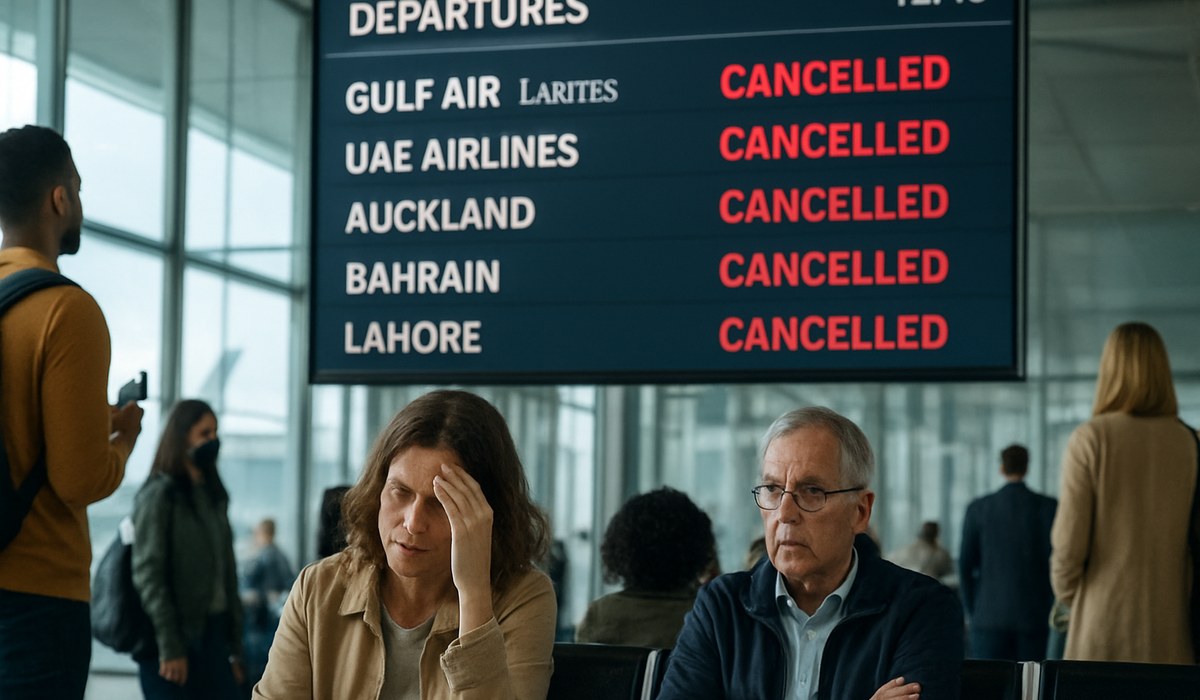
Image generated by AI
**> Quick Summary
- Gulf Air and UAE Airlines have cancelled a dozen flights across major international routes as of March 29, 2026
- Destinations including Auckland, Bahrain, and Lahore are experiencing service interruptions
- Passengers are entitled to compensation under international aviation regulations
- Real-time tracking via FlightAware is essential for verifying rebooking options**
A dozen scheduled departures vanished from reservation systems overnight as two of the Gulf region's largest carriers battled an unexpected operational crisis. Gulf Air and UAE Airlines face mounting pressure following cascading flight cancellations that have left thousands of passengers stranded across three continents.
The disruptions, which intensified on March 29, 2026, exposed vulnerabilities in scheduling resilience for carriers managing densely packed long-haul networks. Travelers bound for Auckland, Bahrain, Lahore, and several undisclosed intermediate points now confront the dual challenge of securing alternative passage and understanding their legal entitlements.
This isn't an isolated incident. Recent aviation sector turbulence across the Arabian Peninsula reflects broader systemic pressures on Gulf-based carriers managing both capacity constraints and regional volatility. The timing compounds existing challenges documented in urgent safety alerts affecting Dubai operations earlier this month.
Which Routes Are Affected and Why
The cancellation wave has carved a geographic footprint spanning Asia-Pacific and South Asian corridors—precisely where Gulf carriers leverage their strategic geographic position to funnel European and Middle Eastern traffic.
Auckland operations represent the most visible disruption. Emirates-dominated competition in the Oceania sector means Gulf Air's Bahrain (BAH) to Auckland (AKL) service carries significance for regional connectivity. Multiple Thursday and Friday departures have been scrubbed, according to data indexed by aviation tracking services.
Bahrain hub-and-spoke operations experienced internal disruptions as well. The carrier's primary home base at Bahrain International Airport (BAH / OBBI) saw ground operations affected, cascading delays into connecting flights.
Lahore (LHE) connections absorbed secondary impacts. Pakistan's second-largest aviation hub funnels traffic toward Middle Eastern distribution centers. The loss of scheduled capacity on this route segment forces passengers onto competitor networks operated by Pakistan International Airlines (PIA) and Turkish Airlines.
Subsidiary routes to Karachi (KHI), Doha hub connections (DOH), and regional spoke destinations have absorbed overflow demand as airlines scramble to consolidate remaining available seats.
What Caused the Disruption: Operational Breakdown or External Factors
No single root cause has been publicly confirmed by either carrier as of publication, though aviation sector analysts point to several converging pressures.
Crew scheduling constraints appear to be a leading culprit. Long-haul operations demand strict fatigue management compliance under international civil aviation regulations. If pilot or cabin crew assignments became untenable—whether due to sudden medical absences, unexpected rostering gaps, or maintenance of mandated rest hours—carriers have no legal option but to cancel rather than operate flights unsafely.
Aircraft availability represents a secondary concern. The IATA guidelines governing maintenance scheduling and unscheduled engineering work mean that if one or two widebody aircraft entered unexpected maintenance, carriers with finite fleets managing ambitious networks would face immediate capacity shortfalls.
External factors warrant consideration as well. Aviation fuel price volatility, volatile regional security assessments, and infrastructure constraints at competing hub airports could collectively strain scheduling flexibility.
What distinguishes this disruption from routine weather-related cancellations is the geographic breadth and the cascading nature of the impact. Single-route disruptions are commonplace. Network-wide operational strain affecting a dozen-plus services suggests systemic rather than localized pressure.
Passenger Rights and Compensation Under International Law
Confusion surrounding passenger protections remains endemic even after decades of international aviation regulation.
Under EU261 regulations (applicable on EU-departing flights regardless of carrier nationality), passengers qualify for compensation ranging from €250 to €600 depending on flight distance, provided the cancellation occurred fewer than 14 days prior to departure due to carrier negligence rather than extraordinary circumstances.
The US Department of Transportation maintains parallel frameworks. The US DOT passenger rights and compensation rules outline mandatory carrier obligations: rebooking on alternative flights, meals and accommodations during delays, and communication requirements. While monetary compensation under DOT rules operates differently than EU schemes (typically enforced through airline policy rather than statutory mandate), carriers cannot avoid responsibility for passenger care.
For routes originating in or transiting through Middle Eastern jurisdictions, the Montreal Convention establishes baseline global standards. Carriers bear financial responsibility for proven damages up to approximately 4,694 Special Drawing Rights (SDRs)—equivalent to roughly $6,300 USD—per passenger for cancelled flights when negligence is established.
Critical action step: Document everything. Collect booking confirmations, cancellation notifications, ticket numbers, and any out-of-pocket expenses (meals, hotels, transportation). Photograph receipts and keep communication records with airline representatives and travel agents.
Both Gulf Air and UAE Airlines operate under these frameworks. Passenger complaint resolution departments exist and are obligated to respond to compensation claims within defined timeframes, though processing timelines often exceed 6-12 months for complex disputes.
Real-Time Tracking and Rebooking Strategies for Affected Travelers
In the immediate aftermath of disruption, information asymmetry creates dangerous gaps for passengers.
FlightAware live tracking provides real-time visibility into flight status changes, equipment reassignments, and schedule modifications that official airline channels may lag in communicating. Accessing these tools within hours of cancellation notice allows passengers to identify reboot opportunities before airline call centers become overwhelmed.
Passengers holding cancellation notices should immediately:
-
Verify the cancellation status independently using FlightAware or FlightRadar24 rather than accepting airline statements at face value. System glitches occasionally trigger false cancellation notices; confirmation prevents unnecessary rebooking chaos.
-
Contact the airline directly through multiple channels. Phone lines, email, and social media customer service teams often process requests with differing speeds. Simultaneous outreach maximizes rebooking speed.
-
Request rebooking on competitor carriers if original flights remain unrecoverable. Airlines maintain interline agreements allowing passengers to transfer to alternative carriers (typically with rebooking fees, though carriers may waive fees for their own operational failures).
-
Explore regional alternatives operating the same routes. Turkish Airlines, Emirates, Etihad, and Lufthansa operate overlapping corridors to Auckland, Lahore, and Bahrain. Premium cabin availability may differ significantly from economy options, potentially enabling faster rebooking.
-
Check emerging route options. Air Premia's expansion of Americas-Southeast Asia connectivity demonstrates market repositioning. New entrants sometimes offer competitive rebooking terms to attract loyalty.
-
Understand rebooking timelines. Airlines typically guarantee rebooking within 24-72 hours on same-cabin availability, though this standard varies by carrier and route availability.
Passengers entitled to compensation should file claims simultaneously with rebooking requests. Compensation and reaccommodation are parallel rights, not alternatives.
FAQ
**Q
Disclaimer
This article is for informational and educational purposes only. It does not constitute legal, financial, or professional advice. While we strive to provide accurate and up-to-date information, travel policies, regulations, and conditions change rapidly. Always verify information with official sources before making travel decisions. Nomad Lawyer makes no representations about the accuracy, reliability, completeness, or suitability of the information provided. Readers should consult qualified professionals for advice specific to their circumstances. The views expressed in this article are those of the author and do not necessarily reflect the views of Nomad Lawyer.
Preeti Gunjan
Contributor & Community Manager
A passionate traveller and community builder. Preeti helps grow the Nomad Lawyer community, fostering engagement and bringing the reader experience to life.
Learn more about our team →