
Travel 2032 India Market Set to Surge Past USD 132 Billion Milestone
India's travel industry is projected to reach USD 132 billion by 2032, driven by unprecedented leisure and business demand amid robust economic expansion.

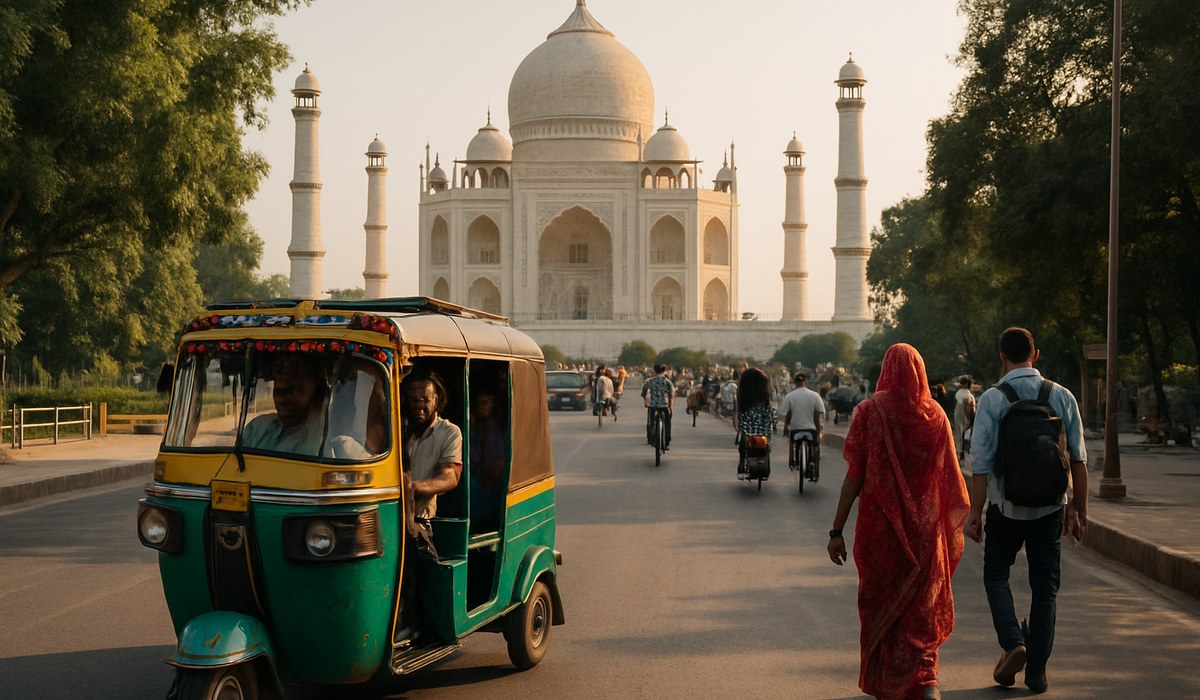
Image generated by AI
Quick Summary • India's travel sector will reach USD 132 billion by 2032, marking the world's fastest growth trajectory • Leisure bookings and corporate travel expansion are driving dual-engine momentum • Rising middle-class prosperity and infrastructure investments fuel unprecedented demand • Digital transformation and mobile-first booking platforms accelerate market penetration
While European tourism hubs grapple with overtourism and North American markets show modest single-digit growth, India's travel industry stands on the threshold of a transformation that will redefine global tourism economics. The subcontinent's travel market is tracking toward USD 132 billion by 2032, propelled by forces that combine demographic advantages, economic vitality, and technological leapfrogging unseen in established Western destinations.
The World Travel & Tourism Council projects{:target="_blank" rel="noopener noreferrer"} this explosive expansion represents a compound annual growth rate exceeding most mature markets by substantial margins. Industry analysts tracking this trajectory point to fundamentals that go beyond simple population mathematics—India's emerging middle class, digital connectivity revolution, and infrastructure modernization are converging at precisely the moment when global tourism patterns are fragmenting.
India's USD 132 Billion Travel Revolution: Breaking Down the Numbers
The projected USD 132 billion valuation by 2032 reflects a market growing from approximately USD 75 billion in 2025, representing a near-doubling within seven years. This acceleration outpaces China's comparable growth phase by several percentage points and positions India as the primary engine for Asia-Pacific tourism expansion through the next decade.
Domestic travel currently accounts for roughly 72% of total market value, with outbound international travel comprising the remaining segment. Yet these proportions are shifting. Outbound bookings from Indian travelers are climbing at 18% annually, creating ripple effects across Southeast Asian destinations, European heritage sites, and Middle Eastern business hubs.
The UN World Tourism Organization data reveals{:target="_blank" rel="noopener noreferrer"} that India's share of global tourism expenditure is climbing from 2.8% in 2024 to a projected 4.6% by 2032. This growth trajectory mirrors—and in some metrics exceeds—the expansion patterns witnessed in South Korea and Taiwan during their rapid development phases from 1990 to 2010.
Leisure spending dominates the market composition, yet business travel is growing faster in absolute terms. Corporate travel bookings surged 23% year-over-year in the first quarter of 2026, driven by multinational expansions, startup ecosystem growth, and India's positioning as a global services hub. Major metropolitan corridors—Delhi-Mumbai, Bengaluru-Hyderabad, and Chennai-Kolkata—are experiencing capacity constraints as demand outstrips available premium inventory.
Economic Catalysts Fueling Unprecedented Tourism Growth
India's GDP growth averaging 6.8% annually creates the fundamental economic foundation supporting travel expansion. Per capita income rising from USD 2,500 in 2024 to a projected USD 3,800 by 2030 moves tens of millions of households into discretionary spending brackets where domestic vacations and international trips transition from aspirational luxuries to accessible realities.
The expanding middle class—projected to reach 580 million individuals by 2030—represents the core demographic powering leisure bookings. First-time flyers are entering the market at unprecedented rates, with tier-2 and tier-3 cities contributing 43% of new airline passengers in 2025, up from 31% just three years prior.
Currency stability and inflation control measures implemented since 2024 have maintained purchasing power for international travel. The rupee's relative stability against major currencies has made Southeast Asian destinations particularly attractive, with Thailand, Singapore, and Vietnam receiving record Indian visitor numbers. European tour operators are expanding India-specific packages, recognizing the market's shift from price-sensitive budget travelers to experience-seeking premium customers.
Government initiatives removing visa restrictions and simplifying travel documentation have eliminated traditional friction points. E-visa programs with 159 countries and streamlined passport processing reduced waiting times from months to weeks, directly translating to booking surges. India's event tourism sector alone contributing $8.5 billion demonstrates how specialized segments are maturing alongside mainstream leisure and business categories.
Leisure vs. Business Travel: The Dual Engines of Expansion
Leisure travel maintains its volume dominance, yet corporate bookings deliver disproportionate revenue impact. Premium business class fares, extended-stay hotel bookings, and ancillary services generate margins that subsidize leisure capacity expansion. Airlines report that business routes to Bengaluru, Pune, and Hyderabad operate at load factors exceeding 85% year-round, compared to seasonal fluctuations affecting leisure-focused destinations.
Family vacation patterns are evolving beyond traditional pilgrimage circuits and hill stations. Experiential travel—wildlife safaris, adventure sports, culinary tours, and wellness retreats—now accounts for 28% of domestic leisure spending, up from 19% in 2022. This premiumization reflects generational shifts as millennials and Gen Z travelers prioritize experiences over conventional sightseeing.
International leisure bookings show distinct seasonal patterns, with peak months shifting as travelers seek off-season value. Europe dominates aspirational long-haul destinations, while short-haul Asian beach resorts capture weekend and extended holiday traffic. The UAE has emerged as a shopping and entertainment hub, with Indian visitors representing the largest international demographic for Dubai and Abu Dhabi tourism.
Corporate travel is diversifying beyond traditional metro corridors. Emerging technology hubs in Kochi, Jaipur, and Chandigarh are generating regular business routes, with Asian airlines leveraging AI-powered systems to capture market share through dynamic pricing and personalized corporate booking programs. MICE (meetings, incentives, conferences, exhibitions) tourism is projected to grow 31% by 2028, with India competing for regional events previously defaulting to Singapore or Bangkok.
Infrastructure and Digital Transformation Accelerating Market Maturity
Airport capacity expansion represents the most visible infrastructure investment supporting travel growth. New terminals in Mumbai, Bengaluru, and Delhi add 120 million annual passenger capacity, while second-tier cities like Goa, Lucknow, and Visakhapatnam receive connectivity upgrades. Regional airports opening in tier-3 cities reduce travel times and democratize air access for populations previously dependent on road and rail.
Digital platforms are collapsing traditional distribution hierarchies. Mobile-first booking apps capture 67% of domestic flight bookings and 54% of hotel reservations, with voice-enabled booking in regional languages expanding access among non-English speakers. Payment infrastructure supporting UPI (Unified Payments Interface) integration eliminates credit card requirements, unlocking travel purchases for demographics excluded from legacy systems.
According to Skift research{:target="_blank" rel="noopener noreferrer"}, India's online travel agency market is consolidating around platforms that combine inventory aggregation, price comparison, and vernacular content. This technological maturation mirrors patterns in China's travel digitalization, though India's fragmented linguistic landscape creates unique localization challenges and opportunities.
Hospitality supply is racing to match demand. International hotel chains announced 287 new properties across 2025-2027, concentrated in tier-2 cities where branded accommodation was previously scarce. Alternative accommodations—serviced apartments, vacation rentals, boutique homestays—are filling gaps in leisure destinations, supported by regulatory frameworks balancing growth with community impact.
Road connectivity improvements and high-speed rail projects reduce inter-city travel times, making multi-destination itineraries practical. The Western Dedicated Freight Corridor and Eastern Dedicated Freight Corridor indirectly benefit passenger rail by freeing capacity, while expressway networks connecting major cities cut driving times by 30-40%, enabling long-weekend road trips that generate accommodation and dining revenue in previously isolated regions.
FAQ: India's Travel Market Boom Explained
What's driving India's travel market to USD 132 billion by 2032?
The growth stems from converging factors: a rising middle class with discretionary income, improved air and road infrastructure, digital booking platforms lowering entry barriers, and younger demographics prioritizing travel experiences. Economic growth averaging 6.8% annually provides the foundational purchasing power.
How does India's growth compare to other emerging travel markets?
India's projected compound annual growth rate exceeds comparable phases in China, Brazil, and Indonesia. The combination of population scale (1.4 billion), demographic youth, and technological leapfrogging creates a unique growth trajectory that surpasses most historical precedents.
Are Indian travelers primarily booking domestic or international trips?
Domestic travel dominates at roughly 72% of market value, but international bookings are growing faster at 18% annually. Southeast Asia, Middle East, and Europe are primary destinations, with outbound spending increasing as passport penetration and visa accessibility improve.
What role does business travel play in the overall market expansion?
Corporate travel generates disproportionate revenue despite smaller volume compared to leisure. Premium fares, extended stays, and MICE tourism contribute high-margin segments that subsidize capacity expansion. Business routes maintain consistent year-round demand compared to seasonal leisure fluctuations.
How is technology transforming India's travel booking landscape?
Mobile-first platforms now handle 67% of flight bookings, with vernacular language interfaces and UPI payment integration expanding access beyond English-speaking, credit card-holding demographics. AI-powered personalization and voice booking are reducing friction for first-time travelers entering the market.
Related Articles:
Disclaimer
This article is for informational and educational purposes only. It does not constitute legal, financial, or professional advice. While we strive to provide accurate and up-to-date information, travel policies, regulations, and conditions change rapidly. Always verify information with official sources before making travel decisions. Nomad Lawyer makes no representations about the accuracy, reliability, completeness, or suitability of the information provided. Readers should consult qualified professionals for advice specific to their circumstances. The views expressed in this article are those of the author and do not necessarily reflect the views of Nomad Lawyer.
Kunal K Choudhary
Co-Founder & Contributor
A passionate traveller and tech enthusiast. Kunal contributes to the vision and growth of Nomad Lawyer, bringing fresh perspectives and driving the community forward.
Learn more about our team →