
Navigating Toronto Pearson International Airport (YYZ) Guide for First-Time Travelers 2026
A comprehensive guide to navigating Toronto Pearson International Airport (YYZ), covering terminal layouts, UP Express transit, and customs procedures for 2026.
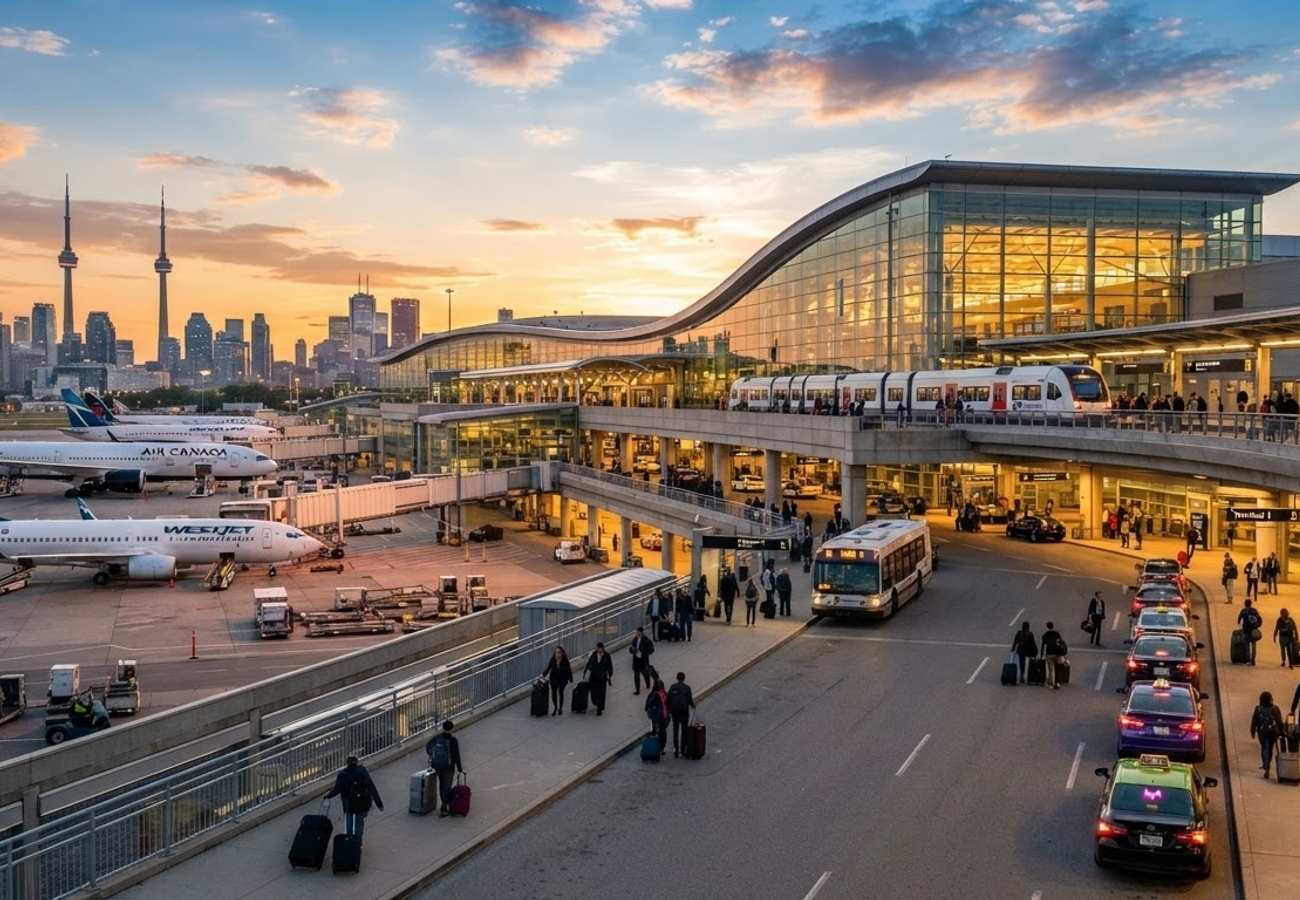
Image generated by AI
Travelers landing at Canada’s busiest aviation hub face a massive complex with two distinct terminals and a high-volume transit system. Navigating Toronto Pearson International Airport (YYZ) efficiently requires understanding the specific airline-to-terminal assignments and the integrated rail links that connect the facility to downtown Toronto.
As the primary gateway for millions of international and domestic passengers, YYZ can be daunting for those unfamiliar with its scale. The airport serves as a critical node for both Air Canada and WestJet, utilizing a layout that separates operations primarily by airline alliance rather than by destination. For the first-time visitor, the transition from the aircraft to the city center involves a series of logistical steps—from digital customs declarations to choosing between high-speed rail and rideshare options.
Terminal Logistics at Toronto Pearson YYZ
Toronto Pearson operates with two primary passenger hubs: Terminal 1 and Terminal 3. It is important for travelers to note that there is no Terminal 2. The distribution of airlines is the primary factor in determining where a passenger will land or depart. Generally, Terminal 1 serves as the base for Air Canada and its Star Alliance partners. Terminal 3 is the primary hub for WestJet and a wide array of international and leisure carriers.
Because both terminals handle a mix of domestic, United States, and international traffic, passengers should verify their terminal via their boarding pass or airline confirmation. Digital signage on the airport access roads provides real-time guidance to ensure travelers enter the correct facility.
The two terminals are connected by the Terminal Link, a free, 24-hour elevated people-mover. This train system is essential for those needing to move between terminals or access the Viscount Station. Viscount Station serves as the gateway to the Alt Hotel and the long-term Value Park Lot and Value Park Garage. This connectivity allows a passenger arriving in Terminal 1 to reach a hotel or a connecting flight in Terminal 3 within minutes without exiting the airport environment.
Internal navigation follows a standard vertical split: departures are typically located on the upper levels, while arrivals are situated on the lower levels. Due to the sprawling nature of the piers and concourses, walking from a distant gate to security or immigration can take between 10 and 15 minutes. While moving walkways are available, passengers with limited mobility are encouraged to coordinate assistance with their airline in advance.
Arrival Procedures and Border Formalities
Upon landing, the immediate priority for international passengers is clearing the Canada Border Services Agency (CBSA) checkpoints. To mitigate delays, the ArriveCAN mobile app is widely used, allowing travelers to submit customs declarations digitally and generate a QR code for rapid scanning at kiosks.
During peak arrival windows—particularly the late afternoon when transatlantic flights converge—the time from the aircraft gate to the curb can range from 60 to 90 minutes. After passing through immigration and retrieving checked luggage from the carousels, passengers proceed through the final customs check.
For those with connecting flights, the airport is designed to keep passengers "airside" to avoid unnecessary security re-screening. Travelers moving from an international arrival to a domestic departure (e.g., London to Vancouver) should follow "Connections" or "Flight Connections" signage. This leads to a specialized document-check area, bypassing the public arrivals hall.
Departure Timelines and Security Screening
To account for potential congestion, airport officials recommend that passengers arrive three hours prior to international departures and two hours before domestic or US-bound flights. This buffer is particularly important during holiday peaks or major city events.
Check-in processes are streamlined through self-service kiosks. In Terminal 1, Air Canada utilizes extensive kiosk zones for printing boarding passes and bag tags. Terminal 3 offers similar facilities for WestJet and its partners. Passengers traveling with carry-on luggage only can bypass the check-in counters and proceed directly to security.
Security screening varies by lane; while some checkpoints require the removal of electronics and liquids, newer scanners are being integrated that allow items to remain in bags. For those with NEXUS or premium cabin status, dedicated priority lanes are available to expedite the process.
Once inside the secure area, travelers have access to a variety of amenities. Air Canada’s Maple Leaf Lounges in Terminal 1 provide full meal services and showers, while various third-party lounges offer quiet workspaces. Passengers should be mindful that boarding for long-haul flights often commences 45 to 60 minutes before the scheduled departure time.
Transit Options to Downtown Toronto
The most efficient method for reaching the city center is the Union Pearson Express (UP Express). This dedicated rail link connects Terminal 1 directly to Union Station.
| Transit Option | Departure Point | Travel Time | Estimated Cost (2026) |
|---|---|---|---|
| UP Express | Terminal 1 | 25–28 Minutes | ~$12 CAD (Standard) / ~$9 CAD (PRESTO) |
| Taxis | Designated Curbside | Variable (Traffic dependent) | Metered |
| Rideshare | Designated Pick-up Zones | Variable (Traffic dependent) | App-based pricing |
To access the UP Express from Terminal 3, passengers must take the free Terminal Link train to Terminal 1. From Union Station, travelers are within walking distance of the CN Tower, Scotiabank Arena, and the broader Toronto subway and streetcar network.
Taxis are readily available at both terminals, though only licensed airport taxis and limousines are permitted to pick up passengers from the official curbside zones.
Why This Matters for the Modern Traveler
For the traveler, the complexity of YYZ means that "winging it" can lead to significant stress or missed connections. The reliance on the ArriveCAN app transforms the customs experience from a manual paperwork exercise into a digital flow; failing to utilize this tool can add significant time to the arrival process.
From a logistical standpoint, the distinction between Terminal 1 and Terminal 3 is the most common point of failure for first-time visitors. Because there is no Terminal 2, a traveler who mistakenly heads to the wrong terminal may lose 30 to 45 minutes correcting the error, even with the Terminal Link train. Understanding that the UP Express departs only from Terminal 1 is critical for those landing in Terminal 3 who have tight schedules for city appointments.
Ultimately, treating the airport as a transit hub rather than a simple building—where the Terminal Link and UP Express act as the primary arteries—allows passengers to move through Canada's busiest airport with professional efficiency.
Efficient navigation of YYZ is the first step toward a seamless Canadian experience.
Related Travel Guides
Disclaimer
This article is for informational and educational purposes only. It does not constitute legal, financial, or professional advice. While we strive to provide accurate and up-to-date information, travel policies, regulations, and conditions change rapidly. Always verify information with official sources before making travel decisions. Nomad Lawyer makes no representations about the accuracy, reliability, completeness, or suitability of the information provided. Readers should consult qualified professionals for advice specific to their circumstances. The views expressed in this article are those of the author and do not necessarily reflect the views of Nomad Lawyer.