
Sierra Leone Emerges as West Africa's Premier Wildlife Destination in 2026
Sierra Leone emerges as West Africa's fastest-growing wildlife and beach destination in 2026, driven by infrastructure investments and rising international tourism interest. The nation transforms from overlooked post-conflict territory into a competitive adventure hub attracting eco-tourists worldwide.

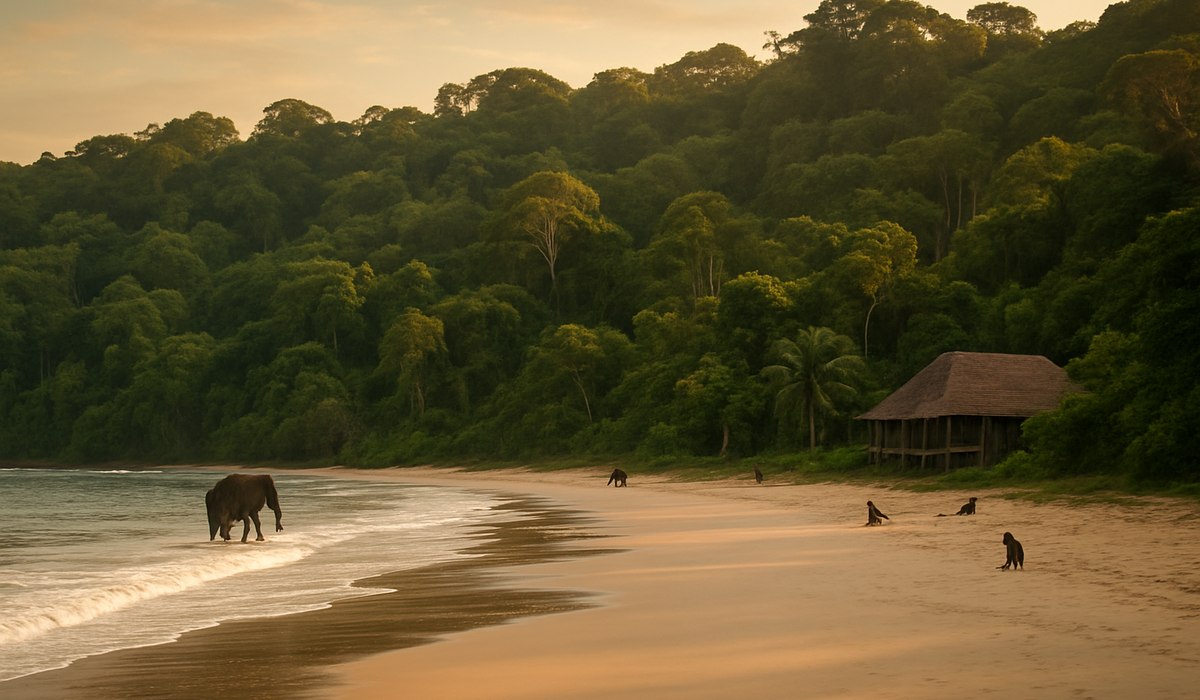
Image generated by AI
Sierra Leone Transforms Into West Africa's Rising Star
Sierra Leone is rapidly shifting its global tourism narrative in 2026, evolving from a post-conflict destination into West Africa's most compelling wildlife and adventure hub. The nation now attracts thousands of international travelers annually who seek encounters with critically endangered western chimpanzees, pristine Atlantic beaches, and authentic community-run lodges at remarkably accessible price points. This transformation reflects substantial infrastructure investments, improved international air connectivity, and sustained media coverage highlighting the country's unparalleled natural and cultural assets.
From Conflict Legacy to Tourism Frontier
For decades, Sierra Leone's international reputation remained shadowed by its civil war history, overshadowing the nation's extraordinary biodiversity and coastal beauty. Today's perception shift marks a fundamental repositioning in global travel consciousness. International travel publications and tourism boards increasingly feature Sierra Leone as a premier winter-sun destination offering genuine adventure without mass tourism crowds.
The Lungi Bridge project, officially contracted in late 2023, represents the cornerstone infrastructure development enabling this transformation. Once completed, the bridge will streamline airport access from Freetown's primary aviation hub, reducing transfer times and logistical friction for arriving visitors. Simultaneously, new regional airline services have launched direct routes connecting Freetown with European and West African capitals, significantly expanding accessibility for international travelers seeking authentic African experiences.
Government tourism strategies explicitly position the sector as essential for economic diversification, employment generation, and conservation financing. Recent visitor arrival data from 2024-2025 demonstrates sustained growth from a modest baseline, indicating strong demand momentum. This convergence of infrastructure development, policy support, and international media attention is fundamentally rewriting Sierra Leone's position within competitive West African tourism markets.
Wildlife, Beaches and Authentic Experiences Drive Visitor Interest
Sierra Leone's wildlife credentials represent its most potent competitive advantage in emerging destination markets. The nation harbors one of West Africa's largest remaining populations of critically endangered western chimpanzees, concentrated within protected and community-managed forest reserves. Conservation research identifies Loma Mountains National Park, Gola Rainforest National Park, and the Outamba-Kilimi landscape as internationally significant biodiversity strongholds.
Specialist tour operators now routinely feature multi-day expeditions throughout these protected areas. Typical itineraries include primate observation walks in rainforest canopies, dawn chorus listening sessions for rare bird species, river-based wildlife surveys along tannin-colored waterways, and occasional sightings of forest elephants documented through camera trap networks. The Tiwai Island Wildlife Sanctuary provides specialized platforms for river-based primate observation and ornithological studies.
Tacugama Chimpanzee Sanctuary, located in forested hills immediately outside Freetown, has emerged as Sierra Leone's flagship wildlife attraction. Originally established in the mid-1990s as a rescue facility for orphaned chimpanzees, Tacugama now operates as a comprehensive primate rehabilitation center, environmental education hub, and eco-tourism destination. The sanctuary's prominence extends beyond wildlife tourism; in 2019, the western chimpanzee received official designation as the nation's national animal, symbolically cementing wildlife conservation within Sierra Leone's tourism branding strategy.
Coastal ecosystems complement rainforest wildlife experiences. Mangrove-lined estuaries, sea turtle nesting beaches, and island bird sanctuaries support community-based tourism enterprises promoting conservation-aligned visitor engagement. Guided canoe expeditions through coastal waterways and village homestay programs enable travelers to contribute financially to habitat protection initiatives while experiencing authentic coastal communities.
Infrastructure Investment Unlocks Access and Growth
Strategic infrastructure development creates the operational foundation enabling Sierra Leone's tourism expansion. Beyond the transformative Lungi Bridge project, regional governments and private investors are upgrading accommodation facilities, road networks, and communications infrastructure throughout high-priority tourism zones.
Accommodation supply is shifting notably, with community-operated eco-lodges replacing purely informal hospitality arrangements. These facilities maintain authentic cultural characteristics while providing contemporary comfort standards increasingly expected by international travelers. Pricing remains substantially below equivalent West African destinations, offering exceptional value propositions for budget and mid-range travelers.
Transportation improvements extend beyond airport access. Road rehabilitation projects connecting Freetown to northern national parks and southern beach destinations are underway, reducing travel times and enabling multi-destination itineraries previously impractical for time-limited visitors. Improved road infrastructure simultaneously benefits local residents through enhanced market access and economic opportunity distribution.
Digital connectivity improvements, including expanded cellular coverage and internet access throughout tourism zones, address practical concerns that previously discouraged independent traveler exploration. Modern accommodation facilities increasingly offer reliable power and data services essential for contemporary travelers requiring regular connectivity.
Economic Strategy Positions Tourism as Development Catalyst
Sierra Leone's national government explicitly recognizes tourism as a transformative economic sector, incorporating tourism growth targets within comprehensive development frameworks. Tourism revenue projections emphasize contributions to foreign exchange earnings, government tax receipts, and employment creation across rural and urban regions.
Conservation financing represents a particularly significant economic argument for tourism expansion. Protected area management, anti-poaching operations, and habitat restoration initiatives require sustained funding sources; tourism revenue provides diversified financing mechanisms beyond traditional government budgets and international conservation grants. This alignment between economic development and environmental protection creates mutually reinforcing incentives for both sectors.
Employment opportunities extend throughout tourism value chains, from hospitality and transportation to guiding and artisanal product production. Community-based tourism enterprises deliberately structure operations to maximize local employment and income retention, contrasting with extractive tourism models concentrating profits among external operators. This distributive approach strengthens rural economies and builds local stakeholder support for conservation initiatives.
What This Means for Travelers
Sierra Leone's emergence as West Africa's premier wildlife destination creates compelling opportunities for international visitors seeking distinctive travel experiences:
-
Exceptional Value: Accommodation, food, and guiding services remain remarkably affordable compared to established African wildlife destinations, enabling longer itineraries within equivalent budgets.
-
Reduced Crowding: Lower overall visitor numbers compared to neighboring countries mean authentic experiences without tourism congestion at major wildlife sites and beaches.
-
Conservation Impact: Visitor spending directly supports endangered species protection, particularly for critically threatened western chimpanzees and forest elephant populations.
-
Infrastructure Improvements: Ongoing transportation and accommodation upgrades make independent travel increasingly feasible for experienced travelers seeking authentic African experiences.
-
Cultural Authenticity: Community-operated tourism enterprises provide genuine interactions with local cultures and traditions rather than commercialized tourism performances.
Key Data Table: Sierra Leone Tourism Emergence Facts
| Metric | Details | Significance |
|---|---|---|
| Western Chimpanzee Population | Largest remaining West African concentration | Flagship wildlife attraction and national symbol |
| National Animal Designation | Western chimpanzee named official national animal (2019) | Tourism branding foundation |
| Protected Forest Areas | Gola Rainforest, Loma Mountains, Outamba-Kilimi | Critical biodiversity strongholds |
| Tacugama Sanctuary | Established 1995, flagship eco-tourism facility | Most visited wildlife attraction in 2026 |
| Lungi Bridge Project | Contracted late 2023, transforms airport access | Infrastructure catalyst for tourism scaling |
| Regional Air Routes | New connections to European and West African capitals | Enhanced international accessibility |
| Accommodation Growth | Community eco-lodges replacing informal hospitality | Improved service standards while maintaining authenticity |
| Tourism Job Creation | Explicit government strategy sector | Rural economic development catalyst |
Frequently Asked Questions
Q: Is Sierra Leone safe for tourists in 2026? Safety conditions have substantially improved since the nation's civil war (concluded 2002). Contemporary Sierra Leone welcomes international tourists, though visitors should exercise standard precautions, remain current with travel advisories from official government sources, and utilize reputable tour operators. Dedicated tourism infrastructure in major destinations provides appropriate support for international travelers.
Q: When is the optimal travel season for wildlife viewing? November through February offers ideal wildlife observation conditions during West Africa's dry season. Reduced vegetation
Disclaimer
This article is for informational and educational purposes only. It does not constitute legal, financial, or professional advice. While we strive to provide accurate and up-to-date information, travel policies, regulations, and conditions change rapidly. Always verify information with official sources before making travel decisions. Nomad Lawyer makes no representations about the accuracy, reliability, completeness, or suitability of the information provided. Readers should consult qualified professionals for advice specific to their circumstances. The views expressed in this article are those of the author and do not necessarily reflect the views of Nomad Lawyer.
Preeti Gunjan
Contributor & Community Manager
A passionate traveller and community builder. Preeti helps grow the Nomad Lawyer community, fostering engagement and bringing the reader experience to life.
Learn more about our team →