
Top Global Photography Destinations 2026: Japan, Switzerland, and Antarctica for Visual Storytelling
Explore the world's most visually stunning destinations for 2026, from Japan's seasonal shifts to Antarctica's polar extremes, focusing on slow tourism and professional travel photography.

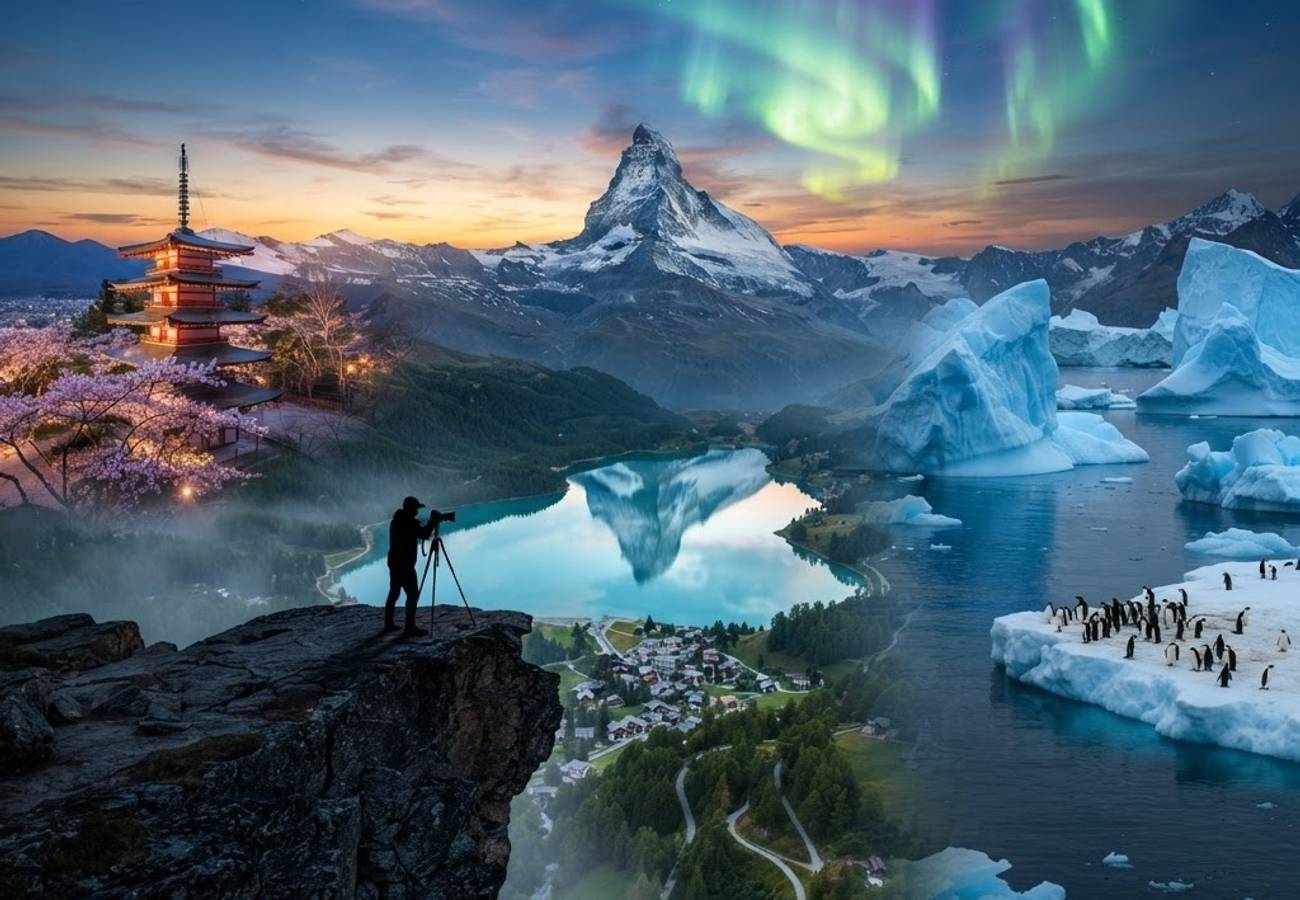
Image generated by AI
World Photography Day serves as a catalyst for travelers to move beyond generic tourist checklists and embrace visual narration. For the modern explorer, the goal is no longer just a souvenir photo, but a curated collection of scenery, culture, and light.
The shift toward "slow tourism" is redefining how photographers interact with the globe. Rather than rushing through landmarks, a growing number of travelers are seeking remote regions that prioritize environmental preservation and heritage, allowing for a more intentional and sedate approach to capturing the world.
Seasonal Dynamics in Japan
Japan remains a premier destination for photographers due to its dramatic seasonal transitions. The visual narrative shifts entirely every few months: spring is defined by cherry blossoms, summer by deep greens, autumn by vibrant foliage, and winter by heavy snow in the highlands.
The contrast between urban and traditional environments provides a diverse portfolio:
- Tokyo: A study in neon illumination, dense urban architecture, and futuristic street life.
- Kyoto: A sanctuary of lantern-lit alleys, Zen gardens, and classical wooden architecture.
- Mount Fuji: An iconic anchor for landscape compositions, varying wildly based on weather and season.
To move beyond postcards, photographers are increasingly integrating cultural immersion—such as calligraphy sessions, ryokan stays, and tea ceremonies—to capture the intimate details of daily Japanese life.
Alpine Precision and Norwegian Drama
Switzerland and Norway offer two distinct interpretations of Northern European grandeur. Switzerland is characterized by the intersection of rugged nature and high-end engineering. The Matterhorn near Zermatt remains a primary subject, while the Jungfrau region and cities like Lucerne and Interlaken provide a mix of turquoise lakes and high-altitude peaks.
Panoramic rail journeys in Switzerland are particularly valuable for photographers, offering a moving vantage point across multiple ecosystems in a single trip.
Conversely, Norway focuses on the raw power of the Arctic. The deep fjords provide imposing verticality, while coastal fishing villages add a human element to the rugged coastline. In the darker months, Northern Norway becomes a hub for aurora borealis photography, though success depends heavily on solar activity and clear skies.
Diversity Across the Southern Hemisphere
New Zealand and Australia provide a vast spectrum of subjects, from cinematic landscapes to arid deserts. The South Island of New Zealand is a concentrated hub of diversity, where Milford Sound’s steep cliffs and the Southern Alps' snow-capped peaks can be accessed within short travel distances.
Australia’s appeal lies in its scale and environmental variety:
- Coastal: The Great Ocean Road and Sydney Harbour offer iconic architectural and maritime views.
- Underwater: The Great Barrier Reef provides a completely different visual medium focused on coral ecosystems.
- Arid: Uluru and the Outback emphasize the interplay of sunlight and red rock formations.
Geological Extremes and Wildlife Frontiers
Iceland and Tanzania offer "natural studios" for those specializing in extreme environments. Iceland is a study in contrast—fire and ice—where black-sand beaches, geothermal vents, and glaciers create otherworldly compositions. The midnight sun of summer allows for extended shooting hours, while winter darkness facilitates Northern Lights captures.
In Tanzania, the focus shifts to biological diversity. The Serengeti and Ngorongoro Conservation Area provide the gold standard for wildlife photography. To gain a unique perspective, many photographers now utilize hot-air balloons over the Serengeti to capture the scale of the migration from above.
Polar Photography at the Edge of the World
Antarctica remains the ultimate challenge for expedition photographers. The environment is defined by shifting light reflecting off polar waters, massive icebergs, and vast penguin colonies.
Because of the fragility of the ecosystem, photography here is strictly governed by expedition rules. Access is primarily via expedition cruises, with Zodiac boats allowing photographers to get closer to ice formations and shore-based wildlife without disrupting the habitat.
Global Photography Focus Matrix
| Destination | Primary Photography Focus | Standout Experience |
|---|---|---|
| Japan | Seasons, culture and urban scenes | Kyoto traditions and Mount Fuji |
| Switzerland | Mountains, lakes and villages | Alpine rail journeys |
| Norway | Fjords and night skies | Northern Lights viewing |
| New Zealand | Mountains and fjords | Milford Sound |
| Australia | Coast, reef and desert | Uluru and Great Barrier Reef |
| Iceland | Ice, volcanoes and waterfalls | Glacier and geothermal experiences |
| Tanzania | Wildlife and landscapes | Serengeti safari |
| Antarctica | Ice, wildlife and polar scenery | Expedition cruise |
Key Takeaways for 2026
- Prioritize Slow Tourism: Shift from "landmark hunting" to immersive storytelling by spending more time in fewer locations.
- Environmental Ethics: In sensitive zones like Iceland and Antarctica, follow marked routes and expedition guidelines to prevent habitat degradation.
- Diversify Perspectives: Combine landscape shots with cultural interactions (e.g., Māori culture in NZ or Sami communities in Norway) to add depth to visual narratives.
- Timing is Everything: Align trips with specific seasonal events, such as the Japanese autumn foliage or the Arctic winter for auroras.
Frequently Asked Questions
What is the best time to photograph the Northern Lights in Norway and Iceland? The best window is typically from late September to March, when the nights are sufficiently dark and the atmospheric conditions are favorable for aurora sightings.
How can I capture more than just landmarks in Japan? Focus on "micro-moments"—the steam of a tea ceremony, the texture of a ryokan's tatami mats, or the focused expression of a calligrapher.
Is professional gear necessary for Antarctica photography? While high-end gear helps, the most critical factors are weather-sealing and battery management, as extreme cold drains power rapidly.
Capturing the world is no longer about the destination, but about the narrative discovered through the lens.
Related Travel Guides
Disclaimer
This article is for informational and educational purposes only. It does not constitute legal, financial, or professional advice. While we strive to provide accurate and up-to-date information, travel policies, regulations, and conditions change rapidly. Always verify information with official sources before making travel decisions. Nomad Lawyer makes no representations about the accuracy, reliability, completeness, or suitability of the information provided. Readers should consult qualified professionals for advice specific to their circumstances. The views expressed in this article are those of the author and do not necessarily reflect the views of Nomad Lawyer.
Raushan Kumar
Founder & Lead Developer
Full-stack developer with 11+ years of experience and a passionate traveller. Raushan built Nomad Lawyer from the ground up with a vision to create the best travel and law experience on the web.
Learn more about our team →