
Tonga Builds Wider Cruise Travel Network Beyond Nukuʻalofa as Neiafu Gains Outer Island Momentum
Tonga Builds Wider Cruise Travel Network Beyond Nukuʻalofa as Neiafu Gains Outer Island Momentum

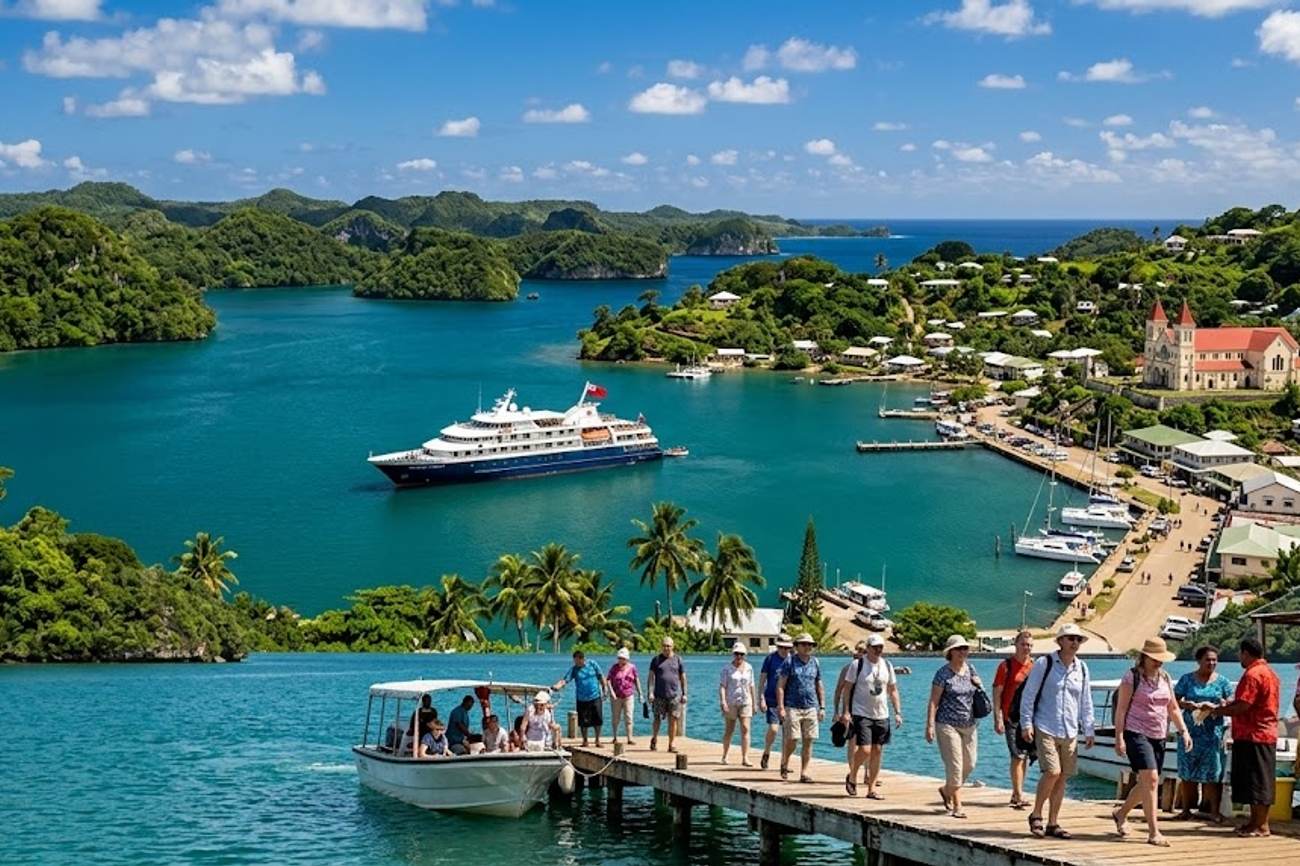
Image generated by AI
[Nukuʻalofa, September 2026] — Tonga is executing a strategic pivot in its cruise tourism model, with outer-island destinations now accounting for 54.5 per cent of all remaining scheduled port calls for the 2026 calendar year.
Data released by the Tonga Tourism Authority confirms that of the 11 calls remaining after September 17, six are slated for locations outside the capital of Nukuʻalofa. This shift signals a deliberate move toward cruise dispersal, moving high-spending visitor traffic away from the primary hub and into the archipelago's more remote island groups.
The Geographic Shift in Port Distribution
The current trend is driven by a transition from centralized arrivals to a distributed model. While the overall volume of cruise traffic remains stable—with 29 completed or expected calls for 2026 compared to 27 in 2025—the destination mix has fundamentally changed.
The remaining schedule from September 29 through December 21 reveals a clear preference for diverse itineraries. Nukuʻalofa, while still the most visited single port, no longer holds the majority share of the remaining season. Instead, the focus has shifted toward the Vavaʻu, Haʻapai, and Niuatoputapu regions.
The specific distribution of the 11 remaining calls is as follows:
- Nukuʻalofa: 5 calls (45.5%)
- Vavaʻu: 4 calls (36.4%)
- Haʻapai: 1 call (9.1%)
- Niuatoputapu: 1 call (9.1%)
This data indicates that combined outer-island visits now outweigh capital city stops, with Vavaʻu emerging as the secondary powerhouse of the Tongan cruise experience.
Operational Logistics and Vessel Profiles
The ability to penetrate the outer islands is largely dependent on the type of vessels deployed. Large-scale cruise ships are limited by infrastructure, but expedition-style vessels are enabling deeper access.
For example, the vessel Island Sky, operated by Noble Caledonia, utilizes anchorage operations and Zodiac transfers. This allows the ship to bypass traditional berths and conduct beach landings, provided weather conditions permit. This operational flexibility is the primary engine behind the 54.5 per cent outer-island share.
The logistics of these visits differ significantly from standard port calls:
- Landing Methods: Heavy reliance on tenders and Zodiacs rather than piers.
- Ground Transport: Limited availability, often consisting of small vans, taxis, or trucks.
- Infrastructure: Reliance on the Neiafu Wharf in Vavaʻu for customs and primary harbor services.
Because these remote communities lack the massive infrastructure of Nukuʻalofa, the economic impact is more direct but also more volatile. Local vendors and guides are highly dependent on the precision of these schedules, making rapid communication regarding cancellations a critical operational requirement.
Practical Traveler Advisory and Strategic Insights
For passengers and travel agents, the "Tonga Experience" is no longer a standardized stop in the capital. The shift toward outer islands changes the nature of the trip from a conventional cruise to an expedition.
Practical impacts include:
- Expectation Management: Travelers should expect "soft" landings. Instead of walking off a gangway into a terminal, passengers will likely be shuttled via small boats to beaches or small wharves.
- Limited Urbanity: While Neiafu serves as a recognizable gateway in Vavaʻu with restaurants and communication facilities, other stops like Niuatoputapu offer minimal commercial infrastructure.
- Weather Sensitivity: Outer-island itineraries are far more susceptible to weather-related cancellations than Nukuʻalofa stops. A shift in wind or sea state can result in a missed port of call without notice.
- Transport Constraints: Once ashore, the "luxury" experience transitions to rugged transport. Travelers will likely use local trucks or vans rather than air-conditioned coaches.
The November B2B Convergence
A unique intersection of industry events and active tourism is occurring this November. The Tonga Tourism Exchange 2026 is scheduled to run from November 2 to November 7, spanning Tongatapu, Vavaʻu, Haʻapai, and ʻEua. This event is designed to link local suppliers with international buyers, specifically from New Zealand and Australia.
The expansion of cruise itineraries to Neiafu on Vava'u reflects a strategic shift to distribute tourism revenue across the archipelago's outer islands. Travelers can find comprehensive visitor guidelines and regional activity details through the Visit Tonga official tourism portal.
Simultaneously, the vessel Noordam is scheduled for a two-port rotation:
- November 4: Vavaʻu
- November 5: Nukuʻalofa
This overlap creates a "live showcase." International travel buyers attending the exchange will be able to witness a real-time cruise operation in Vavaʻu and Nukuʻalofa, providing a tangible demonstration of Tonga's multi-island cruise proposition. This provides a rare opportunity for B2B stakeholders to evaluate the actual passenger flow and infrastructure capabilities of the outer islands during a high-profile industry event.
Detailed Remaining 2026 Cruise Schedule
The following table outlines the exact arrival and departure windows for the remainder of the 2026 season:
| Date | Vessel | Destination | Arrival | Departure | Classification |
|---|---|---|---|---|---|
| 29 Sept | Island Sky | Niuatoputapu | 07:00 | 17:00 | Outer Island |
| 30 Sept | Island Sky | Vavaʻu | 08:00 | 17:00 | Outer Island |
| 1 Oct | Island Sky | Nukuʻalofa | 08:00 | 17:00 | Capital |
| 7 Oct | Seabourn Pursuit | Vavaʻu | 10:30 | 21:00 | Outer Island |
| 8 Oct | Seabourn Pursuit | Haʻapai | 07:00 | 17:00 | Outer Island |
| 9 Oct | Island Sky | Nukuʻalofa | 13:00 | 18:00 | Capital |
| 10 Oct | Island Sky | Vavaʻu | 08:30 | 17:00 | Outer Island |
| 4 Nov | Noordam | Vavaʻu | 08:00 | 17:00 | Outer Island |
| 5 Nov | Noordam | Nukuʻalofa | 08:00 | 17:00 | Capital |
| 21 Nov | Costa Serena | Nukuʻalofa | 08:00 | 18:00 | Capital |
| 21 Dec | AIDAsol | Nukuʻalofa | 08:00 | 18:00 | Capital |
FAQ: Tonga Cruise Travel 2026
Which port is the main gateway for the Vavaʻu islands? Neiafu is the principal harbor town and service center. It houses the customs office at Neiafu Wharf and provides the primary concentration of restaurants, tourism facilities, and communications infrastructure for visiting cruise passengers.
How do passengers get ashore in the outer islands? Depending on the ship, passengers typically use tender boats or Zodiacs for shore access. In some remote locations, this involves direct beach landings, which are subject to weather conditions and sea states.
Are outer-island visits more likely to be cancelled than Nukuʻalofa? Yes. Due to the reliance on anchorage operations and smaller landing sites, weather has a significantly higher impact on the commercial and operational viability of outer-island calls compared to the capital.
What should I expect regarding transportation once I land in Vavaʻu or Haʻapai? Transport is limited. Passengers should expect to use small vans, local trucks, or taxis. The infrastructure is not designed for large-scale coach tourism, emphasizing a more rugged, expedition-style experience.
Tonga is trading mass-market volume for geographic depth, betting that the allure of the outer islands will drive the next era of Pacific cruise growth.
#TongaTourism2026 #Vava'uCruise #Nuku'alofaPort #NobleCaledonia #TongaTourismAuthority #PacificCruiseDispersal
Related Travel Guides
Disclaimer
This article is for informational and educational purposes only. It does not constitute legal, financial, or professional advice. While we strive to provide accurate and up-to-date information, travel policies, regulations, and conditions change rapidly. Always verify information with official sources before making travel decisions. Nomad Lawyer makes no representations about the accuracy, reliability, completeness, or suitability of the information provided. Readers should consult qualified professionals for advice specific to their circumstances. The views expressed in this article are those of the author and do not necessarily reflect the views of Nomad Lawyer.
Raushan Kumar
Founder & Lead Developer
Full-stack developer with 11+ years of experience and a passionate traveller. Raushan built Nomad Lawyer from the ground up with a vision to create the best travel and law experience on the web.
Learn more about our team →