
Timor-Leste Airport Expansion and Ferries to Atauro and Oecusse Boost Regional Tourism
Timor-Leste's US$239 million Dili airport expansion and regional ferry routes are positioning the country as a fly-sea gateway to Atauro Island and Oecusse in 2026.

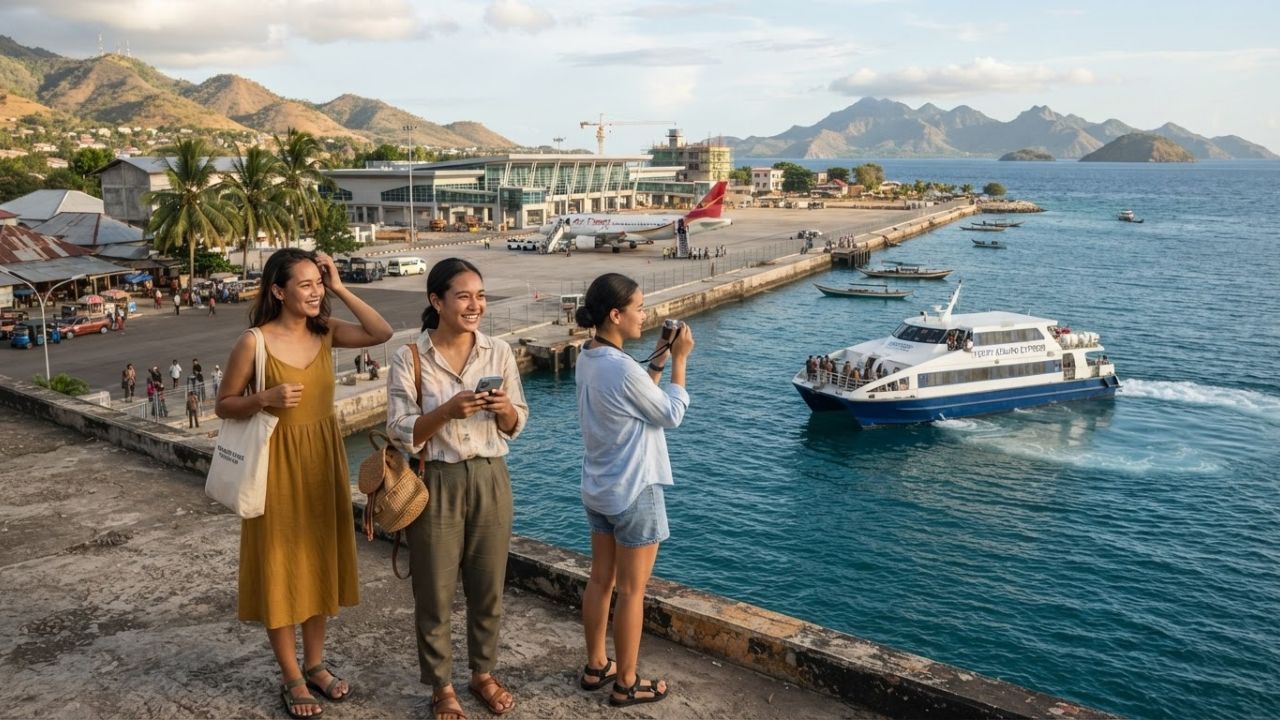
Image generated by AI
Timor-Leste is undertaking a major transition in its tourism network, anchored by a US$239 million expansion of Dili's Presidente Nicolau Lobato International Airport. Combined with maritime ferry routes to the diving sanctuary of Atauro Island and the coastal enclave of Oecusse, the infrastructure upgrade aims to distribute international visitor spending to remote communities.
Airport Expansion: Dili as a Regional Aviation Hub
The Presidente Nicolau Lobato International Airport expansion program is the cornerstone of Timor-Leste's long-term tourism strategy. According to the government's June 19, 2026 Council of Ministers update, the infrastructure project covers the redevelopment of the runway, taxiways, aprons, control tower, and passenger terminal. This phased program, backed by a revised investment of approximately US$239 million, is scheduled for completion through 2028.
A high-level review held on August 7, 2026, confirmed that construction is progressing, with airport electrical generators relocated to a temporary powerhouse on August 10 to maintain continuous service. The Asian Development Bank (ADB) projects that these upgrades will double Dili's annual passenger capacity to over 400,000 by 2030, enhancing aviation safety standards and connecting the nation with new regional carriers.
Flight Timetable: Connecting Dili with Regional Gateways
Timor-Leste's international air access has expanded, providing a stronger foundation for visitor arrivals. According to flight schedules verified on August 11, 2026, Dili is connected to five international hubs with a combined 33 weekly scheduled services. This represents a 13.8 per cent increase compared with the 29 direct weekly international flights and 4,000 seats per week reported in January 2026.
The international services connecting to Dili include:
- Darwin: 12 weekly flights operated by Qantas, Airnorth, and Aero Dili (1 hour 30 minutes).
- Bali/Denpasar: 14 weekly flights operated by Aero Dili and Citilink (2 hours).
- Singapore: 1 weekly flight operated by Aero Dili (4 hours).
- Kuala Lumpur: 5 weekly flights operated by Batik Air and Aero Dili (4 hours 15 minutes).
- Xiamen: 1 weekly flight operated by Aero Dili (5 hours 30 minutes).
These direct flights allow travelers to reach Dili comfortably from major global hubs. However, the travel trade's primary challenge is converting these arrivals into overnight visitors who travel beyond the capital corridor.
Dispersing Visitors: Ferries to Atauro Island
Atauro Island, located north of Dili across the Wetar Strait, is globally recognized for its biodiverse coral reefs and marine life. To distribute visitor spending to the island's eco-lodges, the government operates regular passenger ferries. The ferry timetable shows that Atauro is accessible six days a week, with Monday being the only exception.
Travelers can choose between two primary vessels:
- Berlin Nakroma: Departs Dili for Atauro on Wednesday, Thursday, Saturday, and Sunday, taking 2.5 to 3 hours. Fares cost US$4 or US$5.
- Success: Departs Dili on Tuesday and Friday, taking similar travel times.
Despite the regular schedule, booking remains a challenge. Tickets cannot be reserved online and must be purchased in cash (US dollars) on the day of travel at the Dili Port, requiring passengers to arrive at least 60 minutes before departure. Since sailings are subject to weather conditions and vessel maintenance, travelers must maintain flexible travel schedules.
Oecusse Enclave and Pante Macassar
Oecusse is a geographically detached enclave of Timor-Leste surrounded by Indonesian West Timor. Its principal coastal town, Pante Macassar, represents a destination for slow travel and cultural exploration. The enclave is connected to Dili via four outbound maritime services per week.
The ferry options include:
- Berlin Ramelau: Departs Dili on Tuesday and Friday at 17:00. This vessel carries up to 380 passengers and 30 vehicles, operating an overnight crossing of approximately 12 hours. Passenger fares start at US$8.
- Success: Departs Dili on Wednesday and Sunday at 16:00, carrying 360 passengers alongside freight. Fares start at US$10.
Because the ferry crossing is long, travelers must plan itineraries with significant time buffers, ensuring that return sailings allow sufficient time in Dili before outbound international flights.
Blue Economy Policies and Inbound Dispersal
Timor-Leste approved its national Blue Economy Policy and Action Plan on February 20, 2026, establishing a ten-year framework that integrates sustainable tourism with fisheries, maritime transport, and marine conservation. The policy highlights that coastal livelihoods depend on dispersing tourism benefits beyond the capital.
Official statistics show that stayover arrivals reached nearly 27,000 visitors in 2024, representing a 26 per cent increase compared with the previous year, alongside more than 1,000 cruise passengers. Approximately 30 to 35 per cent of these travelers visited for leisure, with Australia representing half of the leisure segment. In 2026, the country recorded more than 2,400 accommodation rooms nationally, with over 500 higher-quality rooms concentrated in the Dili corridor. If visitors remain in Dili, the economic benefits of the airport upgrade will not reach the rural communities that preserve Timor-Leste's natural heritage. Dispersing visitors via ferries is therefore an economic necessity.
Visitor Guide: Local Dining, Ferry Bookings, and Reef Protection
Exploring Timor-Leste safely and sustainably involves coordinating transportation buffers, experiencing local cuisine, and protecting fragile marine parks. By preparing in advance, travelers can maximize their experience.
Sample traditional East Timorese cuisine during your stay. Try Ikan Sabuko, Spanish mackerel marinated in tamarind juice, basil, and local chilies, grilled over open flames. Order Batar Da'an, a comforting stew made of corn, mung beans, and pumpkin, traditionally served alongside cassava. Pair your meals with organic East Timorese coffee, which is grown in the high-altitude regions of Ermera and Maubisse and is highly valued for its smooth flavor.
Coordinate ferry bookings through a local ground handler or destination management company (DMC). Since advance online booking is not available, local agents can purchase tickets on your behalf at the Dili Port on the morning of departure. Carry cash in small US dollar bills for all ferry tickets (fares range from US$4 to US$10), as credit cards are not accepted at the port.
Observe strict marine conservation rules when diving or snorkeling around Atauro Island. The reefs are highly fragile, so use only reef-safe sunscreen to prevent coral bleaching. Practice excellent buoyancy control to avoid touching or standing on live corals, and do not disturb marine life.
Build a buffer night in Dili at both the start and end of your trip. Do not attempt to catch a ferry on the same day as your international flight arrival or departure, as weather delays or maintenance changes can disrupt ferry schedules, causing you to miss your flights.
Future Outlook: Sustainable Dispersal and Community Growth
The long-term development of Timor-Leste's tourism industry depends on successfully connecting Dili's expanding aviation capacity with its maritime transport network. By resolving the booking challenges associated with regional ferries, the country can establish a sustainable eco-tourism model.
Preservation efforts are increasingly focused on protecting the marine habitats that attract international divers. By coordinating community-led tourism initiatives with the Blue Economy Policy, Timor-Leste aims to protect its natural resources while providing stable employment for local guides, boat operators, and guesthouse owners. This integrated approach ensures that the US$239 million airport investment supports sustainable economic growth across the country's remote island and coastal communities.
Related Travel Guides
Disclaimer
This article is for informational and educational purposes only. It does not constitute legal, financial, or professional advice. While we strive to provide accurate and up-to-date information, travel policies, regulations, and conditions change rapidly. Always verify information with official sources before making travel decisions. Nomad Lawyer makes no representations about the accuracy, reliability, completeness, or suitability of the information provided. Readers should consult qualified professionals for advice specific to their circumstances. The views expressed in this article are those of the author and do not necessarily reflect the views of Nomad Lawyer.
Raushan Kumar
Founder & Lead Developer
Full-stack developer with 11+ years of experience and a passionate traveller. Raushan built Nomad Lawyer from the ground up with a vision to create the best travel and law experience on the web.
Learn more about our team →