
Breaking Airline News: Tigerair Taiwan Emergency Landing Sparks Severe Travel Chaos and Airport Disruptions in Japan
Breaking airline news: A terrifying mid-air cockpit smoke alert forces a Tigerair Taiwan Airbus A320 into an emergency landing, instantly triggering severe runway closures, flight cancellations, and massive travel chaos at Japan's New Chitose Airport.

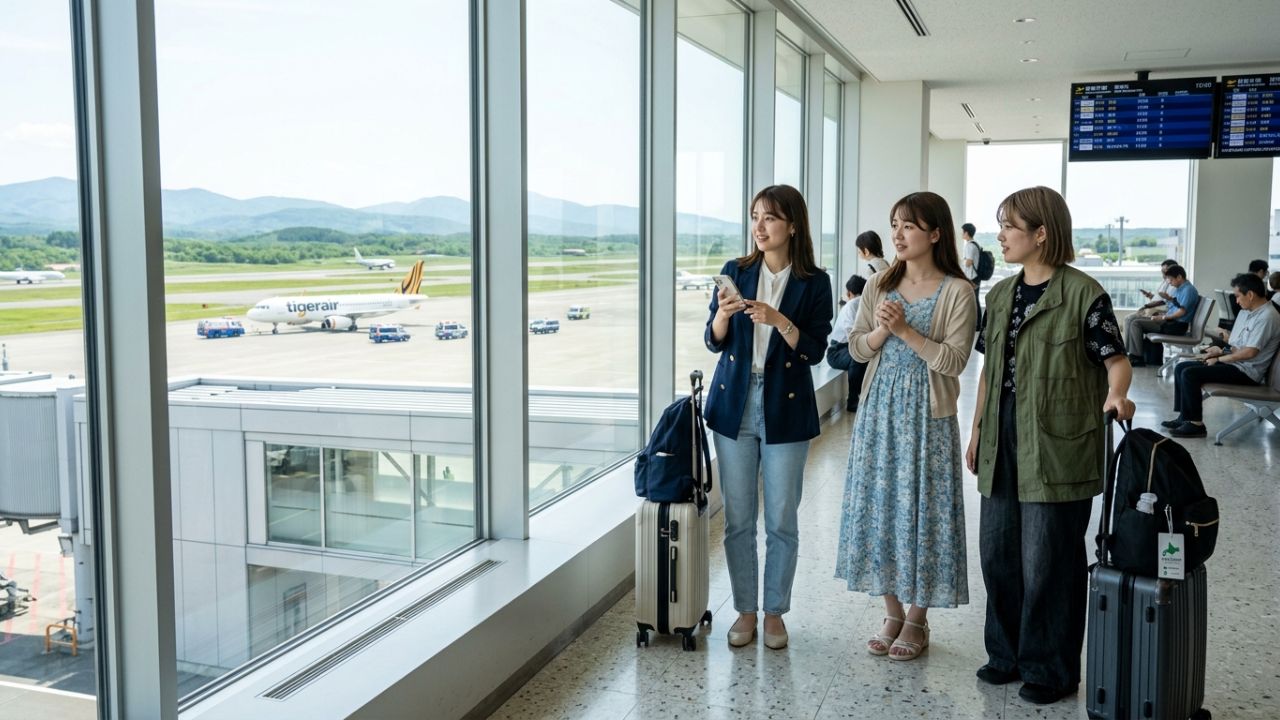
Image representing the terrifying operational collapse and massive travel chaos triggered at New Chitose Airport after a Tigerair Taiwan Airbus A320 was forced into an immediate emergency landing due to severe cockpit smoke.
Breaking Airline News: Tigerair Taiwan Emergency Landing Sparks Severe Travel Chaos and Airport Disruptions in Japan
As paralyzing terminal bottlenecks and severe airspace congestion already test the absolute limits of the Asian aviation network, a terrifying mid-air emergency has just violently plunged a major international transit hub into absolute travel chaos. On Friday, a routine flight traversing one of East Asia’s most highly congested tourism corridors was brutally interrupted when a Tigerair Taiwan Airbus A320 declared an immediate emergency. Operating as Flight IT234 from Taipei to Sapporo, the aircraft was forced into a high-stakes emergency landing at Japan’s New Chitose Airport following horrifying reports of smoke rapidly filling the cockpit at approximately 10:45 a.m. local time. While all 179 passengers and crew miraculously survived completely unharmed, the sheer severity of the incident instantly triggered massive airport disruptions, forcing sudden runway closures that aggressively unleashed cascading flight cancellations and paralyzing delays across the northern Japanese aviation network.
In a brutal demonstration of how terrifyingly fast a localized safety incident can violently shatter regional scheduling, this emergency landing represents far more than a successfully executed safety protocol. For the thousands of stranded passengers relying on New Chitose Airport—the absolute epicenter of Hokkaido's tourism economy—the sudden closure of active runways instantly triggered an agonizing domino effect. A single aircraft in distress violently metastasized across the network, destroying meticulously planned summer itineraries, trapping highly vulnerable travelers within congested terminals, and forcing airlines to rapidly scramble to recover their paralyzed daily schedules. As emergency response teams locked down the tarmac, the immediate reality for the surrounding passengers was a terrifying descent into massive rebooking queues and extreme regional travel chaos.
Expanded Overview: The Anatomy of an Operational Meltdown
The terrifying crisis currently overwhelming customer service desks across Hokkaido brutally exposes the severe limitations of high-density airport scheduling when confronted with a sudden safety emergency. When travel chaos of this magnitude erupts, it is not simply an isolated runway event; it is a violent structural rupture that paralyzes the entire aviation ecosystem.
Section-Wise Breakdown: Grounding the Network
To fully comprehend the massive logistical devastation of Friday's meltdown, corporate travel planners and international tourists must rigorously review the verified disruption matrices detailing the absolute collapse across this critical East Asian artery.
The Incident: Flight IT234 Cockpit Smoke Alert The terrifying reality of in-flight smoke is one of the most critical emergencies an airline crew can face, as it threatens visibility, critical aircraft systems, and crew survival. The decision by the Tigerair Taiwan crew to immediately prioritize a precautionary emergency descent into Sapporo reflects globally mandated, zero-tolerance safety standards. However, while this rapid action saved lives, the immediate arrival of a distressed Airbus A320 violently scrambled all active approach sequencing for the entire region.
| Detail | Information |
|---|---|
| Airline | Tigerair Taiwan |
| Flight Number | IT234 |
| Aircraft Type | Airbus A320 |
| Departure City | Taipei, Taiwan |
| Destination | Sapporo, Hokkaido, Japan |
| Airport of Landing | New Chitose Airport |
| Reported Issue | Smoke detected in cockpit |
| Passengers and Crew | 179 |
| Injuries Reported | None |
| Operational Impact | Temporary runway closure |
New Chitose Meltdown: Runway Closures and Gridlock Following the high-speed emergency landing, New Chitose Airport authorities immediately initiated a mandatory, temporary runway closure. Because this facility serves as the absolute principal aviation hub for Hokkaido—handling millions of passengers and managing massive domestic and international flow—even a short closure unleashes horrific operational damage. The incident instantly triggered massive flight delays, horrific aircraft repositioning challenges, chaotic gate allocation adjustments, and severe air traffic sequencing changes. Dozens of inbound flights were thrown into emergency holding patterns, drastically inflating the scale of the travel chaos.
The Taiwan-Japan Corridor: A Vulnerable Artery The significance of this disruption is heavily magnified by the specific route involved. The Taipei-Sapporo corridor is an absolute lifeline for the regional tourism economy. With summer demand surging, disrupting this highly lucrative market guarantees massive financial and logistical fallout.
| Category | Significance |
|---|---|
| Taiwan–Japan Market | One of Asia’s busiest leisure travel corridors |
| Hokkaido Tourism Appeal | Nature, skiing, culinary tourism, seasonal attractions |
| Summer Travel Demand | Strong growth driven by regional tourism recovery |
| Aircraft Type Involved | Airbus A320, a widely used short- and medium-haul aircraft |
Aviation Safety Protocols: Investigating the Smoke While passengers were aggressively evacuated into the terminal, aviation investigators immediately locked down the Airbus A320 to violently isolate the source of the smoke. Modern commercial aircraft are highly complex, and smoke does not automatically indicate an active fire. However, the rigorous inspection protocols necessary to clear the aircraft guarantee extensive downtime and further scheduling volatility for Tigerair Taiwan.
| Potential Cause | Description |
|---|---|
| Electrical System Issues | Overheated wiring or equipment |
| Environmental Control Systems | Air-conditioning or ventilation anomalies |
| Mechanical Components | Overheated equipment compartments |
| External Contaminants | Fumes entering through ventilation systems |
| False or Temporary Alerts | Conditions requiring precautionary verification |
Passenger Impact: Trapped in the Terminal
For the 179 passengers aboard Flight IT234, the psychological terror of a mid-air emergency descent is profound. However, for the thousands of highly vulnerable passengers trapped in the resulting gridlock at New Chitose Airport, the immediate reality is a logistical nightmare. The massive scale of the sudden runway closures guarantees that travelers missed vital onward connections, destroying entire multi-city itineraries in seconds.
As rebooking queues violently swelled, seat availability on alternative flights plummeted, leaving passengers utterly stranded. Beyond the psychological stress, travelers were forced to absorb unexpected hotel costs, exorbitant ground transportation fees, and massive dining expenses while waiting for the airport to lift the operational freeze and restore normal flight schedules.
Industry Analysis: The Core of the Meltdown
From a strategic aviation perspective, Friday's massive disruption exposes the terrifying reality that safety and operational efficiency are frequently at odds. The mandatory runway closures following an emergency landing are non-negotiable for passenger survival, yet they guarantee catastrophic airport disruptions.
This incident perfectly illustrates how vulnerable major hubs are during peak summer travel periods. Once a critical facility like New Chitose fractures, aircraft fall out of position, crews are delayed, and the entire regional network collapses under the intense pressure of cascading flight cancellations.
Conclusion: A Devastating Blow to Regional Tourism
As the extremely critical East Asian aviation network continues to face terrifying strain from unprecedented operational volatility, the uncontained travel chaos witnessed at New Chitose Airport is a harsh reminder of systemic fragility. Gateway hubs lose massive economic momentum when flight disruptions aggressively discourage visitor spending. Until airlines and airport authorities can aggressively engineer faster recovery protocols following mandatory emergency groundings, travelers must prepare for the horrifying reality that any mid-air incident can instantly trigger a massive, region-wide operational collapse.
Key Takeaways
- Massive Mid-Air Emergency: Tigerair Taiwan Flight IT234 (an Airbus A320) executed an emergency landing at New Chitose Airport following a terrifying cockpit smoke alert.
- Zero Casualties: All 179 passengers and crew members successfully survived the incident completely unharmed.
- Systemic Airport Disruptions: The emergency violently triggered a temporary runway closure at 10:45 a.m., paralyzing New Chitose and unleashing massive travel chaos.
- Critical Tourism Corridor Compromised: The disruption severely impacted the highly lucrative Taipei-Sapporo route during the peak summer travel surge.
- Cascading Network Failure: The mandatory safety lockdown resulted in immediate flight delays, horrific aircraft repositioning challenges, and severe air traffic sequencing changes across Hokkaido.
Related Travel Guides
Disclaimer
This article is for informational and educational purposes only. It does not constitute legal, financial, or professional advice. While we strive to provide accurate and up-to-date information, travel policies, regulations, and conditions change rapidly. Always verify information with official sources before making travel decisions. Nomad Lawyer makes no representations about the accuracy, reliability, completeness, or suitability of the information provided. Readers should consult qualified professionals for advice specific to their circumstances. The views expressed in this article are those of the author and do not necessarily reflect the views of Nomad Lawyer.
Kunal K Choudhary
Co-Founder & Contributor
A passionate traveller and tech enthusiast. Kunal contributes to the vision and growth of Nomad Lawyer, bringing fresh perspectives and driving the community forward.
Learn more about our team →