
Southwest Airlines Shifts Operations Hub: Denver Now Rivals Dallas as Carrier's Busiest Airport
Breaking airline news and aviation industry updates for 2026.

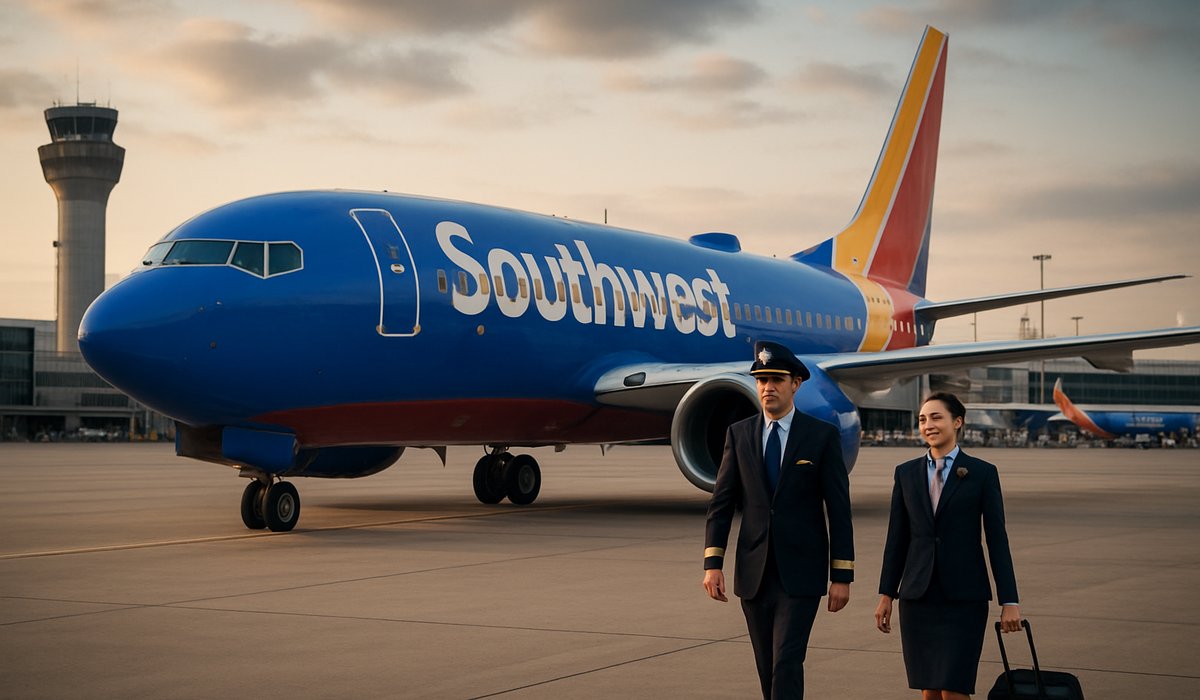
Image generated by AI
Southwest Airlines Shifts Operations Hub: Denver Now Rivals Dallas as Carrier's Busiest Airport
Latest aviation analytics reveal unexpected pivot in America's largest low-cost carrier's operational strategy
Southwest Airlines has quietly repositioned its operational hierarchy, with Denver International Airport emerging as a formidable competitor to the airline's traditional powerhouse at Dallas Love Field, according to fresh scheduling data from Cirium, a leading aviation analytics firm.
Unexpected Shift in Southwest's Hub Strategy
The blue-and-red carrier, which operates one of the world's largest homogeneous fleets of Boeing 737 aircraft, now deploys approximately 7,500 monthly one-way departures from its top operating bases. The revelation challenges longstanding assumptions about where the budget airline giant concentrates its heaviest operations.
Denver's ascent reflects broader industry trends as low-cost carriers optimize networks beyond traditional strongholds. For Southwest—which commands substantial market share across North American routes—the recalibration underscores how fuel efficiency, airport capacity, and competitive pressures reshape airline geography.
What This Means for Travelers and the Industry
The operational shift carries implications for consumer choice and route availability. Increased Southwest presence at Denver suggests expanded service to mountain communities and connections into the Rocky Mountain region, potentially offering budget-conscious travelers more affordable options on underserved routes.
From an industry perspective, Southwest's rebalancing demonstrates how major carriers continuously adjust deployment strategies to maximize aircraft utilization and respond to market demand. The shift occurs amid volatile jet fuel prices and evolving consumer travel patterns post-pandemic recovery.
Southwest's uniform 737 fleet—numbering in the hundreds—enables the flexibility to redeploy capacity across hubs quickly. This operational advantage has made the airline uniquely positioned to respond to shifting regional demand faster than competitors operating mixed-aircraft fleets.
Market Implications and Future Outlook
The Denver development reflects competitive pressures facing legacy carriers at traditional hubs. As Southwest strengthens its presence at secondary and tertiary airports, it potentially captures market share from carriers with less flexible cost structures.
For Dallas Love Field, Southwest's historical headquarters, the data suggests operational rebalancing rather than wholesale abandonment. The airport remains strategically important, but Denver's emergence indicates a more distributed hub model better positioned for long-term growth and resilience.
FAQ: Southwest Airlines Hub Changes & Aviation Trends
Q: Why is Southwest increasing operations at Denver instead of traditional hubs? A: Competitive market dynamics, fuel efficiency on longer routes, and untapped capacity at Denver International Airport make the hub strategically valuable for expanding the carrier's network reach and profitability.
Q: How do airline fee structures change when carriers shift hubs? A: While baggage charges and ancillary fees remain consistent across Southwest's network, hub shifts may alter route-specific pricing and frequency options based on competitive intensity at new bases.
Q: What impact do jet fuel prices have on airline hub decisions? A: Volatile fuel costs influence route profitability analyses, pushing carriers toward hubs with superior fuel efficiency metrics and strong demand patterns to offset operational expenses.
Q: Will this affect baggage charges or travel costs for Denver passengers? A: Southwest's famous two-free-checked-bags policy remains consistent network-wide, though increased competition at Denver may introduce competitive pricing on specific routes.
Q: How does this shift compare to other low-cost carriers' hub strategies? A: Unlike full-service carriers with rigid hub structures, budget airlines like Southwest maintain flexible networks, allowing rapid redeployment based on market opportunities and operational efficiency metrics.
Related Travel Guides
- Middle East Airlines Expand Flight Networks and Frequency Options for Summer Travel Peak Despite Renewed Regional Security Concerns
- Breaking Airline News: Asian Carriers Forge Massive Recovery Efforts to Aggressively Combat Terrifying Travel Chaos
- Airbus A350 Dominates Long-Haul Aviation: How Advanced Engineering Delivers Unprecedented Operational Efficiency
Disclaimer
This article is for informational and educational purposes only. It does not constitute legal, financial, or professional advice. While we strive to provide accurate and up-to-date information, travel policies, regulations, and conditions change rapidly. Always verify information with official sources before making travel decisions. Nomad Lawyer makes no representations about the accuracy, reliability, completeness, or suitability of the information provided. Readers should consult qualified professionals for advice specific to their circumstances. The views expressed in this article are those of the author and do not necessarily reflect the views of Nomad Lawyer.
Kunal K Choudhary
Co-Founder & Contributor
A passionate traveller and tech enthusiast. Kunal contributes to the vision and growth of Nomad Lawyer, bringing fresh perspectives and driving the community forward.
Learn more about our team →